
It is 6:45 in the evening and your best coach is mid-session with three clients on the gym floor. The phone at the front desk rings. Then it rings again. Nobody can leave the floor to answer it, so both calls roll to voicemail. The first caller wanted to know if tomorrow’s 7am spin class still has spots. The second wanted a trial pass for the weekend. Neither leaves a message, and studies of caller behavior keep finding that most callers sent to voicemail never call back. By morning, the spin class is full and the trial prospect has booked with the gym across town, the one whose phone gets answered. This is the coaching trap: the hours when your gym is busiest and most alive are exactly the hours when nobody can answer the phone, and the callers you miss are the highest-intent prospects you get. An AI receptionist for gyms exists for this exact problem. It answers every call on the first ring, handles the questions callers actually ask, books trials and tours into the real calendar, and lets your coaches keep coaching. This guide shows how gym-specific call handling works, what it costs, and how it connects to your booking software.
The quick answer
- The core job: answer every gym call on the first ring, handle class, trial, billing, and trainer questions by voice, and book into the real schedule.
- Class cancellations: callers get live answers about class times, spots, and changes, plus waitlist or rebooking options when a class is full.
- Membership billing questions: trained answers for charges, freezes, and cancellations, with anything sensitive routed to your team with full context.
- Trial and tour calls: the receptionist books trial passes and tours on the trainer calendar and confirms by text, at any hour.
- After-hours coverage: evening, weekend, and holiday calls get answered instead of hitting voicemail, which is when most prospects call.
- What it costs: flat plans run about $200 to $600 per month; per-minute plans suit low call volumes. Booking-software integration is the feature to verify.
The coaching trap: why gyms miss their best calls
Gyms have a staffing pattern that guarantees missed calls. During peak hours, every available person is on the floor, in a class, or with a client. The front desk, if the gym even has a dedicated one, is at its thinnest exactly when call volume is highest. Off-peak, the gym may run with a skeleton crew or none at all. Meanwhile, prospect behavior runs on the opposite schedule: people call about trial passes and memberships in the evening after work, on weekends, and in the January rush, when your staffing is weakest.
The cost of a missed gym call is higher than it looks. A caller asking about a trial pass is a membership decision in progress, and research on lead response has found that 78 percent of buyers go with the company that responds first. A member calling about a billing charge who reaches voicemail becomes a cancellation risk. A caller asking about a full class who gets no answer simply goes to another class at another gym. An AI receptionist breaks the trap: the phone is answered on the first ring every time, the coaches never leave the floor, and every caller gets a real conversation. For the chat side of the same funnel, see our guide to the AI chatbot for gyms, which handles website visitors while the receptionist handles callers.
What the AI receptionist handles for gyms
Gym callers ask a predictable set of questions, which makes the receptionist straightforward to train. Here are the five call types it must handle well.
Class cancellations and schedule changes
“Is the 7am spin still on?” and “Did the yoga class get cancelled?” are daily calls, and they need live answers. The receptionist reads the current class schedule, confirms times and instructors, and handles changes gracefully: if a class is cancelled, it explains why, offers the nearest alternative, and books the caller into it. If a class is full, it offers the waitlist or the next session with spots. Members who get a helpful answer stay members. Members who get voicemail about a cancelled class show up to a dark studio and leave a one-star review. Our guide on how to respond to negative Google reviews covers the damage control side; the receptionist prevents the damage in the first place.
Membership billing questions
Billing calls are sensitive and frequent: unexpected charges, freeze requests, failed payments, and cancellation questions. The receptionist answers the factual layer from your policies: what the charge is, how freezes work, what the cancellation terms require. Anything that needs account access or a judgment call routes to your team immediately, with the caller’s details and the full conversation attached, so the member never repeats themselves. The rule is simple: the AI explains, the human decides. Billing answers must be trained from your real policies and locked, because one wrong statement about a cancellation fee becomes a dispute.
Trial-pass and tour calls
These are the money calls. The receptionist treats them like a good salesperson would: answer the questions, offer the trial pass, and book the tour before the call ends. It collects a name and number, issues the trial with your eligibility rules applied, books a tour slot on the real trainer calendar, and sends a text confirmation with the address and the trainer’s name. The whole exchange takes two minutes and works at 9pm on a Sunday. If the caller hesitates, the receptionist answers the underlying objection, usually price, contract, or hours, from trained answers rather than improvising.
Trainer availability and program questions
Callers ask about personal training availability, specialty programs, kids’ classes, and pool hours. The receptionist answers from your program schedule and trainer calendar: who is available when, what each program costs, and how to start. For personal training inquiries, it books the consultation rather than trying to sell packages by phone, and it passes the caller’s goals to the trainer beforehand. A trainer who knows the caller wants post-injury strength work sells differently than one walking in cold. Program details change, so these answers need a quarterly review at minimum.
After-hours coverage that actually books
The overnight and weekend shift is where the receptionist pays for itself. Calls that arrive when the gym is closed or unstaffed get the same full handling as daytime calls: questions answered, trials issued, tours booked, messages taken for anything that needs a human. The morning starts with a clean summary: new trials booked, tours on the calendar, billing issues flagged for the manager, and any urgent messages. Your team opens the gym to a booked day instead of a voicemail light. The general voice-playbook thinking applies here too; our AI phone agent for home services guide covers the same after-hours principles in a different trade.

Coaching does not pause for a ringing phone. The AI receptionist picks it up so the session never stops.
Flat vs per-minute pricing
Gym receptionists generally bill one of two ways. The right model depends on your call volume, which most gyms underestimate until they measure it.
| Pricing model | How you pay | Typical range | Best for |
|---|---|---|---|
| Flat monthly | One fixed fee for a set or unlimited number of calls | About $200 to $600 per month | Gyms with steady call volume that want predictable cost |
| Per-minute | Charged on talk time, no or low base fee | About $0.15 to $0.40 per minute | Small gyms with light call volume or strong seasonal swings |
| Tiered flat | Fixed fee per call-volume band, stepping up as volume grows | About $150 to $500 per month across tiers | Gyms growing fast that want costs to track volume |
| Multi-location | Per-location fee under one account | About $100 to $250 per month per extra location | Chains and franchises with separate schedules per club |
How to pick between flat and per-minute
Count your real call volume first, including after-hours calls, which most gyms have never measured. At roughly 300 minutes of talk time a month, per-minute at $0.25 costs about $75, well under any flat plan. At 1,000 minutes, that is $250, and the flat plan starts winning. January alone can flip the math for many gyms. The safest move is to start per-minute or tiered for two months, measure the actual volume, then switch to whichever model the numbers favor. Get the overage terms in writing either way: the plan that looks cheap at 500 minutes can get expensive at 1,500.
Integration with gym booking software
The integration is what separates a receptionist from a voicemail with manners. The receptionist must connect to your gym booking or management software so it can read live class schedules, check trainer availability, book tours and trials into real slots, and log every call against the member or prospect record. Without this connection, it can answer questions but cannot book anything, and booking is the point.
Verify three things during the trial. First, the class schedule must be live, not imported weekly: cancellations and fill-ups happen daily, and the receptionist’s answers have to match reality. Second, tour bookings must write to the actual trainer calendar your team uses, with the visitor’s details and interests attached. Third, billing-related calls must create a proper ticket or task in your system, not just a transcript in an email, so nothing falls through. If your gym’s software is older or custom, budget extra setup time for the integration. For context on the website side of the tech stack, our guide to how much a gym website costs covers what the booking layer typically involves.
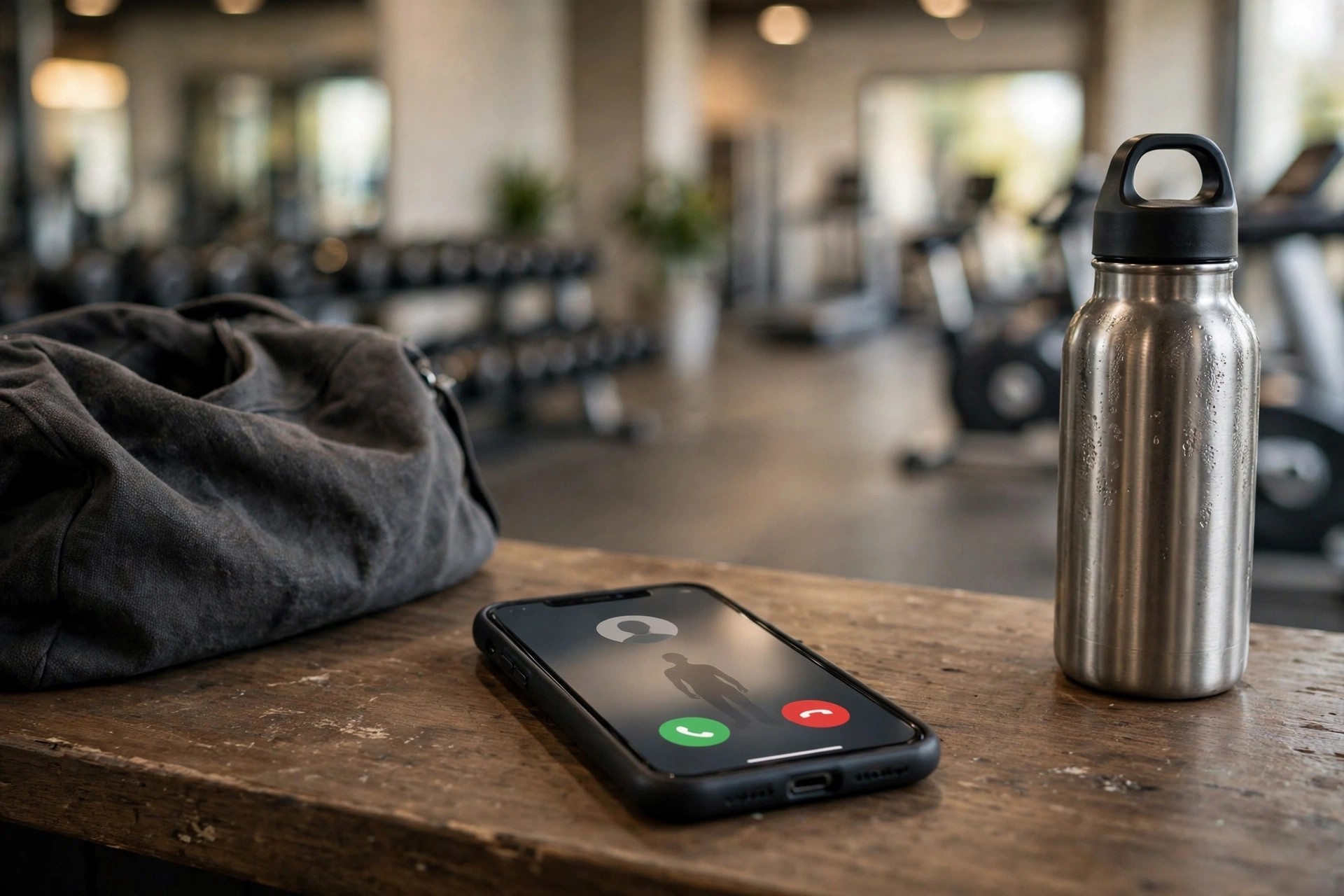
Trial-pass questions, billing questions, and cancellations: handled by voice, at any hour, on the first ring.
Your rollout checklist
Roll this out in order. The class schedule connection gets verified before anything else, because wrong class answers destroy trust.
- 1Connect the live class schedule. The receptionist reads real class times, instructors, and spot counts. Test it after every schedule change in the first month.
- 2Connect the trainer and tour calendar. Trial and tour bookings write to the real calendar with visitor details and interests attached.
- 3Train the billing answers. Charges, freezes, and cancellation terms from your real policies, locked so the AI states them exactly and routes decisions to your team.
- 4Train the membership and pricing answers. Tiers, promotions, contract terms, and hours, with escalation for negotiations like corporate rates.
- 5Define the trial-pass rules. Eligibility, limits, and blackout windows enforced automatically on every trial call.
- 6Set the escalation and ticket rules. Billing disputes, complaints, and requests for a person route to your team with full context and a proper ticket.
- 7Build the morning summary. Overnight trials, tours, flagged billing issues, and urgent messages arrive as one clean report at opening time.
- 8Review call recordings weekly for a month. Tighten the answers and escalation triggers from real calls, then move to a monthly review.

Tours scheduled from calls land straight in the trainer’s calendar, with the visitor’s goals noted.
Frequently asked questions
Will callers know they are talking to an AI?
Most will not care, because the receptionist answers on the first ring, knows the class schedule, and books the tour. The voice is natural and the conversation follows gym logic. Callers who ask directly get an honest answer, and anyone who wants a person is transferred without friction.
Can it handle angry members calling about billing?
It handles the factual layer calmly: what the charge is, what the policy says. Then it escalates to your team with the full context attached. The AI never argues, never guesses at account details, and never processes a cancellation it is not authorized to handle. Your team gets a warm handoff, not a cold complaint.
What happens when a class is cancelled last minute?
The receptionist reads the live schedule, so it knows about the cancellation. It tells the caller plainly, offers the nearest alternative class, and books them into it or onto the waitlist. This is one of the highest-value call types, because a handled cancellation keeps a member and an unhandled one loses one.
How does it book tours if our trainers set their own schedules?
The receptionist reads each trainer’s real calendar, so it only offers slots that exist. When a trainer’s availability changes in your system, the offered slots change automatically. During setup, confirm whose calendar is the source of truth for tours and make sure it stays current.
Is per-minute or flat pricing better for a gym?
It depends on call volume. Light-volume gyms usually save money per-minute; busy gyms and January surges favor flat plans. Measure two months of real volume first, then pick the model the numbers favor. Watch the overage terms on flat plans and the per-minute rate on usage plans.
Do we still need front desk staff?
Yes, but their job changes. The receptionist handles the phone so your staff can handle the people in the building: check-ins, tours, and member relationships. Most gyms find the same staff suddenly has time for the work that actually retains members, instead of juggling a ringing phone. For keeping those members happy publicly, see our guide to getting more Google reviews, whose tactics apply to gyms just as well.
Answer every call, even mid-session
Digital Hayder builds AI receptionists for gyms that answer on the first ring, handle class and billing questions, book trials and tours into the real calendar, and cover every after-hours call. Tell us about your club and we will train the receptionist on your schedule, programs, and policies.
Contact Us