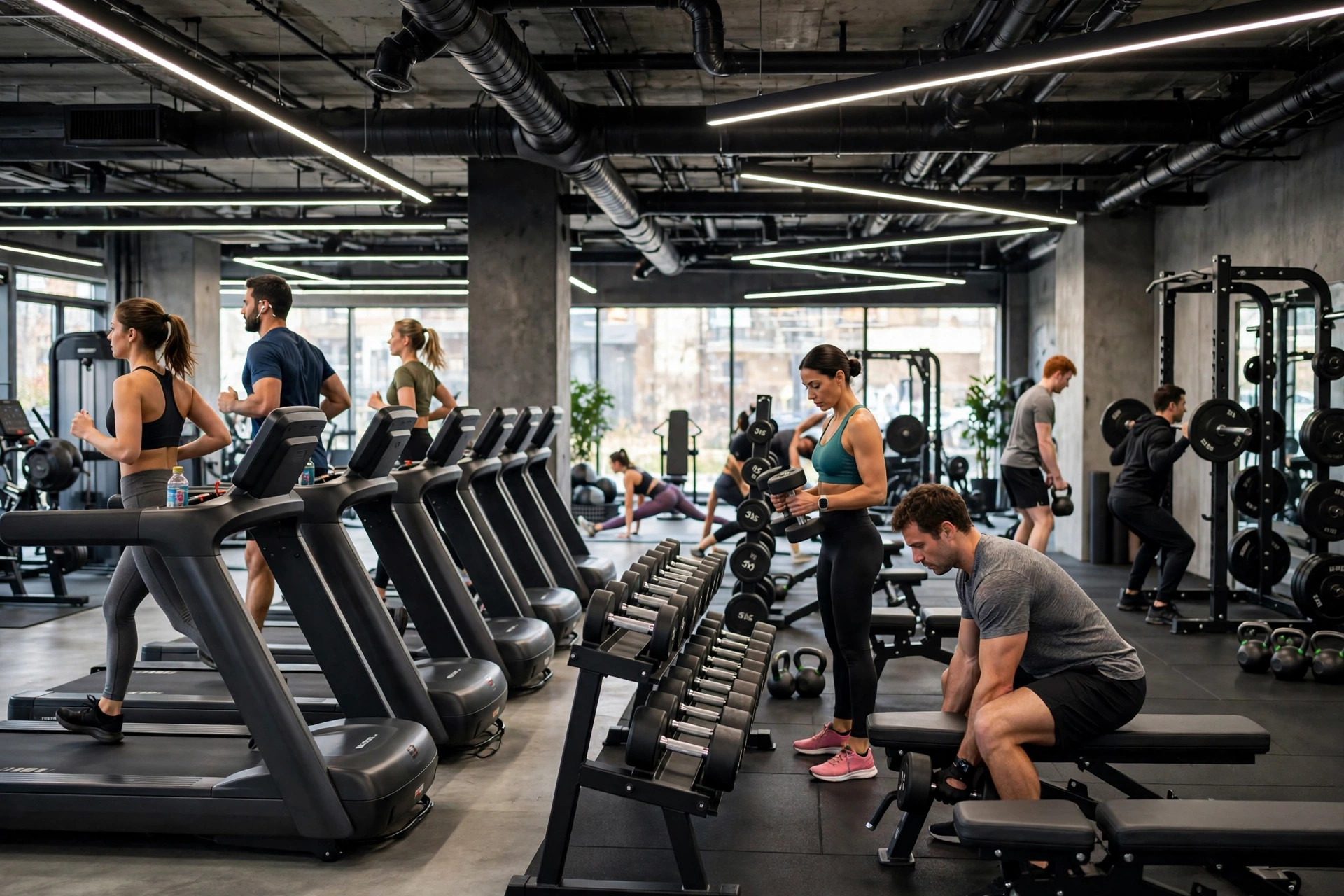
It is 10pm on a Wednesday. A man has just finished scrolling through his camera roll, deleting blurry photos, and admitted to himself that he has said “I should join a gym” for three months straight. Tonight feels different, so he searches for a gym near him. Your gym’s website comes up: good reviews, decent photos, a “free trial pass” banner on the homepage. He clicks it and lands on a contact form that asks for his name, email, phone, fitness goals, preferred location, and how he heard about you. He closes the tab. The gym ranked below you has an AI chatbot that opens the moment the page loads: “Want to try us out? I can book your free trial pass for tomorrow.” Thirty seconds later he has a trial pass, a tour slot with a trainer, and a text with the address. He shows up Thursday. You never saw his name. This is the gym funnel in one scene: the motivation to join is fragile and short-lived, and whatever answers fastest wins it. This guide shows how an AI chatbot for gyms runs the whole funnel, from class questions to trial booking to tour scheduling to membership objections, while your coaches are busy coaching.
The quick answer
- The core job: turn website visitors into trial passes, tour bookings, and membership sign-ups by answering in seconds, at any hour.
- Class schedule questions: the chatbot answers times, availability, and class descriptions from your live schedule, so nobody bounces off an outdated PDF.
- Trial-pass booking: the highest-converting move in the gym business, issued automatically with a tour slot and a reminder sequence.
- Membership objections: trained answers for price, commitment length, and hours that keep the conversation moving instead of ending it.
- After-hours capture: evening and weekend inquiries get answered instantly, with follow-up nudges for anyone who drops off mid-flow.
- What it costs: about $150 to $600 per month for most gyms, plus setup, with booking-software integrations in the mid to upper part of that range.
The gym funnel is a conversation, not a form
Joining a gym is an emotional decision wearing a practical disguise. The visitor has questions that feel small but block the whole decision: what time is the 6am spin class, is there parking, do I have to sign a contract, can I just try it once. Every one of these is easy to answer and easy to lose a prospect over if the answer takes a day. Studies of local consumer behavior keep finding that most customers contact the first business that responds, and gym motivation is the most perishable intent there is. The person who felt ready at 10pm may feel busy by 10am.
The timing mismatch is structural. Your coaches are on the floor during the day, your front desk is busiest during peak hours, and prospect inquiries spike in the evenings, on weekends, and in January, exactly when staffing is thinnest. A chatbot that answers class questions, issues trial passes, and books tours around the clock does not replace your team. It catches the demand your team cannot be awake for. If your website is also due for an overhaul, our guide to how much a gym website costs covers the build side; this guide covers the conversion layer that sits on top of it.
How the chatbot runs the gym funnel
The funnel has four stages, and the chatbot is trained to move people through each one without friction. Here is how each stage works in practice.
Class schedule questions: the top of the funnel
Class times are the most common question gym websites get, and the most common reason visitors leave. An outdated schedule PDF or a buried timetable page sends people back to Google. The chatbot answers from your live class schedule: times, instructors, difficulty level, and remaining spots, in plain conversation. “Do you have yoga on Saturday mornings?” gets “Yes, vinyasa at 9am with Maya, and there are 6 spots left. Want me to hold one for a trial visit?” The question becomes a booking in the same breath. The schedule data must be live, not a copy pasted at setup, because one wrong answer about a class time costs more trust than no answer at all.
Trial-pass booking: the highest-converting move
The free trial pass is the gym industry’s best sales tool, and the chatbot is its best distributor. When a visitor shows interest, the bot offers the trial immediately, collects a name and phone number, and issues the pass with a tour slot attached. The trial is never just a pass: it comes with a scheduled tour time, the trainer’s name, and a text reminder the day before. This matters because unclaimed trial passes convert at near zero, while trial visitors who meet a trainer convert at the rate your sales team already knows. The chatbot also handles the logistics your team would forget: trial passes limited to local residents, one per person, and blackout rules for peak hours if you run them.
Tour scheduling that respects the trainer calendar
Tours are where memberships get sold, so the chatbot treats them as the main event. It offers tour slots from the real trainer calendar, asks what the visitor cares about (classes, weights, pool, personal training), and passes that context to the trainer before the visit. A trainer who knows the visitor wants morning spin classes sells differently than one walking in cold. The chatbot confirms the tour instantly, sends a reminder sequence, and offers a one-tap reschedule link, because a missed tour is a dead lead. If the visitor cannot make any offered slot, the bot takes their details and flags them for a callback instead of letting them leave.
Membership objections: price, commitment, and hours
Most prospects carry the same three objections, and the chatbot answers all three before they become reasons to leave. Price: clear membership tiers with what each includes, plus any current promotion, stated plainly with no “call for pricing” dodge. Commitment: exactly what the contract terms are, including the cancellation policy, because vagueness here is the number one trust killer in gym sales. Hours: opening times, staffed hours versus 24-hour access, and holiday schedules. The answers are trained from your real policies and locked, so the bot cannot invent a discount or misstate the contract. When an objection is really a negotiation, like a request for a corporate rate, the bot escalates to your sales team with the full conversation attached.

Trial passes are the gym’s best sales tool. The chatbot hands them out at any hour, with a tour slot attached.
After-hours lead capture and the follow-up sequence
A large share of gym inquiries arrive when nobody is staffing the desk: late evenings, early mornings, and weekends. The chatbot answers all of them instantly, but the real value is what happens after the first conversation. Every captured lead enters a short follow-up sequence: a thank-you text right away, a nudge the next day for anyone who started booking but did not finish, and a final check-in a few days later. The sequence is short and polite, two or three touches, because gym prospects go cold fast and long drip campaigns annoy them.
The follow-up also covers the trial no-shows. If someone books a trial and does not come, the bot texts them that evening: “Missed you today. Want to try again tomorrow at 7?” This single message recovers a meaningful share of no-show trials, and it costs nothing to send. Your team sees every conversation and every follow-up in the CRM, so when a prospect does talk to a human, the human knows exactly where they left off. The same follow-up thinking works across service businesses; our AI chatbot for med spas guide shows how appointment-based businesses run similar sequences.
CRM and booking software integrations
The chatbot is only as good as its connections. The two that matter most for gyms are the booking software and the CRM. The booking integration lets the bot read live class schedules, check tour-slot availability on the trainer calendar, and write trial bookings directly into the system your team already uses. The CRM integration logs every conversation with source tags, so you can see exactly how many memberships started as chatbot conversations. Without these two connections, you have a FAQ widget. With them, you have a sales rep.
Two integration details deserve attention during setup. First, class schedule data must sync continuously, not on a weekly import. Schedules change, instructors swap, and classes fill up, and the bot’s answers have to match reality at all times. Second, the trial-pass rules must live in the system: eligibility, limits, and blackout windows, enforced automatically. The wrong trial pass issued to the wrong person creates a front desk argument, and the chatbot should never be the cause of one. For the broader website playbook, our AI chatbot for home services websites guide covers the same integration principles in more depth.

Class times, availability, and descriptions: the questions members ask most, answered instantly from the live schedule.
What an AI chatbot for gyms costs
Gym chatbots are on the simpler end of the range: no emergency triage, no complex quoting, just a well-trained funnel with good integrations. Working ranges below.
| Cost component | Typical range | Notes |
|---|---|---|
| Monthly platform, basic | About $150 to $300 per month | Lead capture, trial-pass flows, class FAQ, email alerts |
| Monthly platform, with integrations | About $300 to $600 per month | Live class-schedule sync, trainer-calendar tour booking, CRM connection, follow-up sequences |
| One-time setup | About $500 to $1,500 once | Funnel flows, membership and pricing training, schedule and calendar connections |
| Multi-location add-on | About $100 to $250 per month per extra location | Separate schedules, trainers, and pricing per club under one account |
| Managed service via an agency | About $500 to $1,000 per month | Setup, schedule maintenance, transcript review, and reporting handled for you |
Your rollout checklist
Roll this out in order. The class schedule connection comes first, because wrong class answers destroy trust faster than anything else.
- 1Connect the live class schedule. The bot reads real class times, instructors, and spot counts, syncing continuously. Test it after every schedule change.
- 2Define the trial-pass rules. Eligibility, one-per-person limits, blackout windows, and what the trial includes. The bot enforces these automatically.
- 3Connect the trainer tour calendar. Real availability, visit preferences collected up front, and the context passed to the trainer before each tour.
- 4Train the membership answers. Tiers, pricing, promotions, contract terms, and cancellation policy, locked so the bot states them exactly.
- 5Build the follow-up sequences. Instant thank-you, next-day nudge for unfinished bookings, and a trial no-show recovery text the same evening.
- 6Connect the CRM with source tags. Every conversation logged with its source, so you can trace memberships back to the chatbot.
- 7Set the escalation rules. Corporate rates, complaints, billing disputes, and any request for a person go to your team with the full transcript.
- 8Review transcripts weekly for a month. Tighten the objection answers and funnel flows from real conversations, then move to monthly reviews.
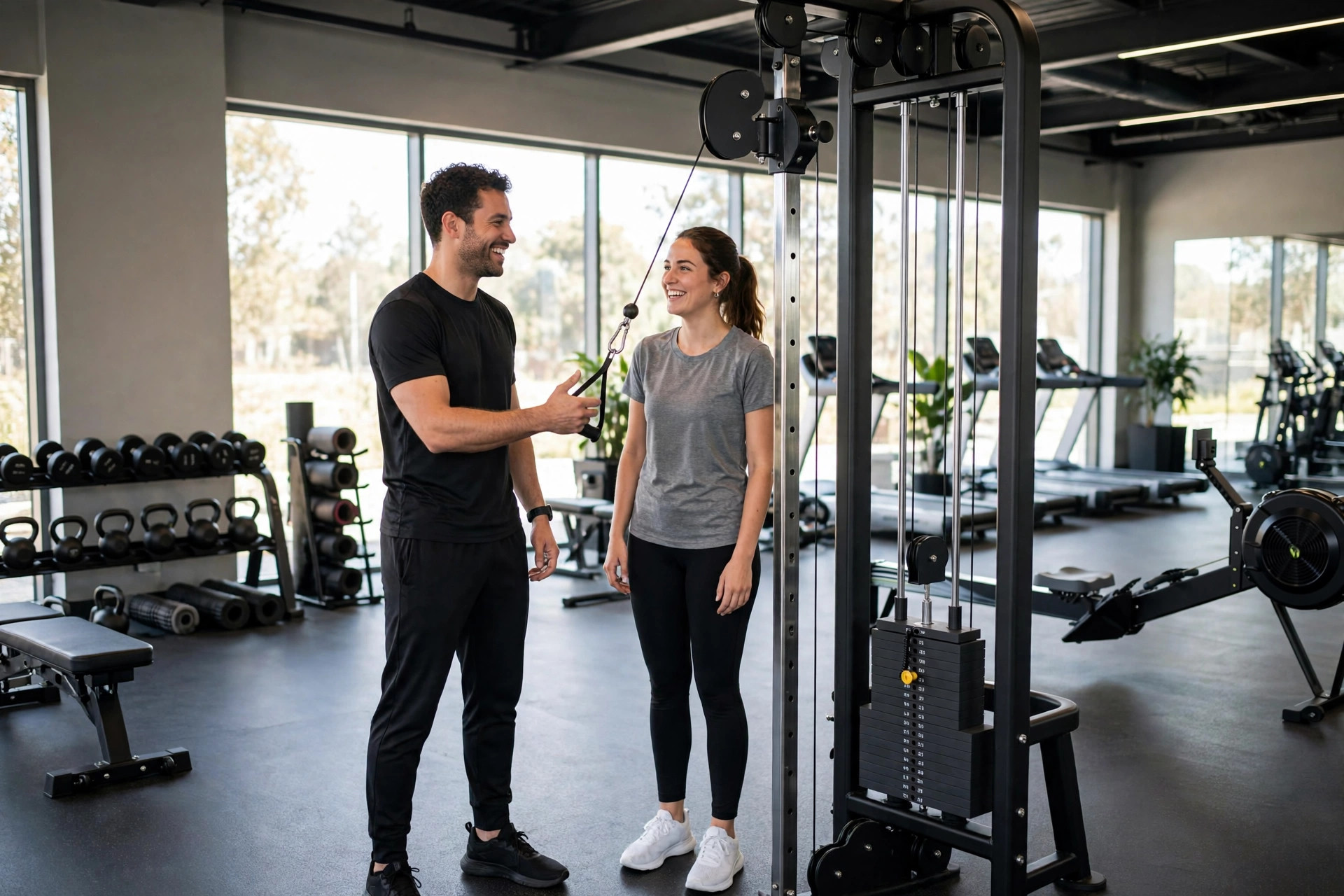
Tours booked by the chatbot arrive with the trainer’s calendar synced and the visitor’s interests noted.
Frequently asked questions
Will a chatbot feel too impersonal for selling gym memberships?
No, because it does not sell the membership. It answers questions, books the trial, and schedules the tour. The human trainer still does the selling face to face. The chatbot’s job is making sure the prospect reaches the trainer instead of bouncing off a contact form at 10pm.
How does it stay accurate when class schedules change?
Through a live connection to your booking software, not a copy of the schedule. When you change a class time or swap an instructor in your system, the bot’s answers update automatically. Test the sync after every schedule change in the first month to build confidence in it.
Can it handle membership pricing questions?
Yes, and it should state prices plainly. The bot is trained on your real tiers, promotions, and contract terms, including the cancellation policy. Vagueness about price or contracts is the fastest way to lose a gym prospect, so lock the answers and keep them current.
What about people who just want to complain or cancel?
Those escalate to your team immediately with the full transcript attached. The bot should never argue with an upset member or process a cancellation it is not authorized to handle. Define the escalation triggers during setup and review them monthly.
Does it work for multi-location gyms?
Yes. Each location gets its own schedule, trainer calendar, pricing, and trial rules under one account. The bot detects which location the visitor is asking about, or asks, and answers from the right data. Expect a per-location add-on in the pricing.
How is this different from a contact form with an auto-reply?
A form collects information and waits. The chatbot holds a conversation: it answers the visitor’s actual questions, offers the trial pass in the moment, books the tour into a real slot, and follows up if they drop off. The difference shows up in conversion rates, not just response times.
Turn website visitors into trial members on autopilot
Digital Hayder builds AI chatbots for gyms that answer class questions, issue trial passes, book tours on the trainer calendar, and follow up with every lead around the clock. Tell us about your club and we will design the funnel around your schedule and membership tiers.
Contact Us