The Childcare Enrollment Funnel Explained
Are you struggling to fill your childcare center's classrooms? You're not alone. The childcare industry faces unique challenges for attracting and retaining families. With rising costs and increasing competition, understanding the childcare enrollment funnel is more critical than ever for center sustainability and growth. In this comprehensive guide, we'll break down each stage of the enrollment process, share actionable strategies to optimize conversions, and provide real-world data to help you maximize your enrollment numbers.
Here's what you'll learn:
- The 5 key stages of the childcare enrollment funnel
- How families make child care decisions based on current research
- Practical strategies to optimize each stage of your enrollment process
- Data-backed insights on pricing and market trends
- Tools and metrics to track your enrollment funnel performance
Understanding the Childcare Enrollment Funnel
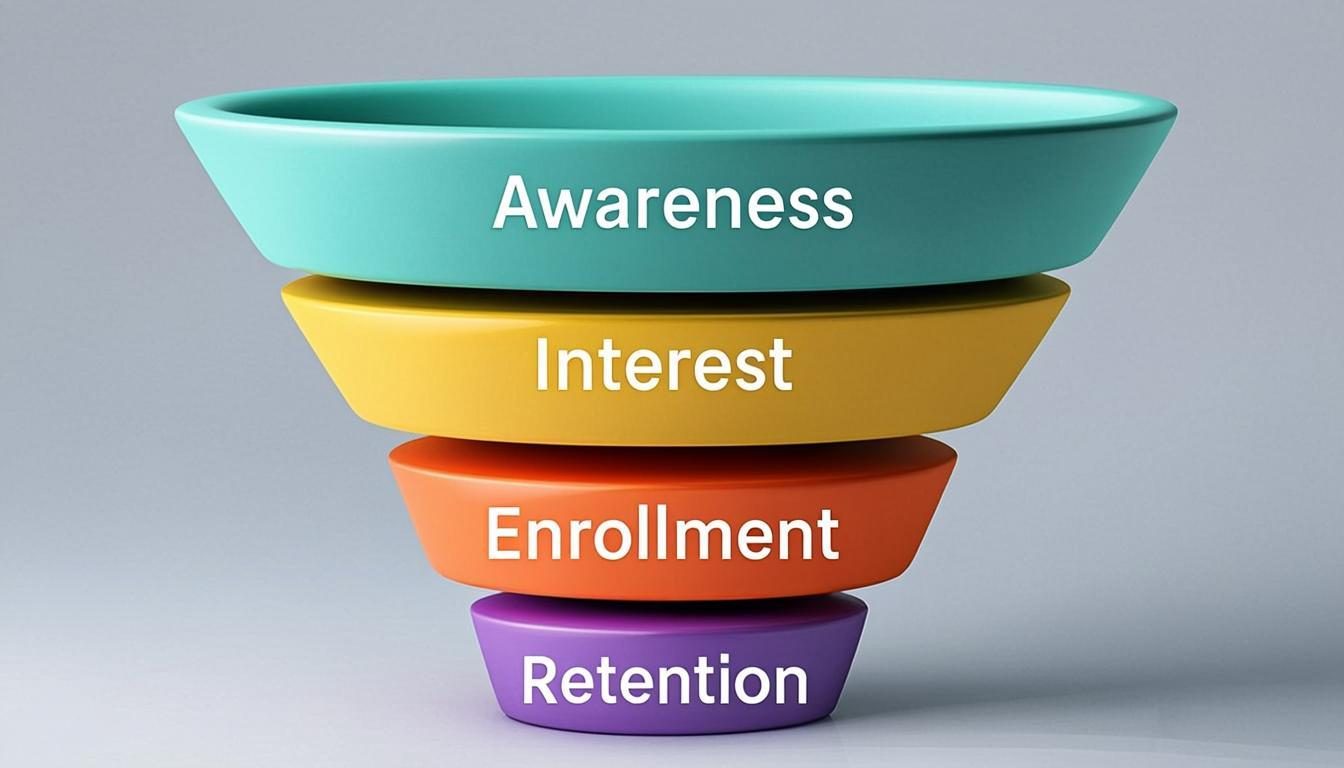
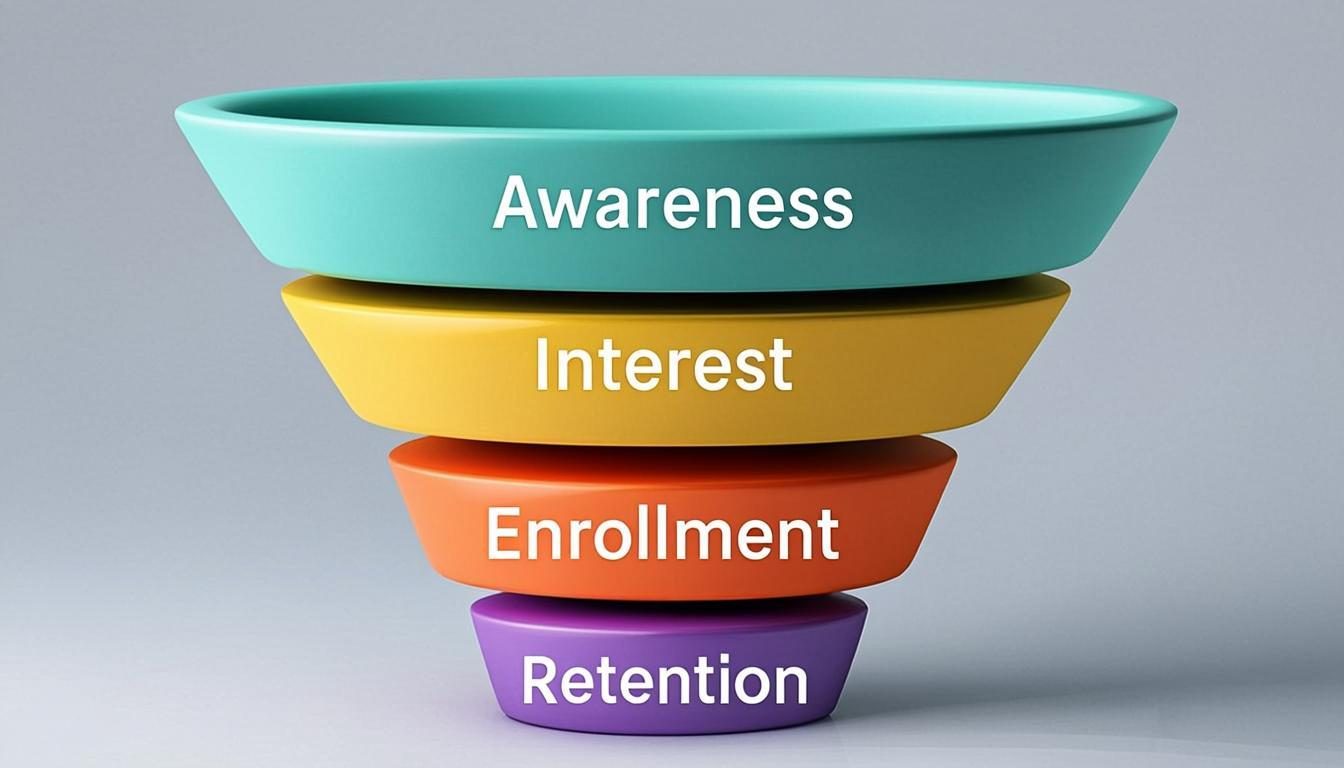
The childcare enrollment funnel represents the journey families take from first discovering your center to enrolling their child. Unlike traditional sales funnels, this process often involves multiple decision-makers and extends over months rather than days. According to recent research, 84% of families using child care for at least one child go through a structured decision-making process [5]. Understanding this funnel allows you to identify where families are dropping off and implement targeted interventions.
What makes the childcare enrollment funnel unique is the emotional weight of the decision. Parents aren't just evaluating a service; they're entrusting you with their most precious asset. This emotional dimension means your marketing and communication strategies must balance practical information with reassurance and trust-building. The funnel also varies significantly by age group, with enrollment rates for 4-year-olds at 37% compared to just 9% for 3-year-olds nationally [4].
Mapping your enrollment funnel begins with recognizing that different families enter at various stages. Some parents start their search 6-12 months before needing care, while others face emergency situations requiring immediate placement. By understanding these different entry points, you can create more flexible marketing approaches that meet families wherever they are in their decision journey.
Stage 1: Awareness
- Getting on Families' Radars
Awareness represents the top of your enrollment funnel, where potential families first learn your center exists. This stage is crucial because if families don't know you exist, they can't enroll. The most effective awareness strategies combine both digital and local community presence. According to industry reports, parents primarily discover childcare options through word-of-mouth (37%), online searches (28%), and local recommendations (22%) [5].
Your awareness strategy should focus on building visibility where parents are already looking. This means optimizing your Google Business Profile with photos, current availability, and parent testimonials. Consider sponsoring local parenting groups, community events, and partnering with pediatric offices who frequently field questions from new parents. The key is consistent presence rather than one-off promotional efforts.
Digital awareness extends beyond your website. Social media platforms, especially Facebook and Instagram, remain powerful tools for reaching local families. Share behind-the-scenes glimpses of your daily activities, staff qualifications, and learning environments. Video content performs particularly well, as it allows parents to virtually experience your center's atmosphere and care quality before visiting in person.
Building Local SEO for Childcare Centers
Local search optimization is non-negotiable for childcare centers. When parents begin their search, they typically use phrases like "day care near me" or "preschool in [your city]." Your website must be optimized for these local search terms to appear in these critical moments. Start by claiming and fully completing your Google Business Profile, including service areas, hours, and photos of your facilities and staff.
Create location-specific pages if you serve multiple neighborhoods or have multiple locations. Each page should include unique content about that specific location, including its features, staff, and community connections. Encourage satisfied parents to leave reviews on Google and other platforms, as positive reviews significantly impact local search rankings and parent decision-making.
Stage 2: Consideration
- Evaluating Your Center
Once families are aware of your center, they enter the consideration stage where they evaluate whether you meet their needs. This is where your center's unique value proposition becomes critical. During this phase, parents compare multiple options, often creating comparison charts or spreadsheets to evaluate different centers based on factors like location, hours, curriculum, and cost.
The average cost of child care in the United States rose to $13,184 in 2025, up from $13,128 in 2024 [3]. With such significant financial investment, parents conduct thorough research before making a decision. Your website should clearly address these concerns with transparent pricing, detailed curriculum information, and staff credentials. Consider creating downloadable comparison guides or checklists that help parents evaluate centers effectively while positioning yours favorably.
Trust signals matters during the consideration stage. Parents look for evidence that your center provides safe, nurturing care with positive developmental outcomes. Highlight testimonials, accreditations, health and safety certifications, and parent references. Virtual tours can be particularly effective at this stage, allowing families to experience your center's environment without scheduling an in-person visit.
Creating Effective Comparison Materials
Develop comparison materials that help parents understand how your center stands out. This could include:
| Feature | Your Center | Competitor A | Competitor B |
|---|---|---|---|
| Student-Teacher Ratio | 1:6 (ages 3-4) | 1:8 | 1:10 |
| Monthly Tuition | $950 | $1,100 | $900 |
| Curriculum | Montessori + Project-Based | Traditional | Play-Based |
| Accreditation | NAEYC | None | State Licensed |
| Hours | 7 AM – 6 PM | 8 AM – 5 PM | 7 AM – 6:30 PM |
This table provides concrete data points that help parents make informed decisions while highlighting your competitive advantages. Remember that parents value different factors, so be prepared to address various concerns during this stage.
Stage 3: Decision
- Converting Interested Families
The decision stage represents the critical moment when families choose your center. This is where many childcare centers lose potential enrollments due to friction in the process or failure to address final concerns. According to enrollment data, the national enrollment reached nearly 1.8 million children during the 2024-2025 school year, with significant variation by age and location [4]. Your goal is to capture as much of this market as possible by making the enrollment process seamless and reassuring.
Streamline your enrollment process to minimize barriers. Offer multiple ways to apply,in-person, online, or via phone. Provide clear documentation requirements and checklists to reduce back-and-forth communication. Implement a CRM system to track prospective families and ensure timely follow-up. Studies show that families who receive a response within 24 hours are 50% more likely to enroll than those who wait longer [5].
Address final objections proactively. Common concerns at this stage include transition anxiety, payment flexibility, and illness policies. Consider offering a meet-and-greet with your child's teacher before the first day, creating a personalized transition plan, or providing a trial day option. These reassurances can tip the balance in your favor when families are making their final decision.
Implementing a Follow-Up System
A structured follow-up system ensures no interested family falls through the cracks. Implement these steps:
- Initial Contact: Send a thank-you email within 2 hours of inquiry with links to your virtual tour and enrollment packet.
- 24-Hour Follow-Up: A phone call to answer any additional questions and gauge interest level.
- 3-Day Follow-Up: Share a testimonial video from a current parent with a similar child/age.
- 1-Week Follow-Up: Information about your curriculum approach and how it benefits children at that specific age.
- 2-Week Follow-Up: Special offer or incentive for enrolling by a specific date.
This systematic approach maintains engagement while providing valuable information that helps families make confident decisions.
Stage 4: Enrollment
- Completing the Paperwork
The enrollment stage involves the administrative process of officially registering a child at your center. This is often the most frustrating part of the process for parents, with complex forms, multiple signatures, and detailed requirements. A cumbersome enrollment process can lead to families abandoning their decision, even after verbally committing to enroll.
Simplify your enrollment paperwork by offering digital options whenever possible. Many parents now expect the ability to complete forms online, upload required documents, and make payments digitally. Platforms like Procare Solutions or Brightwheel specialize in childcare enrollment management and can significantly streamline this process. According to center directors who have implemented digital enrollment systems, completion rates increase by an average of 35% [5].
Create an enrollment welcome packet that provides all necessary information in one organized place. Include a welcome letter, daily schedule, menu, required forms list, and contact information. Consider offering enrollment appointments where parents can complete paperwork with staff assistance, which can address questions immediately and build personal connections.
Essential Enrollment Documentation Checklist
Ensure you have all necessary documents ready to provide to parents:
- Enrollment application with emergency contacts and authorized pickups
- Health history and immunization records
- Physician's report and medication authorization forms
- Allergy action plan if applicable
- Tuition agreement and payment schedule
- Parent handbook with policies and procedures
- Photo release form
- Transportation authorization if applicable
- Special needs accommodation forms if required
Having these documents organized and readily available demonstrates professionalism and makes the enrollment process feel less overwhelming for parents.
Stage 5: Retention
- Keeping Families Enrolled
The enrollment funnel doesn't end when a child enrolls. Retention is crucial for maintaining stable enrollment numbers and maximizing lifetime value from each family. The average family stays with a childcare center for 2.3 years, but this varies significantly based on age groups and program quality [4]. Your retention strategy begins during the enrollment process and continues throughout the family's time at your center.
Implement a comprehensive onboarding process that helps new families feel welcomed and prepared. Assign a "buddy family" to new enrollments, provide detailed transition plans, and schedule home visits or classroom visits before the official start date. These efforts reduce separation anxiety and build community connections that increase the likelihood of long-term enrollment.
Regular communication is the cornerstone of effective retention. Send weekly updates with photos and highlights of your child's activities. Schedule parent-teacher conferences at least quarterly, not just when issues arise. Create a parent portal where families can access their child's daily reports, learning milestones, and upcoming events. According to industry research, centers that implement regular communication systems see 40% higher retention rates than those that don't [5].
Building Parent Partnerships
Transform your relationship with parents from service provider to educational partner:
- Educational Workshops: Offer quarterly sessions on child development topics, helping parents support learning at home.
- Family Events: Host regular opportunities for families to connect with each other and center staff.
- Volunteer Opportunities: Create meaningful ways for parents to contribute to the center community.
- Feedback Channels: Implement regular surveys and suggestion systems to show you value parent input.
- Transition Planning: Proactively plan for classroom transitions and developmental milestones.
These strategies build loyalty and create a community that families don't want to leave, even when their child reaches the next developmental stage.
Measuring and Optimizing Your Enrollment Funnel
To continuously improve your enrollment process, you must track key metrics at each stage of the funnel. Without measurement, you're operating blindly, unable to identify bottlenecks or opportunities for improvement. Implement a simple tracking system that captures data from first inquiry to enrollment and beyond.
Essential enrollment funnel metrics include:
- Inquiry-to-Tour Conversion Rate: Percentage of inquiries that schedule a tour
- Tour-to-Application Conversion Rate: Percentage of tours that result in applications
- Application-to-Enrollment Conversion Rate: Percentage of applications that complete enrollment
- Time-to-Enrollment: Average number of days from first inquiry to completed enrollment
- Source Tracking: Which marketing channels produce the highest-quality leads
- Cost Per Enrollment: Total marketing and administrative costs divided by number of enrollments
Regularly analyze these metrics to identify areas for improvement. If you notice a significant drop between tour and application, your tour process or follow-up may need adjustment. If application-to-enrollment conversion is low, your enrollment paperwork process or pricing may be barriers. Use these insights to make targeted improvements to your enrollment strategy.
Implementing Enrollment Funnel Analytics
Set up a simple analytics system to track your enrollment funnel:
- CRM Implementation: Use childcare-specific software like Procare or HiMama to track all interactions with prospective families.
- UTM Parameters: Add UTM codes to all marketing links to track which channels produce enrollments.
- Enrollment Source Tracking: Ask all applicants how they heard about your center to identify your most effective marketing channels.
- Monthly Funnel Reports: Create visual reports showing conversion rates at each stage and month-over-month changes.
- Annual Funnel Audit: Conduct a comprehensive review of your entire enrollment process with your team to identify systemic improvements.
This data-driven approach allows you to allocate your marketing resources more effectively and continuously refine your enrollment process based on real results.
Key Takeaways
- The childcare enrollment funnel consists of five key stages: awareness, consideration, decision, enrollment, and retention. Understanding each stage allows you to implement targeted strategies that address families' specific needs and concerns.
- Effective awareness building requires both digital and local community presence, with particular emphasis on local SEO and word-of-mouth marketing, as 84% of families use a structured decision-making process [5].
- During the consideration stage, parents conduct thorough research comparing multiple options, with the average childcare cost reaching $13,184 in 2025 [3]. Your center must clearly communicate its unique value through transparent information and trust-building content.
- Streamlining the enrollment process is critical for converting interested families. Centers that respond to inquiries within 24 hours see significantly higher enrollment rates than those with slower response times [5].
- Retention begins at enrollment and continues through regular communication and parent partnerships. Centers with strong parent communication systems see 40% higher retention rates [5].
- Measuring key metrics at each stage of the funnel allows you to identify bottlenecks and continuously improve your enrollment strategy based on data rather than assumptions.
Frequently Asked Questions
How far in advance should parents start looking for childcare?
Most parents begin their childcare search 3-6 months before needing care, though this varies by age group and availability. For infant care, many families start searching 6-12 months in advance due to limited availability. Preschool programs often have earlier deadlines, with many requiring enrollment by January or February for the following fall [4].
What factors influence parents' childcare decisions most significantly?
Research shows that safety and staff quality are the top priorities for parents, followed by location convenience, cost, and curriculum. The emotional aspect of trusting caregivers with their child often outweighs other considerations. Parents also value communication about their child's day and development [5].
How can childcare centers compete with larger chains and franchises?
Focus on your unique strengths: personalized care, stronger community connections, more flexible policies, and specialized programming. Smaller centers often provide more individualized attention and can build closer relationships with families. Highlight these advantages in your marketing and enrollment process [5].
What's the biggest mistake childcare centers make in their enrollment process?
The most significant error is treating enrollment as a transaction rather than a relationship-building process. Centers that focus solely on paperwork and payment without creating personal connections with families often struggle with retention and word-of-mouth referrals. Every interaction should reinforce trust and partnership [5].
How important is online presence for childcare enrollment in 2025?
Digital presence has become essential, with 28% of parents discovering childcare options through online searches [5]. Your website must be mobile-friendly, include current availability, virtual tours, and parent testimonials. Social media engagement and local search optimization are also critical components of a modern enrollment strategy.
Conclusion
Understanding and optimizing the childcare enrollment funnel is essential for maintaining stable enrollment and ensuring your center's long-term success. By mapping each stage of the journey,from awareness through retention,you can identify opportunities to better serve families and differentiate your center in a competitive market.
Implement the strategies outlined in this guide to create a seamless enrollment experience that builds trust and converts interested families into enrolled students. Remember that enrollment is just the beginning,retention through exceptional care and communication will determine your center's reputation and growth potential.
Start by auditing your current enrollment process against the five-stage framework. Identify your biggest opportunities for improvement and implement targeted changes. Track your results and continue refining your approach based on data and parent feedback.
Ready to take your enrollment strategy to the next level? Download our free Childcare Enrollment Funnel Template to map your current process and identify improvement opportunities. Share your enrollment challenges and successes in the comments below,we'd love to hear what's working for your center!