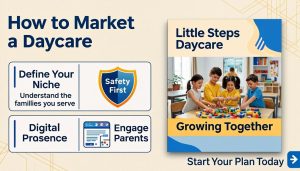
How to Get More Daycare Leads in 2026

Are you struggling to fill all the spots in your daycare center? You're not alone. The child care industry faces a unique paradox: while millions of families need care, many daycare centers struggle to attract enough qualified leads. In September 2025, Indiana officials reported a statewide waitlist of nearly 31,000 children [1]. This shortage creates both an opportunity and a challenge for your business.
The U.S. child care market was valued at $65.15 billion in 2024 and is projected to reach $109.88 billion by 2033, growing at a compound annual rate of 6% [5]. This expanding market means more potential clients, but also more competition. To succeed, you need a strategic approach to lead generation that goes beyond traditional methods.
In this guide, you'll discover proven strategies to attract more daycare leads, including:
- Optimizing your online presence for local search
- Leveraging social media platforms effectively
- Building referral networks with pediatricians and schools
- Creating compelling offers that convert leads to enrollments
- Measuring and refining your lead generation efforts
Understanding Your Daycare Lead Generation Landscape
Before implementing any lead generation strategy, you need to understand the current market conditions and parent behavior. The child care industry has seen significant changes in recent years, with a loss of nearly 75,000 seats in the last year, leading to increased child care deserts across the country [2]. This shortage means that when parents find quality care, they often enroll quickly, making your first impression more important than ever.
Today's parents research daycare options thoroughly before making a decision. They typically start their search online, looking for centers near their home or workplace. According to industry reports, 85% of parents use search engines to find child care options, while 70% check reviews on Google and other platforms. This digital-first approach means your online presence must be optimized to capture these potential leads.
Analyzing Your Target Audience
Understanding your ideal client is essential for effective lead generation. Most parents looking for daycare services fall into one of three categories: working parents needing full-time care, parents seeking part-time educational programs, and those needing drop-in or emergency care. Each group has different priorities and decision-making processes.
Working parents typically prioritize convenience, reliability, and extended hours. They're often pressed for time and need information that's easy to find and digest. Parents seeking educational programs focus on curriculum, staff qualifications, and developmental outcomes. Meanwhile, those needing drop-in care value flexibility and availability above all else. Tailor your lead generation approach to address these specific needs.
Optimizing Your Online Presence for Local Search
Your website is often the first interaction potential clients have with your daycare center. In today's digital landscape, a professional, mobile-friendly website is non-negotiable for lead generation. When parents search "daycare near me" or similar terms, your center needs to appear prominently in local search results.
Start by claiming and optimizing your Google Business Profile. This free tool allows you to manage how your daycare appears on Google Search and Maps. Ensure your profile includes complete information: address, phone number, hours of operation, website link, and high-quality photos of your facilities. Encourage parents to leave reviews, as businesses with more reviews receive better visibility in local search results.
Implementing Local SEO Best Practices
Local search engine optimization (SEO) helps your daycare appear when parents search for services in your area. Begin by conducting keyword research to identify terms your target audience uses. Include phrases like "best daycare in [your city]" and "child care near [your neighborhood]" throughout your website content, especially in page titles, headers, and meta descriptions.
Create location-specific pages if you serve multiple neighborhoods or have multiple facilities. Each page should include unique content that addresses the specific needs of families in that area. For example, if you're near a business district, emphasize your convenient drop-off and pick-up hours for working professionals. If you're near a residential area, highlight your flexible scheduling options for stay-at-home parents.
Building a User-Friendly Website Experience
Your website should make it easy for parents to find information and take action. Structure your site with clear navigation and logical information hierarchy. Essential pages include:
- Home page with clear value proposition and call-to-action
- About Us page highlighting your philosophy and staff credentials
- Programs page detailing the care options you offer
- Facilities page showcasing your environment and amenities
- Contact page with multiple ways to reach you
Include an online inquiry form or contact button on every page. Make this form simple to complete, asking only for essential information like name, email, phone number, child's age, and preferred start date. The fewer barriers you place between interested parents and your enrollment process, the more leads you'll capture.
Leveraging Social Media for Daycare Lead Generation
Social media platforms offer powerful opportunities to connect with potential clients and showcase your daycare's unique value. With 72% of parents using social media daily, these platforms provide direct access to your target audience where they already spend their time [5]. The key is to use each platform strategically based on where your ideal clients spend their time.
Facebook remains the most popular platform for parents, with over 80% of parents active on the site. Create a business page and post regularly about daily activities, staff highlights, and parent testimonials. Join local parenting groups and participate in discussions (without being salesy) to build relationships and establish your center as a community resource.
Creating Engaging Content for Different Platforms
Different social media platforms require different content approaches. Instagram is highly visual, making it perfect for sharing photos and videos of children engaged in activities, play areas, and special events. Use Instagram Stories for behind-the-scenes glimpses of your daily operations, which helps build trust and transparency.
LinkedIn targets working professionals and can be effective for connecting with corporate partners who might offer employee benefits. Share industry insights, educational content about child development, and information about your center's approach to early childhood education.
TikTok and YouTube Shorts are excellent for short-form video content that demonstrates your center's energy and environment. Create quick clips showing children laughing, learning, and playing. These videos don't need to be professionally produced,authenticity resonates with parents more than perfection.
Running Targeted Social Media Ads
Organic reach on social media platforms has declined significantly, making paid advertising essential for lead generation. Facebook and Instagram ads allow you to target parents based on location, age, interests, and even life events like recent moves or new babies.
Create ads that highlight specific benefits parents care about, such as qualified staff, educational curriculum, or flexible scheduling. Use compelling visuals of happy children and engaged teachers. Include a clear call-to-action like "Schedule a Tour" or "Download Our Parent Handbook" to drive leads to your website.
Building Strategic Referral Networks
Word-of-mouth remains one of the most powerful lead generation tools for daycare centers. Parents trust recommendations from other parents more than any form of advertising. Building a strong referral network can significantly increase your leads while improving the quality of inquiries.
Start by identifying potential referral partners in your community. Pediatricians, family doctors, and obstetricians regularly interact with expecting and new parents who need child care solutions. Approach these professionals with professional materials about your center, including business cards, brochures, and information about your referral program.
Partnering with Local Businesses and Schools
Local businesses that employ parents are excellent referral sources. Approach companies in your area with a corporate partnership proposal. Offer benefits like priority enrollment, discounted rates for employees, or on-site information sessions. In return, ask them to refer employees seeking child care to your center.
Elementary schools and preschools can also be valuable referral partners. While they may seem like competitors, many parents need backup care or alternative options. Establish referral relationships with these institutions, creating a mutual benefit system where you refer families to them when appropriate and they do the same for you.
Implementing a Parent Referral Program
Your current parents are your best advocates. Create a structured referral program that rewards parents for bringing in new enrollments. The program should be simple to understand and participate in. Consider offering:
- One month of free tuition for each successful referral
- Gift cards to local family-friendly businesses
- Priority enrollment for siblings of current students
- Special recognition in your newsletter or social media
Promote your referral program through email newsletters, parent communication apps, and signage at your center. Make it easy for parents to refer others by providing them with shareable digital materials they can send to friends and family.
Creating Compelling Offers That Convert Leads
Attracting leads is only half the battle,you also need to convert those leads into enrollments. This requires creating compelling offers and a streamlined enrollment process that addresses parents' concerns and makes the decision to choose your daycare easy.
Develop irresistible lead magnets that provide value to parents while showcasing your expertise. These could include free guides like "Choosing the Right Daycare: 10 Questions to Ask" or "Preparing Your Toddler for Preschool: A Parent's Guide." Offer these resources in exchange for an email address, allowing you to continue nurturing the relationship.
Streamlining Your Enrollment Process
A complicated enrollment process is one of the biggest reasons leads drop off. Make your enrollment process as simple and straightforward as possible. Create a clear checklist of requirements and share it with potential parents early in the process. Offer multiple ways to complete enrollment,online forms, in-person appointments, or email submissions,to accommodate different preferences.
Respond to inquiries promptly. Research shows that businesses that respond to leads within five minutes are 100 times more likely to qualify the lead [5]. Set up automated responses to acknowledge receipt of inquiries and establish expected response times for follow-up communications.
Overcoming Common Parent Objections
Parents have valid concerns when choosing daycare for their children. Address these concerns proactively in your marketing materials and communications. Common objections include cost, safety concerns, separation anxiety, and educational quality. Create specific content that addresses each of these points.
For cost concerns, offer flexible payment options, sibling discounts, or sliding scale fees where possible. For safety concerns, highlight your security measures, staff training, and health protocols. For separation anxiety, share resources about helping children adjust and emphasize your staff's experience with this transition. For educational quality, provide specific examples of your curriculum and learning outcomes.
Measuring and Refining Your Lead Generation Efforts
Effective lead generation requires continuous measurement and optimization. Without tracking your results, you won't know which strategies are working and which need improvement. Implement a system to monitor key metrics across all your lead generation channels.
Track metrics specific to each marketing channel. For your website, monitor traffic sources, bounce rates, and conversion rates. For social media, track engagement rates, click-through rates, and lead conversions. For email marketing, track open rates, click rates, and unsubscribe rates. Set up Google Analytics to track website behavior and goals, and use social media analytics to understand what content resonates with your audience.
Analyzing Lead Quality and Conversion Rates
Not all leads are created equal. Track where your best leads come from and analyze the characteristics of high-quality leads that convert to enrollments. This analysis will help you focus your efforts on the most effective channels and target audiences.
Calculate your lead-to-enrollment conversion rate at each stage of the funnel. Identify where potential parents drop off in the process and address those specific pain points. For example, if many parents schedule tours but don't enroll, you may need to improve your follow-up process or address concerns more effectively during the tour.
Implementing Continuous Improvement Strategies
Use the insights from your analysis to refine your lead generation strategies continuously. Test different approaches, messages, and offers to see what works best. A/B test your website headlines, email subject lines, and social media ad copy to optimize performance.
Stay current with industry trends and changes in parent behavior. The child care industry is evolving, with increasing focus on technology integration, educational outcomes, and health and safety protocols. Attend industry conferences, participate in professional development, and network with other daycare owners to stay informed about effective lead generation strategies.
Key Takeaways
- Your online presence is critical for capturing local search traffic, so optimize your Google Business Profile and website for local SEO
- Social media platforms provide direct access to your target audience; use each platform strategically with engaging content
- Building referral networks with pediatricians, schools, and local businesses creates high-quality leads through trusted recommendations
- Create compelling offers and streamline your enrollment process to convert more leads into enrollments
- Continuously measure and refine your lead generation efforts using data-driven insights
Frequently Asked Questions
How long does it typically take to convert a daycare lead to an enrollment?
The conversion timeline varies, but research shows that parents typically take 2-4 weeks from initial inquiry to enrollment decision. Factors like your follow-up speed, the parent's timeline, and the availability of spots all influence this timeframe.
What's the most effective social media platform for daycare lead generation?
Facebook currently offers the best ROI for most daycare centers due to its targeting capabilities and high usage among parents. However, Instagram performs well for visual storytelling and reaching younger parents, while LinkedIn can be effective for corporate partnerships.
How much should I budget for lead generation as a daycare center?
Industry recommendations suggest allocating 5-10% of your operating budget to marketing and lead generation. For a center with 50 children, this might translate to $2,000-$5,000 monthly, though this varies based on your location and competition.
What's the most common mistake daycare centers make with lead generation?
Many centers focus too heavily on attracting leads without optimizing their conversion process. Others fail to track and analyze their results, missing opportunities to improve their strategies. The most successful centers balance lead attraction with conversion optimization and continuous measurement.
How can I stand out in a competitive daycare market?
Differentiate your center by highlighting your unique strengths,whether it's specialized curriculum, extended hours, highly qualified staff, or exceptional facilities. Build a strong brand story that connects emotionally with parents and consistently deliver outstanding service that generates positive word-of-mouth referrals.
Conclusion
Generating more daycare leads requires a strategic, multi-channel approach that combines online optimization, social media engagement, referral networks, and compelling offers. The child care market continues to grow, with projections reaching $109.88 billion by 2033 [5], creating significant opportunities for centers that effectively attract and convert leads.
Start by implementing the strategies outlined in this guide, focusing first on the areas that will give you the best return on investment. Remember that lead generation is an ongoing process that requires consistent effort and refinement. Track your results, listen to parent feedback, and continuously improve your approach.
Ready to take your daycare's lead generation to the next level? Start by auditing your current online presence and identifying one quick improvement you can make today. Whether it's updating your Google Business Profile, creating a new lead magnet, or reaching out to a potential referral partner, taking action now will help you fill those empty spots and build a thriving, sustainable business.