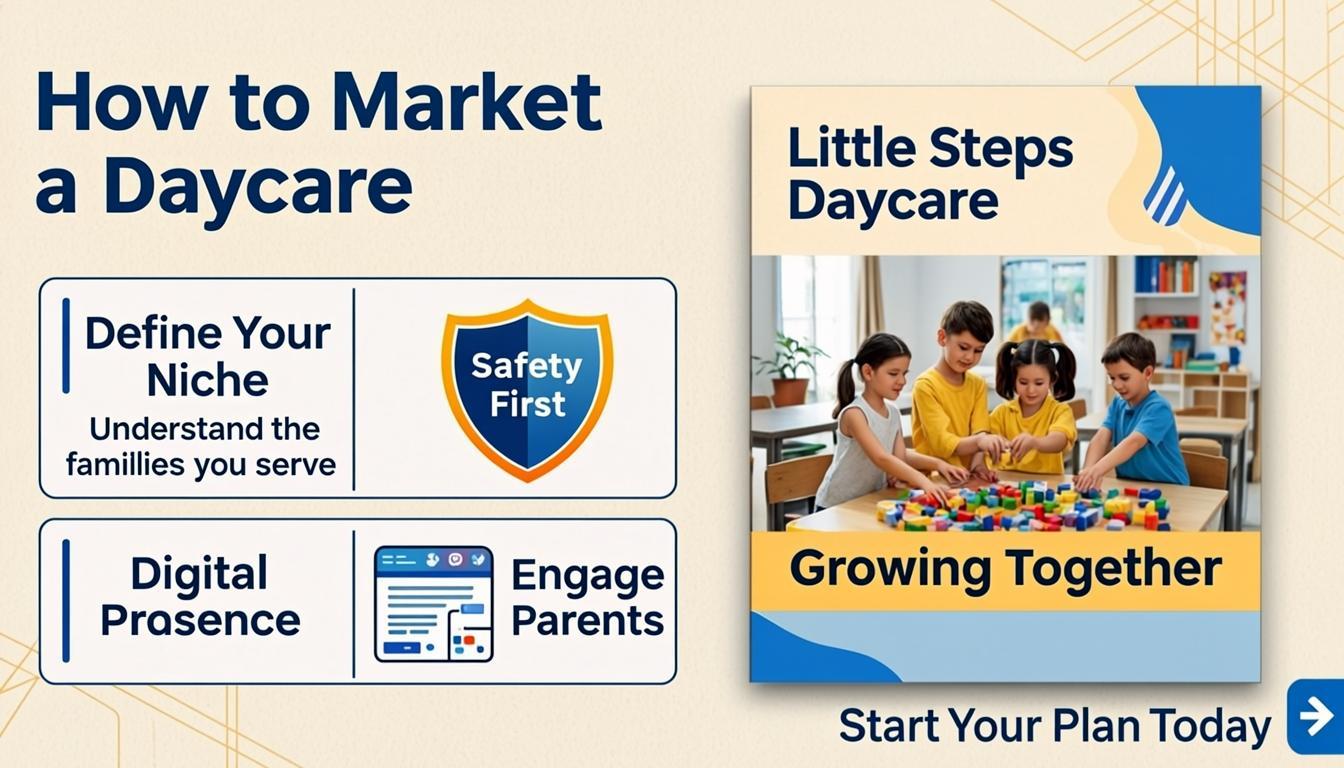
How to Market a Daycare: Complete Guide for 2025
In today's competitive childcare landscape, effective marketing isn't just beneficial—it's essential for survival. The U.S. child care market was valued at $65.15 billion in 2024 and is projected to reach $109.88 billion by 2033, growing at a compound annual growth rate of 6.02% [1]. With demand steadily increasing post-pandemic [8], standing out in this growing market requires strategic marketing that builds trust, showcases your unique value, and connects with parents seeking quality care.
Marketing a daycare involves more than just posting flyers in local coffee shops. It's about creating a comprehensive strategy that addresses the specific needs and concerns of parents while highlighting what makes your facility exceptional. Whether you're launching a new daycare or looking to boost enrollment at an established center, this guide will walk you through proven marketing strategies tailored specifically for childcare providers.
By the end of this guide, you'll learn how to:
- Conduct market research to identify your ideal client and competitive positioning
- Develop a compelling brand identity that communicates trust and quality
- Implement digital marketing strategies that reach parents where they spend their time
- Leverage community partnerships and local networking to build credibility
- Create effective parent communication systems that generate referrals
- Measure your marketing ROI and continuously optimize your approach
Understanding the Daycare Market Landscape
Before developing your marketing strategy, it's crucial to understand the current state of the daycare market. The industry has undergone significant changes in recent years, with new expectations from parents and increased competition. According to industry reports, the daycare market is segmented by funding sources, with private payers accounting for 67.1% of the market share, while government-funded programs make up the remainder [8].
The average annual cost of childcare in the United States reached $13,184 in 2025, making it one of the most significant expenses for many families [4]. This high cost means parents aren't just looking for affordable options—they're seeking value, quality, and peace of mind. Understanding these financial considerations is essential when positioning your daycare in the market.
Analyzing Your Local Market
To determine if your area can support another daycare program, you must conduct thorough research on current conditions and potential competition [2]. Start by gathering data on:
- Demographics: Population statistics, age distribution, and family income levels in your service area
- Existing providers: Number of competitors, their capacity, pricing, and waitlist situations
- Unmet needs: Gaps in service (such as infant care, after-school programs, or special needs accommodations)
- Regulatory environment: Local licensing requirements and zoning laws
Market research reports, such as those available through workforce development areas [3], can provide valuable insights into local demand and pricing benchmarks. For example, Texas offers comprehensive market rate surveys that help providers understand appropriate pricing for different regions and age groups [3].
Identifying Your Unique Value Proposition
In a market projected to reach $294.18 billion by 2026 [6], what makes your daycare stand out? Your unique value proposition (UVP) should address specific parent concerns and differentiate you from competitors. Common UVP elements in successful daycare marketing include:
- Specialized programs: Such as Montessori, bilingual education, or STEM-focused curriculum
- Extended hours: Early drop-off or late pick-up options for working parents
- Staff qualifications: Advanced degrees, specialized training, or low child-to-teacher ratios
- Facility features: Modern playgrounds, security systems, or specialized learning spaces
- Community connections: Transportation to local schools, partnerships with family services
Your UVP should be authentic and supported by actual strengths of your program. Avoid making claims you can't substantiate, as trust is paramount in the childcare industry.
Building Your Daycare Brand Identity
A strong brand identity is the foundation of effective daycare marketing. Your brand encompasses everything from your name and logo to your core values and the overall experience you provide. In an industry where parents are entrusting you with their most precious possessions, a professional, trustworthy brand can make all the difference in their decision-making process.
Start by defining your brand's mission, values, and personality. Are you a nurturing home-away-from-home, an educational institution focused on school readiness, or a modern facility with cutting-edge programs? This brand foundation will guide all your marketing materials and communications, ensuring consistency across every touchpoint.
Creating Professional Marketing Materials
Your marketing materials should reflect the quality of care you provide while speaking directly to parent concerns. Essential materials include:
- Brochure: Highlighting programs, staff credentials, facility features, and testimonials
- Website: Mobile-friendly with program information, enrollment forms, photo galleries, and parent resources
- Social media profiles: Active presence on platforms where parents spend their time
- Parent handbook: Comprehensive guide that demonstrates professionalism and attention to detail
- Enrollment packets: Streamlined process that makes registration easy for parents
Investing in professional design for these materials is crucial. Poorly designed marketing can signal subpar care, while polished materials build confidence in your program's quality.
Developing Compelling Messaging
Your marketing messaging should address the key questions and concerns parents have when selecting daycare. Research shows parents prioritize safety, qualified staff, educational value, and communication when choosing childcare [4]. Your messaging should directly address these priorities while highlighting your unique strengths.
Effective daycare messaging often incorporates:
- Emotional appeals: Emphasizing peace of mind and nurturing environment
- Rational benefits: Highlighting educational outcomes, safety features, and qualified staff
- Social proof: Showcasing testimonials, parent reviews, and enrollment statistics
- Urgency: Waitlist notifications or limited availability for popular programs
Consider developing different messaging for various stages of the parent decision journey—from initial awareness to final enrollment. Each message should guide parents naturally toward choosing your daycare.
Digital Marketing Strategies for Daycares
In today's digital-first world, having a strong online presence is non-negotiable for daycare marketing. Parents increasingly turn to the internet to research childcare options, read reviews, and make enrollment decisions. According to market research, digital channels offer cost-effective ways to reach parents with measurable engagement metrics [5].
Your digital marketing strategy should encompass multiple channels that work together to build awareness, generate leads, and nurture relationships with prospective parents. The most successful daycare digital marketing approaches integrate organic and paid tactics to maximize reach and ROI.
Optimizing Your Website for Parent Searches
Your website is often the first impression potential parents will have of your daycare, making optimization critical. A well-designed daycare website should:
- Load quickly: Mobile optimization is essential, as most parents will view on phones
- Display key information prominently: Hours, location, age groups served, and contact details
- Include clear calls-to-action: Schedule tours, download enrollment packets, or request information
- Feature high-quality photos and videos: Showcasing facilities, activities, and happy children
- Provide parent resources: Articles, guides, and FAQs that establish your expertise
Implementing local SEO strategies is particularly important for daycares. Claim and optimize your Google Business Profile, encourage reviews from current parents, and ensure your name, address, and phone number (NAP) are consistent across all online directories.
Leveraging Social Media Marketing
Social media platforms offer powerful ways to showcase your daycare's personality and connect with parents. The most effective platforms for daycare marketing typically include:
- Facebook: Ideal for sharing updates, events, and parent testimonials
- Instagram: Perfect for visual storytelling with photos and videos of daily activities
- LinkedIn: Useful for connecting with local businesses and professionals
- Nextdoor: Great for reaching nearby families in your immediate service area
When creating social content, focus on demonstrating rather than just telling. Share moments of children engaged in learning, staff implementing curriculum, and facilities that highlight your commitment to quality. User-generated content, such as photos from parents (with permission), can provide authentic social proof.
Implementing Email Marketing Campaigns
Email marketing remains one of the most effective channels for nurturing parent relationships and driving enrollment. Build your email list through website sign-ups, open house events, and parent referrals. Once you have subscribers, segment your list to send targeted content:
- Prospective parents: Information about programs, enrollment processes, and unique features
- Current parents: Updates on activities, events, and parenting resources
- Waitlisted families: Regular communication to maintain interest and reduce drop-off
Automated email sequences can nurture leads effectively. A typical sequence might include a welcome email, program highlights, parent testimonials, and a call to schedule a tour. Track open rates and click-throughs to identify which messages resonate most with your audience.
Community-Based Marketing Approaches
While digital marketing is crucial, community-based approaches remain highly effective for daycares. Local marketing builds trust through face-to-face interactions and leverages the power of word-of-mouth, which is particularly influential in childcare decisions. According to industry research, personal recommendations are among the most trusted sources of information for parents seeking childcare services.
Successful community marketing for daycares involves building relationships and establishing your presence as a valuable community resource. These strategies complement your digital efforts by creating a well-rounded marketing approach that reaches parents through multiple touchpoints.
Building Strategic Community Partnerships
Forming partnerships with local organizations can significantly extend your reach and credibility. Consider collaborating with:
- Local schools: Especially elementary schools for before and after-school programs
- Employers: Offering corporate discounts or on-site childcare options
- Medical providers: Pediatricians and family practices often receive childcare inquiries
- Community centers: Sharing resources and cross-promoting family events
- Real estate agents: Who frequently work with relocating families needing childcare
These partnerships should be mutually beneficial. For example, offering a referral fee to real estate agents or providing special programming for employees of local businesses creates win-win relationships that generate consistent referrals.
Hosting Community Events
Open houses, parenting workshops, and family events serve dual purposes: they provide valuable information to parents while showcasing your facility and programs. Successful daycare events typically include:
- Themed open houses: Such as "STEM Night" or "Art Exploration" days
- Parent education workshops: Topics like positive discipline or school readiness
- Family celebrations: Seasonal events that include current and prospective families
- Community service projects: Demonstrating your commitment to values beyond academics
When planning events, consider the timing and format that best works for your target parents. Working parents may prefer evening or weekend events, while stay-at-home parents might appreciate weekday morning gatherings.
Implementing Referral Programs
Word-of-mouth marketing is incredibly powerful in the childcare industry, as parents naturally seek recommendations from trusted sources. A structured referral program encourages current families to spread the word about your daycare. Effective referral programs typically offer:
- Tangible incentives: Such as tuition discounts, gift cards, or waived fees
- Recognition: Public acknowledgment of referrers in newsletters or social media
- Simple process: Clear instructions for how to make referrals
- Multiple referral tiers: Rewards for referring multiple families
Track your referral sources to understand which families generate the most referrals and tailor your program accordingly. You might find that certain parent groups—such as those in local parent Facebook groups or community organizations—are particularly effective advocates for your program.
Parent Communication Systems That Drive Enrollment
Exceptional parent communication not only satisfies current families but also serves as a powerful marketing tool. When parents feel informed and connected to their child's daycare experience, they become natural advocates who share positive experiences with others. According to market research, effective communication systems are a key differentiator for successful daycare programs [5].
Developing a comprehensive communication strategy ensures that prospective parents see evidence of your commitment to transparency and partnership. Current parents, when properly informed, become your most valuable marketing assets through word-of-mouth referrals and online reviews.
Creating Consistent Communication Channels
Multiple communication channels serve different purposes and parent preferences. A well-rounded communication system might include:
- Daily reports: Digital updates with photos, notes about activities, and meals
- Weekly newsletters: Program highlights, upcoming events, and parenting tips
- Monthly parent meetings: Opportunities for deeper discussion about child development
- Digital platforms: Apps or portals for real-time updates and direct messaging
- Physical materials: Welcome boards, daily sheets, and take-home activity ideas
The key is consistency and reliability. Parents should know when to expect communication and receive it as promised. Over-communication is generally better than under-communication in the childcare context, as parents appreciate feeling informed about their child's day and development.
Showcasing Your Educational Approach
Parents increasingly seek educational value in daycare programs, viewing childcare as the first step in their child's academic journey. Effectively communicating your educational approach helps parents understand how daily activities contribute to development and learning. Consider:
- Developmental milestones: How your program addresses key areas of growth
- Curriculum highlights: Specific learning philosophies or teaching methods used
- Assessment processes: How you track and communicate about child progress
- School readiness: How your program prepares children for educational transitions
Visual documentation of learning—through photos, videos, and work samples—provides concrete evidence of your educational value. Sharing these regularly with parents demonstrates the thoughtfulness and intentionality behind your program design.
Managing Online Reviews and Testimonials
Online reviews significantly influence parent decisions, with many parents consulting review sites before even visiting a daycare. Proactively managing your online reputation involves:
- Monitoring review sites: Regularly checking Google, Yelp, and parenting platforms
- Encouraging reviews: Making it easy for satisfied parents to leave feedback
- Responding professionally: Addressing both positive and negative reviews appropriately
- Showcasing testimonials: Featuring positive quotes on your website and marketing materials
According to industry data, the average annual price of childcare makes parents particularly cautious about their choices [4], leading them to rely heavily on reviews and recommendations. A strong collection of positive reviews can overcome price objections by demonstrating the value and quality parents receive.
Measuring Marketing ROI and Continuous Improvement
Effective daycare marketing isn't set-it-and-forget-it—it requires ongoing measurement, analysis, and optimization. With the U.S. child care market projected to reach $462 billion by 2030 [6], understanding your marketing return on investment (ROI) becomes increasingly important for sustainable growth and competitive positioning.
Developing a system for tracking marketing performance helps you allocate resources effectively, identify what's working, and make data-driven decisions. This continuous improvement approach ensures your marketing efforts evolve with changing parent expectations and market conditions.
Tracking Key Marketing Metrics
Implement tracking systems to measure the effectiveness of your marketing efforts across different channels. Key metrics to monitor include:
- Lead generation: Number of inquiries, tours scheduled, and information requests
- Conversion rates: Percentage of leads that enroll, broken down by source
- Cost per acquisition: How much it costs to enroll one child through each marketing channel
- Enrollment trends: Seasonal patterns and capacity utilization rates
- Parent retention: Year-over-year retention rates and reasons for attrition
Digital marketing platforms offer built-in analytics for tracking online metrics, while manual tracking systems can capture offline marketing results. The goal is to understand which marketing activities deliver the best return on investment and allocate your budget accordingly.
Conducting Parent Satisfaction Surveys
Current parents are your best source of feedback for improving both your services and marketing. Regular surveys can provide insights into:
- Satisfaction drivers: What aspects of your program parents value most
- Areas for improvement: Potential concerns before they become enrollment reasons
- Referral potential: Which parents are most likely to recommend your program
- Communication preferences: How parents prefer to receive information and updates
Survey responses can inform both service improvements and marketing messaging. For example, if parents consistently praise your outdoor play space, highlighting this feature in marketing materials makes sense. If communication is a common concern, improving your systems can become a selling point in your marketing.
A/B Testing Marketing Materials
going optimization through A/B testing allows you to refine your approach based on actual parent responses. Test different elements of your marketing:
- Headlines and messaging: Which value propositions resonate most
- Visual elements: Photos, videos, and design elements that perform best
- Calls-to-action: Different wording and placement for enrollment requests
- Channel effectiveness: Comparing response rates across different marketing platforms
Even small improvements in conversion rates can significantly impact enrollment over time. For example, increasing your tour-to-enrollment conversion rate by just 10% could fill several additional spots without increasing your marketing budget.
Key Takeaways
- Research your market thoroughly before developing your marketing strategy, analyzing local demand, competition, and pricing benchmarks to position your daycare effectively.
- Develop a strong brand identity that communicates trust, quality, and your unique value proposition, with professional marketing materials that address key parent concerns about safety, education, and communication.
- Implement a comprehensive digital marketing approach including website optimization, social media engagement, and email marketing to reach parents where they research and make decisions.
- Build community relationships through strategic partnerships, events, and referral programs that leverage word-of-mouth marketing, which is particularly influential in childcare decisions.
- Create exceptional parent communication systems that not only serve current families but also demonstrate your program's value to prospective parents through transparency and educational documentation.
- Measure and continuously improve your marketing efforts by tracking key metrics, conducting parent surveys, and A/B testing materials to optimize your return on investment over time.
Frequently Asked Questions
How much should I budget for daycare marketing?
Marketing budgets for daycares typically range from 3-5% of operating costs, though this can vary based on location, competition, and growth goals. New centers may allocate 7-10% initially to build awareness. Digital marketing often provides the best ROI, with social media and local SEO offering cost-effective ways to reach target parents.
What's the most effective marketing channel for daycares?
The most effective channels vary by location and target audience, but a multi-channel approach typically works best. Digital marketing (website, social media, email) combined with community-based strategies (open houses, partnerships, and word-of-mouth) creates comprehensive reach. According to market research, digital channels offer measurable engagement metrics that help optimize spending [5].
How can I compete with larger daycare chains?
Focus on your unique strengths and personalized service that larger chains can't match. Emphasize community connections, specialized programs, and individualized attention. Build strong relationships with parents through exceptional communication and create a distinctive brand identity that highlights what makes your approach special.
How important are online reviews for daycare marketing?
Online reviews are extremely important, as parents heavily rely on them when choosing childcare. According to industry data, the average annual childcare cost of $13,184 makes parents particularly cautious, leading them to seek validation through reviews [4]. Actively managing your online reputation and encouraging satisfied parents to leave
Sources
- U.S. Child Care Market Size & Share | Industry Report, 2033
- How To Determine An Area's Child Care Market Need
- 2025 Texas Child Care Market Rate Survey – TXICFW
- Child Care in America: 2025 Price & Supply – Webinar
- Early Childhood Market Research Report | OAECE
- Child Care Market Size, Trends, Share, Growth, Forecast
- Day Care in the US Industry Analysis, 2026
- Daycare Business – Small Business Snapshot Reports