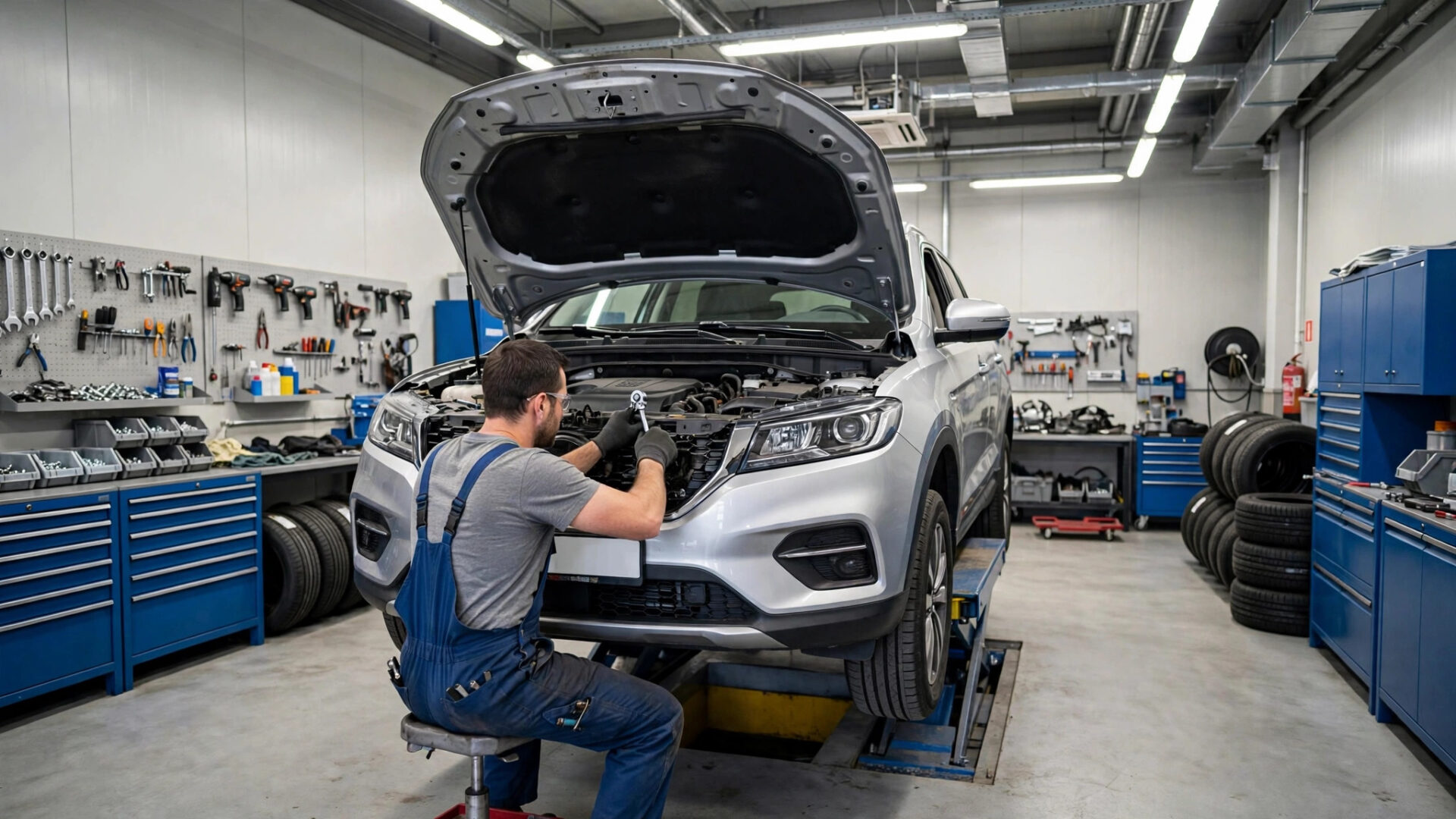
Every bay is full, both techs are under cars, and the phone has rung four times in the last hour. Nobody picked up. One of those callers needed a tow. Another wanted to book a brake job for tomorrow. Both called the shop down the road next. An AI receptionist for auto repair shops exists for exactly this problem: it answers every call, takes the estimate request, books the job, sends status updates, and coordinates the tow, while your team keeps turning wrenches.
This guide covers what a shop AI receptionist actually does, what missed calls really cost a repair shop, how estimate intake and status updates work, what the tools cost, and how to roll one out without your customers feeling handled by a robot.
The quick answer
- What it does: answers every call 24/7, takes estimate and repair requests, books appointments into your schedule, sends automatic repair-status updates, and coordinates tows after hours.
- The missed-call problem: independent shops miss more than 40 percent of inbound calls, and 80 percent of callers who hit voicemail hang up without leaving a message.
- Typical cost: $100 to $500 per month for AI receptionist tools, against $3,000 to $4,500 a month for a full-time service advisor.
- The payback: at roughly $250 per call in recovered revenue, one captured call a day transforms the economics of the tool.
What missed calls cost an auto repair shop
The numbers in this industry are blunt. Independent shops miss more than 40 percent of inbound calls, according to industry surveys, and an In Motion Brands report found many shops miss between 20 and 40 percent, often during the busiest hours when advisors are at the write-up desk with walk-in customers (WebProNews; Auto Service World). Nearly 30 percent of all daily calls arrive in the three hours between 7 and 10 am, exactly when the service lane is chaos. And up to 80 percent of callers who hit a generic voicemail hang up without leaving a message. They do not call back. They call your competitor.
Put dollars on it. The average repair order runs around $428, and NADA data puts average service and parts sales per customer repair order in the mid-$400s. One analysis pegged the value of a recovered call at roughly $250: a shop that recovers just 20 previously missed calls a month, about one a day, recovers $5,000 in monthly revenue, or $60,000 a year, without adding a single bay or technician (Market Realist). After-hours calls alone cost the average shop roughly $66,000 a year: about three missed calls a week after closing, at that $428 average order, walking straight to the next shop on the list.
Here is the part owners feel in their gut: most of those calls are routine. Price inquiries make up about 30 percent of calls, appointment booking another 30 percent, general questions 26 percent. Only a small fraction need real expertise (Auto Service World). Your highest-paid people are spending their days on the calls an AI could handle in seconds, while the calls that need judgment go unanswered.
What an AI receptionist for auto repair shops does
An AI receptionist is a voice agent that answers your shop’s phone on every line, at every hour, and acts on what it hears. Purpose-built automotive versions, like AutoLeap AIR, the first AI receptionist built specifically for auto shops, handle appointment requests, identify returning customers by phone number, pull up their profile from the shop management system, and book straight into the shop calendar (Business Wire). The core jobs:
- Answers every call instantly. Day, night, lunch rush, Monday morning avalanche. No hold music, no voicemail, no “we will call you back.”
- Takes estimate and repair intake. Vehicle year, make, model, symptoms, warning lights, service history. The AI collects the details your advisor needs to write an accurate estimate, and can request photos of the damage or the dashboard lights.
- Books jobs into your schedule. Real availability, real confirmation. Oil change Tuesday, brake job Thursday, diagnostic slot tomorrow morning.
- Sends repair-status updates. “Your car is on the lift.” “The parts arrived.” “Ready for pickup at 4.” Proactive texts that kill the “is my car ready?” callback pileup.
- Coordinates tows after hours. Breakdown at 9 pm? The AI takes the location, dispatches or schedules the tow, and books the diagnostic for the morning.
- Handles the routine questions. Hours, location, oil change pricing, inspection requirements, warranty questions, loaner car policy.
Shops using automotive AI receptionists have reported over $12,000 in additional annual revenue from calls handled by the AI, with average returns on investment of up to 850 percent (Business Wire).
Estimate intake that actually qualifies the job
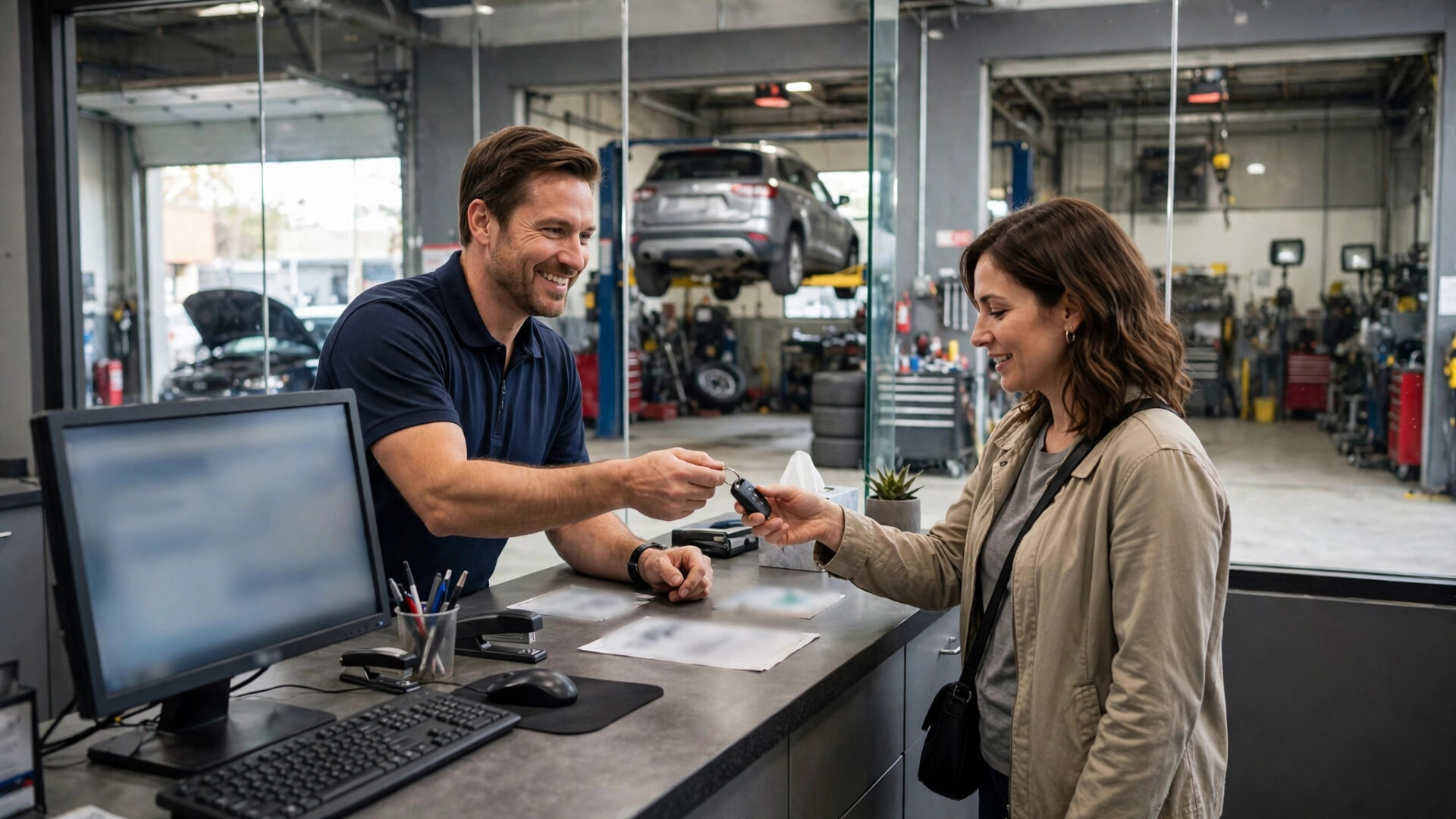
Thirty percent of your calls are price inquiries, and most of them are badly handled. “How much for brakes?” gets a vague range, a callback promise, or a busy signal. A good AI receptionist turns that call into a qualified estimate request in under two minutes.
The flow looks like this: the AI asks for the year, make, and model, then the symptoms in the caller’s own words. Grinding when braking? Check-engine light on? How long has it been happening? It asks about service history if the caller is in your system, and it can request a photo of the dashboard lights or the damaged panel by text. Then it gives a realistic range based on your pricing for that job on that vehicle, books the diagnostic or the repair, and sends a confirmation.
Two things make this work. First, the AI must know your actual pricing bands, not generic internet numbers. Feed it your real menu pricing for common jobs by vehicle class. Second, it must know when to stop quoting and start booking: “That needs a proper diagnostic to price accurately. I have tomorrow at 9:30 or 11:15. Which works?” Price shoppers who get a straight answer and an easy booking path convert far better than price shoppers who get voicemail.
What the intake captures for your advisor
- Vehicle details: year, make, model, mileage, VIN if the caller has it.
- The complaint: symptoms, sounds, smells, warning lights, when it started.
- Photos: damage, dashboard lights, tire wear, requested by text during the call.
- History: returning customer lookup by phone number, past services, open estimates.
- The booking: service type, preferred day, loaner or shuttle need, drop-off versus wait.
Your advisor walks into a complete, structured intake instead of a sticky note that says “guy called about brakes, call back.” That is the difference between quoting in five minutes and playing phone tag for two days.
Repair-status updates without the callback pileup
“Is my car ready yet?” is the most expensive question in a repair shop, not because it is hard, but because of when it arrives. It rings while the advisor is with a customer, while the tech is mid-diagnosis, while the parts delivery is late. Every one of those calls interrupts real work to deliver information the shop already has.
An AI receptionist flips this from reactive to proactive. Tied into your shop management system, it sends automatic status texts at the moments customers actually care about: vehicle checked in, diagnosis complete with the estimate, work approved and in progress, parts delayed with a new ETA, job complete and ready for pickup. The customer who gets “your brakes are done, pickup any time after 3, total is $412” by text does not call. The customer who hears nothing calls three times.
The AI also handles the inbound version gracefully. “Is my car ready?” gets a real answer from the job status, not a promise to check and call back. And when the answer is bad news, parts delayed until tomorrow, the AI delivers it with the new plan attached, which is exactly what an anxious customer needs to hear.
After-hours booking and tow coordination
Cars break at night. That is when your shop is closed and your competitor’s AI is answering. After-hours is where an AI receptionist earns its reputation, because the callers are stressed and the stakes feel high.
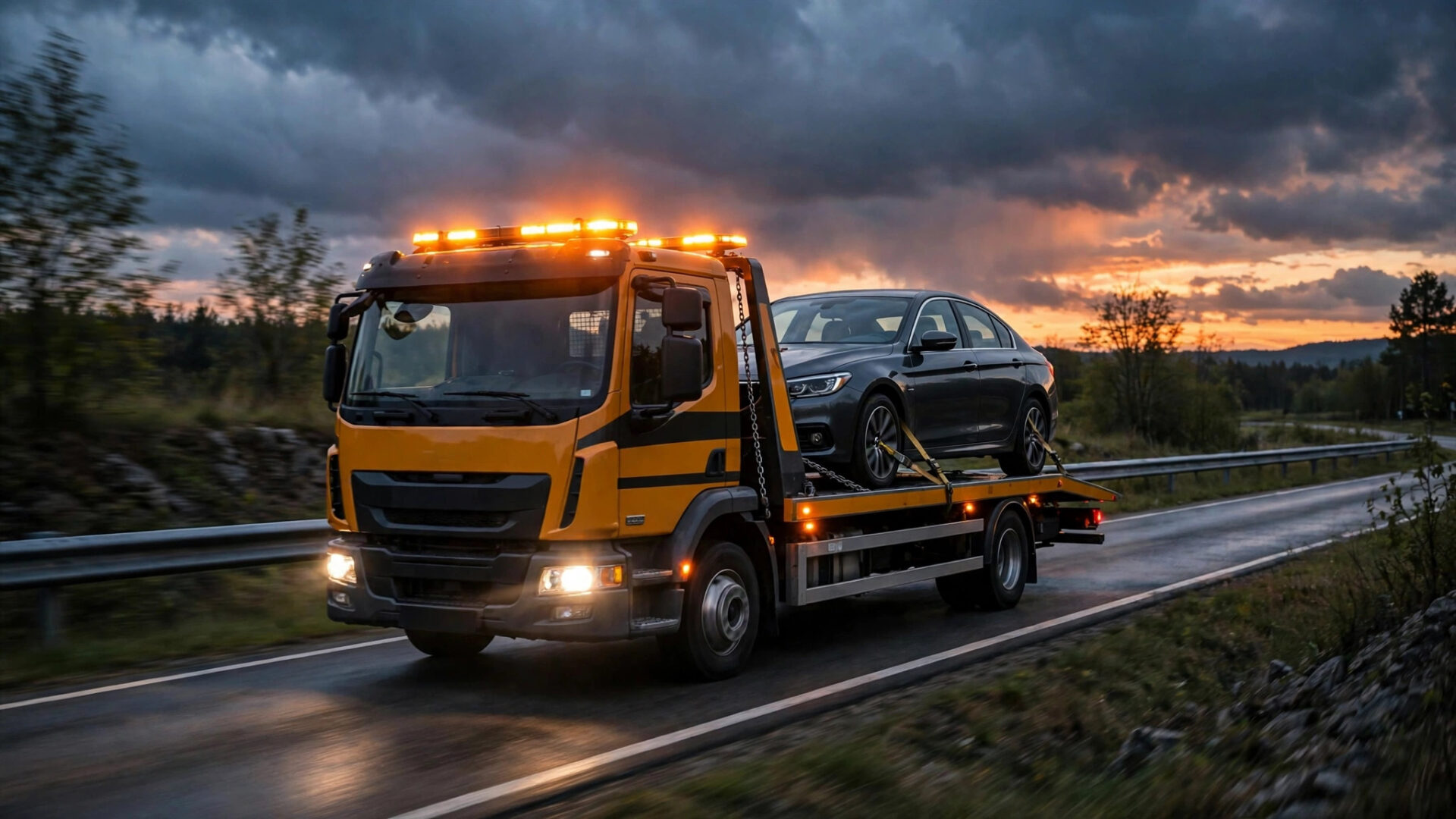
The after-hours flow has three branches. Booking: the caller wants an appointment. The AI books the next available slot, confirms by text, and the morning starts with a full schedule instead of a full voicemail box. Breakdown: the car will not start, or died on the road. The AI takes the location, the vehicle details, and whether the caller is safe, then triggers your tow process: your contracted tow company, your own truck, or a scheduled morning pickup. Urgent but drivable: strange noise, warning light, overheating. The AI triages: safe to drive in tomorrow, or shut it down and tow it now.
Set the tow rules with your team before launch: which situations dispatch immediately, which wait for morning, what the AI tells the caller about timing and cost. A stranded driver who hears “a truck is on the way, about 40 minutes, and we have you booked for a diagnostic at 8 am” becomes a customer for life. A stranded driver who hears voicemail becomes someone else’s customer for life.
Pair this with a missed-call text-back on your main line as a safety net: even on the rare call the AI cannot complete, the caller gets an instant text with a booking link instead of silence.
What an AI receptionist for auto repair shops costs
General AI receptionist tools run roughly $29 to $300 per month depending on minutes and features. Automotive-specific platforms built for shops, with shop management integrations and tow workflows, typically land in the $200 to $500 per month range. Compare that to a full-time service advisor at $3,000 to $4,500 a month once salary, benefits, and training are counted, or a traditional answering service that takes messages at a per-call rate without booking anything.
| Option | Typical cost | Best for |
|---|---|---|
| General AI receptionist | $29 to $300 per month | Basic call answering and message-taking on a budget |
| Automotive-specific AI receptionist (e.g. AutoLeap AIR) | $200 to $500 per month | Shops that want estimate intake, status updates, and shop-system integration |
| Human service advisor | $3,000 to $4,500 per month all-in | The write-up desk, complex estimates, and customer relationships |
| Traditional answering service | Per-call or per-minute billing | After-hours message-taking only, no booking or intake |
The comparison that matters is cost per captured job. At roughly $250 of recovered revenue per call, a $300-a-month tool pays for itself with two recovered calls a month. Everything after that is margin. One real-world test across a dealer group, 42,000 real calls over six months, found the make-or-break factor was voice quality: platforms with response latencies of 1.8 to 2.4 seconds lost callers who experienced the pause as a dead line, while the better tools booked real repair orders. Test the voice yourself before you buy; a cheap tool that callers hang up on is the most expensive option.
- 1Does it integrate with your shop management system? Tekmetric, Shop-Ware, Mitchell1, AutoLeap, or whatever you run. Without it, the AI cannot see real job status or write bookings into your schedule.
- 2How does the voice actually sound? Call the demo line during a noisy moment. If there is a long pause before it answers, callers will hang up. Latency kills AI receptionists faster than any missing feature.
- 3Can it do real estimate intake? Vehicle details, symptoms, photos by text, returning-customer lookup, and your actual pricing bands. A bot that only takes names and numbers is a voicemail with better manners.
- 4Does it send status updates automatically? Check-in, diagnosis complete, work in progress, ready for pickup. Proactive texts are what kill the callback pileup.
- 5What is the after-hours tow flow? Confirm exactly what happens at 10 pm: who gets dispatched, what the caller is told about timing and cost, and how the morning booking is created.
- 6How does escalation work? Angry customer, warranty dispute, comeback job. The AI must recognize the situation and bring in a human with the full context, not argue.
- 7Who owns the call data? Recordings, transcripts, and customer details should be yours and exportable. This data shows you exactly what your market asks for.
Rolling it out without disrupting the shop
Week 1: connect the systems. Shop management integration, your real schedule, your pricing bands for common jobs, your tow process and after-hours rules. Load the answers to your twenty most common questions: hours, oil change price, inspection cost, loaner policy, warranty terms.
Week 2: train the intake. Define what a complete estimate request looks like for your shop and test the flows: brake job inquiry, check-engine light, “is my car ready,” after-hours breakdown. Have your advisors try to stump it. Fix every wrong answer.
Week 3: soft launch on overflow. Let the AI take calls your team cannot get to first: after-hours, lunch, the Monday morning rush. Your advisors keep their normal workflow. Review the transcripts daily and tune the pricing answers and escalation triggers.
Week 4: go full coverage. Move to the AI answering first, with instant handoff to your advisors for anything complex. Tell your customers: “We have added 24/7 phone coverage so you always reach us, and you will get text updates on your repair automatically.” Frame it as the service upgrade it is.
This same AI front-desk pattern, answer every call, book the job, follow up automatically, is working across other appointment-driven local businesses. See how it plays out for dental offices: same logic, different industry.
Frequently asked questions
Will it actually understand car problems described by non-experts?
It does not need to diagnose. It needs to collect: what the driver hears, sees, and smells, when it started, and the warning lights on the dash. Structured intake questions plus photo requests give your advisor everything needed for an accurate estimate. The AI’s job is a complete brief, not a diagnosis.
What about price shoppers who just want the cheapest quote?
Price shoppers call everyone. The shops that win them answer fast, give an honest range from real pricing, and make booking effortless. An AI that does all three in two minutes converts price shoppers better than a busy advisor who calls back tomorrow.
Does it replace my service advisor?
No. It replaces the interruptions: the routine calls, the status checks, the after-hours voicemails. Your advisor keeps the write-up desk, the complex estimates, the upset customers, and the relationships. Most shops find their advisors sell more once the phone stops fragmenting their day.
Can it really coordinate a tow at night?
Yes, with your tow rules configured. It takes the location and vehicle details, confirms the caller is safe, triggers your tow process, and books the morning diagnostic. You define the dispatch rules; the AI executes them at 2 am without waking anyone.
Will it work with my shop management software?
Automotive-specific AI receptionists integrate with the major shop systems. Confirm your exact software and version during the trial, and test a real booking and a real status update, not a slide deck.
Answer every call. Book every job. Update every customer.
Digital Hayder builds AI receptionists for auto repair shops: 24/7 call answering, estimate intake with photos, automatic repair-status updates, after-hours tow coordination, and shop-system integration. Tell us about your shop and we will scope the right setup.
Contact Us