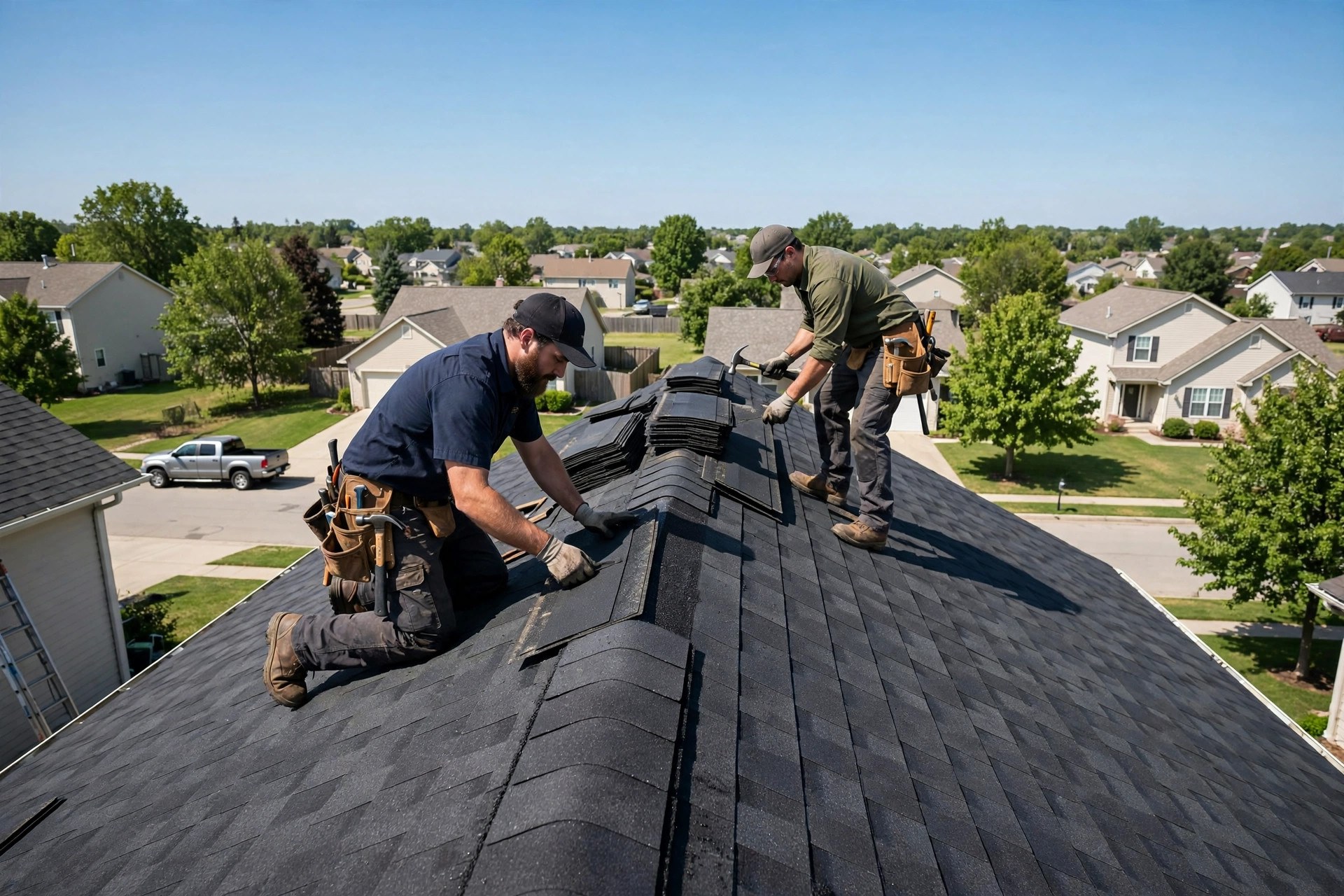
Roofing is a strange business: the ticket is huge, the customer buys once every 15 to 25 years, and most roofers have no way to stay in touch between jobs. That is exactly why email marketing for roofers punches above its weight. A roofer’s email list is a vault of past customers whose roofs are aging on a predictable schedule, neighbors who watched your crew work, and storm leads who need a trusted name fast. Done right, email turns that vault into re-roof jobs, referral chains, and inspection bookings without spending a dollar on ads. This guide covers how to build the list, the re-roof cycle campaigns that produce five-figure tickets, storm aftermath emails, referral asks, maintenance check offers, a full 12-month calendar, costs, and the mistakes that get roofing emails marked as spam.
The quick answer
- Roofs age on schedule: timed emails to past customers at years 12, 15, and 20 catch re-roof decisions before competitors even know the roof exists.
- Storms reward speed: one email within 24 hours of hail or high wind can book a week of inspections in the affected neighborhoods.
- Referrals compound: a short ask after every completed job turns one roof into two or three, because neighbors trust a crew they watched work.
- Inspections keep crews busy: free or low-cost maintenance check offers fill slow weeks and surface the repairs that become replacements.
- Costs are tiny next to tickets: $30 to $150 a month for the platform, or $97 to $300 for a CRM that automates the whole cycle.
- Start with three automations: the re-roof cycle sequence, the post-job referral ask, and the annual inspection reminder. Campaigns come after.
Why email works differently for roofers
Most service businesses email to win the next small ticket: a tune-up, a cleaning, a repair. Roofing email works the opposite way. You send a handful of well-timed messages a year, and each one can produce a $10,000 to $20,000 job. The list is smaller than a plumber’s and the buying cycle is longer, but the payoff per conversion dwarfs almost every other trade. That changes the strategy completely: you do not need weekly content, you need perfect timing and total trust.
Trust is the currency because a roof is the most expensive thing most homeowners will ever buy for their house, and they buy it scared. Stories of fly-by-night storm chasers are everywhere, and every homeowner has heard one. An email from the roofer who did their neighbor’s roof last spring, with photos of the crew and a real local address, cuts through that fear instantly. Email lets you arrive as the known local company instead of a cold door knock. When hail hits, the homeowner does not Google and hope; they open the email from the company they already know and tap the inspection link.
The other difference is the neighborhood effect. Roofing jobs are visible. When your crew spends three days on a street, every neighbor sees the trucks, the dumpster, and the finished roof. Email captures that visibility and stretches it: a "we just finished a roof on Maple Street" email to nearby past customers and leads turns one job’s street presence into the next three quotes. No other trade gets this much free social proof per job. Pair these email plays with the wider tactics in our roofing marketing ideas guide and the list becomes the center of a system where every job feeds the next one.
Building a roofer’s list from jobs, inspections, and storm leads
A roofer’s list comes from different places than a typical contractor’s. Start with every completed job: the contract should always include an email field, and the final walkthrough is the moment to confirm it ("What is the best email for the warranty paperwork and your free annual check reminders?"). Add every inspection you ever ran, whether it closed or not, because an inspection lead is a homeowner who already admitted their roof might need work. Add every estimate, every insurance-claim consultation, and every contact from storm seasons past. A roofer with ten years in business can usually assemble 800 to 2,500 real contacts without spending anything.
Then build capture into the moments roofers usually waste. The website should offer a free inspection checklist or a storm-damage guide in exchange for an email, not just a quote form, because many visitors are researching, not ready to buy. Add a chat option for after-hours questions; our guide to AI chatbots for roofing companies shows how chat captures the storm-night inquiries that never become phone calls. Door hangers and yard signs during jobs should carry a QR code to the inspection offer, turning street visibility into list growth. And every crew truck can carry a simple card: "Free annual roof check for past customers, sign up by text or email."
Consent and honesty matter more in roofing than in most trades, because storm-season spam has burned homeowners before. Collect emails with a plain sentence at each touchpoint: "We send seasonal roof check reminders and storm alerts by email. Unsubscribe anytime." Never buy lists, and never email neighborhoods you have never worked in with cold pitches; that is the behavior that gets roofing companies reported. Your list should be people who know your name: past customers, past inspections, past estimates, and people who asked to hear from you.
Segment the list the way roofs actually age. The segments that drive roofing revenue are: past customers grouped by install year, inspection leads that never closed, open estimates, and storm-season contacts by neighborhood. The install-year segment is the money segment, because it powers the re-roof cycle automation below. Tag every new customer with their install date the week the job closes, and backfill the dates for past jobs from your contracts. That one field is worth more than any other data you keep.

Inspection emails reach homeowners at the research stage, before they start calling around for quotes.
Past-customer re-roof cycles: your highest-ticket automation
An asphalt shingle roof lasts 15 to 25 years depending on the shingle, the ventilation, and the weather it has seen. That lifespan is a gift to email marketing, because it means you know, roughly, when every past customer’s roof will need replacing. The re-roof cycle automation sends timed emails at the moments that matter: year 10 (early awareness), year 12 to 15 (the decision window for most shingles), year 18 to 20 (urgency for aging roofs), and year 22 plus (the final nudge for roofs living on borrowed time).
Each stage speaks to where the homeowner is. The year 10 email is educational and low pressure: "Your roof is now 10 years old, which is a good time for a free 12-point inspection so you know exactly where it stands. Most roofs we installed in your neighborhood are aging well at this stage." The year 14 email gets specific: "At 14 years, we start watching for granular loss, curling, and soft spots. A free inspection now tells you whether you have five good years left or whether planning should start." The year 18 email is direct: "Your roof is 18 years old. We recommend a professional look before the next storm season, and if replacement is on the table, current pricing and financing options are in your favor right now." The tone stays honest throughout: if the roof is fine, say so. Homeowners remember who told them the truth.
Run this as a true automation, not a manual campaign. When the install date hits each anniversary, the right email goes out with the customer’s name, the install year, and a link to book the free inspection. The inspection is the conversion point: your crew gets on the roof, documents its condition with photos, and the homeowner gets a straight answer. Even when the answer is "you have years left," you have refreshed the relationship and earned the next referral. When the answer is "it is time," you are already the trusted company on the roof, not one of three strangers quoting blind.
Do not forget the customers whose roofs you did not install. Repair customers, inspection leads, and insurance-claim contacts all have roofs of unknown age, and they belong in a parallel sequence: an annual "how old is your roof?" check-in with a simple age guide (missing granules, curling edges, daylight in the attic) that invites them to book the free inspection to find out. Many of these become re-roof jobs too, because the inspection reveals what the homeowner could not see from the ground.
Storm aftermath emails: speed wins the neighborhood
When hail or high wind hits your service area, the next 48 hours decide who gets the work. Homeowners are anxious, out-of-town storm chasers are already knocking, and the local roofer who shows up first with a calm, useful message wins. Email is the fastest way to reach every past customer and lead in the affected area at once. The storm email should go out within 24 hours, and it should not sell; it should help.
The message follows a simple shape. First, acknowledge the storm: "Last night’s hail hit the north side hard, and we are already seeing damage reports." Second, give the useful information: what hail damage looks like, why it matters for insurance, and the deadline pressure most policies carry. Third, offer the inspection: "We are running free storm inspections this week for our customers. Reply to this email or tap here to get on the list." Fourth, warn them gently about storm chasers: "If someone knocks offering a free roof today, ask for their local license and a local address. We are at [your address] and we will be here after the storm crews leave." That last paragraph does more for your reputation than any ad ever could.
Segment by neighborhood for maximum effect. If the hail map shows the worst damage in two zip codes, email those contacts first with the specific-street version, then the wider area with a softer version. Your CRM should let you tag contacts by area; if it does not, keep a simple spreadsheet of customers by zip code for storm season. After the first email, send a 3-day follow-up to openers who did not book ("inspection slots are filling, we held Thursday open in your area") and a 10-day follow-up with a photo from an actual local inspection: "This is what we found two streets over." Real local proof beats every claim you could make about yourself.
Speed matters on the response side too. Storm emails generate replies at all hours, and the roofer who answers first usually gets the inspection. Pair the email with fast follow-up on every channel: our guide to lead follow-up automation for roofing companies covers the text and call systems that catch the replies your email generates. An unanswered storm email is worse than no email, because the homeowner asked for help and heard silence.
Referral asks that multiply every job
Roofing has the strongest natural referral engine in the trades: the finished roof is a billboard, the crew was in the neighborhood for days, and the neighbors already know your name. Email turns that passive visibility into active referrals with one well-timed ask. The referral email goes out 7 to 10 days after job completion, once the dumpster is gone and the homeowner has lived with the new roof for a week. The timing matters: too early and they have not formed an opinion yet, too late and the excitement has faded.
Keep the ask short and make it easy. "Hi Tom, it has been a week since we finished your roof. How is everything looking? If you have a neighbor or friend thinking about their roof, we would be grateful for the introduction. Just reply with their name, or forward this email. As a thank-you, we send $250 for every referral that becomes a job." Name a specific reward, because vague promises ("we appreciate referrals") produce nothing. The amount should be meaningful but smaller than your customer acquisition cost from ads; for most roofers, $200 to $500 per closed referral is the right band.
Add a second referral touch 30 days later with social proof: photos of the completed roof, a short quote from the homeowner if they gave one, and the same simple ask. This version can go slightly wider: past customers from the same street get a "your neighbor just got a new roof" email with the referral offer attached, which converts the street’s curiosity into introductions. Track every referral in your CRM with the source customer’s name, pay the reward fast when the job closes, and tell the referrer it is on the way. A referral program that pays slowly is a referral program that dies.
Do not stop at completed jobs. Inspection customers who did not buy are also referral sources: they met your inspector, saw the photos, and decided the timing was not right. A quarterly "know anyone whose roof took a beating this season?" email to that segment produces a steady trickle of warm introductions from people who trust your process even though they have not bought yet.
Maintenance check offers that keep the phone ringing
Between storms and re-roof cycles, roofing has quiet stretches, and quiet stretches are when crews sit idle. Maintenance check offers fill those gaps with low-cost visits that do three jobs at once: they produce immediate repair revenue, they keep your name in front of past customers, and they put your people on roofs where they document the conditions that become future replacements.
The offer itself should be simple and cheap to deliver: a free or $99 seasonal roof check covering gutters, flashing, sealants, and visible shingle condition, with photos delivered by email afterward. Send it in the slow months, typically late winter and mid-summer in most markets, to past customers and inspection leads. The email angle is prevention, not sales: "Small issues found early cost a fraction of what they cost after the next storm. Our 20-minute check catches them." Homeowners understand prevention; it is the same logic as an oil change.
Every check visit follows the same playbook: document everything with photos, fix the small stuff on the spot when the customer approves, and deliver a written roof health report by email within 24 hours. That report is a marketing asset: it reminds the homeowner you were on their roof, it lists what you found in plain language, and it includes the honest timeline ("no action needed," "watch this area," "plan for this within two years"). The "plan for this" line is what feeds the re-roof pipeline. A $99 check that surfaces a $400 gutter repair today and a $13,000 replacement in two years is the best marketing spend in roofing.
Package the checks as an annual program for your best customers. "RoofCare: one free inspection a year, priority storm response, and 10 percent off repairs" gives past customers a reason to stay close and gives you a reason to email them without a sales angle. Even a simple version, a yearly inspection reminder email with one-click booking, keeps the relationship warm through the long quiet years between the install and the re-roof.
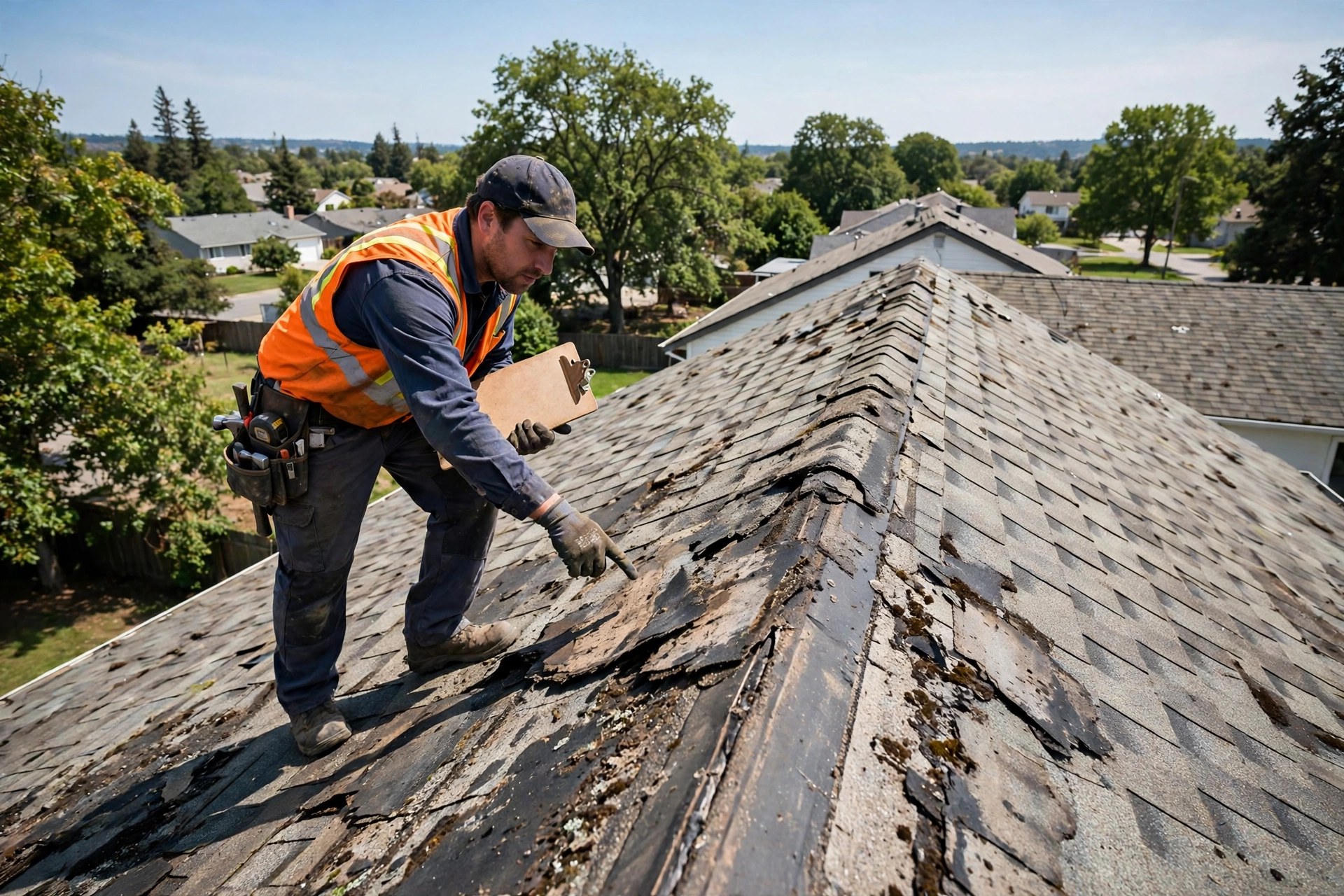
Every inspection documents the roof’s condition with photos, which turns a free visit into a trusted replacement conversation later.
Your 12-month campaign calendar
Roofing email follows the weather, not the retail calendar. Storm season, shingle-aging milestones, and the slow months set the rhythm. Below is a full year; shift the storm rows to match your region’s actual hail and wind seasons, and shift the slow-month offers to whenever your crews sit idle. Each month has one primary campaign so the program stays manageable for a small office.
| Month | Campaign | Audience | Goal |
|---|---|---|---|
| January | Winter roof check offer for slow weeks | Past customers, inspection leads | Repair revenue; roof health reports |
| February | Re-roof cycle batch: roofs 15-plus years | Past customers by install year | Inspection bookings; replacement quotes |
| March | Pre-storm-season readiness email | All contacts | Position as the storm-ready local roofer |
| April | Storm season alert system live notice | All contacts | List engagement; inspection bookings |
| May | Post-storm inspection push after first events | Affected neighborhoods first | Fill inspection calendar fast |
| June | Referral drive: spring completed jobs | Recent job customers plus their streets | Referral introductions |
| July | Mid-summer maintenance check offer | Past customers, slow-week fill | Keep crews busy; surface repairs |
| August | Re-roof cycle batch: roofs 12-plus years | Past customers by install year | Fall replacement pipeline |
| September | Pre-winter inspection reminder | All contacts | Inspection bookings before bad weather |
| October | Insurance and warranty explainer | Inspection leads that never closed | Reactivate old leads with useful info |
| November | Thank-you and review campaign | This year’s job customers | Reviews; testimonial collection |
| December | Year-end roof age check-in | Oldest roofs on the list | January inspection bookings |
Storm emails sit outside the calendar because storms do not keep a schedule. When one hits, the 24-hour storm email jumps the queue and everything else waits a week. That flexibility is the point of owning the list: no ad platform lets you reach every past customer in two zip codes within an hour, but your email list does. The same calendar discipline works in other trades with seasonal demand; our guide to email marketing for HVAC companies runs the parallel playbook around tune-up seasons instead of storm seasons.
Subjects and messages homeowners open
Roofing subject lines work when they name the homeowner’s actual worry. "Is your roof storm-ready?" beats "Quality Roofing Services" because it asks a question the reader is already asking themselves. Proven subjects for roofers: "Free storm inspection this week," "Your roof is 14 years old, here is what that means," "Hail hit your area last night," "3 signs your flashing needs attention," and "Your neighbor’s new roof (photos inside)." Keep them under 50 characters, skip the exclamation points, and never use all caps; urgency should come from relevance, not punctuation.
The body should be short, plain, and local. Homeowners buy from roofers they believe will still be around in five years, so every email should sound like it came from a neighbor who happens to own a roofing company. Here is a full example of a re-roof cycle email a local roofer could send: "Hi Karen, your roof is now 15 years old, which is when we like to take a careful look. Most roofs we installed back then are holding up well, but this is the age where small issues start hiding under the shingles. I would like to send our inspector out for a free 20-minute check with photos, so you know exactly where yours stands. Tap here to pick a time: [Book my free inspection]. No pressure either way. Thanks, Dave at Summit Roofing." That email works because it is specific to her roof, honest about the range of outcomes, and easy to act on.
Photos are the exception to the plain-email rule in roofing. A short email with two or three real photos, hail damage from the next street over, a finished roof on the reader’s own block, a close-up of the exact wear your inspector found, will out-pull any designed template. Real photos prove you do the work locally. Keep them small enough to load fast on phones, and always add descriptive alt text. Everything else about formatting follows the standard rules: send from a real name, keep the design minimal, include an unsubscribe link and your business address, and invite replies that someone actually answers.
Timing follows the sky. Tuesday through Thursday mornings work for planned campaigns, but storm emails ignore the schedule and go out the morning after the storm, because every hour of delay is an hour the storm chasers get first. Re-roof cycle emails perform best in the mild months when homeowners can think clearly: early spring and early fall, not the week of a heat wave. And the post-job referral ask has its own clock, 7 to 10 days after completion, which your CRM should trigger automatically from the job close date.
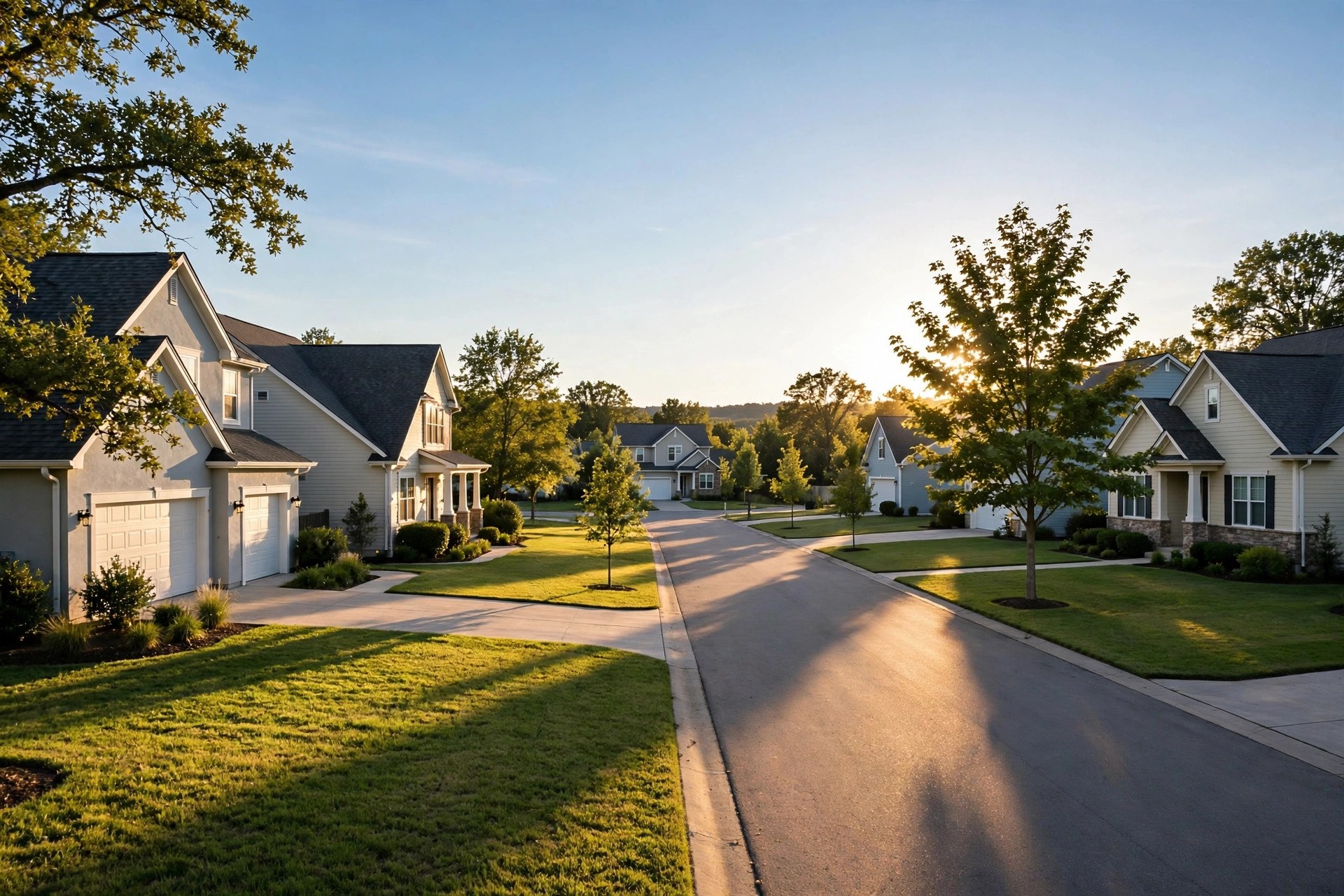
Finished roofs are the best advertising a roofer has. Email stretches one job’s visibility across the whole street.
What email costs and which tools fit a roofing company
For a business selling five-figure tickets, email is almost comically cheap. The platform costs the same as it does for any small business; the difference is that one converted email can carry the program for years. The three tiers below are the realistic options, and most roofers land in the middle one once they want the re-roof cycle and referral automations running without office staff babysitting them.
Basic email platform, DIY
Send storm alerts and seasonal campaigns to your list. Enough to run the calendar, but automations are limited.
- Campaigns to up to a few thousand contacts
- Basic templates and signup forms
- Open and click tracking
- You write and schedule everything yourself
CRM with email automation
The right fit for most roofers. Re-roof cycles, referral asks, and inspection reminders fire automatically from job dates.
- Anniversary automations from install dates
- Post-job referral sequences with tracking
- Neighborhood and zip code tagging for storms
- Inspection booking links and pipeline tracking
Done-for-you email management
An agency builds the list, writes the campaigns, and runs storm responses. Best when the office is too busy to own it.
- List import, cleanup, and segmentation done for you
- Storm alert emails drafted within hours of events
- Re-roof and referral automations built and tested
- Monthly report on inspections, jobs, and revenue
Side by side, the choice comes down to who does the work. A roofer with an office manager who can spend two hours a week gets the most from the CRM tier, because the automations handle the timing that makes roofing email work. A one-crew operation where the owner does everything is usually better served by the done-for-you tier during storm season, when speed matters most. The table below summarizes the trade-offs.
| Option | Monthly cost | Automation | Best for |
|---|---|---|---|
| Basic email platform | $30 to $80 | Limited: scheduled blasts only | Roofers who only need storm and seasonal alerts |
| CRM with automation | $97 to $300 | Full: re-roof cycles, referrals, reminders | Roofers with office staff to manage it |
| Done-for-you agency | $300 to $800 after setup | Full, managed by the agency | Busy owners who want it handled end to end |
Mistakes that get roofers marked as spam
Cold-emailing whole neighborhoods. Nothing burns a roofing company’s reputation faster than blasting streets you have never worked. Homeowners report it, email providers notice, and your domain pays the price. Email people who know your name: past customers, past inspections, past estimates.
Storm emails that only sell. The 24-hour storm email should lead with useful information, damage signs, insurance timing, what to watch for, and only then offer the inspection. A pure sales blast after a storm reads exactly like the storm chasers homeowners fear.
No install dates on file. The re-roof cycle automation is the highest-ROI email a roofer can send, and it cannot run without install dates. Backfill them from contracts now, and record the date on every new job the week it closes.
Asking for referrals with no reward. "We appreciate your referrals" produces nothing. Name the reward, pay it fast when the job closes, and tell the referrer it is coming. A slow or vague referral program trains customers not to bother.
Ignoring replies. Roofing emails generate real questions: "Does the free inspection include the gutters?" "Can you come Saturday?" A reply that sits unanswered for two days sends the homeowner to whoever answered first. Assign replies to a person and answer same-day.
Letting the list go stale. A list you email twice a year forgets you exist, and a list you email twice a week tunes you out. The monthly calendar rhythm plus storm alerts when they matter keeps the list warm without wearing it out.
Your rollout checklist
Work through these in order. Each one builds on the last.
- 1Export every contact you have. Completed jobs, inspections, estimates, and storm leads go into one spreadsheet with names, emails, and addresses.
- 2Backfill install dates. Add the install year for every past job from your contracts. This single field powers the re-roof automation.
- 3Clean the list. Remove duplicates, fix typos, and drop addresses that bounced before. A clean list protects deliverability.
- 4Pick your platform. Basic tool for alerts only, or a CRM with automation for re-roof cycles and referral sequences.
- 5Segment by roof age and area. Past customers by install year, inspection leads, open estimates, and contacts tagged by zip code for storm targeting.
- 6Build the re-roof cycle automation. Year 10, 14, 18, and 22-plus emails, each linking to a free inspection booking page.
- 7Build the post-job referral sequence. The ask at 7 to 10 days with a named reward, plus the 30-day follow-up with job photos.
- 8Write the storm email template. Have the 24-hour message ready before storm season, with blanks for the storm details and affected areas.
- 9Add capture to every job. Email field on the contract, QR code on yard signs, and a website offer for the storm-damage guide.
- 10Assign replies and review monthly. Same-day answers to every reply, and ten minutes after each send to check opens, inspections booked, and jobs closed.
Frequently asked questions
How often should a roofer email customers?
About once a month from the planned calendar, plus storm alerts when they matter. Automated sequences like re-roof anniversaries and referral asks run in the background and do not count. Roofing lists are small and high value, so relevance beats frequency.
Is it legal to email past roofing customers?
Generally yes when you have an existing business relationship, as long as every email includes an unsubscribe link and your business address. Cold-emailing neighborhoods with no prior contact is where roofers get into trouble. Rules vary by region, so check your own obligations and always honor opt-outs immediately.
What is a good open rate for roofer emails?
Lists of real past customers typically see 35 to 45 percent opens on campaigns, with storm alerts often opening much higher because of urgency. Under 25 percent usually means the list needs cleaning or the subjects need work.
Should storm emails go to the whole list or just the affected area?
The affected area first, with specific local detail, then a softer version to the wider list a day later. Neighborhood-specific storm emails convert far better than generic ones, so tag contacts by zip code before storm season.
How much should I pay for a referral?
Most roofers pay $200 to $500 for a referral that becomes a completed job. Keep it below your cost of acquiring a customer through ads, name the amount in the ask, and pay it promptly when the job closes.
Can email really produce re-roof jobs?
Yes. Roofs age on a predictable schedule, and timed emails to past customers catch the decision window before competitors know the roof exists. The money math section above walks through a realistic campaign: 34 inspections turning into 11 jobs worth $132,000.
What if I do not have install dates for old jobs?
Backfill them from contracts, permits, or warranty registrations, even if it takes an afternoon. For customers where the date is truly unknown, use the annual "how old is your roof?" check-in sequence instead, and record the date on every new job going forward.
Should I offer free inspections in my emails?
Yes. The free inspection is the conversion point of roofing email: it gets your people on the roof with a camera, which is where trust is built and real conditions are documented. The inspection costs you under an hour and produces the photo reports that close jobs.
Will email work if most of my work comes from insurance claims?
It works even better. Claim customers need education about the process, deadlines, and documentation, and email is the ideal channel for it. A short "what to expect from your claim" sequence builds the trust that wins the job over competing bidders.
Should I hire an agency or run email myself?
If your office can give it two hours a week, run it yourself with a CRM that automates the re-roof cycles and referral asks. If storm season swamps the office, hire the sending out but keep the list and the automations in systems you control. Either way, start with the three core automations in this guide.
Turn past roofs into future jobs
Digital Hayder builds email and CRM automation for roofing companies: re-roof cycle sequences, storm alert campaigns, post-job referral systems, and inspection booking flows that run on your real job history. Tell us about your operation and we will design the system around your seasons.
Contact Us