Your customers read text messages. Nearly all of them, within minutes, which is more than can be said for your emails, your postcards, or the voicemail you left about the brakes they declined last spring. SMS marketing for auto repair shops is the simplest high-return system a shop can run: service-due texts that bring customers back on mileage, approval follow-ups that close stalled estimates, review requests that arrive right after pickup, and declined-service reminders that turn old inspections into new repair orders. This guide covers how each message type works, the exact templates to use, the opt-in rules that keep you legal, how often to text without annoying people, what it costs, and the math on what service-due texts alone add to a shop with empty bays.
The quick answer
- Texts get read: SMS open rates run near 98 percent, far above email, so service reminders actually reach customers.
- Service-due texts fill bays: mileage and time-based reminders bring past customers back on schedule, no ad spend needed.
- Approval follow-ups close estimates: a text nudge turns stalled repair authorizations into booked work the same week.
- Review texts after pickup build your rating: one text with a review link at the right moment multiplies five-star reviews.
- Opt-in is the law: customers must agree to texts, every message identifies your shop, and STOP always works.
- Costs are tiny: most shops run texting for $50 to $200 a month, and one recovered repair order covers the year.
Why texting beats every other channel for a repair shop
Auto repair runs on timing and trust, and texting serves both. The timing part is simple: people keep their phones on them all day, and industry data consistently puts SMS open rates around 95 to 98 percent, with most messages read within three minutes. Email open rates for automotive businesses sit in the 20 to 30 percent range, and postcards go straight from the mailbox to the recycling bin. When you need a customer to approve a $900 brake job before the tech moves to the next car, a channel they read in three minutes is not a nice extra. It is the difference between doing the work today and watching the car leave with the work undone.
The trust part matters just as much. Customers choose repair shops the way they choose doctors: once bitten, twice shy. A shop that communicates clearly, in writing, with photos and plain explanations, earns the kind of trust that brings people back for years. Texting is the natural channel for that communication. It is personal without being intrusive, it creates a written record both sides can check, and it lets the customer respond on their own schedule instead of playing phone tag with the service advisor.
There is also a practical reality in the shop: the phone is a bottleneck. Service advisors juggle the counter, the phones, the techs, and the parts counter at the same time. Every status update that goes out as a text is one call the advisor does not have to make and one interruption the customer does not have to take. Multiply that across 20 repair orders a day and texting gives your front counter hours back every week. If you want the full picture of how texting fits with calls and chat, our guide to the AI chatbot for auto repair shops shows how the channels work together.
Service-due texts: mileage-based reminders that fill the bays
Service-due reminders are the highest-return text a repair shop can send. Every customer in your database has a car with a next service date: the oil change due in 3,000 miles, the inspection due in six months, the tires that were at 5/32 last visit, the timing belt the tech flagged as due soon. Most customers forget all of it. A short text at the right moment brings them back, and every one of those visits is revenue you earned with a message that cost a penny.
The system works from data you already collect. Your shop management software records the date, mileage, and services of every visit. From that, you build reminder rules: oil change reminders at the mileage interval or six months, whichever comes first; state inspection reminders 30 days before expiry; tire rotation reminders at 6,000 miles; and follow-ups on declined work at 30, 60, and 90 days. When a customer hits a trigger, the text goes out automatically with a one-tap reply to book.
Message timing matters. Send service-due texts mid-morning on weekdays, when people are planning their day and can actually call or tap to book. Avoid early mornings, late nights, and Sundays. Space different reminder types so a customer never gets two texts in one week. And always make the reply useful: “Reply YES and we will call you with times” or a direct booking link beats a plain announcement every time. A customer who can book in thirty seconds books; a customer who has to call during business hours often does not.
The deeper win is bay utilization. Shops do not have a marketing problem as often as they have a scheduling problem: slow Tuesdays and empty bays while Saturdays are jammed. Service-due texts are fully under your control, so you can aim them at the slow days. Offer Tuesday and Wednesday slots in the message, and watch the week’s dead time fill with maintenance work that keeps techs productive. This is the closest thing to a dial you can turn on shop revenue, and it runs on customers you already won once.
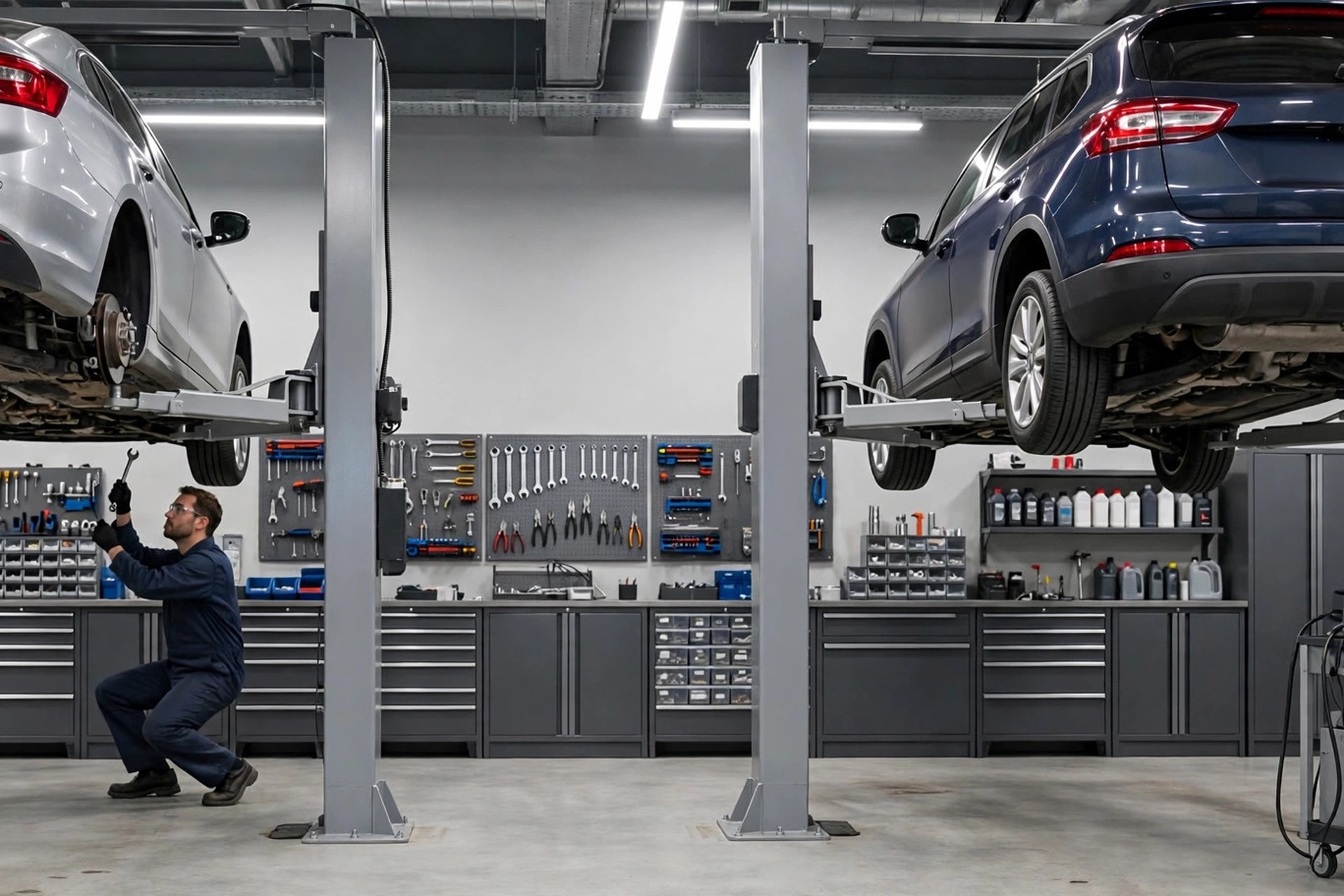
Service-due texts turn your customer database into a booking engine, filling slow days with maintenance work you already earned.
Approval follow-ups: stop estimates from going cold
Every shop knows the pattern. The tech finds $1,200 of needed work, the advisor calls the customer, the customer says “let me think about it,” and the estimate dies in a drawer. A week later the customer goes somewhere cheaper, or nowhere at all, and the bay time you held for the job goes to someone else. Approval follow-up texts fix this by keeping the conversation alive at exactly the moments customers decide.
The sequence is simple and it works. When an estimate stalls, send a text the same day: a short summary of the work, the total, and a one-tap approve button. If there is no reply, follow up in 48 hours with the safety angle: what the worn part risks if it waits. At seven days, send the final nudge with an easy scheduling offer. Three touches, each adding a reason, none of them pushy. Shops running this sequence commonly report closing 15 to 25 percent of stalled estimates that would otherwise have gone cold.
Two details make approval texts work. First, include photos. A picture of the worn brake pad next to a new one, or the cracked belt the tech found, does more convincing than any paragraph. Most shop software can attach inspection photos to the text thread. Second, make approval a single tap. The customer should be able to authorize the work without calling, without logging in, without friction. Every extra step loses a percentage of approvals, and approvals are pure margin on diagnostic work you already did.
Set a clear rule for when the sequence stops. Three follow-ups over seven to ten days, then the estimate goes quiet unless the customer re-engages. Chasing harder than that burns goodwill. The customers who say no this month often say yes next month when the noise starts, and a shop that stayed polite gets the call.
Review requests after pickup
Reviews are the front door of your shop. Most customers check Google reviews before choosing a repair shop, and the shops at the top of the map pack win a steady stream of new business without spending on ads. The problem is that happy customers almost never leave reviews on their own. They drive away satisfied and forget. A review request text, sent at the right moment, is what turns satisfaction into stars.
The right moment is within an hour of pickup, while the relief of a fixed car is fresh. The message is short: thanks for trusting the shop, a direct link to the Google review page, and nothing else. No discount offered for reviews, which violates Google’s policies and cheapens the ask. Just a clean request from the shop they just paid. Shops that text every customer after pickup commonly see review volume multiply several times over within a few months, because the only thing standing between a happy customer and a five-star review was friction.
Handle the unhappy ones first. A smart review flow asks one question before sending the link: “How was your visit? Reply 1 to 5.” Fives get the Google link. Anything lower routes to the service manager for a same-day call. This catches problems while they are still fixable and keeps them off your public profile. One prevented one-star review is worth dozens of five-star ones, because negative reviews sit at the top of the page and every prospective customer reads them.
Declined-service win-back
Your inspection reports are a goldmine sitting in your software. Every declined service is a customer who needed work, heard the price, and said not now. Not never, just not now. Declined-service win-back texts go back to those customers with a well-timed reminder, and they convert because the need never went away. The brakes kept wearing. The leak kept leaking.
The cadence that works is 30, 60, and 90 days after the decline. At 30 days, a simple check-in: the shop noticed the work was declined and wanted to see if the customer would like to get it scheduled. At 60 days, add the safety or cost angle: worn parts get more expensive when they fail completely. At 90 days, make it easy with a specific offer of times. Each message references the actual vehicle and the actual work, like naming the customer’s car and the brakes it needs. Generic messages get ignored; specific ones get answered.
Two rules keep win-back texts welcome instead of annoying. First, stop after the third touch if there is no reply, and stop immediately if the customer says the car was sold or the work was done elsewhere. Second, update the record when work gets completed, so the 90-day text never goes to someone who already paid for the job. Nothing kills trust faster than being reminded about brakes you already bought.
The rules: opt-in, compliance, and cadence
Texting customers is regulated, and the rules are strict enough that you should learn them once and follow them always. In the US, the core law is the TCPA: you need express consent before sending marketing texts, every message must identify your shop, and every message must offer a working opt-out, usually by replying STOP. Promotional texts need written consent, which can be a checkbox on your intake form or a keyword opt-in, as long as the customer clearly agreed to receive texts from your shop.
Transactional texts, appointment confirmations, ready-for-pickup notices, approval requests, sit in a lighter category because the customer expects them as part of the service. But the safest shops treat every text the same way: clear consent, shop name in the message, and STOP honored immediately and automatically. Your texting platform should handle opt-outs for you; never rely on staff remembering to remove someone manually.
Cadence is where shops win or lose customer goodwill. The table below shows the message types, how often each should go out, and the consent each one needs. The pattern is simple: service messages go to everyone who agreed to texts, marketing messages go only to those who opted into promotions, and nobody gets more than a couple of texts a month unless they are in an active repair conversation.
| Message type | How often | Consent needed | Example timing |
|---|---|---|---|
| Appointment confirmation | Every booking | Implied by the booking | Immediately after scheduling |
| Appointment reminder | Every booking | Implied by the booking | 24 hours before, plus morning-of |
| Ready for pickup | Every completed job | Implied by the repair order | When the car is done and the invoice is ready |
| Approval request and follow-ups | Up to 3 per stalled estimate | Implied by the repair order | Same day, 48 hours, 7 days |
| Review request | Every completed job | Agreed texts at intake | Within 1 hour of pickup |
| Service-due reminder | Per maintenance interval | Agreed texts at intake | 30 days before due, once more at 7 days |
| Declined-service win-back | Max 3 per declined job | Agreed texts at intake | 30, 60, and 90 days after the decline |
| Promotions and offers | Max 1 to 2 per month | Written promotional opt-in | Seasonal: winter check, summer AC, holiday offers |
Quiet hours are non-negotiable: no marketing texts before 8 AM or after 9 PM in the customer’s timezone, and most shops keep all automated texts inside business hours plus a small margin. The intake form is where consent gets collected: one clear checkbox for service texts and a separate one for offers and promotions. Two checkboxes, plain language, and a note that message rates may apply. That single form protects the whole program. Pair your texting with a matching email habit for the customers who prefer it; our guide to email marketing for auto repair shops covers the longer-form side of the same system.
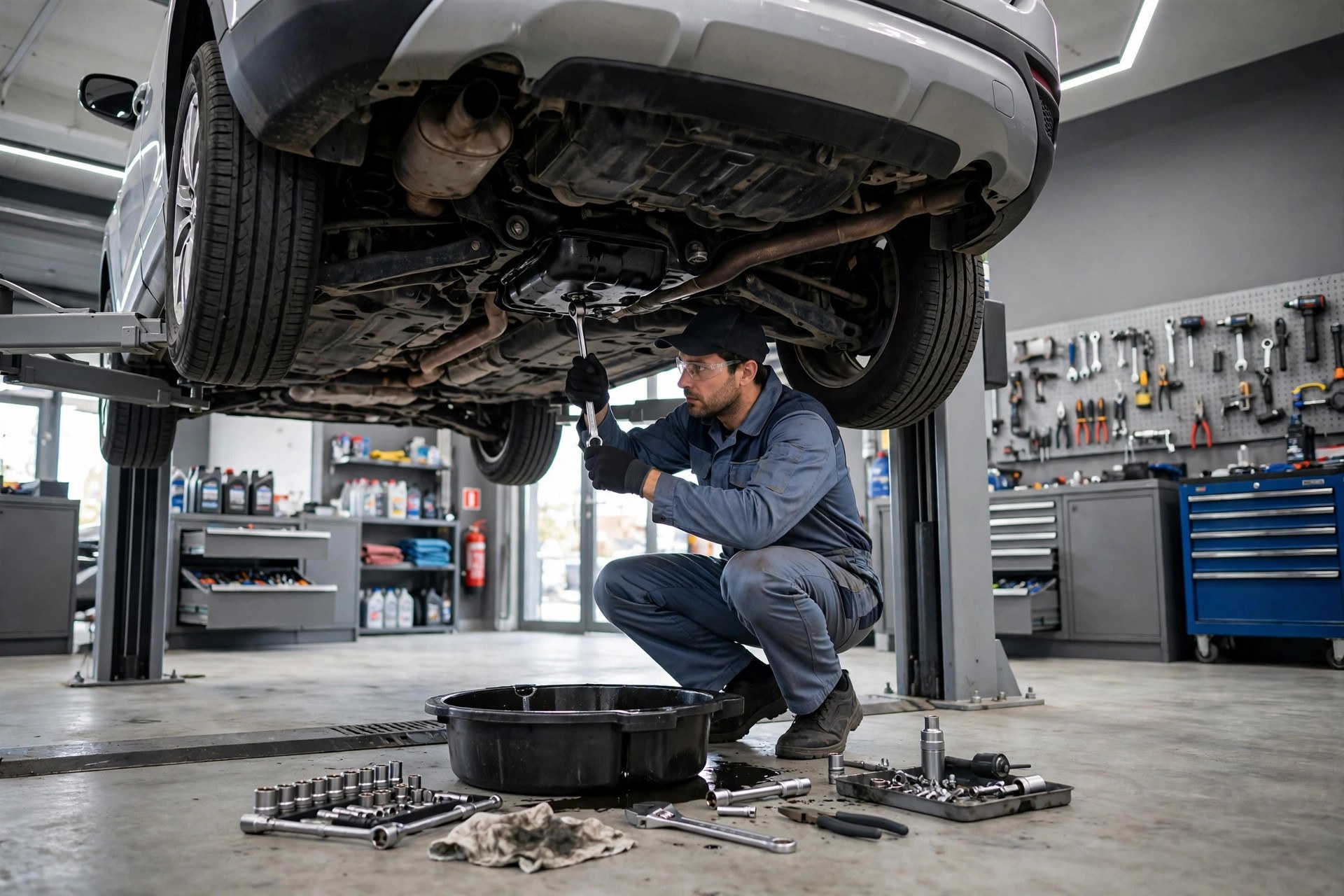
Maintenance work is the steadiest revenue in the shop, and it is exactly the work service-due texts bring back on schedule.
Message templates that get replies
Good shop texts share three traits: they name the shop, they name the vehicle or the job, and they end with one clear action. Below are templates for each message type. Replace the bracketed parts with your details and keep the tone the way you talk at the counter.
Service-due reminder
“Hi [Name], this is [Shop Name]. Your [Year Make Model] is due for an oil change based on your last visit. We have openings Tuesday and Wednesday this week. Reply YES and we will call you with times, or book here: [link]. Reply STOP to opt out.”
Approval request
“Hi [Name], this is [Shop Name]. Our tech found [brief description] during the inspection on your [Vehicle]. The total is $[amount], and we can finish it today if you approve. Photos here: [link]. Reply APPROVE to authorize, or call us with questions. Reply STOP to opt out.”
Approval follow-up, 48 hours
“Hi [Name], this is [Shop Name] following up on the [service] estimate for your [Vehicle] ($[amount]). Waiting risks [specific consequence, e.g. rotor damage]. Want us to get it scheduled this week? Reply YES. Reply STOP to opt out.”
Ready for pickup
“Hi [Name], this is [Shop Name]. Your [Vehicle] is ready. The total is $[amount]. We are open until [time] today. Reply STOP to opt out.”
Review request
“Hi [Name], thanks for trusting [Shop Name] with your [Vehicle] today. If everything went well, a quick review helps our shop a lot: [link]. Thanks again. Reply STOP to opt out.”
Declined-service win-back, 60 days
“Hi [Name], this is [Shop Name]. When we saw your [Vehicle] in [month], you decided to hold off on [service]. Just checking in, since waiting on this can lead to [consequence]. Want us to get you scheduled? Reply YES. Reply STOP to opt out.”
What it costs
Texting is one of the cheapest marketing channels a shop can run, because the per-message cost is measured in fractions of a cent and the software is priced for small business. The table below shows the typical layers.
| Cost layer | Typical price | Notes |
|---|---|---|
| Texting platform | $50 to $200 per month | Scales with message volume and features like automation and photo messaging |
| Per-message charges | Under a cent to 2 cents per segment | Often bundled into the plan up to a monthly limit |
| Dedicated number or short code | $2 to $15 per month for a local number | A local number with your area code gets better reply rates than a short code |
| Setup and template writing | $0 to $800 one time | DIY with templates is realistic; paid setup helps with software integration |
A realistic budget for an independent shop is $75 to $150 a month all-in, including the platform, a local number, and a few thousand messages. One recovered repair order a month, at a typical $350 to $500 ticket, covers the cost many times over. Before you pick a platform, compare features against your needs; our roundup of the best SMS marketing software for small business covers what to look for. And keep your appointment reminders consistent across channels; the appointment reminders for auto repair shops guide pairs directly with this one.
Mistakes that get you blocked
Texting without consent. Buying a list of numbers and blasting offers is illegal under the TCPA and can draw fines per message. Every number in your system must have agreed to hear from your shop. No exceptions, no gray areas.
No opt-out on every message. Skipping the STOP instruction, or honoring it slowly, is the fastest way to earn complaints and carrier blocking. Your platform must process opt-outs automatically and instantly.
Too many texts. A customer who gets four texts a month from their shop opts out, and you lose the channel entirely. Service messages are expected; keep promotional texts to one or two a month and never stack message types in the same week.
Generic messages. “Time for your service!” gets deleted. A message naming the customer’s car and the exact service due gets a booking. Use the vehicle, the service, and the date from your software in every message.
No reply path. A text that announces but does not invite a reply wastes the channel’s biggest advantage. Every marketing and reminder text should end with one clear action: reply YES, tap the link, or call the shop.
Sending at bad hours. A promotional text at 10 PM feels like spam no matter how good the offer is. Keep automated texts inside business hours, and keep the quiet-hours rule even for service messages when you can.
Forgetting the human backup. Automation handles the routine, but a customer who replies with a real question needs a real answer fast. Route text replies to the service counter during business hours and set a response-time target of 15 minutes.

Texting gives your service advisors their counter time back while customers get answers without playing phone tag.
Your rollout checklist
Work through these in order. Each one builds on the last.
- 1Pick a texting platform. One that integrates with your shop software, handles STOP automatically, and supports photo messages.
- 2Get a local number. Your area code on the sender ID beats a short code for reply rates and recognition.
- 3Fix the intake form. Two clear checkboxes: service texts and promotional offers, in plain language.
- 4Import and tag your customers. Phone numbers, vehicles, last visit date and mileage, open estimates, declined services.
- 5Write your templates. Confirmation, reminder, pickup, approval, review, service-due, and win-back, each with shop name and STOP.
- 6Build the service-due rules. Oil, inspection, tires, and fluids on mileage and time triggers from your software data.
- 7Build the approval sequence. Same-day text with photos, 48-hour follow-up, 7-day final nudge, then quiet.
- 8Turn on review texts. One question after pickup, fives get the Google link, low scores route to the manager.
- 9Route replies to the counter. Text conversations land with the service advisor during hours, with a 15-minute reply target.
- 10Measure monthly. Texts sent, replies, bookings from texts, estimates closed, reviews gained, opt-outs.
Frequently asked questions
Is SMS marketing legal for auto repair shops?
Yes, with proper consent. Customers must agree to receive texts, every message must identify your shop and offer a working opt-out, and promotional texts need clear written consent. Collect consent on your intake form, honor STOP replies instantly through your platform, and keep texts inside reasonable hours.
How much does SMS marketing cost a repair shop?
Most independent shops pay $50 to $200 a month for the platform plus a local number, with per-message costs under two cents often bundled into the plan. All-in, $75 to $150 a month is typical. One recovered repair order usually covers several months of cost.
How often should I text customers?
Service messages go out as needed: confirmations, reminders, pickup notices, and approval follow-ups. Marketing and reminder campaigns should stay at one to two texts per customer per month, never stacking multiple campaign types in the same week. Active repair conversations do not count against the limit.
Will customers get annoyed by shop texts?
Not if the texts are useful and expected. Pickup notices, approval requests with photos, and service-due reminders for their actual vehicle are welcome. Generic blasts and frequent promotions are what drive opt-outs. Relevance is the whole game.
Can I text customers who never opted in?
No. Texting numbers without consent violates the TCPA and risks fines per message, plus carrier blocking of your number. Build your list from your own customers through the intake form and in-shop signage, and never buy lists.
What is a good response rate for service-due texts?
Shops commonly see 8 to 15 percent of service-due texts turn into bookings, far above email campaign rates. Rates climb when the message names the vehicle and the specific service due, includes easy booking, and arrives at mid-morning on a weekday.
Should I use a short code or a local number?
A local number with your area code. Customers recognize it, reply to it like a normal text, and trust it more than a five-digit short code. Most small-business texting platforms offer local numbers for a few dollars a month.
Can texting integrate with my shop management software?
The major shop management systems integrate with the leading texting platforms, either directly or through a connector, pulling vehicle, mileage, and service history into messages automatically. Confirm the integration with your specific software before you commit, since automated service-due texts depend on that data feed.
How do I handle negative replies to review texts?
Route them to a human immediately. The pre-screen question catches low scores before the public link goes out, and the service manager calls the same day to fix the problem. A fast, genuine fix often turns the critic into a repeat customer, which is worth more than the review.
Do I still need email marketing if I text?
Yes, for different jobs. Texting wins for anything time-sensitive: approvals, pickups, reminders, and quick offers. Email wins for longer content: seasonal maintenance guides, new service announcements, and detailed explanations. Run both, and let customers pick their preference at intake.
Fill your bays with texts that cost pennies
Digital Hayder builds SMS marketing systems for auto repair shops: service-due reminders on mileage, approval follow-up sequences, review request flows, and declined-service win-back, all running on your real customer data. Tell us about your shop and we will design the texting program around it.
Contact Us