When a family loses someone, the funeral home’s website is often the first place they turn. They need the service time, the address, the obituary, and a way to send flowers or share a memory, and they need it at midnight on a phone, through tears, without hunting. A funeral home website is not a marketing brochure. It is a service desk for people on the hardest day of their lives, and it has to work perfectly at the worst possible moment. That changes what the website must do and what it should cost. This guide breaks down real price bands for funeral home websites in the US, from do-it-yourself builders to full agency builds: what each tier includes, what funeral home sites specifically need, what the ongoing costs look like, and how to choose a partner who understands the sensitivity of the work.
The quick answer
- DIY website builders: $150 to $600 a year. Fine for a simple presence, but obituary features are usually missing or clunky.
- Freelancer build: $1,500 to $5,000 one-time. A solid custom site with obituaries, service pages, and directions.
- Agency build: $5,000 to $15,000 one-time. Full design, obituary system, grief resources, and local search optimization.
- Funeral-specific platforms: $200 to $500 a month. Built for the industry with obituaries and tribute features included.
- Ongoing costs: budget $50 to $300 a month for hosting, maintenance, updates, and obituary management.
- What matters most: fast obituary publishing, clear service information, mobile-friendly design, and a calm, dignified feel.
Why a funeral home website is different
Most business websites exist to persuade. A funeral home website exists to serve, and the difference shapes every design decision. Visitors arrive in grief, often on a phone, often late at night, looking for specific facts: when is the service, where is it, where do I send flowers, how do I get there. If those answers are buried under stock photos and marketing copy, the site has failed at its one job.
The audience is also different. A large share of visitors are older adults who may not be comfortable with complex navigation. Small text, clever menus, and multi-step forms all cost you the very people you are trying to help. The best funeral home websites are radically simple: large readable type, obvious contact information on every page, and obituaries reachable in one tap from the homepage.
Finally, the website carries the firm’s reputation in a way few other industries match. Families choose funeral homes on trust, and a dated, broken, or confusing website quietly suggests a dated operation. In a business where a single family served well refers the next ten, the website is part of the care you provide. It should feel like the building does: calm, dignified, and organized.
What a funeral home website actually needs
Before talking price, it helps to know what the money buys. A funeral home website has a specific job list, and any quote you receive should cover all of it.
Obituaries and service details
Obituaries are the heart of the site and the main reason people visit. Each obituary needs a photo, the service date and time, the location, and options to send flowers, leave a tribute message, or share a memory. The critical feature is speed: when a family calls at 9 pm, the obituary should be publishable that night by your staff, not by a developer next week. Any website plan must include a simple obituary publishing workflow your team can run themselves. Ask every vendor to demonstrate it before you sign.
Practical information, instantly findable
Service information, pricing transparency, directions with parking details, and contact options must be obvious. Families increasingly expect general price information online before they call, and regulators have long required funeral homes to provide itemized price lists on request. A clear “our services and pricing” page answers questions early and builds the trust that wins the call. Directions deserve special care: grieving visitors driving to an unfamiliar chapel need parking instructions and a map that works on a phone, not just a street address.
Grief resources and trust signals
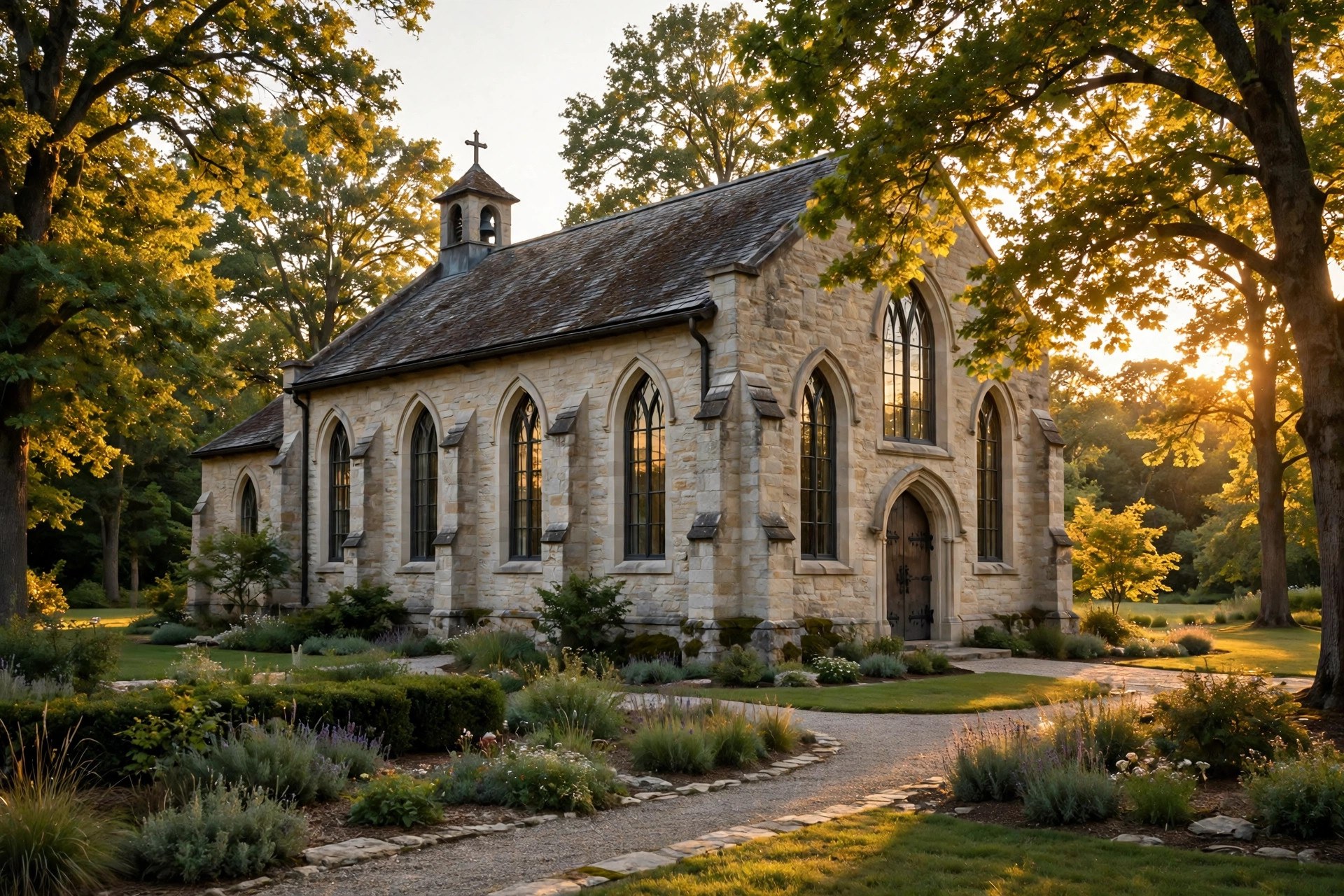
A grief resources section, with articles on what to expect, how to help children, and local support groups, serves families after the service and keeps them returning to your site. Trust signals matter too: the firm’s history, staff profiles with photos, testimonials from families served, and any community involvement. In a trust-driven business, the “about us” page is a sales page wearing a suit. Photographs of the actual building, the chapel, and the grounds beat stock imagery every time.
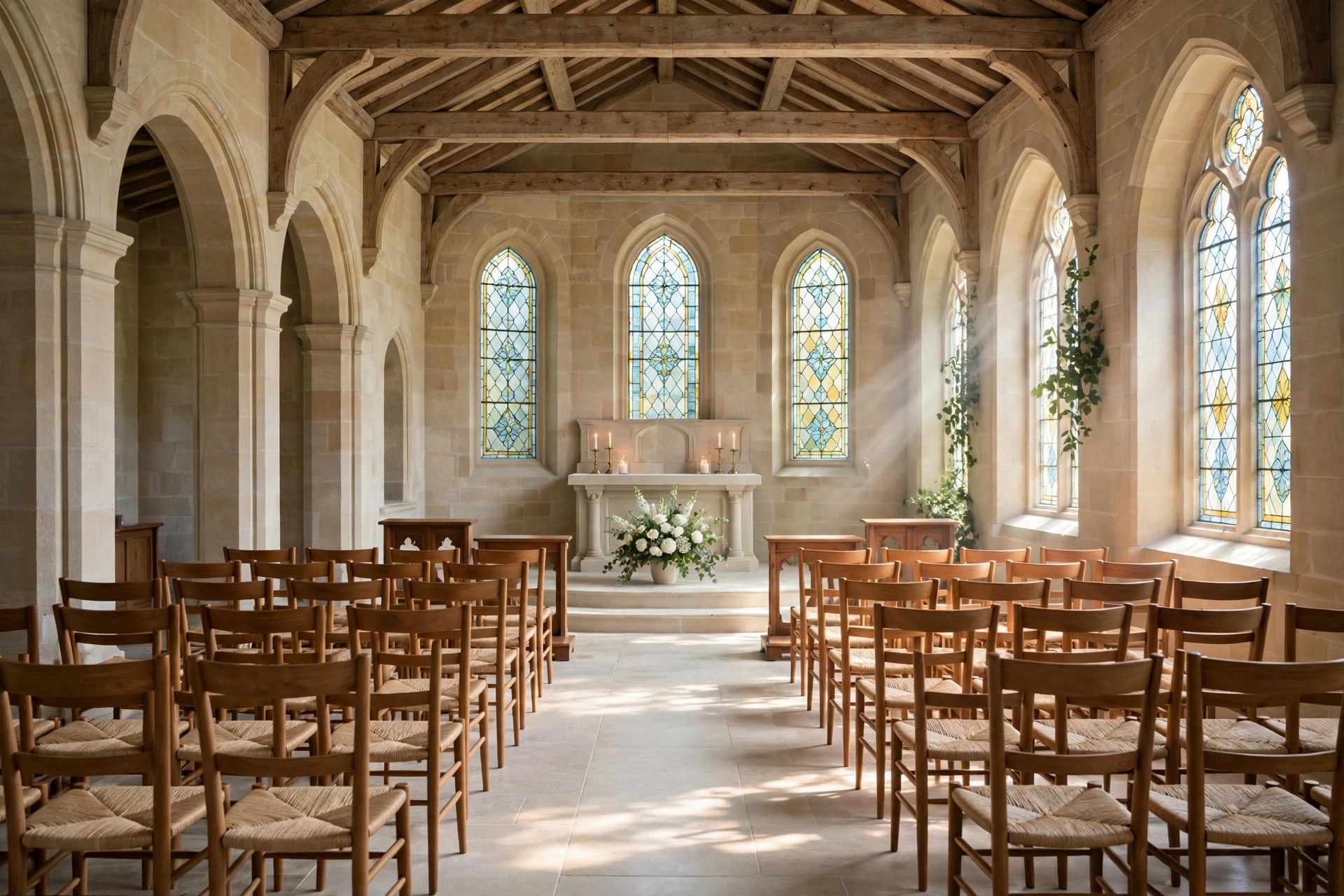
Your website should feel like your building: calm, dignified, and easy to navigate.
What a funeral home website costs: the real price bands
Website pricing for funeral homes falls into four tiers. The right one depends on your budget, your technical comfort, and how much of the work you want handled for you.
Do-it-yourself builders: $150 to $600 a year
Website builders with drag-and-drop editors can produce a decent funeral home site for the cost of the subscription: typically $150 to $400 a year for the plan plus $15 to $25 a year for the domain. This tier works if someone on staff is comfortable with basic web editing and the site needs are simple: service pages, directions, contact forms, and a basic obituary list. The limitation is obituaries. Builders rarely offer the tribute features families expect, like guest books and flower ordering integrations, so you end up with a plain list of names. Design quality also depends entirely on whoever builds it. A careful staff member can make it dignified. A rushed one makes it look temporary.
Freelancer build: $1,500 to $5,000 one-time
A freelance web designer or developer builds a custom site on a platform like WordPress for a one-time fee. At $1,500 to $3,000 you get a clean, mobile-friendly site with service pages, an obituary section your staff can update, directions, and contact forms. At $3,000 to $5,000 you add custom design, a proper obituary publishing workflow, grief resource pages, photo galleries of the facility, and basic local search optimization. This is the sweet spot for most independent funeral homes: a professional result without agency overhead. Vet freelancers on funeral or similarly sensitive work, and confirm in writing who handles updates after launch.
Agency build: $5,000 to $15,000 one-time
A web design agency brings strategy, custom design, copywriting help, and technical depth. The $5,000 to $8,000 range covers a full custom design with advanced obituary features, tribute walls, flower shop integrations, and local SEO foundations. The $8,000 to $15,000 range adds professional photography direction, video, multi-location support, and deeper integrations with your case management or obituary software. Agencies make sense for firms with multiple locations, a rebrand in progress, or a site that must rank competitively in a crowded metro market. Ask for funeral industry experience specifically; an agency that has never built an obituary workflow will underestimate it.
Funeral-specific platforms: $200 to $500 a month
Several companies build websites exclusively for funeral homes, sold as a monthly subscription. These platforms come with obituary publishing, tribute features, and grief resources built in, which removes the biggest technical risk. The trade-off is monthly cost forever and limited design flexibility: your site will resemble other firms on the same platform. For a small firm that wants the industry features without managing a website, the subscription can be worth it. Compare the five-year total against a one-time build before deciding.
| Tier | One-time cost | Ongoing cost | Best for |
|---|---|---|---|
| DIY builder | $0 to $200 setup | $150 to $600 a year | Simple presence, staff comfortable editing |
| Freelancer | $1,500 to $5,000 | $50 to $150 a month | Most independent funeral homes |
| Agency | $5,000 to $15,000 | $150 to $300 a month | Multi-location firms, competitive markets, rebrands |
| Funeral platform | $0 to $1,000 setup | $200 to $500 a month | Firms wanting industry features with no management |
Ongoing costs most quotes leave out
The build price is only the first check. Budget for the yearly reality: domain renewal ($15 to $25), hosting ($100 to $400 a year for quality managed hosting), security and software updates, and content updates as staff, services, and prices change. If nobody on staff will touch the site, a maintenance plan at $50 to $300 a month covers updates, backups, and small changes.
Obituary management has its own cost in staff time. Someone must publish each obituary promptly, proofread it, upload the photo, and moderate tribute messages. That is 15 to 30 minutes per obituary, and it happens on evenings and weekends. Factor it into staffing, not just software. A beautiful obituary system that nobody has time to feed is worse than a simple one that stays current.
Local search optimization is the other ongoing line. Keeping your Google Business Profile current, gathering family reviews where appropriate, and maintaining accurate service information across directories takes a few hours a month. In most markets, the funeral homes that show up first in local results are the ones that treat this as routine. It is quiet work that compounds.

Grief resource pages and facility photos extend the care families feel beyond the service itself.
What drives the price up or down
Five factors move a quote more than anything else. Custom design versus templates is the biggest: a fully custom design costs two to three times a polished template adaptation. Obituary complexity is next: a simple list is cheap, while tribute walls, photo albums, candle lighting, and flower ordering integrations add real development time. Content volume matters: a 10-page site costs less than a 40-page one with extensive grief resources. Photography and video shift the feel enormously and the price with it; professional photos of your actual building are worth budgeting for. Finally, local SEO depth: basic setup is included in most builds, but competitive markets need ongoing work that belongs in the monthly budget, not the build quote.
To keep costs down without cutting what matters, spend on the obituary workflow, mobile design, and real photography, and save on custom animations, elaborate effects, and pages nobody visits. A fast, simple, dignified site outperforms a slow, flashy one with grieving visitors every time.
How to choose the right partner
The wrong vendor in this industry is not just a wasted budget. It is a website that mishandles grieving families. Choose carefully.
Questions to ask every candidate
- Show me the obituary publishing workflow. Can my staff publish one at 10 pm without calling you?
- Show me two funeral home or similarly sensitive sites you have built, and let me click through them on my phone.
- Who writes the content? Do you interview our staff, or do we hand you finished text?
- What happens when something breaks at 8 pm on a Saturday? What is the actual response time?
- Who owns the website, the domain, and the content if we part ways? Get this in writing.
- What are the total first-year and ongoing costs, itemized, with nothing bundled opaquely?
The ownership question deserves emphasis. Some vendors register the domain in their name or build on proprietary systems that cannot be moved. If you ever leave, you start over. Own your domain, insist on standard platforms or exportable content, and keep admin access from day one.
Red flags
Walk away from vendors who cannot demonstrate an obituary workflow, who show only generic business sites, who bundle everything into one opaque monthly fee with no itemization, or who pressure you to sign before you have seen real work. Be cautious with anyone who proposes heavy animations or autoplay video on the homepage: grieving visitors need calm, not spectacle. And be wary of the cheapest bid by a wide margin. In web work, a quote far below the rest usually means the obituary features, the mobile testing, or the post-launch support were quietly left out.
For context on what similar service businesses pay for web design, our guides to pool company website costs and cleaning company website costs show how the same pricing tiers play out in other trades.
How long a funeral home website takes to build
Timelines depend on the tier and on how fast you provide content and feedback. A DIY build can be live in a weekend if someone focuses. A freelancer typically needs 3 to 6 weeks: a week of design, two of building, and the rest in content and revisions. An agency runs 6 to 12 weeks with strategy, copywriting, and testing phases. Funeral platform setups are fastest, often 1 to 3 weeks, since the structure already exists.
The most common delay is content: staff photos, service descriptions, pricing pages, and the firm’s history. Gather these before the project starts and you cut weeks off the timeline. The second most common delay is feedback rounds that never end. Agree up front on how many revision rounds are included and who gives the final approval.
| Phase | Freelancer timeline | Agency timeline | Your job in this phase |
|---|---|---|---|
| Discovery and planning | 3 to 5 days | 1 to 2 weeks | Share goals, examples you like, and all content |
| Design | 1 to 2 weeks | 2 to 3 weeks | Review mockups, give consolidated feedback |
| Build and obituary setup | 1 to 2 weeks | 2 to 4 weeks | Test the obituary workflow yourself |
| Content and revisions | 1 week | 1 to 2 weeks | Approve final text and photos |
| Launch | 2 to 3 days | 1 week | Confirm analytics, backups, and admin access |

A calm, readable design and a staff-friendly obituary workflow matter more than any visual effect.
Mistakes to avoid
The most expensive mistake is treating the website as a brochure instead of a service desk: beautiful homepage, but obituaries buried three clicks deep and no service times on the page. The second is stock photography of models pretending to grieve. Families recognize it instantly and it cheapens the trust you have built over decades. Use photos of your real building, your real chapel, and your real staff.
The third is neglecting mobile. Most obituary visits happen on phones, often from a car outside the chapel. If the service time is hard to read on a small screen, the site has failed. Test every key page on an actual phone, not just in a desktop preview. The fourth is small, low-contrast text. Your audience includes older adults; body text should be large and dark on a light background, always. Our website accessibility guide for small business covers readable design in more depth.
The fifth is launching and abandoning. An obituary section with nothing published in months, a “recent news” page from years past, staff pages naming people who retired, all of it quietly tells visitors the firm is not paying attention. Assign one person to own the website and give them thirty minutes a week. That is enough to keep it current.
Your rollout checklist
Work through these in order and the project stays on budget and on schedule.
- 1List what the site must do. Obituaries, service info, pricing page, directions, contact options, grief resources. Everything else is optional.
- 2Set the budget tier. DIY, freelancer, agency, or funeral platform, based on the price bands above and your staff capacity.
- 3Gather content first. Staff photos and bios, service descriptions, pricing, firm history, building photos. Content delays kill timelines.
- 4Shortlist two or three vendors. Ask for funeral or sensitive-industry work and a live obituary workflow demo.
- 5Get itemized quotes. Build cost, first-year total, and ongoing costs separated. No opaque bundles.
- 6Confirm ownership in writing. You own the domain, the content, and admin access from day one.
- 7Test on a phone before launch. Obituary, service time, directions, and contact form, all readable and tappable.
- 8Train staff on obituary publishing. Everyone who might need to publish one practices before launch night.
- 9Set up analytics and backups. Know your traffic, and never risk losing the site to a failed update.
- 10Assign a website owner. One person, thirty minutes a week, keeps obituaries current and pages accurate.
Frequently asked questions
How much does a funeral home website cost?
DIY builders run $150 to $600 a year, freelancer builds cost $1,500 to $5,000 one-time, agency builds run $5,000 to $15,000, and funeral-specific platforms charge $200 to $500 a month. Most independent funeral homes land well with a freelancer build plus $50 to $150 a month in maintenance.
What features does a funeral home website need?
Fast staff-publishable obituaries with photos and tribute options, clear service and pricing information, directions with parking details, click-to-call contact on every page, grief resources, staff profiles, and a calm mobile-friendly design with large readable text.
Can I build a funeral home website myself?
Yes, with a drag-and-drop builder, for $150 to $600 a year. It works for a simple presence, but obituary tribute features are usually limited. If obituaries are central to how families use your site, a freelancer or funeral platform serves you better.
How much does it cost to maintain a funeral home website?
Budget $50 to $300 a month for hosting, updates, backups, and small changes, plus 15 to 30 minutes of staff time per obituary for publishing and moderation. Assign one person to own the site so nothing goes stale.
Should a funeral home website list prices?
Yes. Families increasingly expect general price information before calling, and transparency builds the trust that wins the first call. A clear services and pricing page answers questions early and positions your firm as straightforward and honest.
How long does it take to build a funeral home website?
A freelancer typically needs 3 to 6 weeks, an agency 6 to 12 weeks, and a funeral platform setup 1 to 3 weeks. Gathering your content, photos, and service descriptions before the project starts is the single biggest timeline saver.
What is the most important page on a funeral home website?
The obituary section. It draws the most visits and serves families at their most vulnerable moment. It must be reachable in one tap from the homepage, readable on a phone, and publishable by your staff within minutes.
Do funeral homes need professional photography for their website?
It helps more here than in most industries. Real photos of your building, chapel, and grounds build trust that stock imagery cannot. If the budget is tight, prioritize a half-day shoot of the facility over any design flourish.
How do I choose between a freelancer, an agency, and a funeral platform?
Choose a freelancer for the best value on a custom site, an agency for multi-location firms or competitive markets, and a funeral platform if you want industry features with zero management. In every case, demand a live demo of the obituary workflow before signing.
What should I avoid in a funeral home website?
Stock photos of grieving models, small low-contrast text, buried obituaries, autoplay video or heavy animations, opaque bundled pricing from vendors, and giving up domain ownership to a provider. Calm, simple, and readable wins.
A website worthy of the families you serve
Digital Hayder designs websites for funeral homes: calm, dignified design, obituary workflows your staff can run at midnight, clear service and pricing pages, and mobile-first layouts that work for every visitor. Tell us about your firm and we will design the site around the families you serve.
Contact Us