Picture a Tuesday afternoon. Your lead tech is in an attic running a new circuit, your apprentice is on a panel upgrade, and the office phone rings three times between 1:00 and 3:00. One caller needs a quote for a ceiling fan install. Another wants pricing on a 200-amp panel upgrade. The third hangs up after four rings. Nobody calls back, nobody gets a text, and by Thursday all three have hired someone else. That is the quiet, daily leak in most electrical companies: not bad work, not bad reviews, just leads that cool off because nobody touched them fast enough or often enough. Electrical work is won by whoever responds first and follows up the longest. The homeowner with a dead outlet does not have loyalty to your brand. They have an urgent problem, a phone, and three other electricians one tap away. This guide builds the complete follow-up system that fixes the leak: instant response to every inquiry, quote follow-up sequences that turn estimates into booked jobs, booking and reminder automation that kills no-shows, and reactivation campaigns that turn your old customer list into new revenue.
The quick answer
- Speed wins the job: most homeowners hire the first electrician who responds. An instant text on every missed call and form fill captures leads your competitors lose.
- Quotes need 4 to 7 touches: most electricians send one quote and never follow up. A short sequence of calls, texts, and emails over 10 days closes far more estimates.
- Automate the first response, personalize the rest: let the system fire the instant reply and reminders; you or your office handle the real conversation.
- Reminders cut no-shows: automated confirmation and day-before texts protect the schedule and keep techs on billable work.
- Your past customers are a revenue source: annual safety inspections, surge protection, and panel check campaigns reactivate old jobs cheaply.
- Cost is modest: a basic text and CRM setup runs $30 to a few hundred dollars a month; the extra booked jobs pay for it many times over.
Why follow-up decides who gets the job
Electrical work is different from most home services. A lot of it is urgent or semi-urgent: a breaker that keeps tripping, an outlet that sparked, a panel that smells hot. When a homeowner is worried about something electrical, they do not comparison-shop for a week. They call two or three electricians and hire whoever picks up first or calls back first. Industry research widely cited across sales studies finds that roughly three out of four buyers go with the company that responds first, and contact rates drop sharply after the first few minutes. The pattern is plain in the trade: the electrician who answers at 7:40 PM gets the panel upgrade. The one who calls back at 9:00 AM the next morning gets voicemail. Follow-up is the second half of the same game. Even when you do answer, the homeowner often needs a day or two to decide on a $3,000 panel upgrade. If you never check in again, the job goes to whoever did. Speed gets you in the door; persistence closes the estimate.
The math on slow response
Run the numbers for a typical small electrical shop. Say your website, Google profile, and ads produce 60 quote requests a month. With a 25 percent close rate and no follow-up system, that is 15 booked jobs. Now imagine you respond to every inquiry within five minutes with an automated text, follow up every unsold quote four times over ten days, and recover half your missed after-hours calls with an instant text-back. The close rate on the same 60 leads rises to 35 percent or better. That is 21 jobs instead of 15: six extra jobs a month on the exact same lead flow. At a blended ticket of $350 to $450, that is $2,100 to $2,700 a month in revenue you were already paying to generate. Most shops spend the year chasing more leads when the cheapest new revenue is sitting in the leads they already have. For a broader look at where those leads come from, see our electrician marketing ideas guide.
Where electrician leads leak out of the bucket
Before building the system, map where leads actually come from and where each one dies. The five usual sources for an electrical company are phone calls, website contact forms, Google Business Profile calls and messages, Local Services Ads leads, and third-party sites like Thumbtack or Angi. Each has its own leak. Phone calls die when nobody answers: techs are in attics, the office is a one-person operation, and after 5 PM the phone goes to voicemail. Website forms die in the inbox: someone submits at 10 PM and gets a reply at 9 AM, by which time they have called three competitors. Google profile calls die the same way as phone calls, plus the missed business messages nobody checks. Local Services Ads leads die from slow response too, and Google tracks your answer rate, so slowness costs you placement as well as jobs. Third-party leads die from underbidding wars and zero follow-up. Write down your five sources and honestly score each one: what percentage gets a response within five minutes, within an hour, ever? Most shops are shocked by the answer. The fix for every leak is the same: an instant automated touch, then a real human, then a sequence until the lead books or says no.

Every unsold estimate is a follow-up sequence waiting to happen. The quote you sent Tuesday is still deciding Thursday.
The 5-minute rule and instant response automation
The single highest-impact change is responding to every inquiry within five minutes, around the clock. You do not need to be awake at 2 AM to do it. Automation handles the first touch; you handle the conversation when you are available. Here is what the instant response layer looks like in practice.
Instant text on every form fill
When someone submits your quote form, the system fires a text within a minute: “Hi, this is Mike with Bright Spark Electric. Got your request about [service]. Are mornings or afternoons better for an estimate?” Personalize the service type from the form. The text does three jobs: it proves you are alive, it asks a question that invites a reply, and it moves the lead from your inbox to a conversation. If they reply, your office or a tech picks it up. If they do not, the sequence continues with a follow-up text a few hours later and a call the next morning. Compare that to the old way: a form notification email that sits until someone checks it. Leads contacted in the first five minutes convert at a multiple of leads contacted an hour later, so this one automation is worth more than most ad campaigns.
Missed-call text-back for every unanswered ring
Missed calls are the biggest single leak, and electricians miss a lot of them. An instant text fires the moment a call goes unanswered: “Sorry we missed your call. This is Bright Spark Electric. What electrical work do you need help with?” After-hours calls get a variant that sets expectations: “Thanks for calling Bright Spark Electric. We are closed right now but we answer texts first thing in the morning. What do you need?” Emergency callers can be routed differently: offer a 24-hour emergency line or an on-call tech option. The text-back catches the caller while they are still looking at their phone, which is exactly when the decision happens. Our full playbook for this is the missed-call text-back for electricians guide.
Speed on Local Services Ads and Google messages
Local Services Ads leads arrive with a phone number and a job description, and Google grades you on response time and answer rate. Wire these leads into the same instant-text flow so every LSA inquiry gets a text within minutes, not hours. The same applies to Google Business Profile messages: most shops never check them. Route them into one inbox with your calls and forms so nothing sits unseen. Fast response here does double duty: it wins the job and it keeps your ad placement strong, which keeps the lead flow coming.
Quote follow-up sequences that win panel upgrades
Here is the part most electricians skip entirely. You spend an hour on a panel upgrade estimate, email the quote, and never follow up. The homeowner sits on a $3,200 decision, the competitor follows up twice, and you lose a job you already earned. A quote follow-up sequence is a short, polite series of touches over about ten days. It is not pushy. It is professional persistence, and big-ticket electrical work needs it because the decision takes time.
The 10-day quote sequence
Day 0, within an hour of sending the quote: a text confirming it arrived and inviting questions. “Hi Sarah, just sent your panel upgrade quote. Happy to walk through any of the line items. Want me to call tonight or tomorrow morning?” Day 2: a short call from the office. If no answer, leave a voicemail and send a text. “Tried you this morning. The quote is good through Friday. Any questions on the panel specs?” Day 5: an email with something useful, not a nag: a one-page explanation of why a 200-amp panel matters for an EV charger and future additions, or photos of a recent panel upgrade. Day 7: a text with a soft deadline. “We can hold your quote pricing through next week. Want me to check Thursday or Friday for the install?” Day 10: the honest close. “I will close out your quote file this week. If the timing changes, just reply and we will reopen it.” Then stop. Five touches, mixed channels, ten days. Most electricians do one. The difference in close rate is dramatic, especially on jobs over $1,500 where the homeowner is comparison shopping.
Scripts for the two hard moments
Two moments kill quotes: the price objection and the “we are getting other bids” stall. For price, do not discount first. Ask: “Is it the total, or is there a part of the scope you would like to adjust?” Often the homeowner is fine with the price but wants the permit, the drywall repair, or the timeline clarified. For the other-bids stall, respond with confidence, not pressure: “That makes sense for a job this size. Two things to compare: whether the other quote includes the permit and inspection, and what panel brand they are installing. We use [brand] with a [length] warranty. I am here when you are ready to compare.” Then keep the sequence running. Price shoppers still buy from the company that stayed helpful the longest.

Instant texts, quote reminders, and booking links all run from the same phone system. The office never has to remember.
Booking, confirmation, and reminder automation
Winning the quote is only half the battle. The job still has to happen, and every missed estimate appointment or no-show service call costs you a tech hour you cannot get back. Booking automation puts a scheduling link in every quote and every text, so the homeowner books themselves instead of playing phone tag. Confirmation automation locks it in: the moment a job is scheduled, the customer gets a text with the date, the arrival window, the tech’s name, and what to have ready. Reminder automation protects the slot: a text the day before and another the morning of, each with a confirm or reschedule button. Automated reminders routinely cut no-shows by a third to a half in home services, because most no-shows are not cancellations. They are forgotten appointments. One line in the reminder does heavy lifting for the office too: “Reply C to confirm or R to reschedule.” The customer who reschedules early frees the slot for someone on the waitlist. The customer who confirms shows up. Your techs stop driving to empty houses.
The estimate-booking link
Put a booking link everywhere the quote lives: in the quote email, in the follow-up texts, on the thank-you page after a form fill. “Pick a time that works for you” beats “call us to schedule” because it removes a step. Let customers choose estimate windows, and sync the calendar so double-booking cannot happen. For emergency calls, skip the link and go straight to a human or an on-call tech. The link is for planned work, which is most of your revenue.
Reactivation: your past customers are the cheapest revenue you own
Every electrical company sits on a database of past customers and never touches it. Those people already trust your techs, they already paid you once, and electrical work repeats: panels age, codes change, homes add EV chargers and hot tubs, and safety inspections are due every few years. A reactivation campaign is a broadcast to that list with one clear offer, run two or three times a year. The cost is a few cents per text or email. The return is jobs with zero acquisition cost.
Campaigns that work for electricians
The annual safety inspection is the classic: “It has been a while since we serviced your home. Our 21-point electrical safety inspection is $189 this month and includes a full panel check. Reply YES and we will find you a slot.” Surge protection sells well before storm season. Panel tune-ups and GFCI checks work for older homes. Code-compliance reminders work when local codes change. Segment the list by job history: customers who had a panel upgrade three or more years ago get the panel check; customers with older homes get the safety inspection. A list of 800 past customers with a 3 to 5 percent response rate is 24 to 40 booked jobs from one campaign. Run it in spring and fall when schedules have room, and it fills the gaps between big jobs.
Review requests as a reactivation side effect
Every completed job should trigger an automated review request by text within a day or two of the visit. Reviews feed your Google profile, which feeds your call volume, which feeds the whole system. Time the ask while the relief is fresh: the lights are back on, the panel is quiet, the tech was great. Make it one tap with a direct link. A steady flow of new reviews also protects you when a bad one lands. The shops with 200 recent reviews shrug off a one-star. The shops with 14 do not.
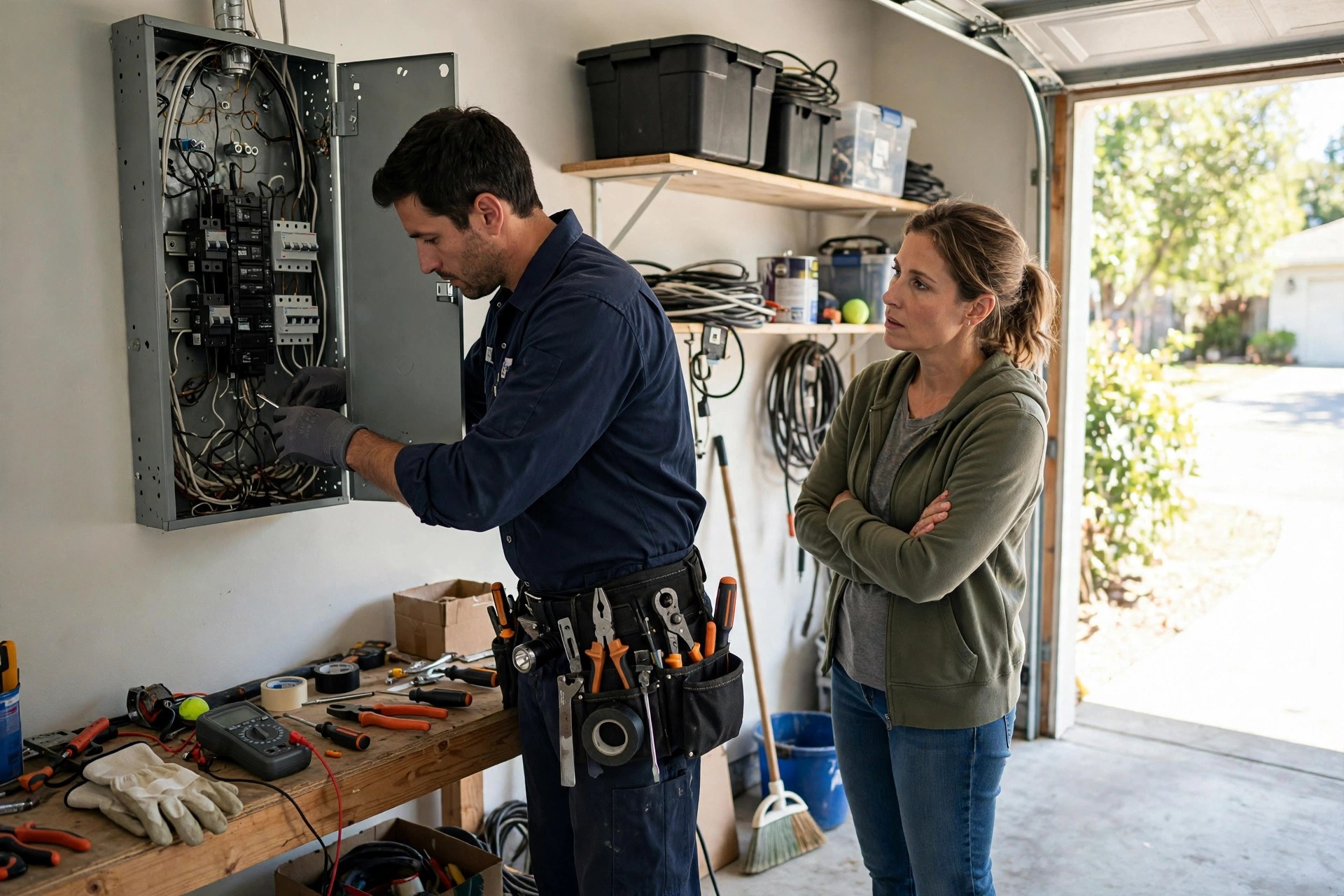
Past customers with aging panels are your best reactivation audience. They already trust the tech at the door.
What it actually costs
Follow-up automation costs far less than the jobs it saves. The price depends on how much you build yourself and how much you hand to a system or an agency. Here are the realistic bands for a small to mid-size electrical company in the US.
| Setup | Typical monthly cost | What you get | Best for |
|---|---|---|---|
| DIY: phone + spreadsheet + manual texts | $0 to $30 | Manual follow-up, no automation, easy to forget | One-truck shops just starting |
| Texting platform with automations | $30 to $80 | Instant texts, missed-call text-back, reminders, basic sequences | Shops that want the core wins cheap |
| Trade CRM with built-in automation | $80 to $350 | Full pipeline, quote follow-up, scheduling, review requests, reporting | Growing shops with an office person |
| Done-for-you by an agency | $297 to $997 | System built and managed: texts, sequences, reactivation, reporting | Owners who want it handled |
Setup costs run from nearly zero for DIY to $1,000 to $3,000 for a done-for-you build that wires in your phone system, builds the sequences, and writes the templates. Watch for per-message fees on texting platforms: most charge 1 to 3 cents per text segment on top of the monthly fee, plus a monthly charge for the phone number. Also budget for A2P 10DLC registration, which US carriers now require for business texting; it is a small one-time and monthly fee that keeps your messages delivering instead of getting filtered as spam. Before you spend more on ads, check what Google Ads costs for electricians and ask whether the same money works harder inside your follow-up system.
Setting it up: the rollout in order
Do this in order and you will have the core system running in two to three weeks. First, list every lead source and score the current response time for each. You cannot fix what you have not measured. Second, get a business texting number and register it for A2P 10DLC so your messages reach phones instead of spam filters. Third, connect the phone system so missed calls trigger the instant text-back automatically. Fourth, wire the website form and Google profile messages into the same inbox and the same instant-text flow. Fifth, write the templates: the instant replies, the 10-day quote sequence, the booking confirmations, the day-before reminders, and one reactivation campaign. Keep every message short, personal, and signed by a real name. Sixth, build the sequences in the tool and test them with your own phone number before any customer sees them. Seventh, assign one owner in the office who watches the inbox daily and handles replies the automation cannot. Automation starts conversations; humans close them. Eighth, run the first reactivation campaign to the past-customer list. Ninth, review the numbers weekly for the first month: response time, quote close rate, no-show rate, and revenue per campaign. Tenth, tighten what works and cut what does not.
Common mistakes that kill follow-up
Seven mistakes show up in almost every shop that tries this and stalls. One: texting customers without proper consent. US carriers and the TCPA require opt-in for marketing texts; get permission on the form, on the estimate, and at the door, and keep service texts separate from promotional ones. Two: generic messages that read like a robot wrote them. “Dear customer, your quote is ready” loses to “Hi Sarah, your panel quote is ready. Want me to walk through it tonight?” Three: no booking link. Every quote and every follow-up should make booking one tap, not a phone call. Four: calling once and quitting. Most jobs are won on the third to fifth touch, not the first. Five: no after-hours coverage. A huge share of electrical calls come in the evening when the office is closed; if nothing responds, the lead is gone. Six: not tracking where leads come from. If you do not tag the source, you cannot tell whether the money belongs in Google Ads, the website, or the truck wraps. Seven: training nobody. The system needs one person who owns the inbox, answers the tricky replies, and keeps the templates fresh. Software without an owner goes stale in a month.
Your rollout checklist
Work the list in order. Check each box before moving on.
- 1Audit every lead source. List calls, forms, Google messages, Local Services Ads, and third-party leads. Score the current response time for each one.
- 2Get a business texting number. Register it for A2P 10DLC so messages deliver instead of landing in spam filters.
- 3Turn on missed-call text-back. Every unanswered ring fires an instant text within a minute, day and night.
- 4Wire in the website form and Google messages. One inbox, one instant-text flow, nothing sitting unseen overnight.
- 5Write the quote follow-up sequence. Five touches over ten days: text, call, useful email, deadline text, honest close.
- 6Add booking links everywhere. Quote emails, follow-up texts, and the thank-you page all carry a one-tap scheduling link.
- 7Build confirmations and reminders. Instant confirmation on booking, day-before text, morning-of text, each with confirm or reschedule.
- 8Launch review requests. Automated text within two days of every completed job with a direct review link.
- 9Run the first reactivation campaign. Annual safety inspection or panel check offer to the full past-customer list.
- 10Review weekly for a month. Track response time, quote close rate, no-show rate, and revenue per campaign. Keep what works.
Frequently asked questions
How fast should an electrician respond to a new lead?
Within five minutes. Homeowners with electrical problems hire the first company that responds, and contact rates fall sharply after the first few minutes. Use automated texts for the instant reply so the speed does not depend on anyone being at a desk.
How many times should I follow up on an electrical quote?
Plan four to seven touches over about ten days across text, phone, and email. Most electricians follow up once or not at all, so persistence alone wins a large share of undecided quotes, especially on jobs over $1,500.
What should the first text to a new lead say?
Confirm you received their request, name the service they asked about, and ask a question that starts a conversation: “Hi, this is Mike with Bright Spark Electric. Got your request about a panel upgrade. Are mornings or afternoons better for an estimate?” Keep it short and signed by a real person.
Is it legal to text electrical customers automatically?
Service texts like appointment confirmations are generally fine with implied consent from the business relationship. Marketing texts require express opt-in under the TCPA, and US carriers require A2P 10DLC registration for business texting. Collect consent on forms and estimates, keep marketing and service messages separate, and honor opt-outs immediately.
How do I follow up without sounding pushy?
Mix channels, add value, and give the customer an exit. Send something useful mid-sequence, like panel photos or a warranty explainer, and end with an honest close: “I will close out your quote file this week.” Polite persistence reads as professional, not pushy.
What is a good close rate for electrical quotes?
Many shops close 20 to 30 percent of quotes with little follow-up. With fast response and a real sequence, 35 to 45 percent is a realistic target. Track it monthly; the trend matters more than any single number.
How do automated reminders reduce no-shows?
Most no-shows are forgotten appointments, not cancellations. A day-before text and a morning-of text with confirm-or-reschedule buttons catch the forgetful ones early and let real cancellations free the slot for the waitlist.
Should I discount quotes in follow-up texts?
Rarely. Discounting trains customers to wait for a deal. Instead, restate the value: warranty length, permit included, panel brand, timeline. If you must move, adjust scope or add a small bonus rather than cutting the price.
How often should I text my past customer list?
Two to three reactivation campaigns a year is the sweet spot for electricians, plus review requests after each job. More than that trains people to ignore you; less wastes the list. Only text customers who gave you a working number and have not opted out.
Can one person run this whole system?
Yes. The automation handles the instant replies, reminders, and sequences. One office person owns the inbox, answers the replies the system cannot, and reviews the numbers weekly. Most shops need an hour or two a day once it is built.
Stop losing quotes to faster competitors
Digital Hayder builds lead follow-up systems for electricians: instant text response, missed-call text-back, quote sequences, booking and reminder automation, and reactivation campaigns for your past customers. Tell us how your leads come in and we will design the system around your shop.
Contact Us