The average HVAC company spends thousands a month on Google Ads, Local Services Ads, and yard signs to make the phone ring, then lets a shocking share of those leads die in silence. The tech is on a roof. The office manager is on another call. The website form sits unread until morning. By the time someone follows up, the homeowner has already booked the competitor who answered in five minutes. Studies of lead response across industries have consistently found that contacting a lead within five minutes produces dramatically higher conversion than waiting even thirty, and in HVAC the gap is wider than almost anywhere, because an emergency no-heat or no-cool call is decided in minutes, not days. Follow-up automation is the fix: instant responses, persistent multi-touch sequences, and reactivation campaigns that run without anyone remembering to run them. This guide builds the complete system for HVAC companies: speed-to-lead for emergency calls, new-lead follow-up sequences with ready-to-use scripts, estimate follow-up that closes the quotes sitting in your pipeline, no-show recovery, and seasonal reactivation that fills the slow months.
The quick answer
- Speed wins: calling or texting within 5 minutes of a new lead converts far better than waiting 30; automation makes the 5-minute response possible on every lead.
- Instant stack: every new lead gets an immediate auto-text plus a live call attempt, with after-hours coverage so nights and weekends are not dead zones.
- New-lead sequence: 8 to 12 touches over 14 days across SMS, calls, and email. Most companies stop at 2; the jobs go to the company that does not.
- Estimate follow-up: quotes that sit unanswered are the biggest hidden revenue source. A 5-touch sequence over 30 days recovers a large share of them.
- Seasonal reactivation: tune-up campaigns and off-season win-back emails fill slow months from your existing customer list at near-zero cost.
- Measure it: track speed-to-lead, contact rate, appointment rate, and quote close rate. The system pays for itself on the first recovered install.
Why HVAC companies lose the leads they already paid for
Walk through a typical day at a busy HVAC shop. The Google Ads are running. A homeowner with a dead AC fills out the website form at 6:40 PM. The office closed at 5. The form email sits until 8 AM. At 8:15 the office manager calls, gets voicemail, and moves on to the day’s fires. Nobody calls again. That lead cost $80 to $200, and it just evaporated. Multiply that by every missed call during a job, every form that arrived after hours, every quote that went out and never got a follow-up, and the average HVAC company is quietly losing 20 to 40 percent of its paid leads to slow or absent follow-up. The painful part is that these are the cheapest leads you will ever get: you already paid for them. Automation does not replace your office staff. It makes sure no lead ever waits on a human being busy, asleep, or on another call.
The 5-minute rule
Research on lead response has shown for years that the odds of qualifying a lead drop off a cliff after the first five minutes, and keep falling every hour after that. The logic is simple: a homeowner with no heat in January is calling three companies. The first one to answer, or to text back instantly, gets the job. The second and third get voicemail. In HVAC this is not a theory, it is the daily reality of emergency season. The companies that win are not necessarily the best technicians. They are the fastest responders. Automation guarantees the fast response on every single lead: an instant text the second the form is submitted, a call attempt within minutes, and a persistent sequence that keeps trying until the homeowner answers or books. Humans handle the conversation. The system handles the timing.
The anatomy of HVAC lead flow
Before building anything, map where your leads come from and what happens to each one today. Most HVAC companies have four to six lead sources, and each needs its own response path.
| Lead source | Typical urgency | Common failure | Automation answer |
|---|---|---|---|
| Website quote form | Medium to high | Sits unread after hours | Instant auto-text plus call task |
| Inbound phone call | High, often emergency | Missed during jobs | Missed-call text-back in 60 seconds |
| Google Ads click-to-call | High | No tracking, no follow-up | Call tracking plus callback sequence |
| Local Services Ads | High | Slow response hurts ranking | Instant response protects LSA rank |
| Chat and chatbot | Medium | Transcript never read | Transcript triggers same-day follow-up |
| Referrals and repeats | Medium | No tracking at all | Logged in CRM, review request after job |
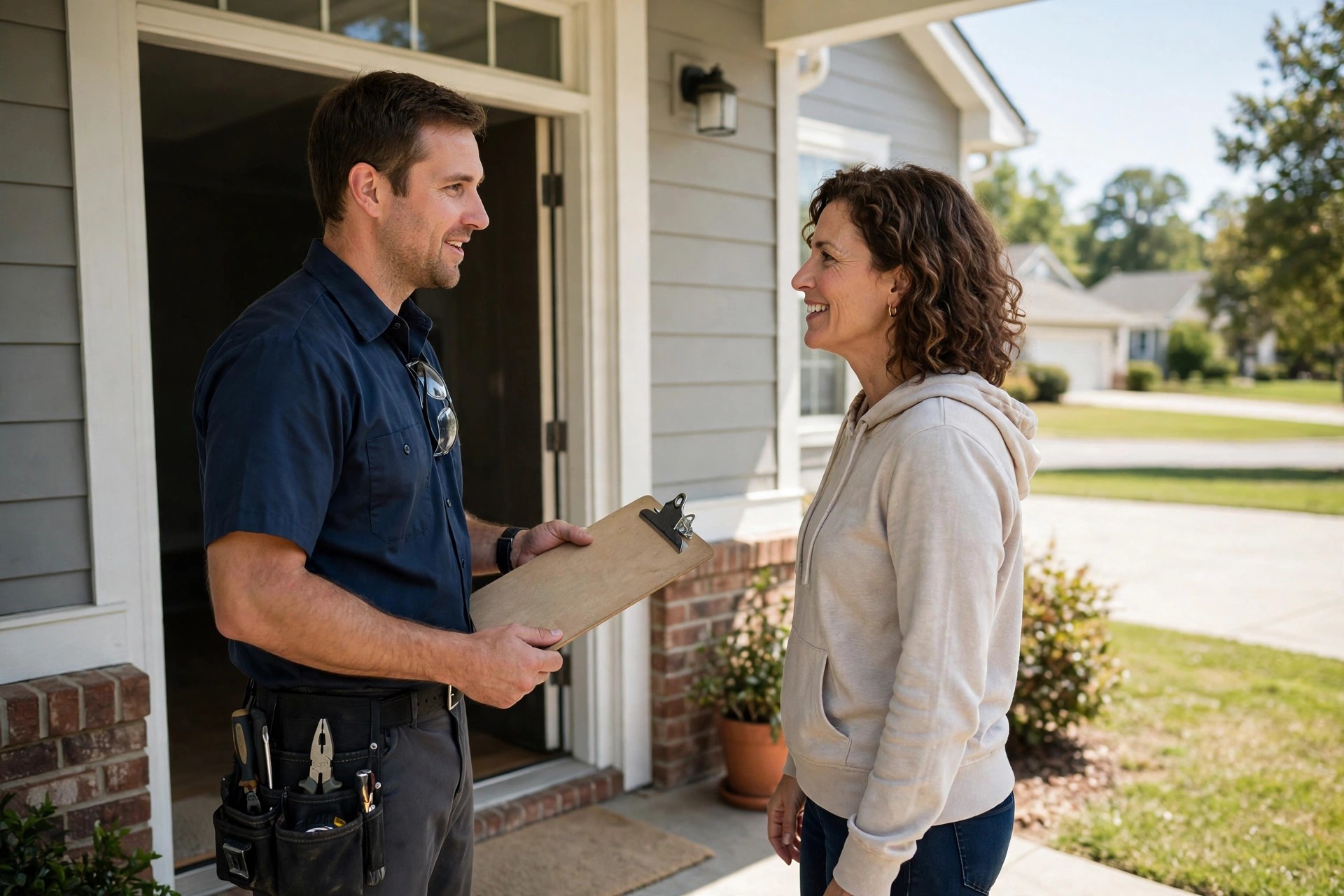
Every lead source needs its own response path. The emergency call and the website form cannot share a workflow.
Speed-to-lead automation: the first 5 minutes
The first five minutes decide more revenue than the next five days. Build this layer first, because it pays back immediately and everything else layers on top of it.
The instant response stack
When a new lead arrives from any source, three things should happen automatically. First, an SMS goes out within 60 seconds: “Hi [Name], this is [Company]. We got your request about your [AC/furnace]. A tech can call you in the next few minutes, or reply YES and we will call right now.” Second, a call task fires to whoever is on lead duty, with the lead’s details on screen. Third, the lead is logged in the CRM with the source tagged, so nothing lives only in someone’s head or inbox. If the call connects, great, the human takes over and the automation stops. If it does not, the sequence continues: a second text an hour later, a call attempt the next morning, and so on. The key design rule: automation never pretends to be the whole conversation. It buys the first minute and keeps the lead warm until a human arrives.
Missed-call text-back for the calls you cannot take
Techs cannot answer from a roof, and the office cannot answer during the dinner rush. Every missed call should trigger an automatic text within a minute: “Sorry we missed you. This is [Company]. Are you having a heating or cooling emergency? Reply and we will call you right back.” For emergency keywords in the reply, escalate immediately: route to the on-call tech or an answering service. Our full guide to missed-call text-back for HVAC companies covers the setup in detail. The numbers make the case alone: a meaningful share of missed callers never call a second business if the first one texts back fast. Without text-back, a missed call is a lead you paid for and handed to a competitor. An AI answering service for HVAC companies can take this further, answering the call itself, booking the appointment, and dispatching the emergency, even at 2 AM.
The new-lead follow-up sequence
Most HVAC companies make one or two attempts to reach a new lead, then give up. The data says the money is in attempts three through ten. A proper sequence runs 8 to 12 touches over 14 days, mixing SMS, calls, and email, and it stops the moment the lead books, replies stop, or asks to be left alone. Here is a proven cadence.
| Timing | Channel | Purpose |
|---|---|---|
| Minute 0 | SMS | Instant acknowledgment, offer immediate call |
| Minute 5 | Call | Live attempt while intent is hot |
| Hour 2 | SMS | Second touch, ask best time to call |
| Day 1 evening | Introduce company, reviews, what to expect | |
| Day 2 | Call + SMS | Second call attempt with text backup |
| Day 4 | SMS | Short check-in, booking link |
| Day 7 | Call | Week-later attempt, different time of day |
| Day 7 | Seasonal tip plus soft offer | |
| Day 10 | SMS | Last-call framing, easy reply options |
| Day 14 | Break-up email, door stays open |
Sample scripts that sound human
Write every message the way your best dispatcher talks: short, warm, and specific. Day 0 SMS: “Hi [Name], [Company] here. Got your request about the [AC/furnace]. Want us to call you in the next 10 minutes? Just reply YES.” Day 2 SMS: “Hi [Name], [Tech Name] from [Company]. Tried reaching you about your [AC/furnace] issue. Is mornings or afternoons better for a quick call?” Day 4 SMS: “Quick check-in, [Name]. Still need help with the [AC/furnace]? You can book directly here: [link].” Day 10 SMS: “Hi [Name], last note from us. If the [AC/furnace] is sorted, great. If not, reply and we will get you on the schedule this week.” Day 14 email: a short, honest close. “We have tried to reach you a few times about your [system]. We will stop checking in, but if it acts up again, reply to this email and we will take care of it.” Keep every message under 160 characters where possible, always include the company name, and always give a one-tap way to respond. Rotate call times across mornings, lunch, and evenings, because the lead who never answers at 10 AM might pick up at 6 PM.
Estimate follow-up: where the real money hides
Ask any HVAC owner where their biggest leak is, and the honest ones point at the quotes. A tech spends an hour on site, writes up a $9,500 system replacement, and the homeowner says “we need to think about it.” The quote goes into a folder. Nobody follows up. Two weeks later the homeowner buys from the company that called back. Industry experience puts the typical HVAC quote close rate without follow-up at 20 to 30 percent, and with a real follow-up sequence at 35 to 50 percent. On $500,000 a year in quotes, that gap is $75,000 to $125,000 in revenue sitting in a folder. This is the highest-ROI automation an HVAC company can build.
The 5-touch quote sequence
Start the sequence the day after the estimate, not the same day; same-day follow-up feels pushy, next-day feels professional. Touch 1, day 1: a thank-you text with the quote attached and one clear next step. “Thanks for having us out yesterday, [Name]. Your quote for the [system] is attached. Any questions, just reply here.” Touch 2, day 3: a call from the comfort advisor or office, framed as helpful, not salesy. “Calling to see if you had questions about the options we quoted.” Touch 3, day 7: an email that handles the unspoken objection, usually price or timing, with financing options and a comparison of repair versus replace. Touch 4, day 14: a text with a gentle nudge and social proof. “Just checking in on your quote. We installed the same [system] for a neighbor last week and they are loving it. Want us to hold your install date?” Touch 5, day 30: the honest last call. “Hi [Name], we will close out your quote this week. If you want to move ahead, reply and we will get you scheduled. Either way, thanks for considering us.” Every touch stops instantly if the homeowner replies, books, or declines.
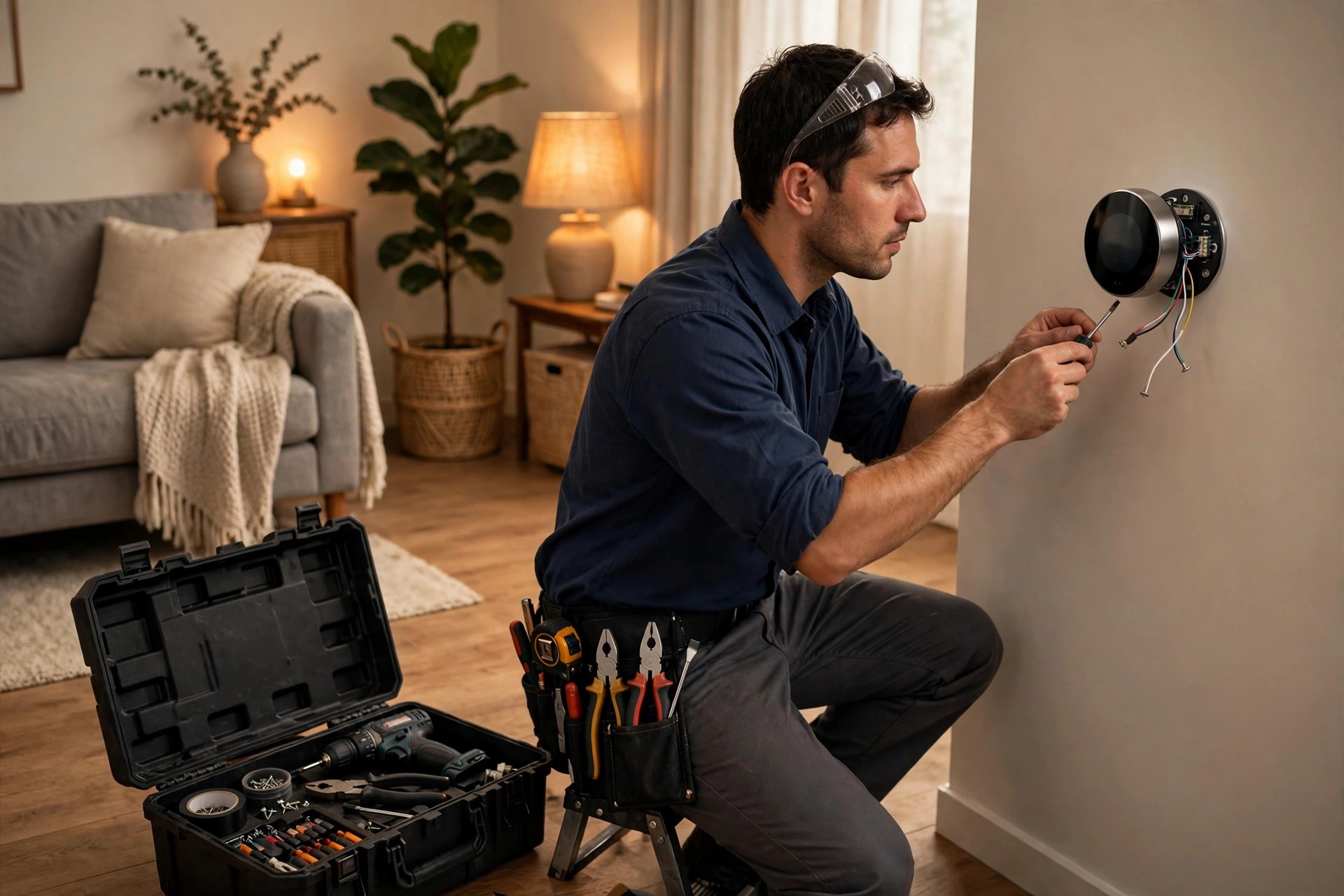
A quote that sits unanswered is revenue you already paid to generate. Five touches over 30 days recovers it.
No-show and reschedule recovery
Missed appointments cost a truck roll and a tech’s hour, and they happen because life happens, not because customers are rude. Automation cuts no-shows in two places. Before the appointment: a confirmation text 24 hours out (“Your tune-up is tomorrow between 9 and 11. Reply C to confirm or R to reschedule”), a reminder the morning of, and a “tech is on the way” text with the tech’s name. Companies that run this triple reminder typically cut no-shows by a third or more. After a no-show: an immediate text (“We missed you today. Want to reschedule? Reply with a day that works”), a call the next day, and one more text two days later before the lead goes back into the general nurture pool. Never scold, never charge-talk in the first message; the goal is the rebook, and a friendly tone rebooks while a stern one does not.
Seasonal reactivation campaigns
Your customer list is the most underused asset in the business. Every past customer is a future tune-up, a future filter customer, a future system replacement, and a future referral, but only if you stay in touch. Reactivation campaigns run on a schedule, cost almost nothing, and fill the slow months.
Tune-up and maintenance plan campaigns
Twice a year, run the seasonal tune-up push: spring for AC, fall for heating. A simple three-message campaign to every customer without a maintenance plan: an email announcing the seasonal special, a text a week later to non-responders, and a final text with a deadline. “Spring tune-up special: $89 through the end of the month. Reply TUNEUP and we will get you scheduled.” The tune-up is the wedge: the tech is in the home, finds the aging capacitor or the 14-year-old system, and the $89 visit turns into a repair or a replacement quote. Maintenance plan members get a different campaign: renewal reminders, priority scheduling offers, and the occasional “plan member exclusive.” The plan business is the stable base that carries the slow months, and every reactivation campaign should push plan signups, not just one-time visits.
Off-season win-back
Pull the list of customers with no visit in 18 months and run a quarterly win-back: three messages over three weeks. Message one is honest and light: “We noticed it has been a while since we serviced your [system]. Everything running okay?” Message two makes an offer: a discounted tune-up or a free system check. Message three is the last call with the door left open. Expect 5 to 15 percent to re-engage, and every one of them is a customer you already paid to acquire. Also run the aging-equipment campaign: filter the list for systems over 12 years old and send them a replacement consultation offer before the peak season, when you want installs, not emergencies. For more ways to keep the calendar full year-round, see our HVAC marketing ideas guide.

Reactivation campaigns cost almost nothing and fill slow months from the customer list you already own.
Maintenance plan renewals on autopilot
Maintenance plans are the closest thing HVAC has to subscription revenue, and they die from the same disease as everything else in this guide: nobody follows up. Build a renewal sequence that starts 45 days before expiry. Touch 1: an email recapping the year’s value. “This year your plan covered 2 tune-ups, 1 emergency diagnostic, and 15 percent off your blower repair. Your plan renews on [date] at [price].” Touch 2, at 21 days: a text with a one-tap renew link. Touch 3, at 7 days: a final reminder with the deadline. Touch 4, the day after expiry: a save message. “Your plan lapsed yesterday. Rejoin in one tap and keep your member pricing.” Track renewal rate before and after, because a 10-point lift on a 500-member plan base at $200 a year is $10,000 in protected recurring revenue. Also automate the failed-payment save: a polite text the day a card declines, another at day 3, and a final one at day 7. A surprising share of “canceled” plans are just expired cards.
Wiring it together: the CRM setup
None of this works on sticky notes. You need one CRM where every lead, quote, appointment, and customer lives, and where pipeline movement triggers the automations. The setup is simpler than most owners expect.
Pipeline stages and triggers
Build one pipeline with clear stages: New Lead, Contact Attempted, Appointment Set, Estimate Given, Proposal Sent, Won, Lost, and Nurture. Every stage change fires the right automation: entering New Lead starts the 14-day sequence; entering Proposal Sent starts the 5-touch quote sequence; entering Lost starts the long-term nurture; entering Won triggers the review request and the referral ask. The office updates the stage, the system does the rest. Keep the stage list short: if the team will not update it, it does not exist. One person owns the pipeline review every morning: anything sitting in Contact Attempted for more than a day gets a personal call, and anything in Proposal Sent past day 30 gets a manager review. The CRM is not the system. The habit of updating it is.
Mistakes that kill follow-up systems
The number one killer is building the sequences and never turning them on, because “we will start next month.” Turn on the speed-to-lead layer this week; it takes an afternoon. The second killer is generic messages that sound like a robot wrote them. Personalize with the name, the equipment, and the tech’s name, and write like a dispatcher, not a marketing department. The third is over-messaging: 12 touches in 14 days is persistence; 12 texts in 3 days is harassment. Space it out and stop instantly on reply, booking, or opt-out. The fourth is no opt-out handling. Every automated text must honor STOP immediately, and the CRM must suppress anyone who opts out across all sequences, or you will burn trust and risk compliance trouble. The fifth is measuring nothing. If you do not track speed-to-lead, contact rate, and quote close rate, you will never know the system is working, and the team will quietly stop using it. Publish the numbers weekly and the habit sticks.
Your rollout checklist
Build in this order. Each layer pays for the next.
- 1Map every lead source. List where leads come from today and what happens to each one in the first hour. The gaps are your build list.
- 2Turn on instant auto-text. Every new lead gets an SMS within 60 seconds, day or night, with a one-tap reply path.
- 3Add missed-call text-back. Every unanswered call gets a text within a minute, with emergency replies escalated immediately.
- 4Build the 14-day new-lead sequence. 8 to 12 touches across SMS, calls, and email, with rotating call times.
- 5Build the 5-touch quote sequence. Day 1, 3, 7, 14, and 30 after every estimate, with financing and social proof in the middle.
- 6Set up appointment reminders. Confirm at 24 hours, remind the morning of, and text when the tech is on the way.
- 7Launch the no-show recovery. Immediate rebook text, a call the next day, and one final text before the lead returns to nurture.
- 8Schedule seasonal reactivation. Spring AC and fall heating tune-up pushes, plus a quarterly win-back for dormant customers.
- 9Automate plan renewals. Value recap at 45 days, texts at 21 and 7, a save message after expiry, and failed-payment recovery.
- 10Publish the numbers weekly. Speed-to-lead, contact rate, appointment rate, and quote close rate, reviewed every Monday.
Frequently asked questions
What is lead follow-up automation for HVAC companies?
It is a system that responds to every new lead instantly, follows up persistently across SMS, calls, and email, chases open quotes with a set sequence, and reactivates past customers on a schedule, all without anyone having to remember. It covers speed-to-lead, new-lead nurture, estimate follow-up, no-show recovery, and seasonal reactivation.
How fast should an HVAC company follow up on a new lead?
Within five minutes. Lead response research consistently shows contact and qualification rates fall sharply after the first five minutes, and HVAC emergency shoppers book the first company that answers. Use an instant auto-text plus a live call attempt on every lead.
How many times should I follow up on an HVAC quote?
Five touches over 30 days is the proven cadence: a thank-you text on day 1, a call on day 3, an objection-handling email on day 7, a social-proof text on day 14, and an honest last call on day 30. Most companies stop at one or two, which is why the quotes sit.
What should the follow-up messages say?
Short, warm, and specific: the customer’s name, their equipment, and your tech’s name. Every message needs one clear next step, like replying YES, tapping a booking link, or taking a call. Write like your best dispatcher talks, not like a marketing department.
Does automation work for emergency HVAC calls?
Yes, and it matters most there. Missed-call text-back catches the calls your techs cannot take, emergency replies escalate to the on-call tech immediately, and an AI answering service can book the job even at 2 AM. Speed is the whole game in emergencies.
How do I reduce HVAC appointment no-shows?
Run a triple reminder: confirmation text 24 hours out, reminder the morning of, and a “tech is on the way” text with the tech’s name. That alone typically cuts no-shows by a third or more. Follow every no-show with an immediate rebook text and a call the next day.
What is a good quote close rate for HVAC?
Without follow-up, 20 to 30 percent is typical. With a real 5-touch sequence, 35 to 50 percent is realistic. On $500,000 a year in quotes, that gap is $75,000 to $125,000 in recovered revenue.
How do seasonal reactivation campaigns work?
Twice a year you message past customers with a seasonal tune-up offer, spring for AC and fall for heating, using email plus two texts. Quarterly, you run a win-back to customers with no visit in 18 months. Both cost almost nothing and fill slow months from a list you already own.
What CRM does an HVAC company need for this?
Any CRM that supports pipelines, automated SMS and email, and stage-change triggers. The brand matters less than the habit: one pipeline, clear stages, and one person reviewing it every morning. If the team will not update the stages, the automation cannot fire.
How do I stay compliant with automated texts?
Get clear consent on your forms and at booking, include opt-out instructions, honor STOP requests immediately across all sequences, and keep marketing texts separate from transactional ones. When in doubt, have the consent language reviewed before you scale the messaging.
Stop losing leads you already paid for
Digital Hayder builds lead follow-up automation for HVAC companies: instant speed-to-lead response, missed-call text-back, multi-touch new-lead and quote sequences, no-show recovery, and seasonal reactivation campaigns wired into your CRM. Tell us about your lead flow and we will design the system around it.
Contact Us