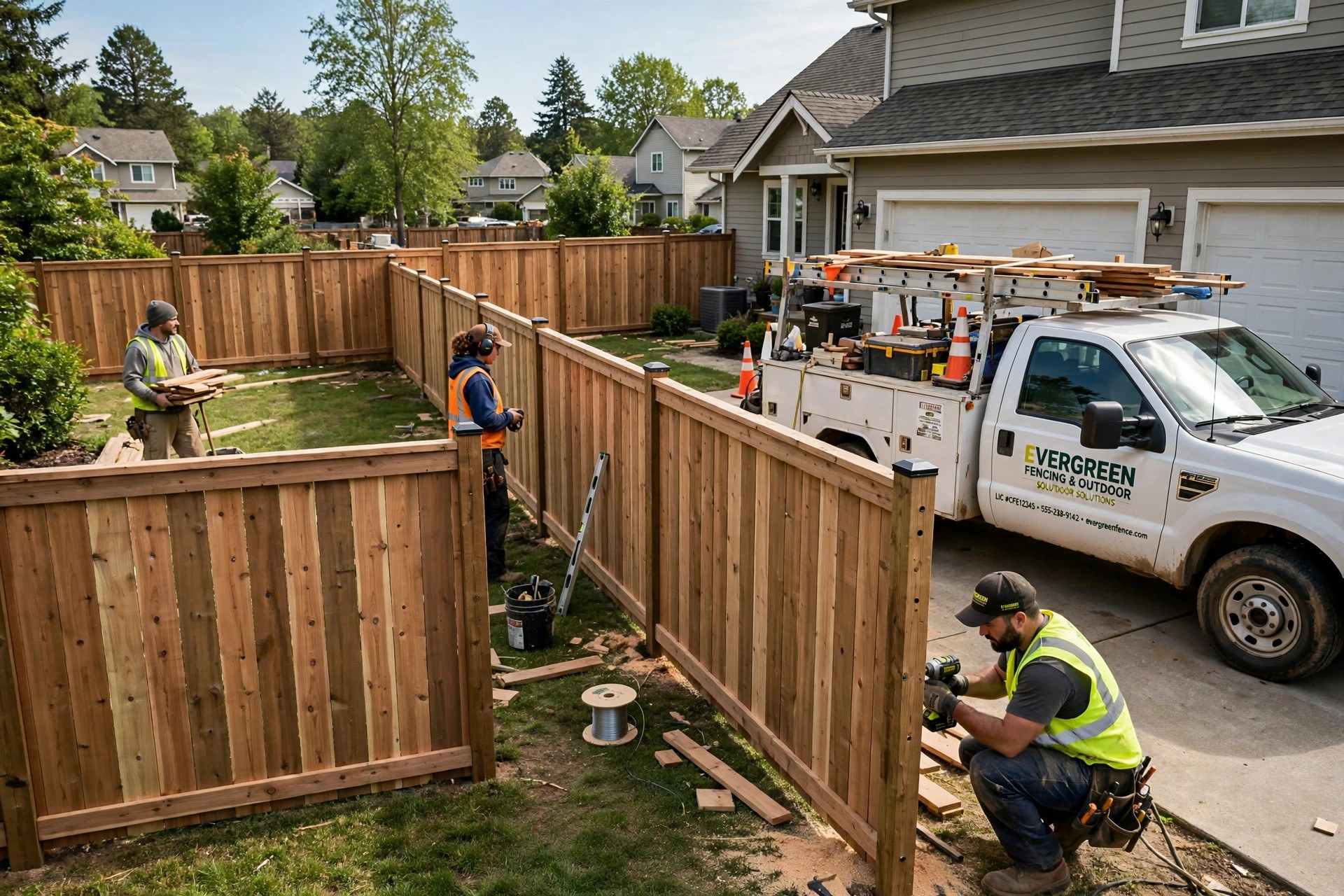
Your crew just finished a beautiful cedar privacy fence on a corner lot, and every neighbor on the block watched it go up. Three of them are thinking about their own fence right now. None of them will call you, because nothing told them who built it, where to find you, or what it costs. That is the fencing company’s marketing problem in one scene: the product is a billboard that advertises itself to exactly the right audience, and most companies leave it anonymous. Fencing is a visual, neighborhood-driven trade. People buy fences when they see a good one going up nearby, when the dog needs containing, or when the old fence finally leans too far. This guide covers the systems that fill a fencing estimate calendar: yard signs at every active job site, before-and-after galleries organized by material, Google Business Profile optimization for “fence installer near me” searches, review capture after every install, referral partnerships with landscapers and real estate agents, and how to split your marketing between residential and commercial fencing.
The quick answer
- Yard signs at every job site: a fence under construction is your best ad. Sign every active site and knock the five nearest doors when the crew is there.
- Galleries by material, not by date: organize photos into wood, vinyl, chain-link, and ornamental aluminum so buyers find their exact fence in seconds.
- Own “fence installer near me”: a complete Google Business Profile with material-specific posts and fresh reviews wins the local pack for fence searches.
- Ask for the review on install day: text the review link the day the fence is finished, while the homeowner is admiring it.
- Partner with landscapers and agents: landscapers see failing fences daily, and agents hear “we need a fence” from every buyer with a dog.
- Split residential and commercial: homeowners buy on looks and price; businesses buy on specs and timelines. Market to each separately.
Yard-sign systems at active job sites
A fence installation takes one to three days, sits on the most visible part of a property, and draws the exact neighbors most likely to buy a fence. This is the cheapest lead source in the trade, and it works only if it is a system rather than an afterthought. Every crew truck should carry at least four yard signs. The signs go up the morning work starts: two facing the street, one at each end of the property line. They come down the morning after the final walkthrough, and the crew lead photographs them in place as proof.
Knock the five nearest doors
The sign gets attention; the knock gets the estimate. While the crew is on site, the crew lead or a salesperson knocks on the five closest houses with a simple script: “Hi, we are installing a cedar privacy fence at number 42 this week. A lot of neighbors ask about pricing when they see us working, so I wanted to let you know we offer free estimates while we are in the area.” No pressure, no flyer dump. Just the offer.
Make the sign do the selling
The sign needs three things: your company name large enough to read from a passing car, the words “Free Estimates,” and a phone number in big digits. Skip the clever taglines. “Fence installation” in plain words beats a pun, because the person reading it is searching their memory later for “that fence company on Elm Street.”
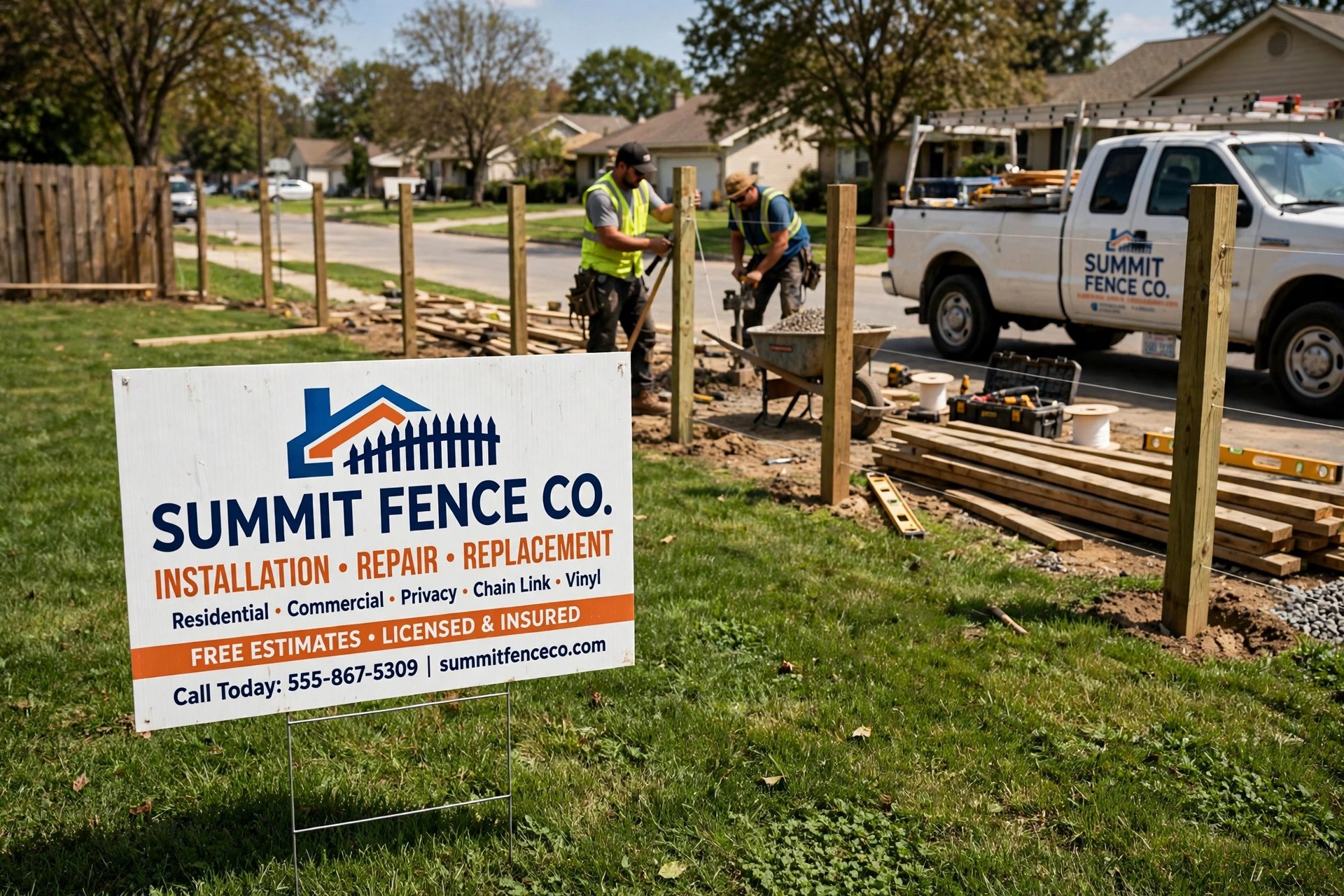
Every active job site is a billboard. Sign it, photograph it, and knock the nearest doors while the crew is there.
Before-and-after galleries organized by material
Fence buyers do not shop the way other trade customers shop. They have a material in mind, wood, vinyl, chain-link, or ornamental aluminum, and they want to see what that material looks like on a house like theirs. Galleries organized by date or by “our work” force them to scroll through fifty photos to find three relevant ones. Organize by material and the gallery becomes a sales tool.
What each material gallery needs
Wood: show cedar and pressure-treated side by side, plus stain options, because buyers agonize over color. Vinyl: show white, tan, and gray, and include a close-up of the texture, because the biggest vinyl objection is that it looks cheap. Chain-link: show residential black vinyl-coated chain-link, not just industrial silver, because homeowners do not know the attractive version exists. Ornamental aluminum: show it on front yards and pool enclosures, where it sells best. Every gallery needs the same four shots: a straight-on wide shot, an angle showing the full run, a close-up of the material and hardware, and the old fence it replaced when you have one. The old-fence photo is the most persuasive image you own.
Where the galleries live
The full galleries belong on your website, one page per material with a quote form on each page. Short versions belong on your Google Business Profile as posts and on social media as carousel posts. Post one finished job per week, always naming the material and the neighborhood. “Cedar privacy fence, Maple Grove neighborhood” teaches Google and buyers exactly what you do and where.
Google Business Profile optimization for “fence installer near me”
When a homeowner’s fence blows down in a storm, they search “fence installer near me” on their phone and call whoever looks credible in the local pack. That search is won or lost on your Google Business Profile. The category should be “Fence contractor” as primary, with “Fence supply store” only if you actually sell materials retail. The business description should name every material you install and every service you offer: installation, repair, replacement, gates, and commercial fencing.
Posts, photos, and reviews by the numbers
Upload new job photos weekly, and label them by material and city. Post a finished job as a Google Business Profile post every week or two with the material, the neighborhood, and a call to action for free estimates. Reviews matter enormously for fence searches: buyers are inviting you onto their property, so trust signals decide. Text the review link on install day, and aim for a steady flow rather than a one-time push. Respond to every review, and mention the material in your replies when natural: “Glad you love the vinyl fence.” That keyword relevance adds up. Our Google Business Profile guide for contractors covers the full setup.
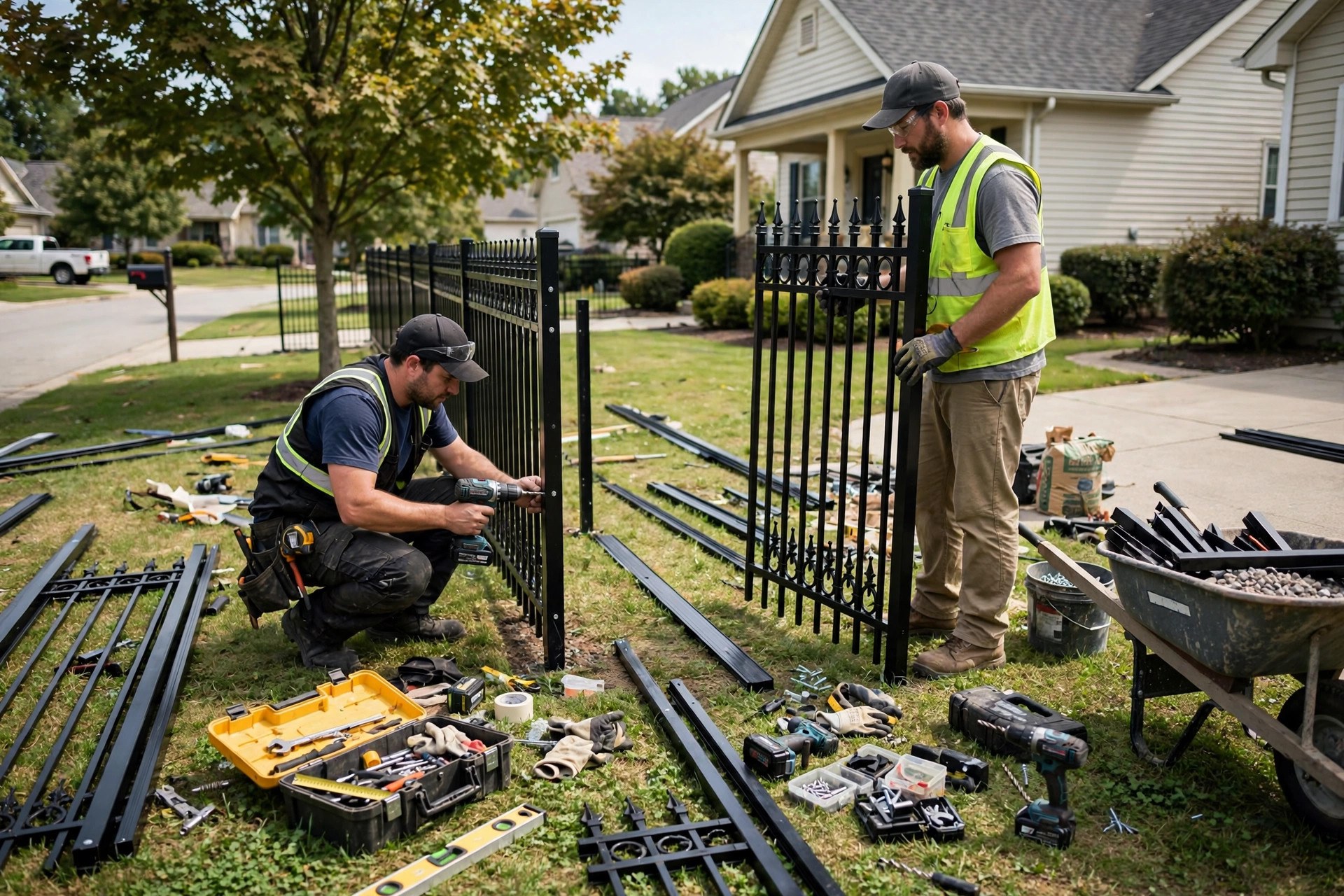
Photograph every material you install. Buyers decide on the material first and the company second.
Review capture after every install
The install-day high is real: the homeowner walks the new fence line, the yard looks finished, and they are already telling friends. Capture it. The crew lead asks during the final walkthrough, and the office texts the direct review link the same afternoon. One follow-up text two days later, then stop.
Reviews do double duty in fencing. They lift your local pack ranking for “fence installer near me,” and they answer the buyer’s biggest fear, which is paying thousands for a fence that leans in two years. Ask happy customers to mention durability and the crew’s cleanliness: “If you mention how the crew left the yard, that helps future customers trust us.” For the review side in more depth, our text message marketing guide for contractors covers the request timing that converts.
Referral partnerships that actually send jobs
Fencing sits at the intersection of several trades that see fence opportunities before you do. Two partnerships matter most.
Landscapers
Landscapers walk properties every week and see the leaning, rotting, and missing fences their clients complain about. They also install new landscaping around new fences, so the referral runs both ways. Offer a simple deal: a fixed referral fee or a reciprocal referral agreement, plus a one-page flyer they can hand the client with your number and a “referred by [landscaper]” note so you can track it. The best landscaper partners send two to four jobs a month once the relationship is warm. Check our landscaping marketing ideas for the other side of this trade.
Real estate agents
Agents hear “we need a fence for the dog” from a large share of buyers, and they manage listings where a new fence raises the sale price. Introduce yourself to the top-producing agents in your service area with a simple pitch: fast quotes for their clients, clean work that photographs well for listings, and a small thank-you for every referral that books. One agent who trusts you can send a dozen jobs a year. Property managers are the commercial version of this partnership and are covered below.
Split residential and commercial fencing
Residential and commercial fencing are different businesses wearing the same truck wrap. Marketing them as one blurs both messages.
| Residential fencing | Commercial fencing | |
|---|---|---|
| Typical buyer | Homeowner | Property manager, GC, business owner |
| Average ticket | $4,000 to $12,000 | $15,000 to $100,000-plus |
| Decision driver | Looks, price, neighbor proof | Specs, timeline, insurance, compliance |
| Best channels | Yard signs, Google local pack, social galleries | Direct outreach, bid lists, LinkedIn, trade relationships |
| Review strategy | Volume and recency on Google | A few detailed reviews naming on-time, on-spec delivery |
| Sales cycle | Days to weeks | Weeks to months |
How to run both without doubling the work
Keep one brand and one website, but give commercial its own page and its own photo set: chain-link with barbed wire, access control gates, dumpster enclosures, and construction site fencing. The commercial page should lead with capabilities and compliance (licensed, insured, prevailing-wage experience where relevant) instead of pretty pictures. Outreach is direct: introduce yourself to property management companies, general contractors, and municipalities with a one-page capability statement and three commercial references. Commercial buyers rarely Google “fence installer near me.” They ask peers and check bid lists, so relationships beat ads.
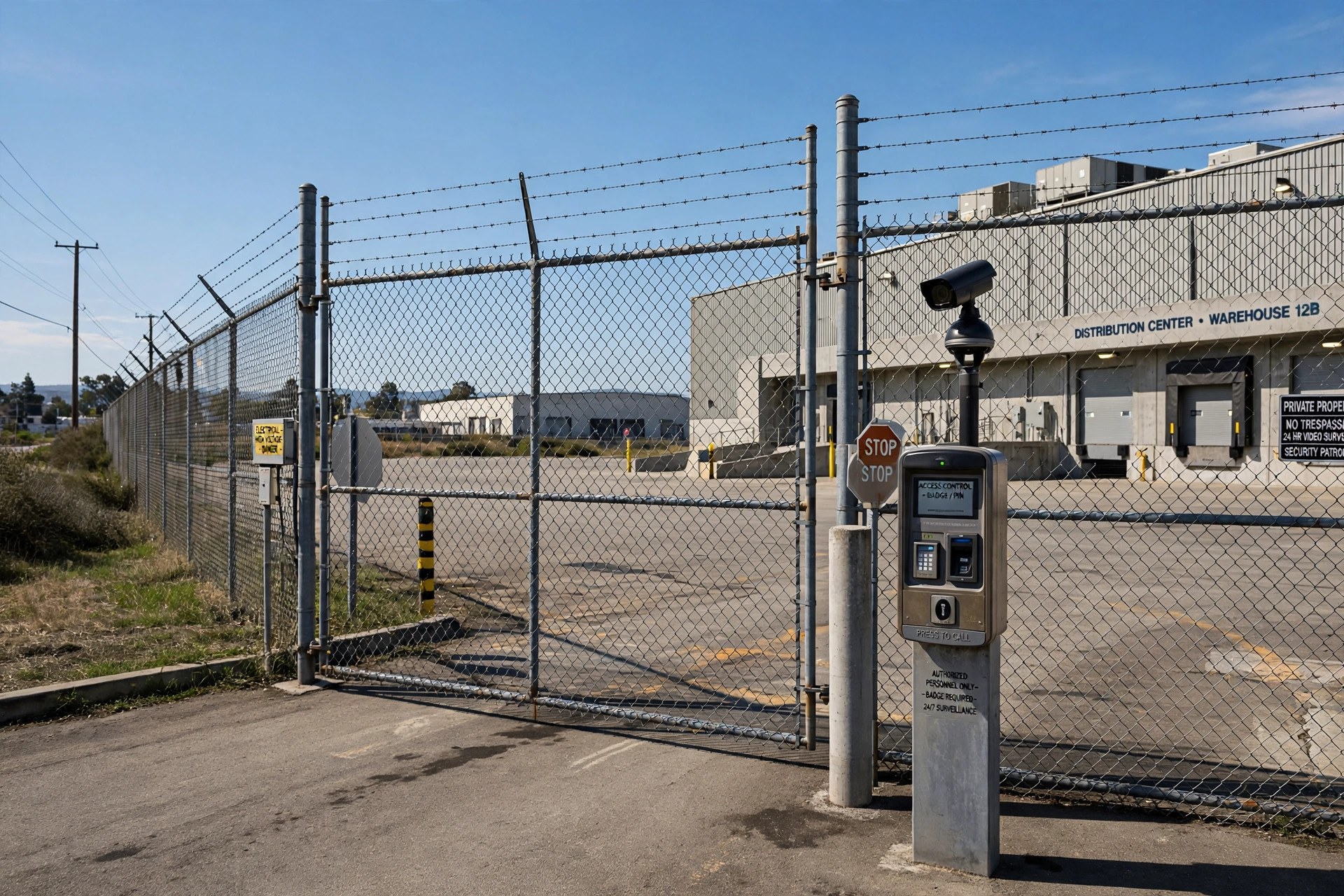
Commercial fencing is a separate business: bigger tickets, longer cycles, and buyers who check specs before photos.
What it costs to fill the calendar
Put the channels side by side and the budget decision gets simple. Yard signs and door-knocking cost a few hundred dollars in signs and an hour of crew-lead time per job, and produce the highest close rate because the buyer has seen your work. Google Business Profile optimization costs time, not money, and compounds: every review and photo lifts the next month’s calls. Google Ads for “fence installation [city]” runs $8 to $20 per click in most markets. Referral partnerships cost a referral fee per closed job, usually $100 to $300, which is cheap against a $7,000 ticket. Most healthy fence companies run all five channels and let the free and cheap ones carry the base load while ads fill the gaps.
Your rollout checklist
Start with the free channels. They work the fastest in this trade.
- 1Buy the yard signs. At least four per crew, with company name, “Free Estimates,” and a big phone number. Signs go up day one of every job.
- 2Train the door-knock script. Crew lead knocks the five nearest houses on every job. Track neighbor estimates per month.
- 3Reorganize photo galleries by material. Wood, vinyl, chain-link, ornamental aluminum, each with wide, angle, close-up, and old-fence shots.
- 4Rebuild the Google Business Profile. “Fence contractor” category, materials in the description, weekly job photos and posts.
- 5Launch install-day review texts. Same-day text with the direct link, one follow-up, and replies to every review.
- 6Sign two landscaper partners. Referral fee or reciprocal deal, tracked with a “referred by” note on every estimate.
- 7Pitch five real estate agents. Fast quotes for their buyers, clean work for their listings, thanks for every booked referral.
- 8Build the commercial page. Separate photos, capabilities, and compliance info, plus direct outreach to property managers.
Frequently asked questions
What is the best marketing for a fencing company?
Yard signs at active job sites plus door-knocking the nearest neighbors, backed by a strong Google Business Profile for “fence installer near me” searches. The sign-and-knock system produces the highest close rate because buyers have watched your work, and it costs almost nothing.
How much should a fencing company spend on marketing?
Most healthy fence companies spend 5 to 10 percent of revenue on marketing. Start with the free channels, yard signs, reviews, and referrals, then add Google Ads at $1,500 to $3,000 a month in competitive markets to fill gaps in the schedule.
Do Google Ads work for fence companies?
Yes for high-intent searches like “fence installation [city],” which run $8 to $20 per click in most markets. They work best when your reviews and photo galleries are already strong, because ad clicks convert on trust. Fix the profile first, then buy the clicks.
How do I get more Google reviews for my fencing company?
Text the direct review link on install day while the homeowner is admiring the finished fence, with one follow-up text two days later. Ask customers to mention the material and the crew’s cleanliness, which are the trust signals fence buyers look for.
Should a fencing company do residential and commercial work?
Both can work under one brand, but market them separately. Residential buyers respond to photos, reviews, and price; commercial buyers respond to specs, timelines, insurance, and references. Give commercial its own web page and do direct outreach to property managers.
How do referral partnerships with landscapers work?
Landscapers see failing fences on client properties every week. Offer a fixed referral fee, usually $100 to $300 per booked job, or a reciprocal referral deal, and give them a simple flyer with a “referred by” tracking note. A warm partner sends several jobs a month.
What photos should a fencing company post?
Organize by material: wood, vinyl, chain-link, and ornamental aluminum. Each job needs a wide shot, an angle shot, a close-up of material and hardware, and the old fence it replaced. Post one finished job per week naming the material and neighborhood.
Fill your estimate calendar every month
Digital Hayder builds marketing systems for fencing companies: Google Business Profile optimization, review automation, material galleries that sell, and websites with quote forms on every page. Tell us about your company and we will design the system around your crews and your service area.
Contact Us