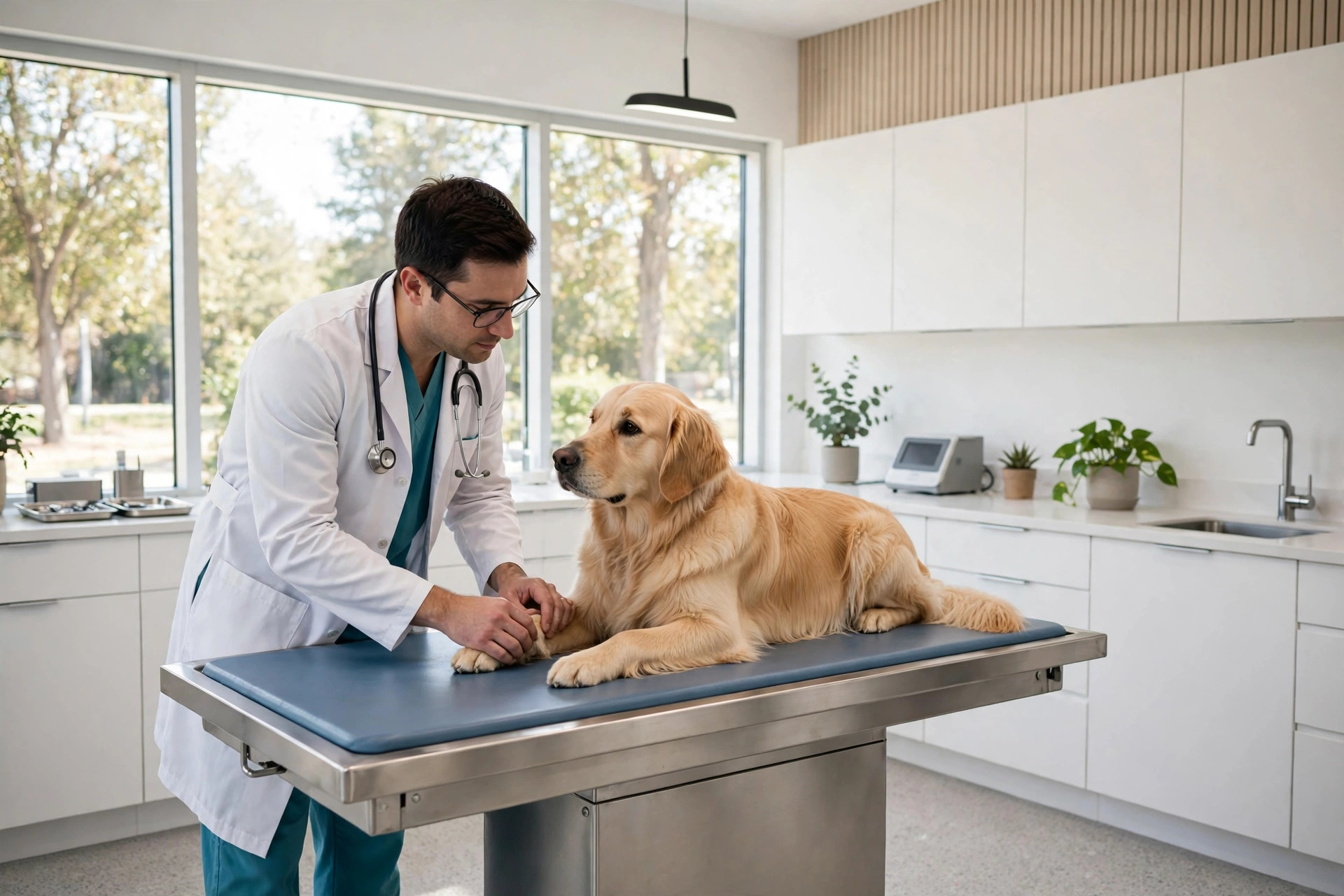
A young couple carries a trembling rescue puppy through your door for the first time, and that visit decides something bigger than a single exam fee. The American Pet Products Association reports that US pet industry spending keeps climbing past the hundred-billion-dollar mark, and the average pet-owning household spends well over a thousand dollars a year on their animals. The clinic that wins that first visit usually wins the next ten years of vaccinations, dental cleanings, wellness exams, and the 2am emergency. Yet most vet clinics market like a generic local business: a few boosted posts, a coupon nobody redeems, and a website that says “we love pets” like every other clinic in town. This guide splits vet clinic marketing into two jobs that need different tactics. New-client acquisition: winning new pet owners at the moment they pick a vet. And retention: keeping them booked, compliant with care plans, and recommending you for years.
The quick answer
- Split your plan in two: acquisition tactics win first visits; retention tactics (wellness plans, recalls, reviews) turn them into decade-long clients.
- New pet owners are the highest-value audience: partnerships with shelters and breeders put your clinic in front of them before they ever search Google.
- Retention pays for acquisition: a client on a wellness plan books more visits per year and spends more per visit than a walk-in client.
- Reviews are the front door: automated review requests after every visit compound into the star rating that decides the Google Maps pack.
- Social content that works: patient spotlights, real behind-the-scenes moments, and education posts that answer the questions owners actually ask.
- Measure two numbers: new-client acquisition cost and 12-month retention rate. If retention is rising, almost every other metric follows.
Acquisition: win the new pet owner before they search
New pet owners choose a vet within days of getting the animal, and once they book somewhere, they tend to stay. The average lifetime value of a veterinary client runs into the thousands of dollars, so every tactic in this section is about intercepting that first decision. The cheapest and most effective channel is not ads. It is partnerships.
Shelter and breeder partnerships
Animal shelters and reputable breeders hand off hundreds of new pets a year, and each handoff comes with a nervous new owner who needs a vet immediately. Offer the shelter a free first exam for every adopted pet, and give the shelter a stack of branded new-pet folders with your clinic card, a first-visit checklist, and a coupon for the second visit. For breeders, offer the same first-exam arrangement plus a breeder referral line that rings straight to your front desk. The economics are simple: if one partnership sends you 40 new clients a year and each is worth $3,000 to $5,000 over their lifetime, that is six figures of lifetime value from a relationship that costs you a few free exams and some printed folders. Formalize it with a one-page agreement so the referral keeps flowing when the shelter’s staff turns over.
The new-pet landing page and first-visit offer
Build a dedicated page on your site just for new pet owners, not a buried paragraph on the services page. Headline it plainly: “New puppy or kitten? Here is what the first visit includes.” List the exam, the vaccination schedule, the microchip check, and the welcome kit. Pair it with a real first-visit offer, like a free first wellness exam or a discounted puppy package, and run it as the destination for your ads and shelter referrals. A focused page converts far better than a homepage because it speaks to one person with one urgent need. Track how many first visits it produces per month so you know whether the page or the traffic is the problem.
Retention: wellness plans and recall reminders
Acquiring a client costs real money. Keeping one costs almost nothing, and retained clients are where vet clinics actually make their margin. Industry data consistently shows that clients enrolled in wellness plans visit more often and accept more recommended care than non-members. Retention is not a loyalty program with points. It is a system of reminders that make doing the right thing for the pet effortless for the owner.
Wellness plans that create recurring revenue
Package preventive care into monthly plans: annual exam, vaccinations, parasite prevention, and one dental cleaning discount, billed monthly at a level that feels painless. Name the tiers plainly (Puppy, Adult, Senior) and present the plan at the end of the first visit, when the owner’s motivation is highest. The monthly billing does two things: it smooths your revenue across the year, and it creates a reason to contact the member when a benefit goes unused. Train your front desk to pitch the plan with one sentence: “Most of our families put this on the plan and it saves them about $200 a year.” A soft, specific pitch at the right moment beats a brochure every time.
Vaccination and checkup recalls that run themselves
Most missed revenue in vet clinics is not lost to competitors. It is lost to owners who simply forgot. Automate the recall sequence: a text or email 30 days before a vaccine is due, a reminder at 7 days, and a final nudge the day after it lapses. The same applies to annual exams, dental cleanings, and parasite prevention refills. These reminders should come from your practice management system automatically, not from a receptionist remembering to call. Clinics that run tight recall programs recover a large share of lapsed patients, and every recovered patient is a visit you would otherwise have replaced with paid advertising. The reminder is the marketing.

The first visit is an emotional moment. Make it memorable and that family rarely leaves.
Reviews: ask when pet parents are happiest
A vet clinic’s Google rating is its front door. Pet owners choosing a clinic read reviews with unusual care, because this is about a family member. A 4.9-star clinic with 400 reviews will beat a 4.3-star clinic with 40 reviews in the Maps pack almost every time, and the Maps pack is where most “vet near me” searches get decided.
Automate the review request after every visit
The best moment to ask is within an hour of a good visit, while the owner is still relieved and grateful. Send an automated text with a direct link to your Google review page, not a generic “leave us a review” email that gets buried. Personalize it with the pet’s name: “How was Bella’s visit today? A quick review helps other pet parents find us.” Aim for a steady flow rather than bursts, since Google trusts a consistent review velocity. For the full playbook, including how to handle the review that goes wrong, see our guide on getting more Google reviews for veterinary clinics and our guide to responding to negative Google reviews. Respond to every review, good and bad, because prospects read your responses as closely as the reviews themselves.
Social content that actually works for vets
Pet content is the most shared category on social media, and vet clinics sit on an endless supply of it. The mistake is posting generic “we love pets” graphics. The content that drives appointments is specific, local, and useful.
Patient spotlights and behind-the-scenes
With the owner’s permission, post a short spotlight: the pet’s name, a photo, and one line about why the visit mattered (“Milo came in for his first dental cleaning at age 9. Senior dogs need dental care too.”). These posts get shared by the owner to their own network, which is exactly your local audience. Behind-the-scenes clips, a tour of the surgical suite, the morning routine, the techs prepping for the day, build the trust that a stock photo never will. Mix in education posts that answer real questions: “Why does my dog need the bordetella vaccine?” and “What does a heartworm test actually check?” End education posts with a soft call to action, like “Due for a checkup? Call us.” Keep a simple rhythm: three posts a week is plenty if they are real.

A full waiting room is built one kept appointment at a time. Retention systems do the heavy lifting.
Where to put the money: a simple budget split
A single-location clinic does not need a complicated media plan. Split the budget by job: acquisition gets the ads, retention gets the systems.
| Channel | Job it does | Typical monthly range | What good looks like |
|---|---|---|---|
| Google Ads, new-pet keywords | Acquisition | $800 to $2,000 | First-visit bookings under $60 each in most markets |
| Social ads, new-pet-owner targeting | Acquisition | $400 to $1,000 | Cheap reach to recent adopters and new puppy owners |
| Shelter and breeder partnerships | Acquisition | $100 to $300 in materials | Steady flow of pre-qualified new clients at near-zero cost |
| Recall and reminder automation | Retention | $100 to $400 in software | Lapsed-patient recovery and fuller recall books |
| Review automation | Both | $50 to $200 in software | Consistent new reviews and Maps pack visibility |
| Wellness plan program | Retention | Staff time, no media cost | Growing share of clients on plans, higher visits per year |
Your rollout checklist
Work this list in order. The retention systems go first because they pay for everything else.
- 1Turn on automated recall reminders. 30-day, 7-day, and lapsed notices for vaccines, exams, and dental cleanings. This is your fastest revenue win.
- 2Launch or relaunch wellness plans. Three plain tiers, monthly billing, and a one-sentence pitch your front desk uses at every first visit.
- 3Automate review requests. Text every client within an hour of the visit with a direct Google review link personalized with the pet’s name.
- 4Sign two shelter or breeder partners. Free first exam, printed new-pet folders, and a direct referral line. Put the agreement in writing.
- 5Build the new-pet landing page. One page, one offer, one booking button. Send all new-pet traffic there.
- 6Start the content rhythm. Three posts a week: one patient spotlight, one behind-the-scenes, one education post.
- 7Add Google Ads on new-pet keywords. “Puppy first vet visit” and “kitten vaccinations near me” convert better than generic “vet near me.”
- 8Track the two numbers monthly. Cost per new client and 12-month retention rate. Adjust the budget toward whichever is underperforming.
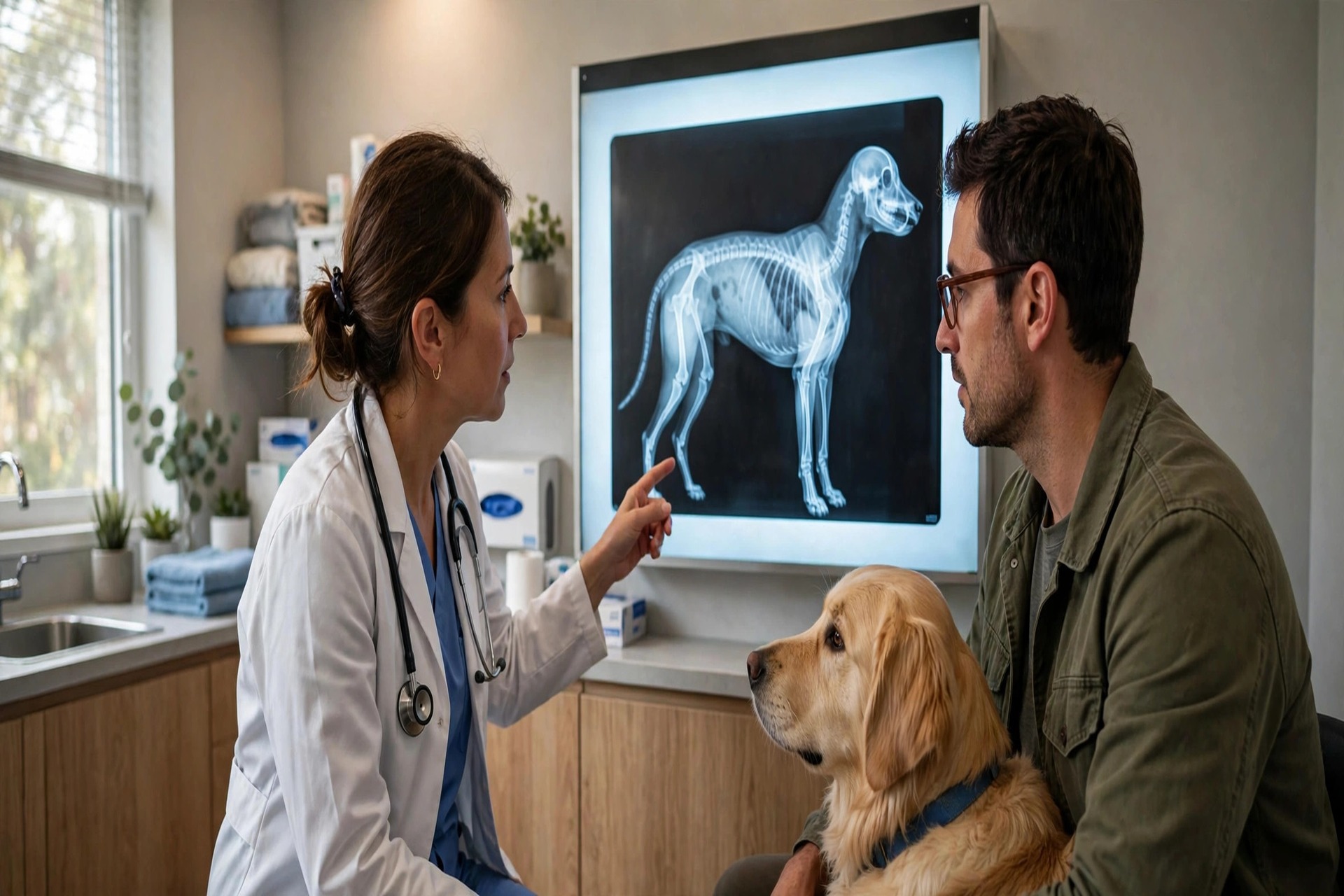
Clear explanations build the trust that turns a first visit into a ten-year relationship.
Frequently asked questions
How much should a vet clinic spend on marketing?
Most healthy clinics spend 3 to 7 percent of revenue on marketing. For a $1.5M clinic, that is $45,000 to $105,000 a year, or roughly $4,000 to $9,000 a month. Start with retention systems, which cost little, then add acquisition ads once the recall engine is running.
What is the best way to get new clients for a vet clinic?
Shelter and breeder partnerships are the highest-quality source because the new owner needs a vet immediately and arrives pre-qualified. Google Ads on new-pet keywords and a strong Google Maps presence come next. Social ads targeting new pet owners fill the gap between those.
Do wellness plans really increase revenue?
Yes. Clients on wellness plans visit more often and accept more recommended treatments because the cost is already budgeted monthly. The plans also smooth your cash flow across slow months and give you a reason to re-engage members with unused benefits.
How do I get more Google reviews without annoying clients?
Automate a single text request within an hour of the visit, personalized with the pet’s name and a direct link. One polite ask at the happiest moment is not annoying. Our veterinary clinic reviews guide covers the timing and the templates in detail.
Should my vet clinic run social media ads or just post organically?
Do both. Organic posts build trust and community; a modest ad budget behind new-pet-owner targeting brings in clients you would never reach organically. Boost your best-performing organic posts rather than creating separate ad creative from scratch.
What is a good retention rate for a vet clinic?
Aim for at least 70 percent of active clients returning within 12 months, and higher for wellness plan members. If your rate is below 60 percent, the problem is usually missing recall reminders, not competitors. Fix the reminders before spending more on acquisition.
How do I handle a negative review from an upset pet owner?
Respond quickly, publicly, and calmly: acknowledge their concern, invite them to discuss it directly, and never share medical details in the reply. A thoughtful response often impresses prospects more than the complaint hurts you. See our guide to responding to negative Google reviews.
Fill your appointment book with the right clients
Digital Hayder builds marketing systems for vet clinics: recall automation that brings lapsed patients back, review engines that lift your Maps ranking, and new-pet-owner campaigns that win first visits. Tell us about your clinic and we will map the plan to your market.
Contact Us