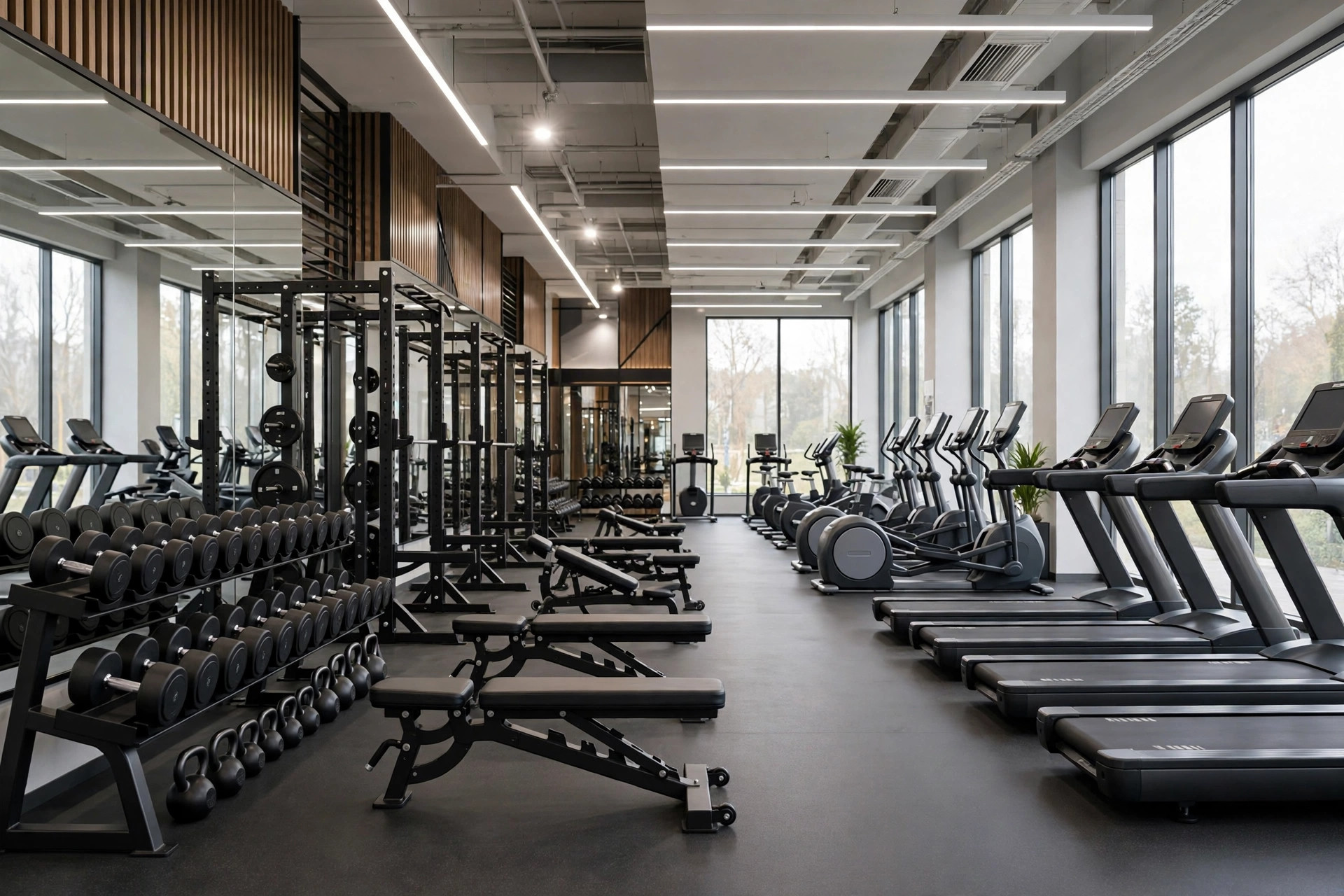
Someone deciding to get fit opens three gym websites on their phone. The first shows the class schedule for this week, a free trial signup that takes a minute, trainer profiles with real photos, and membership plans with a join button. The second lists a phone number and a PDF of the schedule from last season. The third is a Facebook page. The person signs up for the trial on the first site before putting the phone down, and the other two never hear from them. A gym website is not a digital poster. It is a booking and billing machine that sells memberships while the front desk is busy. The price of building one depends almost entirely on how much selling you ask it to do. This guide breaks down the real tiers, from do-it-yourself builders to full agency builds, explains why booking and payments drive the cost, and exposes the ongoing fees that surprise most gym owners after launch.
The quick answer
- The short answer: most gym websites cost between $0 and $15,000 to build, with the price driven by class booking, trial signups, and membership billing features.
- A freelancer-built site typically runs $2,000 to $6,000. A custom agency build with real booking and payments runs $6,000 to $15,000 or more.
- The biggest cost drivers are live class schedules with booking, free trial signup flows, recurring membership billing, and trainer profile systems.
- Integrating gym management software like Mindbody, Zen Planner, or PushPress adds $1,000 to $5,000 to the build and $100 to $400 per month in subscriptions.
- Hidden ongoing fees include payment processing (around 3 percent of every transaction), hosting, maintenance, and software subscriptions. Budget $150 to $600 per month total.
- Judge every dollar by memberships sold. The cheapest option that books trials reliably beats the prettiest option that does not.
What a gym website actually needs to do
Before talking prices, be clear about the job. People shopping for a gym are motivated in short bursts: the New Year resolution, the wedding in three months, the doctor’s warning. When that motivation hits, they search on their phone, and they want three things immediately: when classes run, whether they can try it free, and what it costs. If your site answers all three in under a minute, you get the trial signup. If it makes them call during business hours for answers, most of them never call. Research on fitness consumer behavior keeps finding that the large majority of gym shoppers research online before visiting, and that friction in the signup process is the top reason interested prospects never become members.
The pages and features that matter most are the live class schedule, because “what time is yoga on Tuesday” is the most common question your site will ever get. The free trial signup flow, because the trial is your highest-converting offer and it should take sixty seconds. Membership plans with online join and recurring billing, because every plan that requires an in-person visit loses impulse buyers. Trainer profiles, because people buy coaching from people they feel they know. And trust content: real photos of your facility, member results and testimonials, and clear pricing. Every price tier below is a measure of how many of these jobs the site performs well.
Gym website cost: the four tiers
Gym website pricing falls into four clear tiers. The right one depends on how you sell: walk-ins and phone calls, or online trials and self-serve memberships.
Tier 1: Do it yourself with a website builder
Best for: brand-new studios, garage gyms, and personal trainers validating demand on a tight budget.
- Built on Wix, Squarespace, or GoDaddy with a template, assembled by you
- Cost is the platform subscription ($15 to $50 per month) plus a domain name
- You get the basics: homepage, about, class list, trainer bios, contact form, photo gallery
- Schedules are usually static text or an embedded PDF, updated by hand when classes change
- Trials and memberships go through a contact form or a phone call, not online checkout
- Limitations: no real booking, no recurring billing, manual everything, and a generic look that is hard to differentiate
Tier 2: Freelancer-built site
Best for: established single gyms that need to look professional and start capturing trials online.
- A freelance designer or developer customizes a premium template, usually on WordPress, to your brand
- Includes class schedule pages, trainer profiles, membership plan pages, testimonials, and a trial signup form
- Scheduling plugins can show a nicer timetable, and forms can route trial requests to your email or CRM automatically
- Basic local search setup so you rank for “gym near me” and your neighborhood terms
- Limitations: booking is form-based rather than live reservation, payments usually still happen in person, and support depends on the freelancer
Tier 3: Custom agency build with booking and payments
Best for: gyms competing for members online, studios selling class packs, and anyone who wants trials to book themselves.
- Designed from scratch around one goal: turning visitors into trial bookings and paying members without a phone call
- Live class schedule with real booking: members reserve spots, get waitlisted when full, and receive automatic reminders that cut no-shows
- Free trial signup flow that captures the lead, books their first class, and triggers follow-up messages automatically
- Membership checkout with recurring billing: plans, class packs, and drop-ins purchasable online in minutes
- Trainer profile system with specialties, certifications, photos, and direct booking for personal training sessions
- Speed, mobile performance, and conversion tracking so you can see exactly how many trials and memberships each page produces
Tier 4: Full platform integration build
Best for: multi-location gyms, franchises, and large studios running everything through management software.
- Everything in Tier 3, deeply integrated with your gym management platform: Mindbody, Zen Planner, PushPress, ABC Fitness, or similar
- Single sign-on between the website and the member app, so schedules, billing, and profiles stay in sync everywhere
- Multi-location structure: each gym gets its own schedule, trainers, pricing, and local search presence under one brand system
- Custom member portal features: workout tracking, nutrition plans, challenge leaderboards, and referral program dashboards
- Advanced marketing automation: abandoned trial recovery, win-back campaigns for cancelled members, and upsell flows for personal training

Trainer profiles sell personal training. Real photos and specialties turn browsers into booked sessions.
Why booking and payments drive the cost
A brochure site is cheap because it is static: pages of text and photos that rarely change. The moment your site starts taking bookings and money, it becomes a small software product, and software costs more than pages. Here is what each money-moving feature adds and why it is worth it.
Live class schedules with booking
A static schedule is a page you edit by hand. A live schedule is a system: classes with capacity limits, member reservations, waitlists that promote people automatically when spots open, cancellations, and reminder messages. Building or integrating this adds $1,500 to $4,000 to a project. It pays back in two ways. Members who can book in seconds attend more classes, and prospects who see a live, bookable schedule perceive a professional operation. Studios that switch from “call to reserve” to online booking consistently report fuller classes and fewer no-shows, because the friction between intention and reservation disappears.
Trial signup flows
The free trial is the highest-converting offer most gyms have, and the signup flow is where trials are won or lost. A proper flow captures the prospect’s details, lets them pick their first class, sends confirmation and reminder messages, and alerts your team to follow up personally. Building this well adds $1,000 to $3,000. The return is straightforward: every step you remove from the signup process lifts conversion, and a trial that books itself at 11pm captures the motivated prospect who would never have called the next day. If your site does one revenue job well, make it this one.
Recurring membership billing
Online membership checkout with recurring billing means integrating a payment processor, handling plan changes, failed payment retries, and proration, and keeping everything compliant with payment security standards. This adds $2,000 to $5,000 to a build. The payoff is that members can join at midnight on a Sunday, upgrades and class pack purchases happen without staff involvement, and failed payments get retried automatically instead of turning into awkward front-desk conversations. For gyms with high membership volume, self-serve billing quickly pays for itself in saved staff hours alone.
Trainer profiles and personal training booking
Trainer profile systems range from simple bio pages to full booking platforms with trainer calendars, session packs, and client management. The simple version adds a few hundred dollars per profile page; the booking version adds $1,500 to $3,000. Personal training is the highest-margin product most gyms sell, and prospects buy it from trainers they feel they know. Profiles with real photos, specialties, certifications, and client results, plus a book-a-session button, turn your trainers into a sales channel that works around the clock.
Gym management software integration costs
Most serious gyms already run on management software, Mindbody, Zen Planner, PushPress, ABC Fitness, TeamUp, and others, that handles scheduling, billing, and member data. Your website can either sit next to that software or connect to it, and the choice has real cost implications.
The cheap route is linking out: “book a class” buttons that send visitors to your software’s hosted pages. This costs almost nothing to implement, but the experience feels disjointed, the branding changes mid-flow, and you lose conversion at every handoff. The integrated route embeds schedules, booking, and checkout directly in your site’s design through the software’s API or widgets. Integration typically adds $1,000 to $5,000 to the build depending on how deep it goes, plus the software subscription itself at $100 to $400 per month. For gyms where online booking is the main sales channel, the integrated route converts measurably better and is worth the investment. For small studios where most sales still happen in person, the linked route is the sensible budget choice.
One caution: pick your management software before you build the website, not after. Switching platforms later means rebuilding every integration, which is one of the most expensive do-overs in gym technology. If you are choosing, prioritize the platform whose member-facing booking experience you would be happy to put your brand on. For comparison on how other local industries price similar booking-driven sites, our guide to how much a roofing website costs breaks down the same build-vs-integrate logic.

The trial signup should take sixty seconds on a phone. Every extra step loses motivated prospects.
The hidden ongoing fees
The build quote is only the first bill. Gym websites carry monthly costs that continue as long as the site sells memberships, and owners who do not budget for them get surprised every quarter.
| Ongoing cost | Typical range | What it covers |
|---|---|---|
| Payment processing fees | Around 2.9% + $0.30 per transaction | The cut your processor takes on every membership, class pack, and drop-in sold online; on $20,000 monthly online revenue that is about $600 |
| Gym management software | $100 to $400 per month | Scheduling, billing, and member management platform your site integrates with |
| Hosting | $15 to $60 per month | Where your site lives; booking-driven sites need faster hosting than brochure sites |
| Domain name | $15 to $25 per year | Your web address; renew for multiple years so it never lapses |
| Maintenance and updates | $75 to $250 per month | Software updates, backups, security, and fixes; booking and payment features break first when maintenance is skipped |
| Booking and marketing tools | $0 to $100 per month | Scheduling widgets, email and text automation, review tools beyond what your management software includes |
All in, expect $150 to $600 per month in ongoing costs for a booking-enabled gym site. The single most overlooked line is payment processing: it scales with your success, so a site that sells well costs more to run, which is a good problem as long as you priced your memberships with it in mind. The most expensive ongoing mistake is launching booking features and then neglecting them: a schedule widget that breaks, a trial form nobody monitors, or prices that drift out of date quietly cost you members every week. Assign one staff member to check the site’s booking flow weekly, the same way someone checks the equipment. Our breakdown of how much a plumbing website costs covers the same ongoing-cost discipline for another local trade.
How to choose the right tier for your gym
Match the tier to how you actually sell memberships. A garage gym or new studio selling through Instagram DMs and word of mouth needs Tier 1: a credible presence that confirms you are legitimate. A neighborhood gym with steady walk-in traffic but no online sales needs Tier 2: professional pages and trial capture so the website starts contributing. A studio or gym competing online for members, running ads, or selling class packs needs Tier 3, because at that point the website is your salesperson and brochure sites lose the comparison. A multi-location brand or franchise needs Tier 4 integration, because inconsistent booking experiences across locations erode the brand.
Watch for the two classic mistakes. The first is buying Tier 1 when you need Tier 3: a cheap site that cannot book trials is a placeholder while competitors convert the prospects you paid to attract. The second is buying Tier 4 complexity for a single location: deep integrations you do not use are expensive decoration. List the three actions your site must produce, usually book a trial, join as a member, and book personal training, and buy the cheapest tier that performs all three well on a phone. Pair the site with fast lead follow-up; our guide to AI SDR for small business shows how automated follow-up turns trial signups into show-ups.
Red flags when getting quotes
Gym website quotes vary wildly because “website” can mean a five-page brochure or a booking platform. Be wary of any quote that does not itemize features: you cannot compare two prices when you do not know what each includes. Be wary of builders who have never integrated gym management software but promise it will be easy; ask to see a live integration they built. Ask who owns the site, the domain, and the member data flow if you leave. Ask exactly how trial booking and membership checkout work on a phone, and test it on their past work yourself. And ask what the monthly total will be, build plus software plus processing, because the quote is never the whole price. A good proposal reads like a plan for selling memberships: it names the booking and billing features, shows the path from search to trial to member, and explains how you will measure it.
What to ask any web designer before you hire them
Use this checklist in every sales call. The designers worth hiring answer all of them clearly.
- 1Show me gym or fitness sites you have built with real booking. A designer who understands class schedules and trial flows beats a generalist every time.
- 2How do trial signup and membership checkout work on a phone? Make them demonstrate it. If it takes more than a couple of minutes on mobile, prospects will abandon it.
- 3What is included in the quoted price, line by line? Pages, booking system, payment integration, content, search setup. No lump sums without a breakdown.
- 4How will it integrate with my gym management software? Embedded in the site or linked out to hosted pages? The answer changes both cost and conversion.
- 5What are the total monthly costs? Software subscriptions, hosting, maintenance, and payment processing. Get the full picture, not just the build price.
- 6Who owns the website, domain, and content if we part ways? Get it in writing. You should own everything.
- 7How will we measure results? Trial signups tracked, memberships tracked, a monthly report you can actually read.
- 8What happens when I need changes? Turnaround time, cost per change, or a maintenance plan that covers schedule updates and new programs.

Full classes are the goal. Online booking fills them with less work from your front desk.
Frequently asked questions
How much does a gym website cost on average?
Most gym websites cost between $2,000 and $15,000 to build. A freelancer-built site runs $2,000 to $6,000, while a custom agency build with live class booking and online membership billing runs $6,000 to $15,000. DIY builders cost $0 to $600 per year but lack real booking and payment features.
Why do gym websites cost more than basic business websites?
Booking and payments. A brochure site is static pages, but a gym site that takes class reservations, trial signups, and recurring membership payments is a small software product. Each of those features adds development cost, and together they are what makes the site sell memberships around the clock.
What are the monthly costs of running a gym website?
Expect $150 to $600 per month: gym management software ($100 to $400), hosting, maintenance, and payment processing at around 2.9 percent plus $0.30 per transaction. Processing scales with your online sales, so budget it as a cost of revenue.
Should my gym website integrate with Mindbody or similar software?
If online booking is a main sales channel, yes: embedded integration converts better than sending visitors to hosted booking pages. If most of your sales still happen in person, simple links to your software pages are the sensible budget choice. Choose your management platform before building the site, since switching later means rebuilding the integration.
Can I just use my gym software’s hosted pages instead of a website?
You can, but hosted pages are generic, weak for local search, and poor at telling your story. Most successful gyms use a proper website for marketing and trust, with the software handling booking and billing behind it, either embedded or linked.
How long does it take to build a gym website?
A freelancer site typically takes 3 to 5 weeks. A custom agency build with booking and payments takes 8 to 12 weeks, including integrations and testing. The biggest delays come from payment setup and software integration, so start those conversations early.
Get a gym website that sells memberships
Digital Hayder builds gym websites designed around one goal: turning searches into trial bookings and members. Live class booking, trial flows, online membership billing, and trainer profiles, all done for you. Tell us about your gym and we will quote a site that pays for itself in memberships.
Contact Us