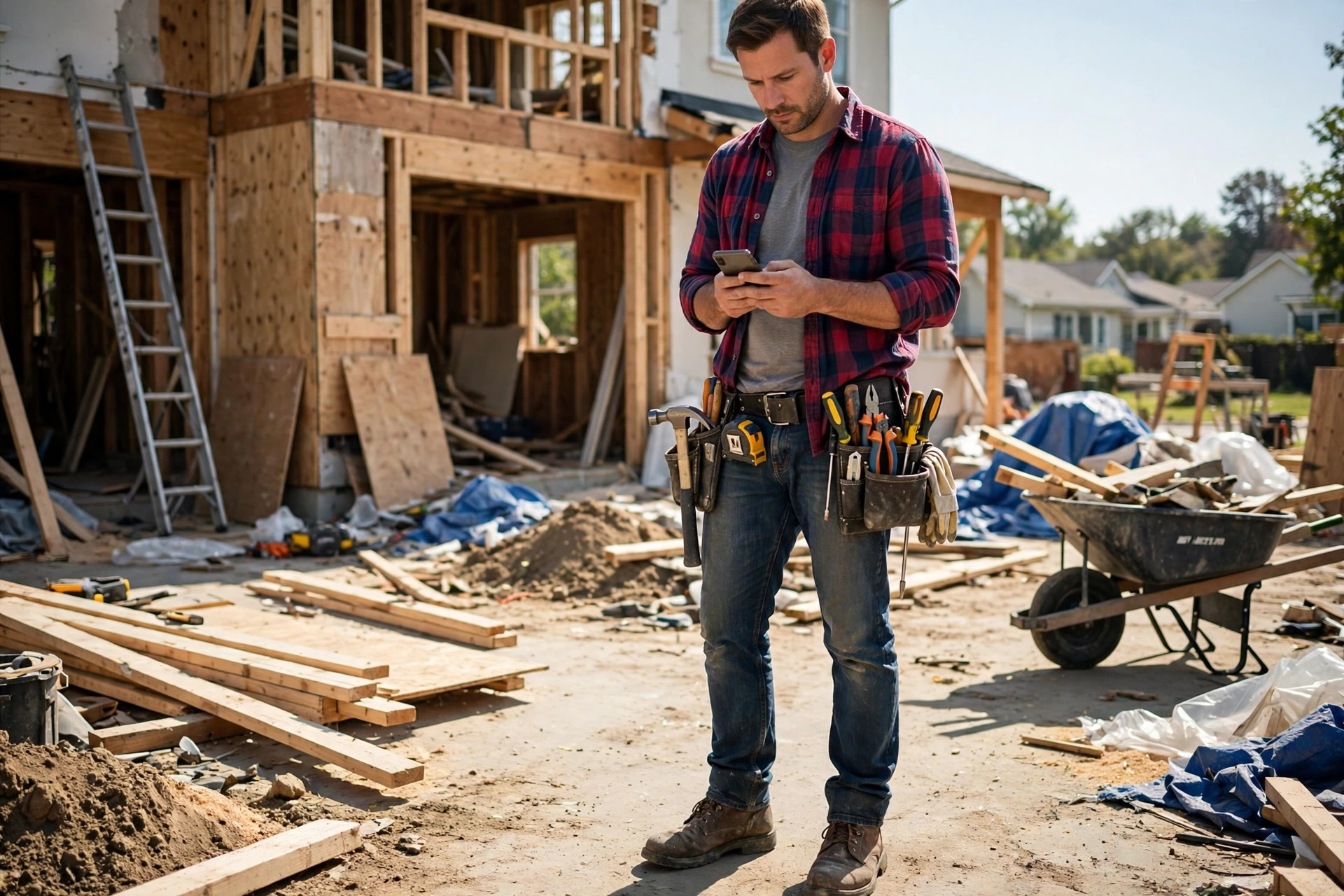
A homeowner fills out your quote form at 10pm, and by morning they have already hired someone else. Not because your price was wrong, but because the other contractor texted back in four minutes and you called back the next day. Contractors do not have a lead problem as often as they have a speed problem, and text message marketing is the simplest fix. SMS gets read within minutes, it reaches customers who never open email, and it turns dead quotes and missed calls into booked jobs. This guide covers exactly how contractors use texting: the rules, the campaigns, the costs, and the automations that do the work while you are on the tools.
The quick answer
- Why SMS for contractors: texts are read at rates near 90%, most within minutes. Homeowners answer texts while they ignore unknown calls and unopened emails.
- Biggest wins: instant reply to new leads, missed-call text back, estimate follow-ups for 30 days, appointment reminders, and review requests after the job.
- The law: in the US you need express written consent before marketing texts (TCPA), and carriers require registered 10DLC numbers. Fines start in the hundreds per message.
- Cost: typical SMS platforms run $30 to $300 a month for contractor volume; per-message rates run about $0.01 to $0.05 per text segment.
- Start simple: a shared team inbox with automations for new leads and missed calls beats a fancy campaign every time.
Why texting beats calling and email for contractors
Picture the homeowner’s side. A pipe bursts, a furnace dies, a roof leaks. They search, they tap three contractor websites, and they want help now. They will not answer a call from an unknown number at work, and they will not dig through email. But a text thread feels safe and fast. That is the entire case for SMS in contracting: it meets the customer in the channel they already trust for quick, practical communication.
Speed wins the job
Lead response research keeps landing in the same place: contacting a new lead within five minutes makes you dramatically more likely to reach them than waiting even half an hour. In contracting, the homeowner is usually contacting two or three companies at once, and the first one to respond like a human being wins the site visit. A text that says “Thanks for reaching out. When is a good time for us to look at the job?” beats a next-day callback every time. Many contractors automate this first reply so it goes out in under a minute, even at midnight.
Texts get read, emails get buried
SMS open rates sit near 90% or higher, with most messages read within a few minutes of arrival. Contractor email newsletters, by contrast, typically see open rates under 25%. This does not mean email is useless; it means email is the wrong tool for anything time-sensitive. Estimates, appointment confirmations, arrival updates, and payment links all belong in text. Save email for longer content like project portfolios and seasonal newsletters.
It fixes the jobs you already paid to win
The most profitable texting campaigns do not chase new leads. They recover the ones you already paid for. The estimate you sent last week that went quiet. The customer from two years ago whose water heater is now due for replacement. The missed call from Saturday that went to voicemail. Each of these is revenue hiding in your existing records, and a short text is the cheapest way to pull it out.
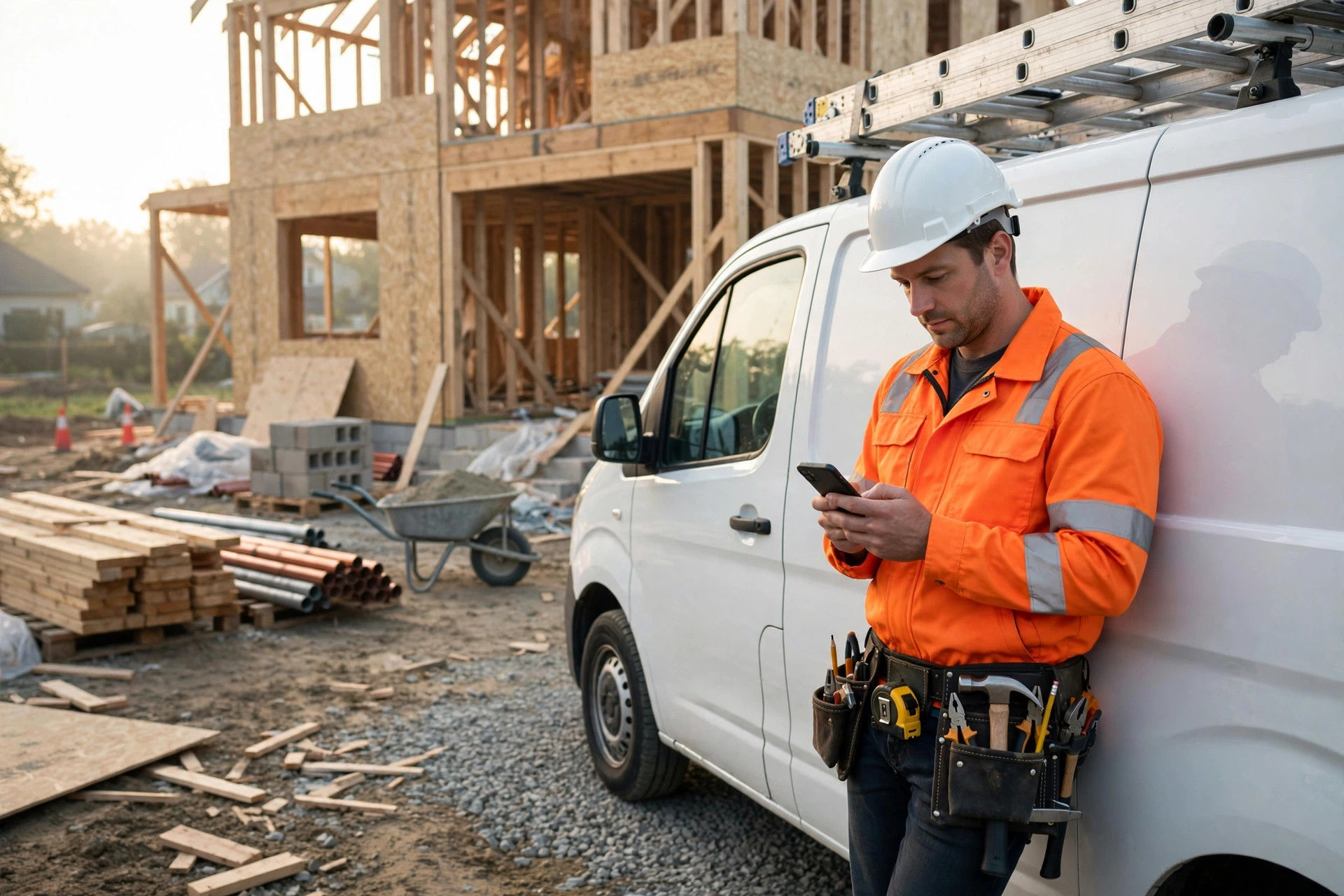
A fast text reply often decides which contractor gets the site visit.
The rules: consent, 10DLC, and staying out of trouble
Texting is regulated more strictly than email, and contractors get this wrong more than any other local industry. Get the compliance basics right before you send a single campaign.
Consent is the whole law
In the United States, the TCPA requires express written consent before you send marketing texts. That means the customer agreed, in writing (a checkbox, a signed form, a texted keyword), to receive marketing messages from your business at that number. Consent for one thing is not consent for everything: someone who gave their number for an appointment reminder has not agreed to promotional blasts. Keep consent records tied to each contact, including when and how they opted in.
Transactional messages (appointment confirmations, arrival updates, invoices) sit in a lighter category, but the safe practice is the same: get permission, identify your business in every message, and honor opt-outs immediately. Every marketing text must include a working opt-out instruction, usually “Reply STOP to opt out.”
Register your number: 10DLC
US carriers now require businesses to register their texting numbers through 10DLC (10-digit long code) registration: your brand, your campaign type, and sample messages. Unregistered numbers get filtered or blocked, which is why “my texts suddenly stopped delivering” is such a common contractor complaint. Legitimate SMS platforms walk you through registration during signup; it typically takes a few days to a couple of weeks for carrier approval. Budget for small one-time and monthly carrier fees on top of your platform cost.
Never buy lists
Purchased phone lists are illegal to text for marketing under the TCPA, and carrier filters flag the behavior fast. Build your list from your own customers and leads: website forms with a consent checkbox, QR codes on invoices and yard signs, keywords on truck wraps (“Text ROOF to 55555 for a free inspection checklist”). A list of 500 real customers who asked to hear from you will outperform a bought list of 50,000 every time, without the legal exposure.
Seven text campaigns every contractor should run
1. Instant new-lead response
When a quote request comes in from your website, Google, or a lead service, an automated text goes out within a minute: “Hi [name], thanks for contacting [company]. This is [name] with the team. When works for a quick call about your [project]?” The automation buys you time; a human takes over the conversation within minutes. Contractors who add this one automation commonly report contacting twice as many leads and booking far more site visits, because the leads were going cold in the inbox before.
2. Missed-call text back
You cannot answer every call from a roof or a crawlspace. An automatic text to every missed call keeps the caller from dialing your competitor: “Sorry we missed you. How can we help?” This single automation is the highest-ROI texting play in contracting. The caller called because they need work done now; a text within sixty seconds keeps them yours. Pair it with an after-hours version that sets expectations: “We are on the tools until 5. We will call you back today.”
3. Estimate follow-up sequences
The average contractor sends an estimate and follows up once, if at all. Build a 30-day text sequence instead: day 1, a thank-you plus one useful detail about the project; day 3, a question that invites a reply (“Any questions on the timeline?”); day 7, the estimate re-attached with a nudge; day 14, a short incentive or a seasonal reason to decide; day 30, a polite close-out (“Should I keep this quote open for you?”). Each message should invite a reply, because a reply restarts the conversation. Even a 10 to 15% recovery rate on dead estimates is pure profit on marketing you already paid for.
4. Appointment confirmations and reminders
Text a confirmation the moment a site visit or job is booked, a reminder 24 hours before, and a morning-of message with the technician’s name and arrival window. Add a “reply C to confirm” so no-shows surface before you dispatch a truck. For multi-day projects, a daily start-time text keeps the homeowner informed without phone tag. Fewer no-shows and fewer “when are you coming?” calls means your office staff gets hours back every week.
5. On-the-way and job-complete updates
“Mike is on the way, arriving between 2 and 4.” “The job is done. Here is your invoice: [link].” These transactional texts are the ones customers appreciate most, and they keep your number’s reputation warm with carriers. The job-complete text is also the perfect moment to ask for a review: the customer is happy, the work is fresh, and the review link is one tap away.
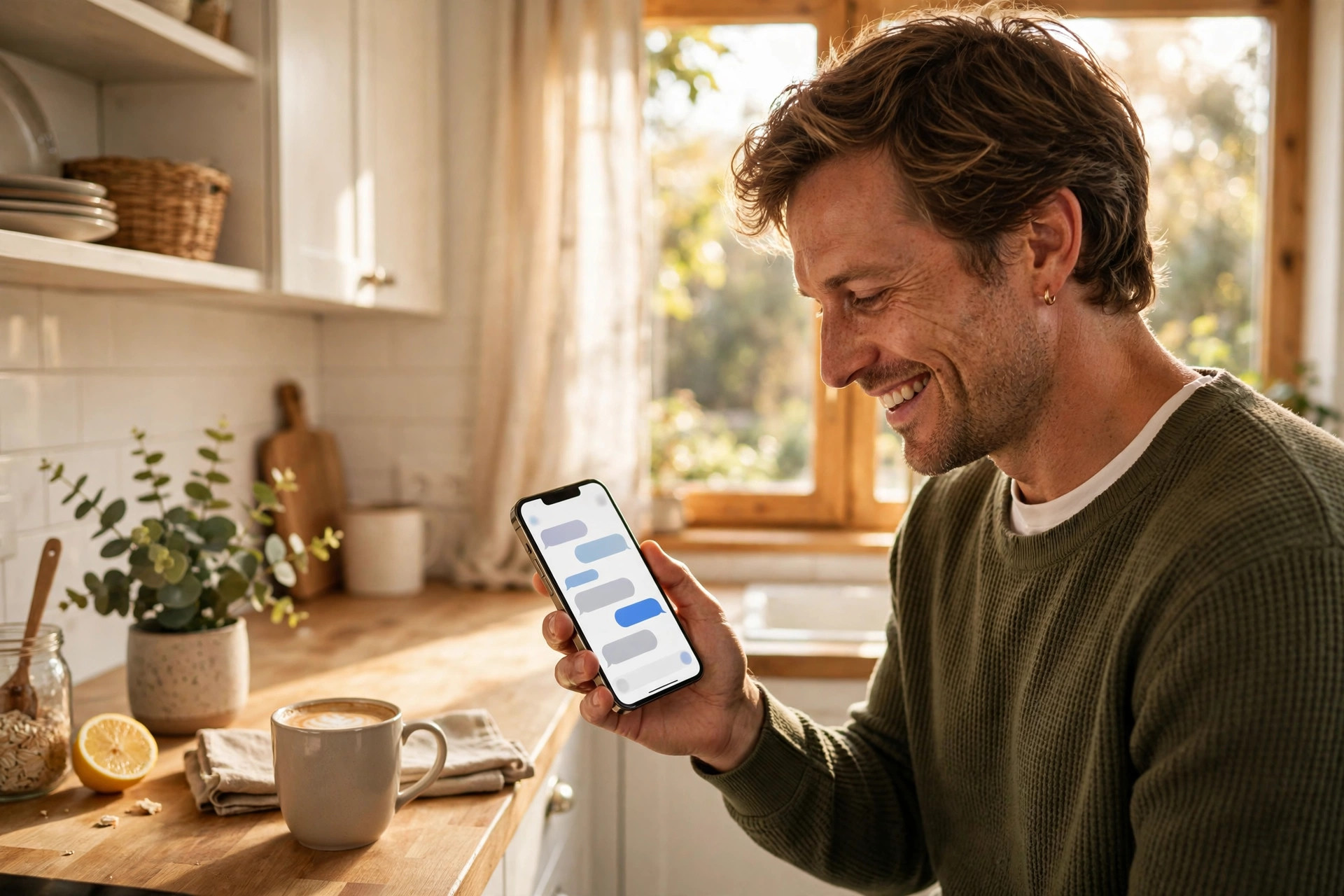
Reminders and arrival updates cut no-shows and keep customers informed without phone tag.
6. Review requests after every job
Send a review request text within an hour of job completion, while the customer is happiest. Include the direct Google review link, not a link to a page that links to the link. One follow-up text three days later for anyone who did not review. Respond to every review within 48 hours. Contractors live and die by review count in the map pack, and a systematic text ask is how shops climb from 40 reviews to 400.
7. Seasonal and win-back broadcasts
Twice a year, text your past-customer list with something genuinely useful: furnace tune-up reminders before winter, gutter cleaning before fall, AC checks before summer. These are service reminders, not spam, and they book real work. Separately, run win-back texts to customers who have not booked in 18 to 24 months: “Hi [name], it has been a while. We are offering past customers [offer] this month.” Keep broadcasts to a few per year, always to opted-in contacts, always with an opt-out.
What to say: text templates that sound human
Contractor texts work when they sound like a person, not a blast system. Keep them under 160 characters where possible, use the customer’s name, and end with a question or a clear next step. A few proven formats:
- New lead: “Hi [name], this is [your name] with [company]. Got your request about [project]. When is a good time for a quick call?”
- Missed call: “Sorry we missed your call. This is [company]. What do you need help with?”
- Estimate follow-up: “Hi [name], checking in on the [project] estimate. Any questions I can answer? Happy to walk through it.”
- Reminder: “Reminder: [tech name] arrives tomorrow between [window] for your [service]. Reply C to confirm.”
- On the way: “[Tech name] is on the way, arriving in about 30 minutes. Please make sure the [area] is accessible.”
- Review ask: “Thanks for choosing [company] today. A quick Google review would mean a lot: [link]”
- Win-back: “Hi [name], it has been a while since we serviced your [system]. We are booking [season] tune-ups now. Want a slot?”
Notice what is missing: hype, exclamation marks, and all-caps offers. A contractor’s texts should read like the owner typed them. That tone is exactly why they get answered.
Choosing an SMS platform: what contractors actually need
You do not need the most powerful SMS platform. You need the one your office will actually use. For most contractors, the must-have list is short: a shared team inbox so anyone can reply, automations for new leads and missed calls, templates and scheduling, 10DLC registration handled in signup, and integration with your CRM or booking system. Nice to have: two-way MMS for job photos, review request automation, and call tracking on the same number.
Common setups: all-in-one marketing platforms with SMS built in (simplest if you want email, CRM, and texting in one place), dedicated SMS tools (best deliverability and compliance tooling), and field-service software with texting add-ons (best if your scheduling already lives there). Price them at your actual volume: a contractor sending a few thousand texts a month should not pay for an enterprise plan.
How much does text message marketing cost for contractors?
Typical ranges at contractor volumes. Your actual cost depends on message volume, MMS use, and carrier fees in your area.
| Cost item | Typical range | Notes |
|---|---|---|
| SMS platform subscription | $30 to $300/mo | By contacts and features; most contractors land in the $50 to $150 band |
| Per-message (SMS segment) | $0.01 to $0.05 | A segment is 160 characters; longer texts use multiple segments |
| Per-message (MMS with photos) | $0.02 to $0.08 | Worth it for before/after photos and estimate documents |
| 10DLC registration and carrier fees | $15 to $50 one-time plus a few dollars monthly | Required for US business texting; platforms usually handle filing |
| Dedicated number or short code | $10 to $30/mo for a long code; short codes $500+/mo | Most contractors do fine with a registered 10DLC long code |
Typical ranges, not fixed prices. As a planning rule, a contractor texting a list of 1,000 opted-in contacts a few times a month usually spends $75 to $200 a month all in.

Track reply and booking rates per campaign so you know which messages earn their cost.
Your 30-day contractor texting launch plan
- 1Days 1 to 7: pick a platform, register your 10DLC number, and set up the shared inbox. Add consent checkboxes to your website forms and quote request pages.
- 2Days 8 to 14: build the two automations that matter most: instant new-lead response and missed-call text back. Write your five most-used templates.
- 3Days 15 to 21: launch appointment confirmations and reminders, plus the job-complete text with a review link. Import your past-customer list with consent records.
- 4Days 22 to 30: start the 30-day estimate follow-up sequence on every new quote. Send your first seasonal broadcast to the opted-in list. Review reply rates and bookings weekly.
Frequently asked questions
Is text message marketing legal for contractors?
Yes, with consent. US law requires express written consent before marketing texts, working opt-outs on every message, and registered sending numbers. Transactional texts like appointment reminders have lighter rules, but the safe standard is the same: permission, identification, and instant opt-out handling.
How much does SMS marketing cost a small contractor?
Most small contractors spend $75 to $200 a month all in: a platform subscription of $50 to $150, per-message costs of $0.01 to $0.05 per segment, and small carrier registration fees. High-volume shops or heavy MMS users land in the $200 to $300 range.
What is 10DLC and do I need it?
10DLC is the carrier registration system for US business texting from standard 10-digit numbers. You need it for reliable delivery; unregistered numbers get filtered or blocked. Your SMS platform files the registration for you during signup, and approval usually takes days to a couple of weeks.
How often can I text my customers?
For transactional messages (confirmations, reminders, updates), as often as the job requires. For promotional broadcasts, keep it to a few per year with real offers, and only to opted-in contacts. Frequency complaints are the top reason customers opt out, so every broadcast should earn its place.
Should I use SMS or WhatsApp for my contracting business?
In the US, SMS reaches everyone with a phone and no app needed, which makes it the safer default for contractors. WhatsApp works well if your customer base already uses it heavily. Many contractors run both: SMS for alerts and reminders, WhatsApp for longer back-and-forth conversations with photos and documents.
Want texting that turns more estimates into booked jobs?
Digital Hayder builds text message systems for contractors: compliant list setup, instant lead response, missed-call text back, estimate follow-up sequences, reminders, and review automation, all connected to your CRM. Tell us about your trade and we will map the plan.
Contact Us