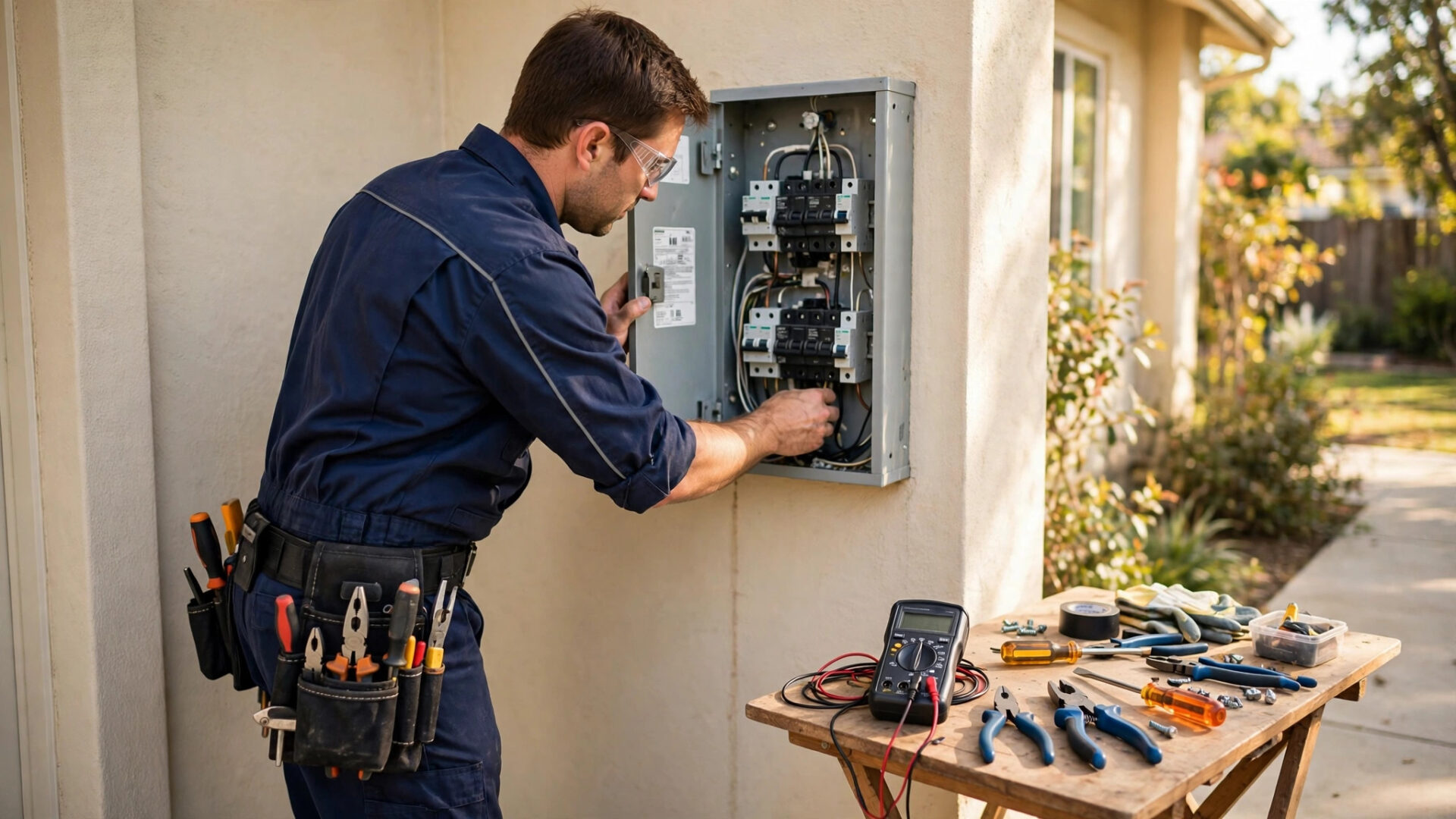
The lights go out across half a house at 9 p.m. The homeowner calls three electricians. The first two do not pick up. The third does, pages the on-call tech, and has someone on the way within the hour. That is the whole business case for an AI answering service for electricians: electrical problems scare people, and scared people hire whoever answers first.
Electricians lose calls in the worst possible moments: up a ladder, inside a panel, on a roof running conduit, or driving to the next job with both hands on the wheel. This guide covers what an AI answering service does for electrical contractors, how outage triage and safety escalation work, what it costs compared to a human answering service, and the questions that matter before you buy.
The quick answer
- Cost: AI answering services for electricians typically run $49 to $349 a month depending on call volume and features. Human answering services run $300 to $800 or more, with per-minute billing that surges in busy months.
- What it does: answers every call 24/7, identifies outage and safety emergencies, patches urgent calls to your on-call electrician, books panel upgrades and EV charger installs, and filters spam.
- Safety rule: the AI never gives electrical safety advice. Sparking, burning smells, and downed lines escalate to a human immediately, no exceptions.
- Best fit: contractors who lose calls while on jobs, shops with an on-call rotation, and businesses booking high-value work like panel upgrades and EV charger installs.
What an AI answering service for electricians actually does
An AI answering service is a voice agent that picks up your business line, talks with the caller in natural conversation, and acts on what it hears. For electrical shops, it is configured around your trade: the jobs you run, your service area, your on-call schedule, and the safety rules you set.
Outage triage and on-call dispatch
Most after-hours electrical calls are about lost power: half the house is dark, the breaker keeps tripping, an outlet is sparking. The AI is trained to listen for these situations and separate them from routine calls. When a call qualifies as urgent, it follows your escalation plan, which usually means patching the call through to the on-call electrician right then or sending an urgent text alert with the caller’s details. Trade-focused services let you write these rules in advance, so a sparking outlet at midnight reaches the right person within seconds while the caller is still on the line (wisconsinbeacon.com).
This mirrors how established electrical shops already work. On trade forums, contractors with 24/7 service divisions describe answering services that contact the on-call person, with the electrician typically speaking to the customer within five minutes of the original call (forums.mikeholt.com). The AI version just answers faster and never has a busy line.
Safety-first escalation
Electrical calls carry a safety dimension other trades do not. The AI should be scripted with clear red lines: any mention of sparking, smoke, a burning smell, or downed power lines escalates to a human immediately. The AI does not troubleshoot, does not tell the caller it is safe to touch anything, and does not keep them on the phone with questions when danger is possible. For downed lines, callers should be directed to emergency services first. You define these rules once; the AI follows them every time without exception.
Booking high-value jobs: panel upgrades and EV charger installs
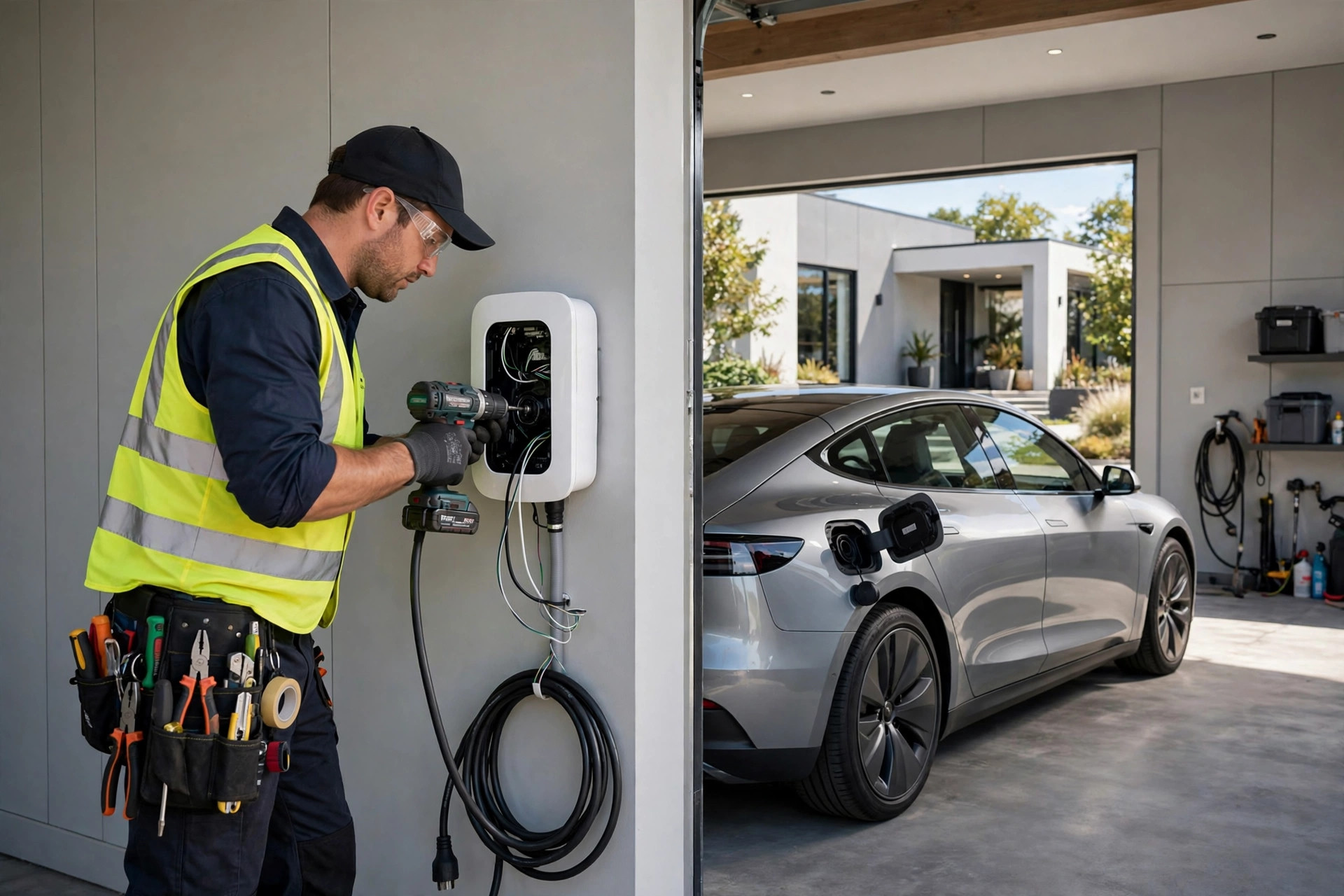
Not every call is an emergency, and for electricians the routine calls are often the most profitable. A panel upgrade inquiry, a quote request for an EV charger install, a homeowner planning recessed lighting for a renovation: these are high-value jobs that start as ordinary phone calls. The AI collects the details (panel size, EV model, home age, timeline), checks your availability, and books a quote visit or install appointment directly into your schedule. Many trade AI services integrate with field-service tools like Jobber, so the booking lands on your dispatch board with the full job description attached.
EV charger installs deserve special attention. They are a growing revenue stream, the buyer has already decided to spend, and the call usually comes with specific technical questions (amperage, panel capacity, permit requirements). An AI trained on your answers to those questions can qualify the lead properly and book the site visit, instead of letting it sit in voicemail until Monday morning.
After-hours and overflow coverage
You do not have to hand over every call. Most electrical contractors start with after-hours only: the AI answers nights, weekends, and holidays, when outage calls peak and nobody is in the office. Others add daytime overflow, so a call that comes in while you are on a panel replacement does not bounce to voicemail. Either way, every call gets recorded and summarized, and you get a morning digest of who called, what they needed, and what was booked.

The outage call you are losing to a competitor
When someone loses power, they do not wait until morning to find help. Electrical problems cannot always be pushed to the next business day, and callers know it. Without after-hours coverage, the calls that matter most go straight to the next electrician on the list, and the caller who tried you first becomes someone else’s customer (yourccsteam.com).
The broader numbers back this up. Research on small business calls found that 62% go unanswered, and only about 42% of callers leave a voicemail. Of those who reach voicemail, 85% never call back, and roughly 67% call a competitor instead. For home services, missed calls are not just lost leads; they are lost relationships, because the customer who hired someone else in an emergency will likely call that company for the next panel upgrade too.
AI answering service for electricians: what it costs
The pricing split in this market is simple: AI services mostly charge flat monthly rates, and human services mostly charge by the minute. Compare them on your real call volume, not the headline price.
Budget AI services
Entry-level AI answering with per-call or limited-call plans. Published examples include $49/month for 100 included calls and $149/month for 400 calls, with unlimited-call plans starting around $109 a month (oncrew.ai). Right for a solo electrician or a small shop that mainly needs after-hours and overflow coverage.
Trade-focused AI services
AI services built for plumbing, HVAC, and electrical contractors, with trade-specific triage, outage escalation rules, and scheduling integrations. Published trade plans run about $149/month for after-hours-only answering and $349/month for full front-desk coverage with Jobber integration (wisconsinbeacon.com). This is the tier where the AI functions as a dispatcher: routing outages, booking panel upgrades, and handling the on-call rotation.
Human answering services
Live agents with a monthly base fee (typically $50 to $200) plus $0.79 to $1.50 per minute, sometimes with 1.5 to 2 times premiums for nights and weekends. For an electrical shop taking 50 after-hours calls a month at 3 minutes each, per-minute charges alone run $200 to $500 on top of the base fee. Storm season can double the bill. Humans handle frightened callers well, but you pay for every minute of every call.
In-house dispatcher or receptionist
A full-time employee costs around $35,000 a year in salary before benefits and overhead, and works 40 hours a week. Nights, weekends, and sick days stay uncovered, which is exactly when outage calls spike. Makes sense for shops with a real office and admin load; expensive as a phone-coverage solution.
| Option | Typical monthly cost | Coverage | Best for |
|---|---|---|---|
| AI answering (budget) | $29 to $149 | 24/7 or after-hours | Solo electricians, small shops |
| AI answering (trade-focused) | $149 to $349 | 24/7, outage escalation | Shops with on-call rotations |
| Human answering service | $300 to $1,500+ | 24/7, per-minute billing | Shops needing live empathy every call |
| In-house staff | ~$2,900+ (salary) | 40 hrs/week | Shops with office traffic and admin work |
A note on these numbers: they are planning ranges from published pricing guides, not fixed industry rates. Per-minute billing means a cheap human plan can get expensive in a storm-heavy month, while flat-rate AI plans cost the same whether you get 50 calls or 500.
7 questions to ask before you buy
Electrical calls have safety and licensing details that generic AI services will miss. These questions sort the trade-ready providers from the generalists.
- 1How does it handle safety emergencies? Ask exactly what it does when a caller mentions sparking, smoke, a burning smell, or downed lines. The right answer is immediate human escalation, never troubleshooting. If the provider is vague on this, walk away.
- 2Can it qualify a panel upgrade inquiry? It should ask about the current panel size, the reason for the upgrade, and the home’s age, then book a quote visit with those details recorded. Listen to a demo of this exact scenario.
- 3Does it book EV charger installs correctly? The AI should capture the EV model, desired amperage, panel capacity questions, and permit needs, then schedule a site visit. This is a fast-growing revenue stream; the intake should treat it that way.
- 4What counts as a billable call? Get it in writing: spam, wrong numbers, and short hang-ups should not count. Storm weeks bring solicitor surges, and you should not pay for them.
- 5How does the on-call rotation work? Confirm you can set which tech gets paged on which nights, and that the caller can be patched through live rather than just getting a callback promise.
- 6Does it integrate with my scheduling software? Bookings should land directly in Jobber or your field-service tool with the full job description, not arrive as an email you have to re-enter.
- 7Can I try it risk-free? Most providers offer a free trial of about two weeks. Use it to test an outage call, a panel upgrade inquiry, and a spam call, then read the transcripts before committing.
Where an AI answering service for electricians hits its limit
The line for electrical work is brighter than in most trades: the AI must never give electrical advice. It does not tell a caller whether a buzzing panel is safe to leave overnight. It does not walk anyone through resetting a breaker. It does not estimate whether wiring is code-compliant. It captures facts, books visits, and escalates. Every scenario where the caller might act on what they hear goes to a human.
The second limit is emotional. A caller reporting sparking behind a wall at midnight is frightened. An AI can page your tech in seconds, but it cannot reassure the caller while they wait. For those calls, the escalation path matters more than the AI’s conversation skills: get the details, trigger the page, and hand off fast.
The practical setup most electrical contractors land on is the same pattern other trades use: AI answers after hours and overflows during the day, with real emergencies escalating to a live person immediately. Dental offices run the same playbook with AI receptionists booking consults after hours (see how dental offices use AI receptionists), and the logic transfers directly to electrical shops.
How to roll it out without disrupting your shop
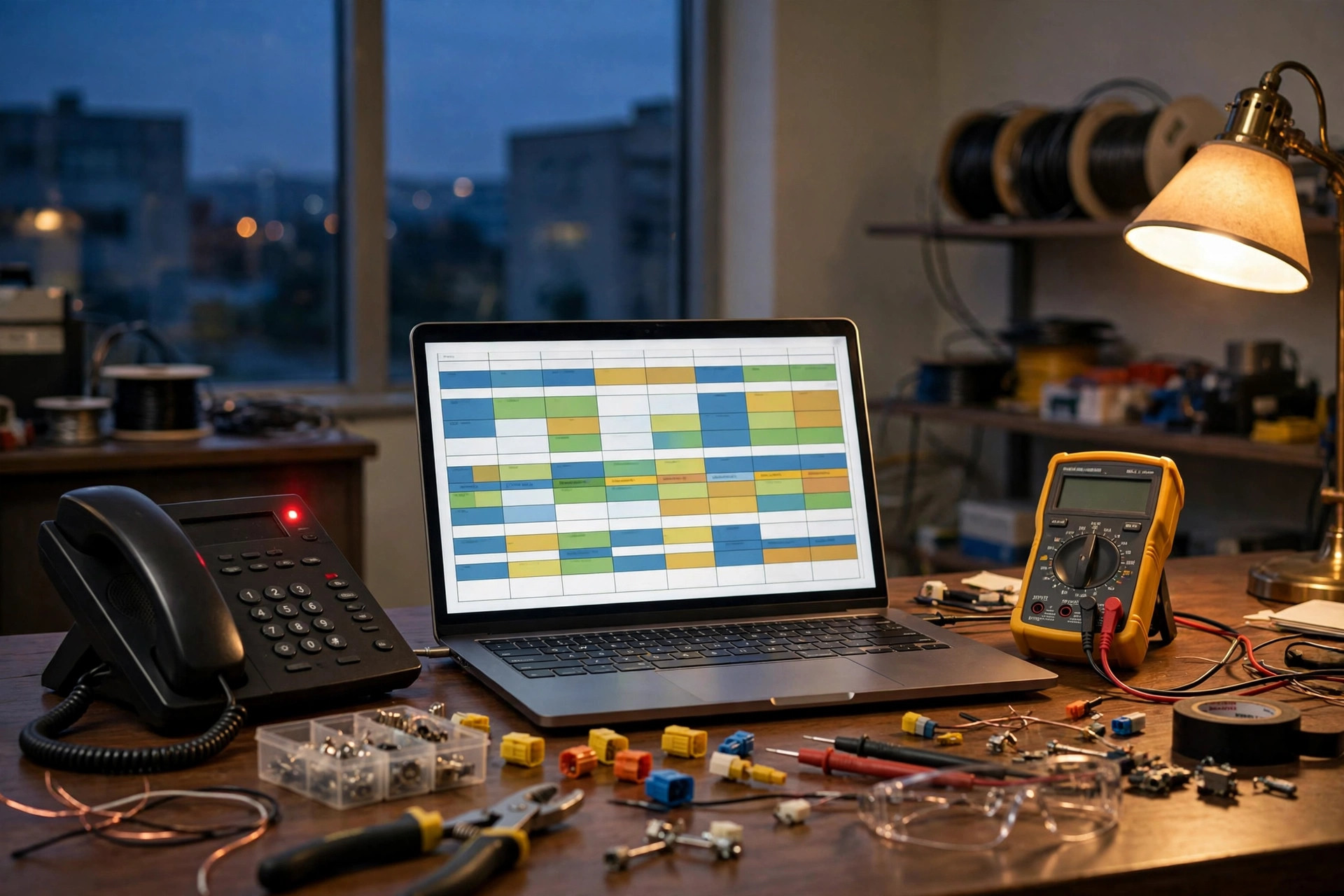
Start with after-hours only. Forward unanswered calls to the AI after closing time and on weekends, and give it your safety rules first: what counts as an emergency, who gets paged, and the exact script for sparking, smoke, and downed lines. Add your standard intake for the big-ticket jobs: panel upgrades, EV charger installs, and whole-home surge protection.
Run it for two to four weeks and review the call summaries each morning. Check three things: did real outages reach the on-call tech fast, did quote bookings land in the schedule with accurate details, and did any safety call get handled correctly. When the trial period looks clean, extend coverage to daytime overflow so no call goes to voicemail while you are on a job.
Frequently asked questions
How much does an AI answering service for electricians cost per month?
Published pricing for AI answering plans typically runs $29 to $349 a month, from budget per-call plans up to trade-focused plans with outage escalation and dispatch features. Human answering services run $300 to $1,500 or more a month with per-minute billing. Compare plans on your actual monthly call volume.
Can an AI answering service handle electrical emergency calls?
Yes, with strict rules. It recognizes outage and emergency language, then patches the caller to your on-call electrician or sends an urgent alert while the caller is still on the line. It never gives electrical safety advice; sparking, smoke, burning smells, and downed lines escalate to a human immediately.
Can it book panel upgrades and EV charger installs?
Yes. The AI collects the qualification details (panel size, EV model, home age, timeline), answers your standard questions from its knowledge base, and books a quote visit or install appointment directly into your schedule. These high-value bookings are where the service earns its keep.
Is it safe to let AI answer calls about sparking or burning smells?
Only if the AI is scripted to escalate, not to advise. A proper setup detects danger language, tells the caller help is being connected, and patches to a human right away. Downed power lines should be directed to emergency services. Ask the provider to show you this flow on a demo call before you sign.
Will I keep my existing business number?
Yes. You forward your current number to the service, so callers hear your company name and notice no change. Forwarding is reversible if you ever cancel.
Never miss another outage call
Digital Hayder sets up AI answering and call-capture systems for electrical contractors: outage triage, after-hours coverage, on-call dispatch, and quote bookings that land straight in your schedule. Tell us about your shop and we will map the right setup for your call volume.
Contact Us