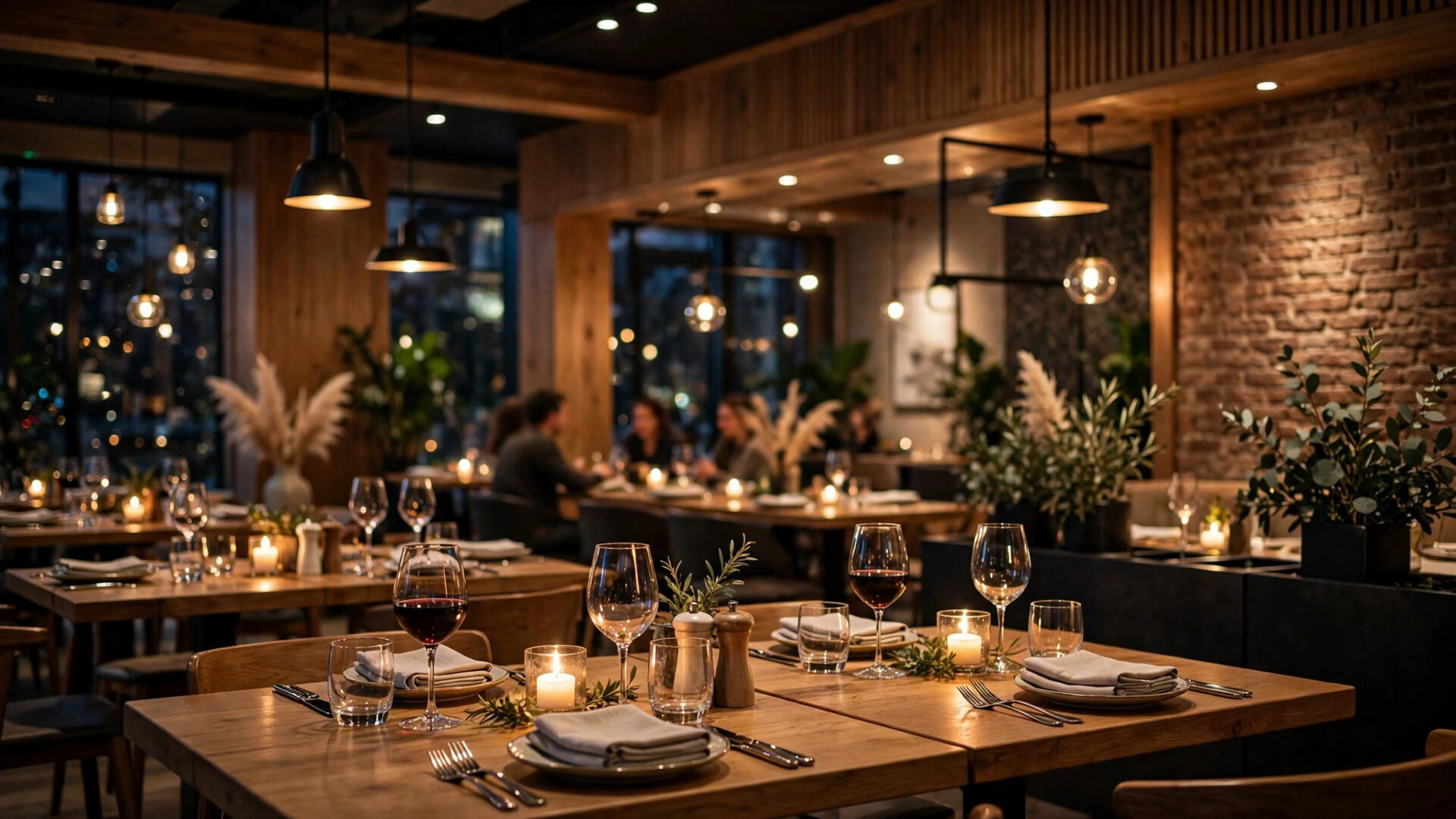
It is 7:15 on a Saturday night. Your dining room is full, the host stand is three deep, and the phone is ringing for the fifth time in ten minutes. Nobody can answer it. Those callers are not leaving voicemails. They are calling the place down the street. An AI booking chatbot for restaurants exists for exactly this problem: it answers every inquiry instantly, books the table, and answers the menu and hours questions that eat up your staff’s time.
This guide covers what a restaurant booking chatbot actually does, what no-shows and missed calls really cost you, what the tools cost, and how to roll one out without making your guests feel like they are talking to a machine.
The quick answer
- What it does: takes reservations around the clock, answers hours and menu questions, sends confirmation and reminder messages, handles cancellations and large-party requests.
- The no-show problem it fixes: US restaurants see 15 to 20 percent no-show rates, with each empty table costing an estimated $150 to $200. Automated reminders can cut no-shows by up to 40 percent, according to OpenTable data.
- Typical cost: $100 to $300 per month for chatbot platforms; AI voice agents that answer calls start around $199 per month with no per-minute charges.
- The payback: one recovered table a week often covers the subscription for the whole month.
The real cost of missed calls and empty tables
Two leaks drain restaurant revenue quietly, and most owners underestimate both. The first is the unanswered phone. During the dinner rush, the host is seating, the bar is slammed, and the phone rings unanswered. Industry case studies of AI booking tools report that phone-based reservations take three to five minutes of staff time per call, and restaurants that shift 60 to 70 percent of bookings to an AI agent free up the equivalent of 10 to 15 staff hours per week (Tars). One Brighton seafood restaurant found roughly 40 percent of its incoming calls went unanswered during the 6 pm to 8 pm rush. After putting an AI answering line in front of their reservation system, missed calls during peak hours dropped to under 8 percent (Lilach Bullock).
The second leak is the no-show. US restaurants experience no-show rates averaging 15 to 20 percent, and each empty table costs a full-service venue an estimated $150 to $200 in lost revenue (Tars). In the UK, industry data puts no-show rates at 12 to 15 percent, with an average 80-cover restaurant losing roughly 1,200 pounds a week through poor table allocation alone. Hotel restaurants run even higher, 18 to 24 percent for unconfirmed reservations, because guests mentally treat a restaurant booking as optional once the room is paid for.
Run the math for a 60-cover restaurant with 50 reservations on a Friday and Saturday. At a 15 percent no-show rate, that is seven or eight empty tables a weekend. At $150 a table, that is over $1,000 a weekend walking out the door, and most of those tables could have been filled or at least released in time to seat someone else. The same Brighton restaurant cut its no-show rate from around 18 percent to just under 8 percent with automated confirmation texts, recovering roughly five extra filled tables a week worth about 4,000 pounds a month. The tool cost them under 300 pounds a month.
What an AI booking chatbot for restaurants actually does
A restaurant booking chatbot is a conversational assistant that lives on your website, your Google business profile, WhatsApp, or your phone line. Guests message it the way they would text a friend, and it handles the four jobs that matter:
- Takes reservations. It checks real availability, offers time slots, collects party size and contact details, confirms the booking, and writes it into your reservation system. The whole flow happens in one conversation, no forms, no hold music.
- Answers hours and menu questions. “Are you open Monday?” “Do you have gluten-free options?” “Where do I park?” The bot answers from your actual info, including the daily specials and holiday hours you update.
- Cuts no-shows with reminders. Confirmation at booking, reminder the day before, and a simple reply-to-confirm or cancel. Guests who can cancel in one tap do it in time for you to refill the table, which beats a silent no-show every time.
- Handles large parties and special requests. Tables of eight, birthdays, anniversaries, wheelchair access, high chairs. The bot collects the details, applies your large-party policy, and flags the booking for your team.
The best setups also run on voice. AI receptionist tools that answer your phone line, check live availability, and confirm the booking now start at around $199 a month with no per-minute charges (Loman AI). That matters because plenty of your guests, especially older diners and large-party organizers, still prefer to call.
Reservations that book themselves
The reservation flow is where a booking chatbot earns its keep. A static “book a table” form has a single path and a lot of drop-off. A conversational flow adapts. If Friday 7 pm is full, it suggests 6:15 or 8:30, or Saturday instead. If the party is ten people, it switches to your large-party flow instead of jamming them into a standard table request. Industry case studies report that conversational booking flows lift reservation conversion by 25 to 35 percent compared with static web forms (Tars).
Three details make the difference between a bot that books and a bot that annoys:
Live availability, not a request form
The bot must read your real reservation book, whether that is OpenTable, Resy, SevenRooms, or a simple calendar. A “request” that still needs a human to confirm is just a form with extra steps, and guests know it.
Smart alternatives when the first choice is gone
“We are full at 7:30, but I have 6:45 or 8:15. Which works better?” That one sentence saves the booking. So does offering the waitlist, or a different day, before the guest gives up and books elsewhere.
One-tap changes and cancellations
Plans change. A guest who can move their reservation from Friday to Saturday in thirty seconds stays your customer. A guest who has to call during service hours, wait on hold, and explain themselves might just not show up. Make the easy path the honest path.
Killing the no-show problem
Reminders are the single highest-ROI feature of a booking chatbot, and the data is clear. Automated confirmation and reminder messages can reduce no-shows by up to 40 percent, according to OpenTable data cited in industry case studies (Tars). Here is how a good reminder sequence works:
- At booking: instant confirmation with date, time, party size, and a link to modify or cancel.
- Day before: a short reminder with one-tap confirm or cancel. Guests who reply “cancel” release the table while you still have time to fill it.
- Day of (optional): a short “see you tonight” message for high-value slots like Friday and Saturday prime time.
For restaurants where no-shows are brutal, Friday and Saturday prime time, tasting menus, chef’s counters, the bot can also collect card details to back your cancellation policy. Frame it as standard practice, because it is: guests are used to it from hotels and airlines, and it filters out the bookings that were never serious.
Pair the bot with a missed-call text-back on your phone line and you cover both directions: the chatbot handles website and chat bookings, the text-back catches callers who rang during the rush and gives them a booking link before they call your competitor.
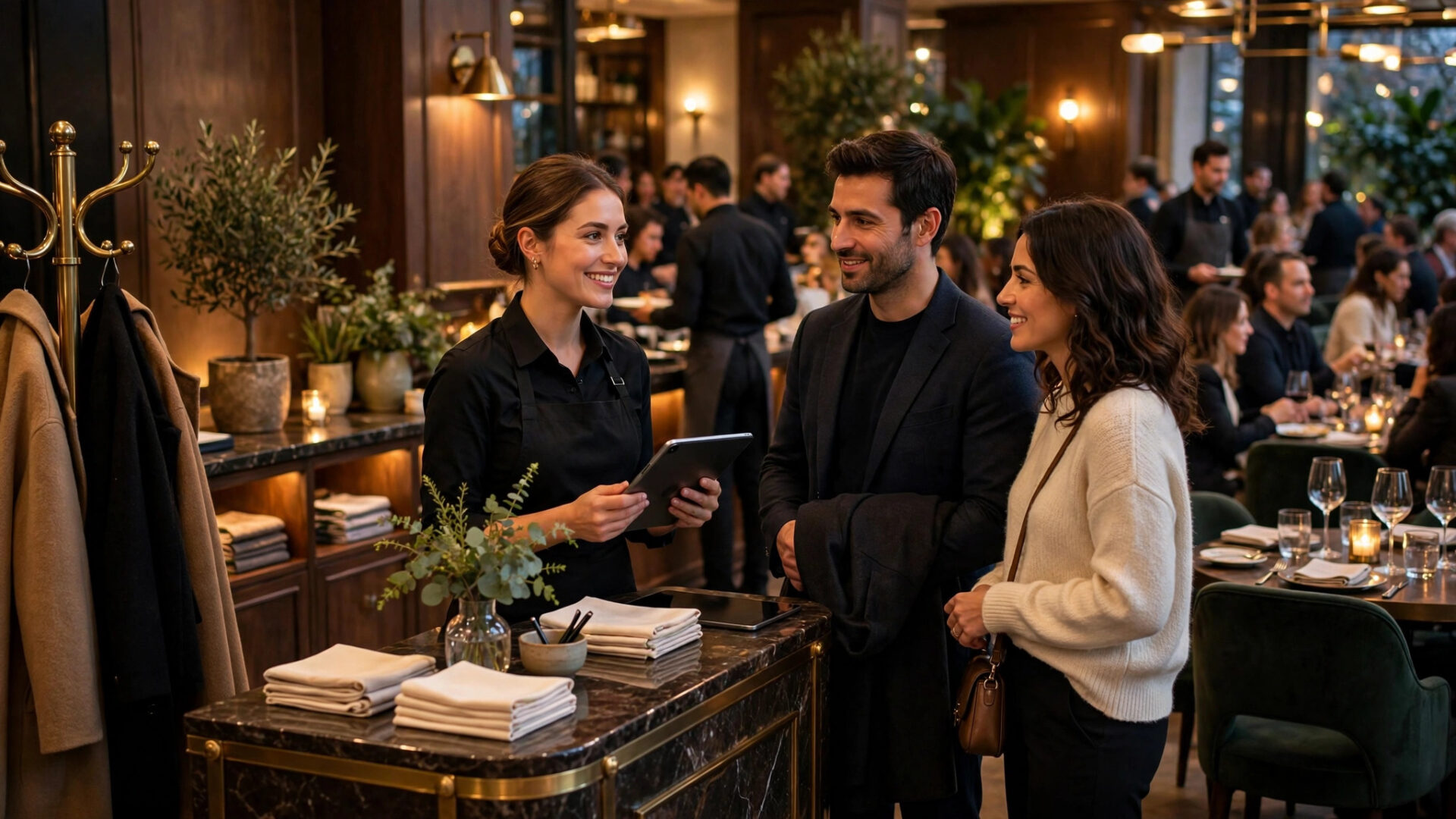
Large parties, special requests, and the edge cases
This is where cheap bots fall apart and good ones shine. A party of twelve for a birthday is not a standard reservation. It involves your large-party policy, maybe a set menu, a deposit, a private room option, and dietary restrictions. A good booking chatbot collects all of it in one conversation: date, headcount, occasion, allergies, seating preferences, and whether they want the private dining room.
The bot should also know your rules and enforce them politely. Maximum party size for online booking, deposit required over eight guests, 18 percent gratuity added for parties of six or more, kids’ menu available, wheelchair-accessible tables on request. When the request exceeds what the bot can handle, a private event for forty, a full buyout, it collects the details and routes them to your events manager with a complete brief instead of dropping the inquiry.
Special requests deserve the same care. High chair, quiet corner, proposal at the window table: the bot logs them against the reservation so your team sees them at seating time. Small details, remembered automatically, are what turn a first visit into a regular.
What an AI booking chatbot for restaurants costs
Pricing falls into a few clear tiers. Chatbot platforms built for bookings typically run $100 to $300 per month. AI voice agents that answer your actual phone line start at around $199 per month with no per-minute charges (Loman AI). Custom builds that tie into your POS and reservation stack cost more up front but give you full control.
One cost comparison owners often miss: third-party reservation platforms charge a per-seated-diner fee that adds up fast for a busy restaurant. A chatbot on your own website and WhatsApp is a fixed monthly cost with zero per-cover fees, and you own the guest data instead of renting it from a platform (Conferbot).
| Option | Typical cost | Best for |
|---|---|---|
| Booking chatbot platforms (templates with reservation flows) | $100 to $300 per month | Independent restaurants that want website and WhatsApp bookings fast |
| AI voice agents (answer your phone line, check availability) | Around $199 per month, no per-minute charges | Restaurants losing bookings to unanswered calls during service |
| Third-party reservation platforms (OpenTable, Resy) | Monthly fee plus per-cover charges | Discovery and diner network reach, at a per-guest cost |
| Custom build (chatbot tied to your POS and reservation stack) | Several thousand to build, $200 to $600 per month to run | Groups and multi-location operators with specific workflows |
The ROI case is unusually simple for restaurants. Restaurants using AI-powered chatbots report a 35 percent reduction in operational costs related to customer handling (Tars). And the revenue side is direct: if the bot recovers even one or two tables a week from missed calls and no-shows, it has paid for itself many times over.
- 1Does it connect to your real reservation book? OpenTable, Resy, SevenRooms, or your calendar. Read-only is not enough; confirmed bookings must write back so double bookings never happen.
- 2Does it handle your large-party rules? Deposits, set menus, gratuity policies, private rooms. If your biggest tables are your best revenue, the bot must handle them properly.
- 3Does it send reminders and confirmations? This is the no-show killer. Confirm at booking, remind the day before, offer one-tap cancel.
- 4Can guests reach it where they are? Your website at minimum; WhatsApp and your Google profile if you want full coverage. Voice answering is a bonus worth paying for.
- 5Does it know your menu and hours? Daily specials, holiday hours, allergen info, parking. A booking bot that cannot answer “are you open Monday” is half a tool.
- 6Who owns the guest data? Names, phone numbers, visit history, and preferences should live in your system, not locked inside a vendor’s dashboard.
- 7Can it escalate gracefully? Allergies, complaints, and private events need a human. The bot should collect the details and route them with context, not fumble.
Getting it live without disrupting service
Rollout is straightforward if you sequence it right:
Week 1: connect and configure. Link your reservation system, load your hours, menu highlights, large-party policies, and cancellation terms. Set the bot’s personality to match your restaurant: a white-tablecloth place and a taco truck should not sound the same.
Week 2: test the flows. Run through a standard booking, a sold-out Friday, a party of ten, and a cancellation. Have your host team try to break it. Fix every wrong answer before a guest sees one.
Week 3: soft launch. Put it on your website first, keep the phone as it was. Watch the first hundred conversations and the reminder replies. Tune the wording of the confirmation and reminder messages; small changes move the confirm rate.
Week 4: expand. Add WhatsApp or Google profile messaging, and consider the voice agent for your phone line if missed calls are still costing you tables. Train your staff on what the bot handles so the host stand and the chatbot stop duplicating each other.
The same pattern, instant answers plus automatic booking, is working across other local businesses too. See how AI receptionists handle the front desk for dental offices: same logic, different industry.
Frequently asked questions
Will guests be annoyed talking to a bot instead of a person?
Guests are annoyed by waiting on hold and by booking forms that go nowhere. A chatbot that answers in seconds and books the table is faster than the phone experience it replaces. The complaints come when bots pretend to be human or cannot hand off; set clear escalation and you avoid both.
Can it really reduce no-shows?
Yes, and this is the best-documented benefit. Automated confirmation and reminder messages can reduce no-shows by up to 40 percent, according to OpenTable data. The mechanism is simple: guests who confirm show up, and guests who cancel in time release the table while you can still fill it.
Does it work with OpenTable or Resy?
Most serious booking tools integrate with the major reservation platforms. The key question is whether the integration is two-way: the bot must read live availability and write confirmed bookings back into the shared book, or you risk double bookings.
What about guests who still want to call?
Keep a human path, but add an AI voice agent on the line. It answers during the rush, checks live availability, and confirms the booking. Callers get served instead of sent to voicemail, and your host team stays focused on the room.
How fast does it pay for itself?
Usually within the first month. One recovered Friday-night table can be worth $150 to $200, and the monthly cost of most platforms is in the low hundreds. Track recovered bookings and the no-show rate before and after; those two numbers are the whole business case.
Stop losing tables to unanswered calls and silent no-shows
Digital Hayder builds AI booking chatbots for restaurants: real reservations from your website and chat, automatic reminders that cut no-shows, and phone coverage for the dinner rush. Tell us about your restaurant and we will scope the right setup.
Contact Us