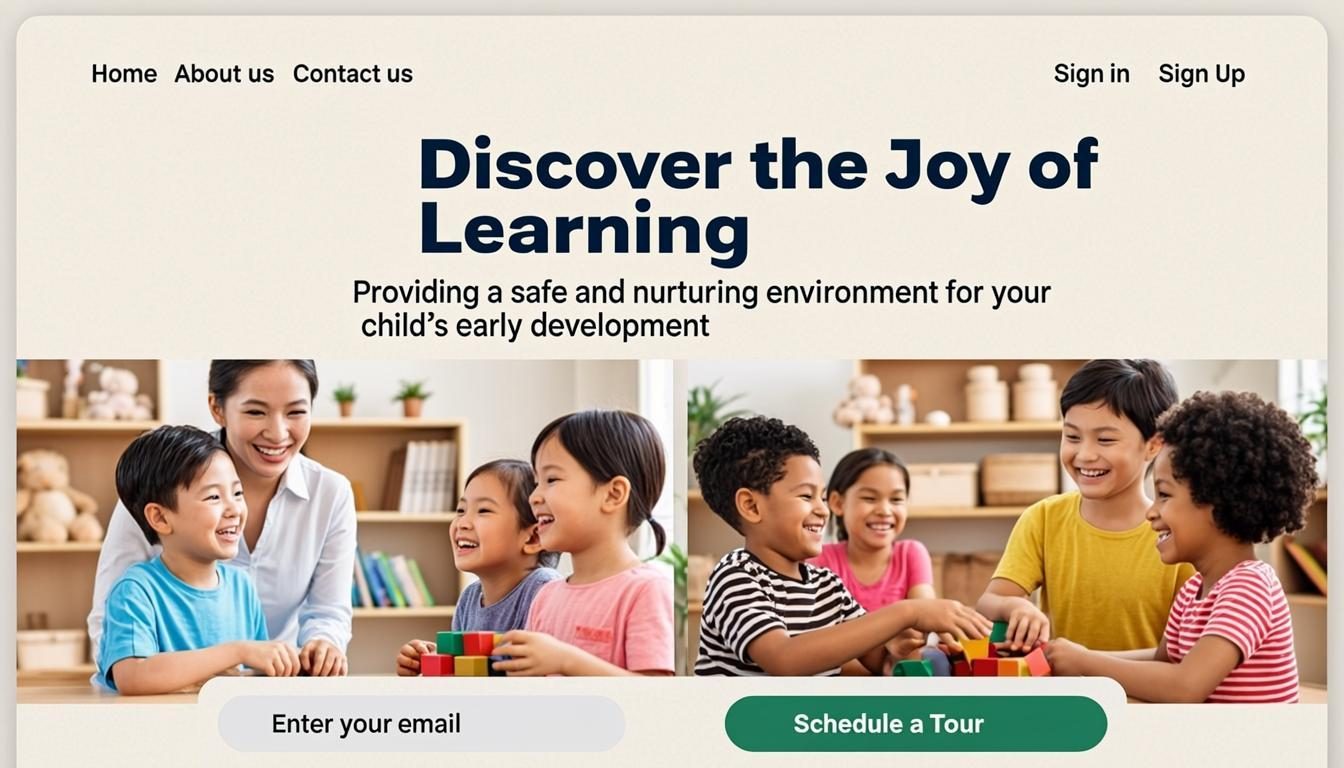
Why Your Daycare Website Isn't Getting Enrollments
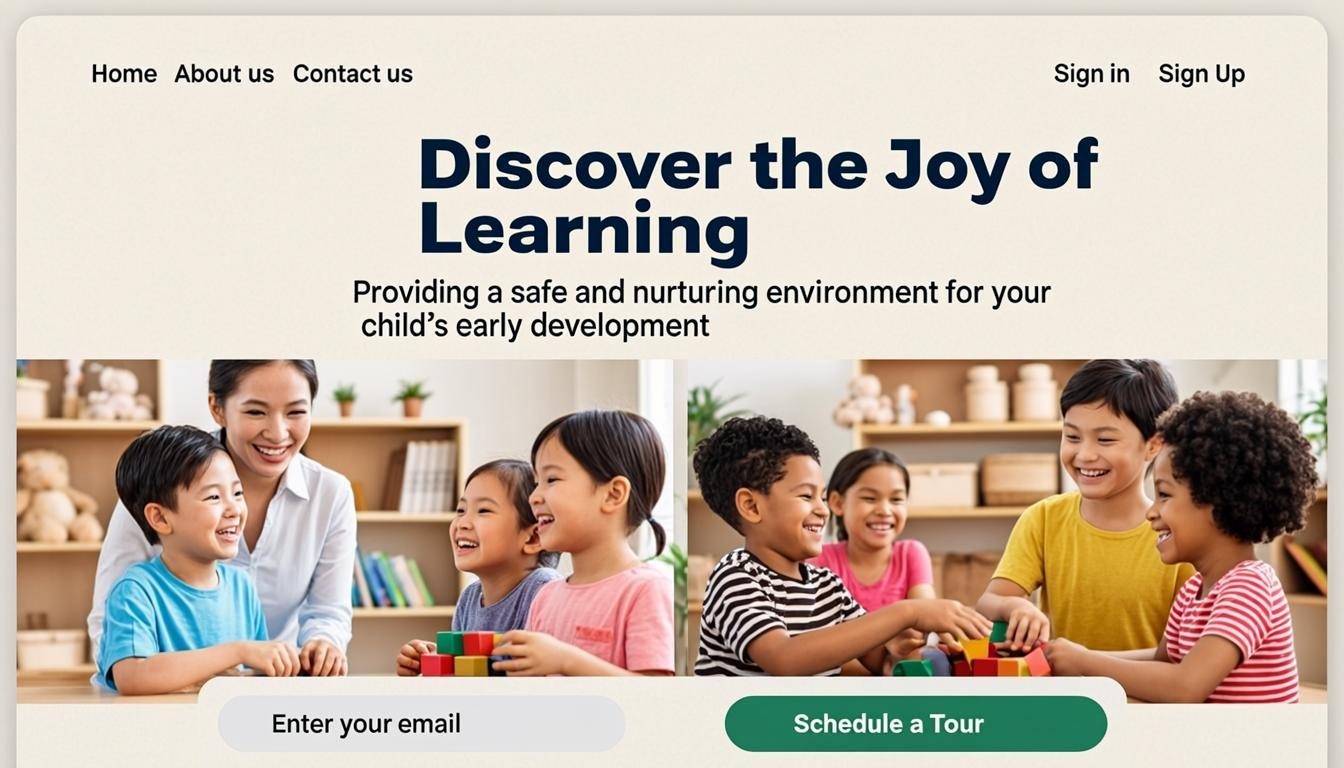
Are you struggling to fill your daycare's classrooms despite having a beautiful website? You're not alone. Many childcare centers invest time and money into their online presence only to see little return on investment. The truth is, a website that looks good isn't enough in today's competitive childcare market. Your daycare website needs to actively convert visitors into enrolled families. In this comprehensive guide, we'll explore the most common reasons why your daycare website isn't generating enrollments and provide actionable solutions to turn your digital presence into your most powerful enrollment tool.
Here's what you'll learn:
- The critical elements missing from your daycare website
- How to optimize your site for both parents and search engines
- Strategies that successful childcare centers use to fill classrooms faster
- Specific tactics to increase your website's conversion rate
- Common mistakes that drive potential families away
Understanding the Current Childcare Market Landscape
The childcare industry faces unique challenges in 2024 that directly impact enrollment numbers. According to recent industry reports, many childcare centers are operating at only 55-60% capacity, which is significantly below optimal levels [4]. This isn't just a local issue,it's affecting centers across the country. In fact, one Bay Area director reported noticing "a significant decline in daycare demand,not just here in Oakland, but across the Bay Area in general" [2].
Several factors contribute to this enrollment challenge:
- Changing parent expectations for digital experiences
- Increased competition in many markets
- Economic pressures affecting family budgets
- Shifting demographics and family structures
Understanding these market dynamics is crucial because your website must address these specific challenges to succeed. A one-size-fits-all approach simply won't work in today's diverse childcare landscape. The centers that are thriving have adapted their digital strategies to meet the needs of modern parents while differentiating themselves from competitors.
The Digital Expectations of Modern Parents
Today's parents approach childcare decisions differently than previous generations. They research extensively online, read reviews, and compare options before ever contacting a center. Your website is often the first,and sometimes only,impression potential families will have of your program. If your site doesn't immediately answer their questions and build trust, they'll move on to the next option without a second thought.
Research shows that parents spend an average of 8-10 weeks researching childcare options before making a decision. During this time, they visit multiple websites, compare programs, and narrow down their choices based on the information available online. Your website needs to provide comprehensive information while maintaining an engaging, user-friendly experience that guides parents toward enrollment.
Common Website Mistakes That Drive Parents Away
Many childcare centers make fundamental errors with their websites that prevent them from converting visitors into enrolled families. These mistakes often go unnoticed by the center's staff but are immediately apparent to discerning parents who are comparing multiple options.
One of the most critical errors is failing to clearly communicate your unique value proposition. Parents need to understand what makes your center special within the first few seconds of visiting your site. If they can't quickly answer "Why should I choose this center over the one down the street?" they'll likely leave your site and never return. Your value proposition should be prominently displayed on your homepage and reinforced throughout your website.
Another common mistake is having outdated or incomplete information. Nothing erodes trust faster than incorrect hours, outdated tuition rates, or photos that don't represent your current facility. Parents expect accuracy and consistency across your digital presence. When they encounter discrepancies, it raises questions about your attention to detail and overall quality of care.
Mobile-Usability Issues
With over 60% of parents now researching childcare options on their mobile devices, having a mobile-friendly website is no longer optional,it's essential. Many daycare websites are built with desktop users in mind, creating frustrating experiences for mobile visitors who struggle to navigate tiny text, broken layouts, and slow loading times.
Google's research shows that 53% of mobile users will abandon a site that takes longer than three seconds to load. For a parent juggling work and childcare research, that's an eternity. Your website must load quickly, display properly on all devices, and allow parents to easily find the information they need without zooming or scrolling excessively.
Essential Elements of a High-Converting Daycare Website
A successful daycare website goes beyond looking good,it actively converts visitors into enrolled families. The most effective childcare websites incorporate specific elements that address parents' questions, build trust, and make the enrollment process as seamless as possible.
Professional photography and video content are non-negotiable elements of a high-converting daycare website. Parents want to see your facility, meet your staff, and understand the daily experience you provide. High-quality photos of your classrooms, playground, and activities help parents visualize their child in your environment. Video content, such as tours of your facility or testimonials from current parents, can significantly increase engagement and build emotional connections with potential families.
Clear calls-to-action (CTAs) guide parents through the enrollment process. Every page on your website should have a purpose and include a relevant CTA that tells parents exactly what to do next. Whether it's "Schedule a Tour," "Download Tuition Information," or "Contact Us," your CTAs should be visually distinct and strategically placed to maximize conversion opportunities.
Comprehensive Program Information
Parents need detailed information about your programs to make informed decisions. This includes:
- Age groups served and classroom capacity
- Curriculum philosophy and educational approach
- Staff qualifications and experience
- Daily schedule and routine
- Health and safety protocols
- Tuition rates and payment options
- Operating hours and holiday schedule
This information should be easy to find and organized in a logical manner. Consider creating a dedicated page for each program (infant, toddler, preschool, etc.) with specific details relevant to each age group. The more comprehensive your information, the fewer questions parents will have when they contact you, making the enrollment process smoother and more efficient.
SEO Strategies to Drive Targeted Traffic
Even the most beautiful website won't generate enrollments if parents can't find it when searching for childcare options. Search engine optimization (SEO) is crucial for ensuring your website appears in search results when parents are actively looking for childcare in your area.
Local SEO is particularly important for daycare centers. Most parents search for childcare options near their home or workplace. This means optimizing your website for location-based keywords such as "daycare near me," "preschool in [your city]," or "childcare center [your neighborhood]." Your website should prominently display your address, phone number, and service areas to help search engines understand your geographic relevance.
Keyword research is the foundation of effective SEO. Identify the terms parents use when searching for childcare and strategically incorporate them throughout your website. Focus on long-tail keywords that capture specific needs, such as "Montessori toddler program" or "full-time infant care with extended hours." These targeted keywords attract more qualified traffic and improve your conversion rate.
Content Marketing That Builds Trust
Content marketing serves two important purposes for daycare websites: improving SEO and building trust with potential families. By creating valuable content that addresses parents' questions and concerns, you establish your center as an authority in early childhood education while improving your search rankings.
Consider developing content around topics such as:
- Age-appropriate developmental milestones
- Separation anxiety tips for parents
- Nutritional guidelines for young children
- Preparing children for kindergarten
- The importance of play-based learning
This content should be easily accessible through blog posts, resource libraries, or downloadable guides. Not only does this improve your SEO, but it also gives parents a reason to return to your website multiple times during their research process, increasing the likelihood they'll eventually choose your center.
Conversion Rate Optimization Techniques
Once you're attracting the right traffic to your website, the next step is optimizing it to convert those visitors into enrolled families. Conversion rate optimization (CRO) involves making strategic changes to your website that increase the percentage of visitors who take desired actions, such as scheduling a tour or submitting an enrollment application.
Simplify your enrollment process to reduce friction for parents. The fewer steps between expressing interest and completing enrollment, the better. Consider implementing online registration forms that can be completed in under five minutes. If your current process requires multiple in-person visits or extensive paperwork, many parents will abandon the process before completion.
Social proof is a powerful conversion tool. Display testimonials from current parents, before-and-after photos of children's artwork or projects, and statistics about your program's success. When potential families see that other parents have had positive experiences with your center, they're more likely to trust your program and complete the enrollment process.
Trust Signals That Reduce Parental Anxiety
Choosing childcare is one of the most important decisions parents make, and anxiety is a natural part of the process. Your website should include elements that build trust and reduce this anxiety, making parents feel confident in their decision to choose your center.
Trust signals include:
- Accurate contact information with multiple ways to reach you
- Clear information about staff qualifications and background checks
- Detailed health and safety protocols
- Transparent policies on tuition, hours, and holidays
- Information about your accreditation and licensing
- Emergency procedures and communication plans
These elements should be prominently displayed throughout your website, not buried in hard-to-find documents. When parents can easily find information that addresses their concerns, they're more likely to move forward with enrollment rather than continuing their search.
Measuring and Improving Your Website Performance
Understanding how your website performs is essential for continuous improvement. By tracking key metrics, you can identify areas for improvement and make data-driven decisions to increase enrollments.
Google Analytics provides valuable insights into your website's performance. Key metrics to monitor include:
- Traffic sources and volume
- Time on page and bounce rate
- Conversion rates for different pages
- Mobile vs. desktop performance
- Most visited pages and exit pages
Regularly review these metrics to identify trends and opportunities for improvement. For example, if you notice that many visitors exit your tuition page without taking action, it may indicate that your pricing information is unclear or your enrollment process is too complex.
A/B Testing for Continuous Improvement
A/B testing allows you to compare different versions of your website elements to determine which performs better. This could involve testing different headlines, calls-to-action, page layouts, or even color schemes. By making small, data-driven changes, you can gradually improve your website's conversion rate over time.
Focus on testing one element at a time to accurately measure the impact of each change. For example, you might test two different versions of your "Schedule a Tour" button to see which generates more clicks. Over time, these small improvements can significantly increase your website's ability to convert visitors into enrolled families.
Key Takeaways
- Your daycare website must actively convert visitors, not just look professional
- Mobile optimization is critical as most parents research childcare on their phones
- Comprehensive program information builds trust and reduces parental questions
- Local SEO ensures parents can find you when searching for childcare options
- Simplified enrollment processes reduce friction and increase completion rates
- Trust signals address parental anxiety and build confidence in your program
- Regular performance measurement and testing drive continuous improvement
Frequently Asked Questions
How long does it typically take for a daycare website to start generating enrollments?
Most daycare websites start seeing enrollment results within 3-6 months of implementing proper SEO and conversion strategies. However, this timeline varies based on your local market competition, existing online reputation, and how well your website addresses parents' needs.
What's the most important page on a daycare website?
Your homepage is typically the most important page as it creates the first impression. However, your program pages and tuition information pages are critical for conversion. Ensure all key pages load quickly, are mobile-friendly, and include clear calls-to-action.
How much should I budget for website improvements?
Budgets vary widely based on your specific needs, but many successful daycare centers allocate $2,000-5,000 annually for website improvements, SEO, and digital marketing. This includes professional photography, content creation, and ongoing optimization.
Can I handle website improvements myself or should I hire professionals?
While basic improvements can be handled in-house, professional assistance is recommended for technical SEO, content strategy, and conversion optimization. Many childcare centers benefit from a hybrid approach, handling updates while outsourcing specialized tasks.
How often should I update my daycare website content?
Plan to review and update your website content at least quarterly, with more frequent updates for time-sensitive information like tuition rates or program changes. Adding fresh blog content monthly can also improve your SEO and keep your website current.
Conclusion
Your daycare website has the potential to be your most powerful enrollment tool, but only if it's designed with parents' needs in mind and optimized for conversion. By addressing common mistakes, implementing essential elements, and continuously measuring and improving performance, you can transform your website from a simple online brochure into an enrollment-generating machine.
Start by evaluating your current website against the principles outlined in this guide. Identify your biggest opportunities for improvement and prioritize changes that will have the greatest impact on your enrollment goals. Remember, small improvements can lead to significant results over time.
Ready to take the next step? Download our Daycare Website Audit Checklist to evaluate your current site and identify specific improvements you can make today. Your future enrollments depend on it.