Preschool vs Daycare Cost in 2026
Child care costs are shaping families' futures in ways we've never seen before. According to recent data, 1 in 5 rural parents are putting off having more children because child care is so expensive [1]. This isn't just a financial concern,it's a life-altering decision for millions of families. When you're weighing preschool versus daycare options, understanding the true costs can help you make the best choice for your child and your budget.
The Rising Cost of Child Care
Child care prices have skyrocketed in recent years. From 2021 to 2025, child care costs increased by 23%, while overall prices rose by 24% [3]. This means child care costs are essentially keeping pace with general inflation, putting immense pressure on family budgets. The national average cost of child care in 2024 was $13,128 per child,a significant investment for most families [4].
The U.S. Department of Health and Human Services considers child care affordable if it costs no more than 7% of a family's income [2]. However, for many families, this benchmark is increasingly difficult to meet. In California, for example, full-time preschool care ranges from 6% to 18% of median income, while infant care consumes 8% to 28% [5]. These percentages translate to thousands of dollars annually that families must allocate to child care expenses.
Understanding Preschool Costs
Preschool programs typically focus on educational preparation for kindergarten. They usually operate during school hours (9 AM to 3 PM) and follow an academic calendar. The cost of preschool varies significantly based on location, program quality, and hours of operation.
Full-day preschool programs often cost more than half-day options because they include additional care hours. In many urban areas, full-day preschool can range from $9,000 to $15,000 annually. Some high-end preschools in major metropolitan areas may charge upwards of $20,000 per year for premium programs with specialized curricula and low student-to-teacher ratios.
Part-time preschool options are more budget-friendly, typically costing $5,000 to $10,000 annually. These programs usually run 3-5 days per week for 3-4 hours each day. Many parents choose part-time preschool as a transitional step before full-day kindergarten, balancing educational benefits with cost considerations.
Understanding Daycare Costs
Daycare centers generally offer more flexible hours and year-round care compared to preschool programs. This extended care often comes with a higher price tag. Full-time daycare typically costs between $10,000 and $16,000 annually for infants and toddlers, with costs decreasing slightly for preschool-aged children [4].
Infant care is the most expensive option due to the higher staff-to-child ratio requirements and specialized care needs. Many daycare centers charge premium rates for infants, sometimes exceeding $1,500 per month. As children grow and require less individual attention, the cost typically decreases by 10-20% when they move to toddler and preschool classrooms.
Before and after-school care for elementary-aged children is generally more affordable, ranging from $3,000 to $6,000 annually. These programs provide supervision during non-school hours and often include homework help, enrichment activities, and recreational time.
Key Factors Influencing Costs
Several factors significantly impact the cost difference between preschool and daycare options:
Location matters in determining child care costs. Child care in urban areas can be 20-30% more expensive than in rural areas. For example, monthly infant care costs in New York City average $2,000, while in some rural areas, similar care might cost $1,200 or less [4].
Staff qualifications directly affect pricing. Programs with lead teachers holding bachelor's degrees in early childhood education typically charge 15-25% more than those with only minimum qualification requirements. This premium pricing reflects the investment in higher-quality educators and better educational outcomes.
Facility features also influence costs. Centers with specialized facilities like swimming pools, gymnasiums, or outdoor learning spaces often charge higher rates. Similarly, programs offering additional services such as transportation, meals, or extracurricular activities may include these in their base tuition or charge them as add-on fees.
Cost Comparison: Preschool vs Daycare
| Feature | Preschool | Daycare |
|---|---|---|
| Typical Hours | 9 AM – 3 PM (school hours) | 6 AM – 6 PM (full day) |
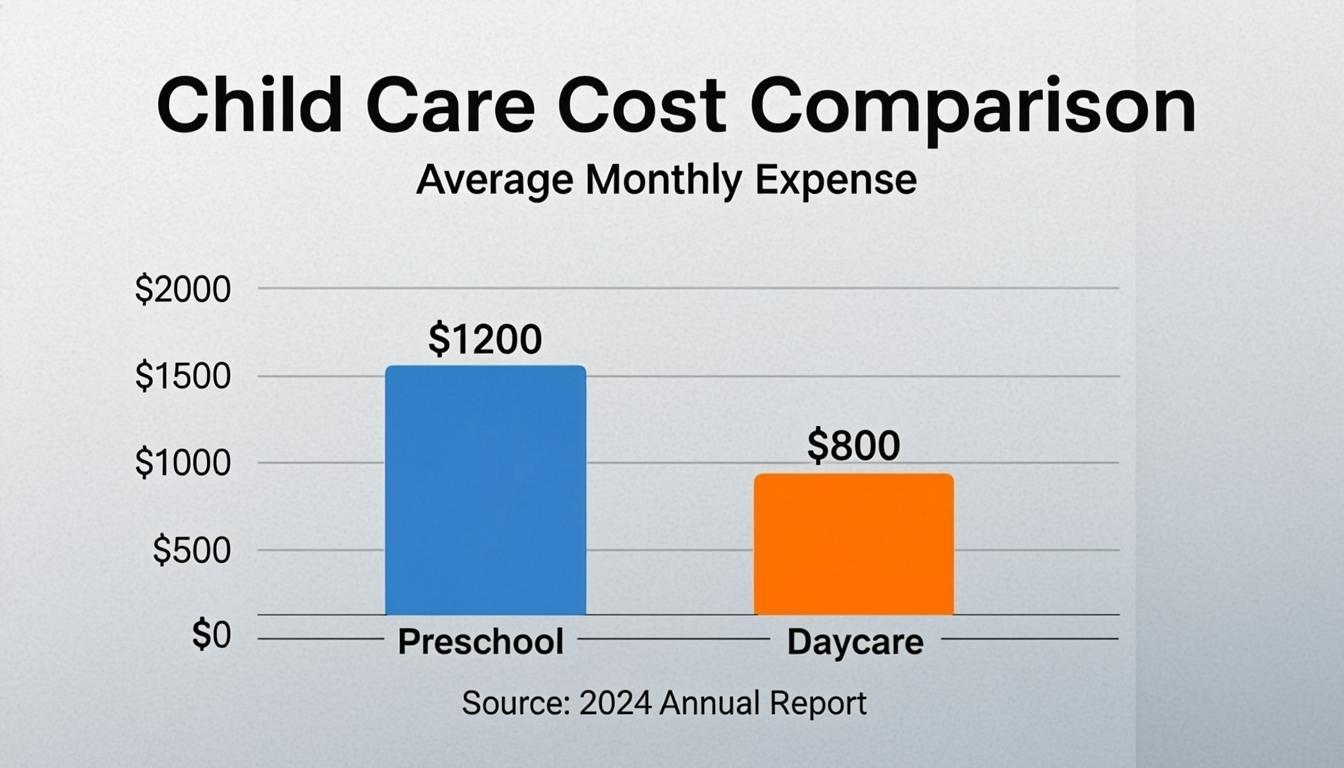
| Annual Cost (full-time) | $9,000 – $15,000 | $10,000 – $16,000 |
| Age Groups | 3-5 years (primarily) | 6 weeks – 12 years |
| Schedule | Academic calendar (September-May) | Year-round (with holiday closures) |
| Educational Focus | Academic preparation | Child development and care |
| Flexibility | Limited (fixed schedule) | High (drop-in options available) |
Making the Financial Decision
When choosing between preschool and daycare, consider your family's specific needs and financial situation. Many parents find that a combination approach works best,using part-time preschool for educational enrichment and daycare for extended care hours.
Financial assistance options can significantly reduce your out-of-pocket costs. The Child Care and Development Block Grant program provides subsidies for eligible families, potentially covering 30-70% of child care costs [2]. Additionally, many employers offer dependent care flexible spending accounts, which allow you to set aside pre-tax dollars for child care expenses.
Tax credits can also help offset child care costs. The Child and Dependent Care Credit allows families to claim up to $3,000 for one child or $6,000 for two or more children in care expenses. This credit can reduce your tax liability by 20-35% of eligible expenses, depending on your income level [2].
Long-Term Value Considerations
While upfront costs are important, consider the long-term value of your child care investment. High-quality early childhood education has been shown to yield significant returns, including better academic performance, higher graduation rates, and increased earning potential later in life.
Educational outcomes differ between preschool and daycare settings. Preschool programs with structured curricula and qualified teachers have been linked to improved literacy and math skills by kindergarten entry. Studies show that children attending high-quality preschool programs score 10-15 percentage points higher on school readiness assessments than those who do not [5].
Social development is another important consideration. Daycare environments with mixed age groups often provide more opportunities for social interaction and peer learning. Research indicates that children in group care settings develop stronger social skills and adaptability to diverse environments compared to those primarily in home care [3].
Key Takeaways
- Child care costs have increased by 23% from 2021 to 2025, with the national average at $13,128 per child in 2024 [3][4].
- Preschool typically costs $9,000-$15,000 annually for full-time programs with academic focus, while daycare costs $10,000-$16,000 for full-time care with extended hours [4].
- Location significantly impacts costs, with urban areas charging 20-30% more than rural areas for similar services [4].
- Financial assistance options including subsidies, flexible spending accounts, and tax credits can reduce your out-of-pocket costs by 30-70% [2].
- High-quality early childhood education provides long-term benefits including improved academic performance and social development [5].
- The right choice between preschool and daycare depends on your child's needs, your family schedule, and your budget constraints.
Making Your Decision
When choosing between preschool and daycare, consider your child's personality, learning style, and social needs. Some children thrive in structured academic environments, while others benefit more from play-based learning with flexible schedules. Evaluate your family's budget, work schedule, and long-term educational goals to determine which option offers the best value.
Research shows that investing in quality early childhood education yields significant returns,not just for your child, but for society as a whole [5]. Take the time to visit multiple programs, ask about teacher qualifications and curriculum approaches, and consider how each option aligns with your family's values and priorities.
What factors are most important to you when choosing between preschool and daycare? Share your experiences and questions in the comments below!