Breastfeeding Support in Daycare: A 2026 Guide
As a daycare owner or director, you're constantly looking for ways to provide exceptional care that sets your facility apart. Did you know that supporting breastfeeding families isn't just about good health,it's also a competitive advantage in today's childcare market? In 2026, with nearly 60% of mothers breastfeeding at six months postpartum [1], your facility's policies could be the deciding factor for many families choosing care.
The intersection of breastfeeding and daycare presents unique challenges and opportunities. When done right, supporting breastfeeding mothers builds loyalty, improves your facility's reputation, and contributes to better health outcomes for children. But where do you start? This guide will walk you through everything you need to know about creating a breastfeeding-friendly daycare environment that works for both families and your staff.
Why Breastfeeding Support Matters for Your Daycare
Supporting breastfeeding isn't just a nice,it's becoming an expected standard of care in quality childcare facilities. The CDC's 2025 Early Childhood Nutrition report highlights that children who are breastfed have lower rates of ear infections, respiratory illnesses, and sudden infant death syndrome (SIDS) [1]. For daycare providers, this means fewer sick days and more consistent attendance.
From a business perspective, breastfeeding support is a powerful differentiator. The 2025 State of Breastfeeding Survey found that 78% of breastfeeding parents would choose a daycare that actively supports their feeding journey over one that doesn't [3]. That's a significant competitive advantage in a market where every family counts.
Moreover, supporting breastfeeding aligns with quality standards and accreditation requirements. Many state licensing bodies now include breastfeeding support in their quality rating systems. Making these accommodations can help your facility achieve higher ratings, attract more families, and potentially qualify for additional funding or grants.
Legal Requirements and Best Practices
Understanding the legal landscape is your first step toward creating a breastfeeding-friendly environment. Federal law under the Fair Labor Standards Act (FLSA) requires employers to provide reasonable break time and a private space (other than a bathroom) for nursing mothers to express milk. While this primarily applies to your employees, many states have extended similar protections to childcare facilities serving the public.
State-specific regulations vary significantly. According to CDC data, 32 states now have laws requiring licensed childcare facilities to accommodate breastfeeding needs [1]. These laws may specify requirements for storage, feeding, or staff training. Familiarize yourself with your state's specific regulations to ensure compliance and avoid potential legal issues.
Best practices go beyond minimum requirements. Consider implementing policies that:
- Train all staff on proper handling of human milk
- Provide refrigeration for expressed milk with clear labeling protocols
- Designate a private, comfortable space for mothers to nurse or pump
- Develop clear procedures for handling breastmilk from arrival to pickup
Creating a Breastfeeding-Friendly Physical Environment
Your physical environment is important in supporting breastfeeding families. The space you provide should make mothers feel comfortable, respected, and welcome. This isn't just about compliance,it's about creating an inclusive atmosphere that values all feeding choices.
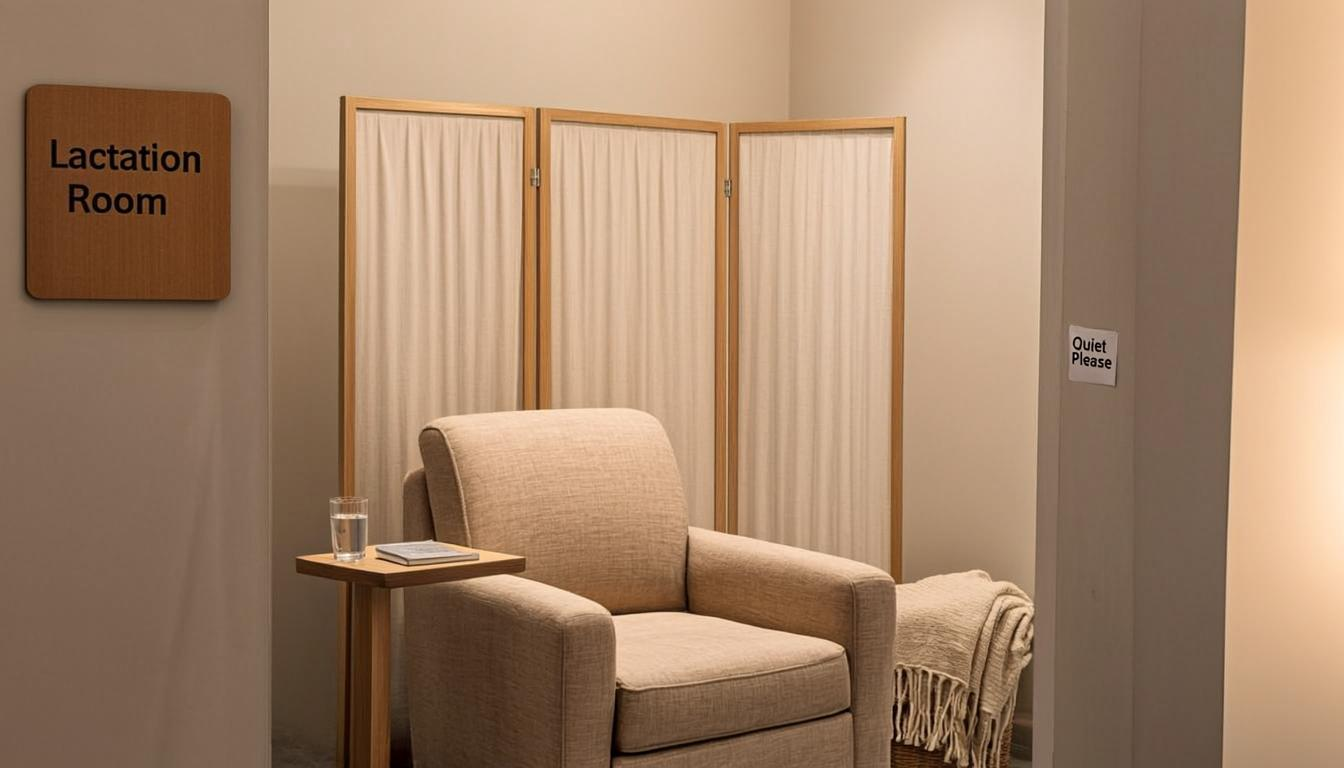
A dedicated lactation room should be your top priority. This space should be:
- Private and secure with a door that can be locked
- Equipped with comfortable seating, an electrical outlet, and a small table
- stocked with essentials like hand sanitizer, cleaning supplies, and storage containers
- Located in a quiet area away from high-traffic spaces
Storage solutions are equally important. Human milk must be handled with care to maintain safety and quality. The CDC recommends storing breastmilk in the main refrigerator compartment (not the door) at 39°F or below [1]. Implement clear labeling systems with the child's name, date, and time of expression to prevent confusion.
Don't overlook the importance of creating a welcoming atmosphere in common areas. Consider adding comfortable seating in entryways or quiet corners where mothers might nurse their infants. Small touches like privacy screens, nursing pillows, and informational brochures can make a big difference in how breastfeeding families experience your facility.
Staff Training and Education
Your staff are on the front lines of breastfeeding support. Proper training ensures they can handle situations confidently and sensitively. Without adequate preparation, well-meaning staff might inadvertently make breastfeeding families feel uncomfortable or create compliance issues.
Comprehensive staff training should cover:
- Proper hand hygiene and milk handling protocols
- Understanding different feeding methods and equipment
- Respectful communication with breastfeeding parents
- Recognizing and responding to signs of engorgement or mastitis
The 2025 State of Breastfeeding Survey found that only 41% of childcare providers report receiving any formal training on breastfeeding support [3]. This represents a significant gap that your facility can fill by implementing thorough training programs. Consider partnering with lactation consultants or local healthcare providers to develop customized training materials.
Ongoing education is key. Breastfeeding support isn't a one-time training topic. Incorporate breastfeeding education into staff meetings, refreshers, and new hire orientations. Consider designating a breastfeeding support champion on your team who can serve as a resource for both staff and families.
Communication Strategies for Breastfeeding Families
Clear, consistent communication builds trust with breastfeeding families. From enrollment to daily pickup, every interaction is an opportunity to demonstrate your commitment to their needs. Families who feel heard and supported are more likely to remain loyal customers and recommend your services to others.
Start during the enrollment process. Include specific questions about feeding preferences, expressed milk quantities, and any special considerations. This information helps you prepare and shows families that you're attentive to their individual needs. Consider creating a separate section in your enrollment forms specifically for breastfeeding information.
Daily communication deserves special attention. Develop a system for tracking and communicating feeding times, quantities consumed, and any observations about the infant's response to the milk. Many facilities use digital apps or specialized software for this purpose, which can provide real-time updates to parents throughout the day.
Transparency about your policies builds confidence. Create a written breastfeeding support policy that's easily accessible to all families. This document should outline your procedures for handling breastmilk, your facilities for nursing mothers, and your staff's training on breastfeeding support. Make this document part of your parent handbook and have copies available upon request.
Balancing Breastfeeding Support with Operational Needs
Supporting breastfeeding families requires thoughtful planning to balance their needs with your operational constraints. With proper strategies, you can accommodate breastfeeding without disrupting your facility's workflow or compromising care for other children.
Staffing considerations are crucial. Designate specific team members responsible for handling expressed milk, particularly during peak transition times like arrival and pickup. This ensures consistency and reduces the risk of errors. Cross-training multiple staff members provides backup coverage and prevents bottlenecks.
Storage logistics require careful attention. As your facility cares for more breastfeeding infants, you'll need adequate refrigeration space. The CDC recommends having at least one dedicated refrigerator for human milk, separate from food storage [1]. Plan your storage capacity based on current needs with room for growth as more families choose your services.
Cost-benefit analysis shows that breastfeeding support offers strong returns. While there are initial investments required for training, equipment, and space modifications, the benefits include reduced illness rates (fewer sick days), improved family retention, and enhanced reputation. The HHS Healthy People 2030 initiative has set a goal of at least 42% of infants being exclusively breastfed through their first six months [2], indicating growing demand for these services.
Comparison: Breastfeeding Support Implementation Options
| Implementation Option | Initial Cost | Staff Time Required | Family Impact | Competitive Advantage |
|---|---|---|---|---|
| Basic Compliance | Low | Minimal | Low | Minimal |
| Enhanced Support | Medium | Moderate | Moderate | Moderate |
| Comprehensive Program | High | Significant | High | High |
| Partnership with Lactation Consultants | Variable | Low to Moderate | High | High |
Key Takeaways
- Breastfeeding support is becoming a competitive advantage in the daycare market, with 78% of breastfeeding parents preferring facilities that actively support their feeding journey [3].
- Legal requirements vary by state, with 32 states now mandating licensed childcare facilities to accommodate breastfeeding needs [1].
- Creating a dedicated, private lactation space with proper storage solutions is essential for providing quality breastfeeding support.
- Comprehensive staff training on breastfeeding protocols and respectful communication is crucial for successful implementation.
- Clear communication with families about feeding preferences and daily activities builds trust and demonstrates your commitment to their needs.
- Balancing breastfeeding support with operational efficiency requires thoughtful planning but offers significant returns through reduced illness rates and improved family retention.
Moving Forward
Supporting breastfeeding families isn't just about compliance,it's about creating an inclusive environment that values all feeding choices. By implementing the strategies outlined in this guide, you'll not only meet the needs of breastfeeding families but also strengthen your facility's reputation and competitive position.
Start by assessing your current policies and facilities against best practices. Identify gaps and create an implementation plan with clear timelines and responsibilities. Consider reaching out to other successful daycare providers in your area to learn from their experiences.
Remember, every step you take toward better breastfeeding support makes a difference for the families in your care and contributes to healthier communities. What will be your first move toward becoming a more breastfeeding-friendly daycare this year?