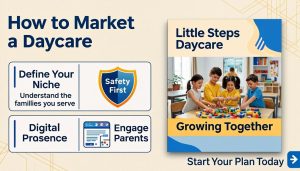
How to Market a Preschool Locally

Are you struggling to fill your preschool classrooms with the right families? In today's competitive childcare landscape, effective local marketing isn't just nice to have,it's essential for survival. According to industry reports, 68% of parents search for childcare options online before making a decision [3]. If your preschool isn't visible in local search results and community engagement, you're missing out on potential enrollments. This comprehensive guide will walk you through proven strategies to effectively market your preschool in your local area, helping you stand out from the competition and attract the families you want to serve.
Understanding Your Local Market
Before you can effectively market your preschool, you need to understand your local market inside and out. This means diving deep into demographic data, analyzing competition, and identifying what local families truly want in early education. Without this foundation, your marketing efforts will miss their mark no matter how polished they appear.
Conducting Demographic Research
Start by gathering data about families with young children in your service area. Look at census information, local school district data, and community reports to understand: population density of families with preschool-aged children, average income levels in your target neighborhoods, and existing early care and education deserts [1]. For example, you might discover that your area has a growing population of dual-income families who need flexible hours, or that there's a shortage of quality preschool options in a particular neighborhood. This information helps you tailor your services and messaging to meet specific local needs.
Analyzing Local Competition
Next, take a close look at other preschools and childcare centers in your area. Visit their websites, social media pages, and if possible, their facilities. Note their: pricing structures, educational approaches and curriculum highlights, unique selling points, and marketing strategies [2]. Create a comparison chart to visualize how your preschool stacks up against competitors. This analysis helps you identify gaps in the market that your preschool can fill and develop messaging that highlights what makes your program unique. Perhaps most competitors focus on academic preparation while you emphasize play-based learning, or maybe you offer extended hours that others don't.
Surveying Local Parent Needs
Direct feedback from your target audience provides invaluable insights. Design a simple survey asking local parents about their: childcare preferences and priorities, biggest challenges in finding quality care, ideal preschool location and hours, and willingness to pay for premium services [2]. You can distribute this survey through local parenting groups, community centers, and online forums. According to research, parents consistently rank safety, qualified staff, and educational value as their top concerns when choosing a preschool [4]. Understanding these priorities helps you craft marketing messages that resonate with what matters most to local families.
Building Your Digital Presence
In today's digital age, your online presence often is the first impression potential families have of your preschool. A strong digital strategy ensures that when parents search for local childcare options, your preschool appears professional, trustworthy, and appealing.
Optimizing for Local Search
Local search optimization is critical for visibility in Google results. Start by creating and fully optimizing your Google Business Profile with: accurate address and service area, high-quality photos of your facility and activities, current hours and contact information, and regular updates about your programs [5]. Encourage satisfied parents to leave positive reviews, as these significantly impact your local search ranking. According to recent data, businesses with complete profiles receive 7 times more clicks from interested customers than those with incomplete profiles [5]. Consider creating local landing pages on your website that specifically target different neighborhoods you serve, with content tailored to each area's unique characteristics.
Developing a User-Friendly Website
Your preschool website should serve as a comprehensive resource for prospective parents. Ensure it includes: clear information about your curriculum and educational philosophy, staff credentials and experience, tuition rates and enrollment process, photo galleries showing your facility in action, and testimonials from current and past families [3]. Make sure your website is mobile-friendly, as over 60% of parents search for childcare options on their smartphones [3]. Your site should load quickly, have easy navigation, and prominently display your contact information and call-to-action buttons. Consider adding virtual tours or video content to give families a feel for your environment before they visit in person.
Leveraging Social Media Effectively
Social media platforms offer powerful ways to connect with local families and showcase your preschool's unique environment. Choose platforms where your target audience is most active,Facebook and Instagram are typically most effective for preschool marketing. Share: daily activities and special events, educational philosophy in action, staff spotlights and parent testimonials, and helpful parenting tips related to early childhood education [3]. According to industry research, preschools that post regularly on social media see 35% higher inquiry rates than those with minimal activity [3]. Remember to engage with comments and messages promptly, as timely responses can significantly influence a family's decision to enroll.
Community Engagement Strategies
Beyond digital marketing, building strong connections within your local community can generate word-of-mouth referrals and establish your preschool as a trusted local institution. Community-based marketing often yields the highest return on investment because it builds authentic relationships with families in your service area.
Networking with Local Organizations
Forge relationships with organizations that serve families with young children. These include: local pediatric offices and family healthcare providers, elementary schools and kindergarten programs, community centers and libraries, and local businesses frequented by parents [2]. Offer to provide free parenting workshops or storytimes at these locations. According to research, 78% of parents trust recommendations from healthcare providers when choosing childcare [4]. When you establish yourself as a community resource rather than just a business, you create a powerful network of advocates for your preschool.
Hosting Community Events
Organize events that bring families together while showcasing your preschool's environment and approach. Consider hosting: open houses and discovery days for prospective families, parenting workshops on topics like early literacy or behavior guidance, seasonal festivals and family fun days, and community service projects involving children and parents [3]. These events serve multiple purposes: they provide opportunities for families to experience your facility firsthand, demonstrate your educational philosophy in action, and create memorable experiences that families share with others. Research shows that families who attend preschool events are 50% more likely to enroll compared to those who only view online information [3].
Partnering with Local Businesses
Create strategic partnerships with complementary local businesses that can refer families to your preschool. These might include: children's activity centers like gymnastics or music classes, children's clothing and toy stores, family restaurants and cafes, and real estate agents who work with young families [2]. Develop formal referral programs that benefit both parties. For example, a children's boutique might offer discounts to your preschool families while displaying your brochures and referring customers to you. These partnerships extend your reach into the community while adding credibility through association with other trusted local businesses.
Targeted Advertising Approaches
While organic marketing strategies build momentum over time, targeted advertising can help you reach prospective families quickly and efficiently. When implemented strategically, paid marketing channels can significantly boost your enrollment numbers.
Local Search Advertising
Invest in pay-per-click (PPC) advertising targeting local keywords. Set up campaigns that appear when parents search for terms like: "preschool near me," "best childcare in [your city]," and "private preschool tuition" [5]. Create ad groups specifically targeting different neighborhoods or demographic segments you serve. According to industry data, local search ads for childcare services have a 12% higher click-through rate than general business ads [5]. Ensure your landing pages are optimized for conversions with clear information about your programs, easy enrollment forms, and compelling calls-to-action. Set a realistic budget based on your tuition rates and expected enrollment numbers, as the return on investment can be substantial.
Social Media Advertising
Leverage social media advertising to reach parents in your specific geographic areas. Create highly targeted campaigns on platforms like Facebook and Instagram that filter users by: location (radius around your preschool or specific neighborhoods), age (targeting parents of preschool-aged children), interests (parenting groups, early childhood education), and behaviors (new parents, families recently moved to area) [3]. Use engaging visuals showing happy children in your classroom and clear messaging about your unique approach. Industry research indicates that social media ads for preschools see an average conversion rate of 8-10% when properly targeted [3]. Consider running special promotions like "refer a friend" discounts through these ads to encourage word-of-mouth sharing.
Traditional Local Advertising
Don't overlook traditional advertising channels that still reach local audiences effectively. These include: local parenting magazines and community newspapers, flyers and brochures in pediatric offices and community centers, radio ads during morning drive time when parents are commuting, and billboards near schools and family destinations [2]. While digital channels often provide better tracking, traditional advertising can still be effective for building name recognition in your community. According to research, consistent exposure across multiple channels increases brand recall by up to 60% [2]. Track the effectiveness of each channel by using specific phone numbers or promo codes for different advertising methods.
Measuring and Optimizing Your Marketing Efforts
Marketing without measurement is just guessing. Implement systems to track the effectiveness of your marketing strategies and continuously optimize based on what's working best for your preschool.
Tracking Key Metrics
Establish clear metrics to evaluate your marketing performance. These should include: website traffic and source breakdown, inquiry-to-enrollment conversion rates, cost per acquisition (CPA) for each marketing channel, parent satisfaction and retention rates, and return on investment (ROI) for marketing spend [3]. Set up Google Analytics to track website behavior, use CRM software to manage leads, and implement call tracking for phone inquiries. According to industry reports, preschools that track their marketing metrics see 25% higher enrollment rates than those that don't [3]. Review these metrics monthly to identify trends and make data-driven decisions about where to allocate your marketing resources.
Gathering Parent Feedback
Regular feedback from current and prospective parents provides invaluable insights for improving your marketing. Implement systems like: post-enrollment surveys for new families, quarterly feedback forms for current families, exit interviews for families who don't enroll, and online reputation monitoring [4]. Pay particular attention to what initially attracted families to your preschool and what information they found most helpful during their decision-making process. Research shows that 85% of parents say word-of-mouth recommendations from other parents are more influential than any marketing material [4]. Use positive feedback in your marketing materials and address any concerns raised to improve both your services and messaging.
A/B Testing Your Marketing Materials
Continuously test and refine your marketing messages and materials for maximum effectiveness. Implement A/B testing for: website headlines and calls-to-action, email subject lines and content, social media post formats and times, and advertising visuals and copy [5]. Test one element at a time to determine what specific changes improve engagement and conversion rates. For example, you might test whether emphasizing your low teacher-to-child ratio or your specialized curriculum generates more inquiries. According to industry data, preschools that regularly test their marketing messages see 15-20% higher conversion rates over time [5]. Keep testing and refining based on results to continuously improve your marketing ROI.
Key Takeaways
- Conduct thorough market research including demographic analysis, competition assessment, and parent surveys to understand your local market before launching marketing campaigns.
- Build a strong digital presence through Google Business Profile optimization, a user-friendly website, and strategic social media engagement to ensure visibility when parents search online.
- Engage with your local community through networking, hosting events, and forming business partnerships to generate authentic word-of-mouth referrals.
- Implement targeted advertising across both digital and traditional channels to reach prospective families efficiently and track your return on investment.
- Continuously measure your marketing effectiveness through key metrics, parent feedback, and A/B testing to optimize your strategies and maximize enrollment.
Frequently Asked Questions
What is the most effective marketing channel for preschools?
The most effective marketing channel varies by location and target audience, but a multi-channel approach typically yields the best results. According to recent research, 78% of parents use online search to find childcare options, while 65% rely on word-of-mouth recommendations from friends and family [3]. The most successful preschools combine strong online visibility with community engagement to capture both digital searchers and local network referrals.
How much should I budget for preschool marketing?
Industry experts recommend allocating 3-5% of your annual tuition revenue to marketing efforts [2]. For a preschool with 50 children averaging $1,000 monthly tuition, this would mean $1,800-$3,000 annually. However, this can vary based on your location, competition, and growth goals. Start with a modest budget and scale up as you identify which channels deliver the best return on investment.
How long does it typically take to see results from preschool marketing?
Most preschools begin to see initial results within 2-3 months of consistent marketing efforts, with significant enrollment increases typically occurring within 4-6 months [3]. However, building brand recognition and establishing a strong local reputation takes longer, often 9-12 months. Consistency is key,marketing is a marathon, not a sprint, and regular engagement across multiple channels produces the best long-term results.
What's the most important factor parents consider when choosing a preschool?
While factors vary by family, research consistently shows that safety is the top concern for 92% of parents when selecting a preschool, followed by qualified staff (87%) and educational approach (76%) [4]. Your marketing should emphasize these core values while highlighting what makes your preschool unique. Addressing these fundamental concerns builds trust and makes parents more receptive to your specific offerings.
Should I hire a marketing professional or handle preschool marketing internally?
This depends on your budget, expertise, and time constraints. Many successful preschools use a hybrid approach, with an internal staff member handling day-to-day social media and community engagement while outsourcing specialized tasks like website development or advertising management [2]. If you choose to hire externally, look for professionals with experience in education marketing who understand the unique considerations of childcare marketing and can deliver measurable results.
Conclusion
Marketing your preschool locally requires a strategic, multi-faceted approach that combines digital visibility with authentic community engagement. By understanding your local market, building a strong online presence, connecting with community organizations, implementing targeted advertising, and continuously measuring your results, you can attract the right families to your program and maintain consistent enrollment. Remember that effective preschool marketing isn't just about filling classrooms,it's about connecting with families who share your educational values and will thrive in your environment.
Start implementing these strategies today, but be patient and consistent. Building awareness and trust takes time, but with persistent effort, your preschool will become the obvious choice for families in your community. If you're ready to take your preschool marketing to the next level, consider scheduling a marketing audit to identify your greatest opportunities for growth and develop a customized action plan that delivers measurable results.