A carpet cleaning website can cost $300 or $15,000, and both prices can be right. The difference is what the site actually does for you: a static brochure that lists your phone number, or a booking machine with a room-pricing quote calculator, real-time scheduling, and a page for every town you serve. Most carpet cleaning owners overpay for design and underpay for the features that book jobs. This guide breaks down what carpet cleaning websites really cost by build type, what each money-making feature adds, the ongoing costs nobody mentions in the first quote, and the simple math that shows when a better site pays for itself.
The quick answer
- Realistic price bands: $500 to $2,500 for a solid template-based site, $2,500 to $7,500 for a custom build, $7,500 and up for advanced booking and multi-location setups.
- DIY builders are cheapest and weakest: $15 to $50 a month gets you online fast, but with no quote calculator, weak local SEO, and a generic look that books fewer jobs.
- The quote calculator is the highest-ROI feature: room-based pricing that turns price shoppers into booked jobs without a single phone call.
- Service-area pages win local search: one page per town you serve, each with local photos and reviews, captures “carpet cleaning” plus town-name searches.
- Ongoing costs run $50 to $300 a month: hosting, maintenance, booking software, and optional SEO on top of the build price.
- Payback is fast: one extra cleaning a week at a $250 average ticket pays for a $5,000 website in about five months.
The short answer: what a carpet cleaning website costs
If you want the number first, here it is. Most carpet cleaning companies end up spending between $1,500 and $5,000 one time for a professional website, plus $50 to $300 a month to keep it running and improving. Below that range you are looking at DIY builders or bare-bones template jobs. Above it you are paying for custom design, advanced booking systems, or an agency that also handles your marketing.
The wide range exists because a website is not one product. A five-page brochure site that lists your services and phone number is a weekend project. A site with an instant quote calculator, online booking tied to your real schedule, twenty service-area pages, and review widgets pulling in fresh Google reviews is a small software build. Both are called “a website.” Only one of them books cleanings while you sleep. The rest of this guide shows you exactly what each version costs and which features earn their keep.
Cost by build type
Website pricing falls into four clear tiers. The table gives the honest ranges, including the trade-offs each tier forces on you. Pick the tier that matches where your business is, not where you wish it were; a one-truck operation does not need the same site as a five-crew company.
| Build type | Typical price | Timeline | Best for |
|---|---|---|---|
| DIY website builder | $15 to $50 per month | A weekend | Brand-new businesses that need something online fast and cheap |
| Freelancer template site | $800 to $2,500 one time | 2 to 4 weeks | One to two truck operations that want a professional look without agency prices |
| Small agency custom site | $2,500 to $7,500 one time | 4 to 8 weeks | Growing companies that need booking, quote tools, and local SEO baked in |
| Full custom with integrations | $7,500 to $15,000 plus | 8 to 12 weeks | Multi-crew or multi-location companies with complex scheduling needs |
The DIY builder route
You build it yourself on a drag-and-drop platform. It is online by Sunday night and it looks acceptable. What you do not get: a real quote calculator, service-area pages that rank, or a design that stands out from every other template site in town. Fine as a placeholder. A weak long-term asset.
- Fastest path to being online
- No coding or designer needed
- Limited local SEO and no custom booking logic
The freelancer WordPress build
A freelancer builds you a proper WordPress site on a premium theme, customized with your branding, real copy, and the core pages. This is the sweet spot for most carpet cleaners: professional, fast, and yours to keep. Make sure the quote includes mobile optimization, speed work, and basic local SEO setup, not just pages. For a useful comparison point, see our breakdown of what a cleaning company website costs.
- Professional design at a fair price
- You own the site and the domain outright
- Quality varies: vet the freelancer’s past local-service work
The agency custom build
An agency designs from scratch, writes conversion-focused copy, builds the quote calculator and booking flow, creates your service-area pages, and wires up review widgets and call tracking. You pay more, but the site arrives as a finished sales tool instead of a project you have to finish yourself. Ask for the page list, the feature list, and the timeline in writing before you sign.
- Booking and quote tools included from day one
- Copy and local SEO handled by people who do it daily
- Highest upfront cost; confirm exactly what is included
The five features that actually book cleanings
A carpet cleaning website has one job: turn visitors into booked cleanings. Everything on the site should serve that job. These five features do the heavy lifting, and they are worth paying for in roughly this order.
1. Room-pricing quote calculator. This is the single highest-ROI feature on a carpet cleaning website. The visitor picks the number of rooms, stairs, and extras like pet treatment or upholstery, and gets an instant price range. Price shoppers are your most common visitor, and most of them will never call for a quote. The calculator captures them at the moment of interest and hands them a booking button. Without it, you are losing every visitor who hates phone calls, which is most of them under 45.
2. Before and after gallery. Carpet cleaning is a visual sale. A gallery of real transformations, dirty traffic lanes next to clean carpet, pet stains gone, does more persuading than any headline. Use your own job photos, organized by service type. Update it monthly. Stock photos of perfect living rooms actively hurt, because customers can tell.
3. Online booking calendar. Let customers pick a day and time window and book directly, with the slot confirmed against your real availability. Every booking that happens at 10 PM is a job you would have lost to voicemail. Pair it with automated confirmations and reminders to keep no-shows down.
4. Service-area pages. One page per town or neighborhood you serve, each with local photos, local reviews, and town-specific details like parking or common carpet types in the area. These pages capture “carpet cleaning” plus town-name searches that your homepage will never rank for, and they make out-of-town visitors feel like you are their local company.
5. Review widgets. Fresh Google reviews displayed on the homepage and service pages, updating automatically. Reviews are the trust layer for every other feature: the calculator gives the price, the reviews give the confidence to book it. A site showing 4.9 stars from 200 reviews converts dramatically better than the same site showing nothing.
| Feature | Typical add-on cost | Why it pays for itself |
|---|---|---|
| Room-pricing quote calculator | $300 to $1,200 | Converts price shoppers who would never call; the top revenue feature on the site |
| Before and after gallery | $100 to $400 | Visual proof that sells the service better than any copy; cheap to build if you supply photos |
| Online booking calendar | $200 to $800 plus $30 to $100 per month | Captures after-hours bookings and cuts phone tag; software fee is ongoing |
| Service-area pages (10 to 20 towns) | $500 to $1,500 | Each page is a new chance to rank locally; compounds over time |
| Review widgets | $50 to $200 | Automatic trust signal on every page; lifts conversion across the whole site |
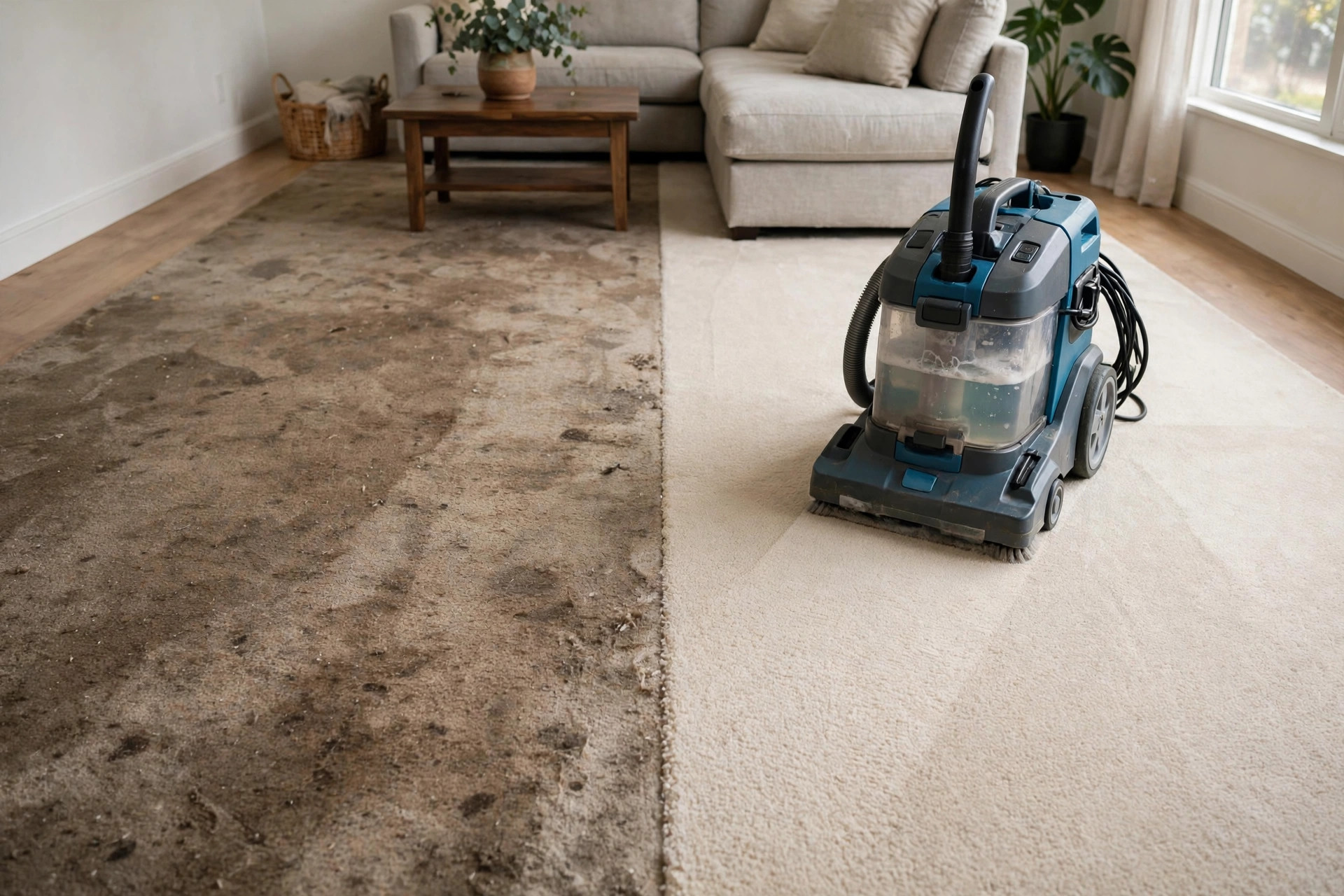
A before and after gallery turns your real job photos into the hardest-working salesperson on the site.
What pushes the price up or down
Two quotes for “a carpet cleaning website” can differ by thousands, and both can be fair. The difference is always in the specifics. Here is what moves the number.
Copywriting. A site with real, specific copy about your services, your process, and your service area costs more than a site filled with placeholder text you were supposed to replace. Good copy is worth paying for because it is what actually persuades. Budget $500 to $1,500 for professional copy on a 10 to 15 page site, or write it yourself and save the money.
Photography. Real photos of your crew, your equipment, and your results cost either a half-day shoot ($300 to $800) or the discipline of photographing every job for a month. Either beats stock photos, which cost nothing and are worth less.
Page count. Every service-area page, service page, and blog post is writing, layout, and SEO work. A 6-page site and a 25-page site are different projects. Decide the page list before you ask for quotes so every quote covers the same scope.
Integrations. Connecting the site to your booking software, CRM, review platform, and call tracking adds setup time per integration. Simple contact forms are cheap. Two-way calendar sync and automated review pulls cost more.
Revisions and timeline. Fixed-scope quotes assume two or three revision rounds and a normal timeline. Rush jobs and endless revisions push the price up. Get the revision count and the delivery date in the contract.
The costs nobody puts in the first quote
The build price is only the entry ticket. A website has running costs, and quotes that hide them are setting you up for an unpleasant surprise in month two. None of these are large, but you should budget for all of them.
Hosting: $10 to $50 a month. Basic shared hosting sits at the low end; managed WordPress hosting with backups and security sits higher. Do not host a business site on the cheapest plan you can find. Slow hosting costs you rankings and bookings.
Domain: about $15 a year. Trivial, but make sure the domain is registered in your name with your email. Designers who register client domains under their own accounts create hostage situations. Own yours from day one.
Maintenance and updates: $50 to $150 a month. WordPress needs core, theme, and plugin updates, plus backups and security monitoring. Skip this and the site eventually breaks or gets hacked. A care plan with your developer or a maintenance service covers it.
Booking software: $30 to $100 a month. If the online calendar is a third-party tool rather than built into the site, it carries its own subscription. Factor it into the feature’s true cost.
SEO and content: $300 to $1,500 a month, optional. The site will not rank on its own in a competitive market. Ongoing SEO means new service-area pages, fresh content, and review generation. Start this after the site is live and converting, not before.
Paid traffic landing costs: variable. If you plan to run ads to the site, budget for the ad spend separately. Our breakdown of Google Ads cost for cleaning companies covers what clicks actually cost in this industry.

The website books the job, but the technician at the door earns the review that feeds the next booking.
How to get quotes without getting played
Website pricing is unregulated, and the spread between quotes can be absurd. Protect yourself with a simple process. Write a one-page brief before you talk to anyone: your services, your service area, the pages you want, the features from the list above, and two or three competitor sites you like. Send the same brief to three providers. Quotes you can compare beat quotes you have to decode.
Ask every provider these five questions. One, what exactly is included, page by page and feature by feature? Two, do I own the domain, the hosting account, and the site files? Three, what are the monthly costs after launch, itemized? Four, how many revision rounds are included, and what is the delivery date? Five, can I see two live sites you built for local service businesses, with the owners’ permission to ask about the experience?
Red flags: a quote with no page list, pressure to sign today, a “free” website bundled with a long marketing contract you cannot exit, and any provider who will not put the deliverables in writing. A legitimate developer answers these questions easily because they answer them every week.
DIY vs freelancer vs agency, honestly
There is no universally right choice, only the right choice for your stage. DIY makes sense when cash is tighter than time and you need something online this weekend. Accept that you are building a placeholder: it will look generic, it will not have a quote calculator, and you will rebuild it within two years. That is fine if you go in with eyes open.
A freelancer is the value pick for most carpet cleaning companies. You get a professional WordPress site, real customization, and someone who answers the phone, at a fraction of agency prices. The risk is variance: great freelancers and terrible ones charge similar rates. Vet hard. Look at live local-service sites they built, call the owners, and confirm the sites load fast on a phone.
An agency makes sense when the website is a growth asset, not a checkbox. If you are running ads, expanding to new towns, or building a multi-crew operation, the agency’s conversion copy, booking flow, and local SEO setup pay back quickly. You are buying a finished sales tool plus a team that maintains it. Do not hire an agency for a brochure site; that is paying agency rates for freelancer work.
One more option worth naming: the marketing-system build. Some providers bundle the website with the booking automation, review engine, and ad management as one package. This can be good value if the pieces are genuinely integrated, and a trap if the “free website” locks you into an expensive monthly contract. Read the exit terms before the feature list.
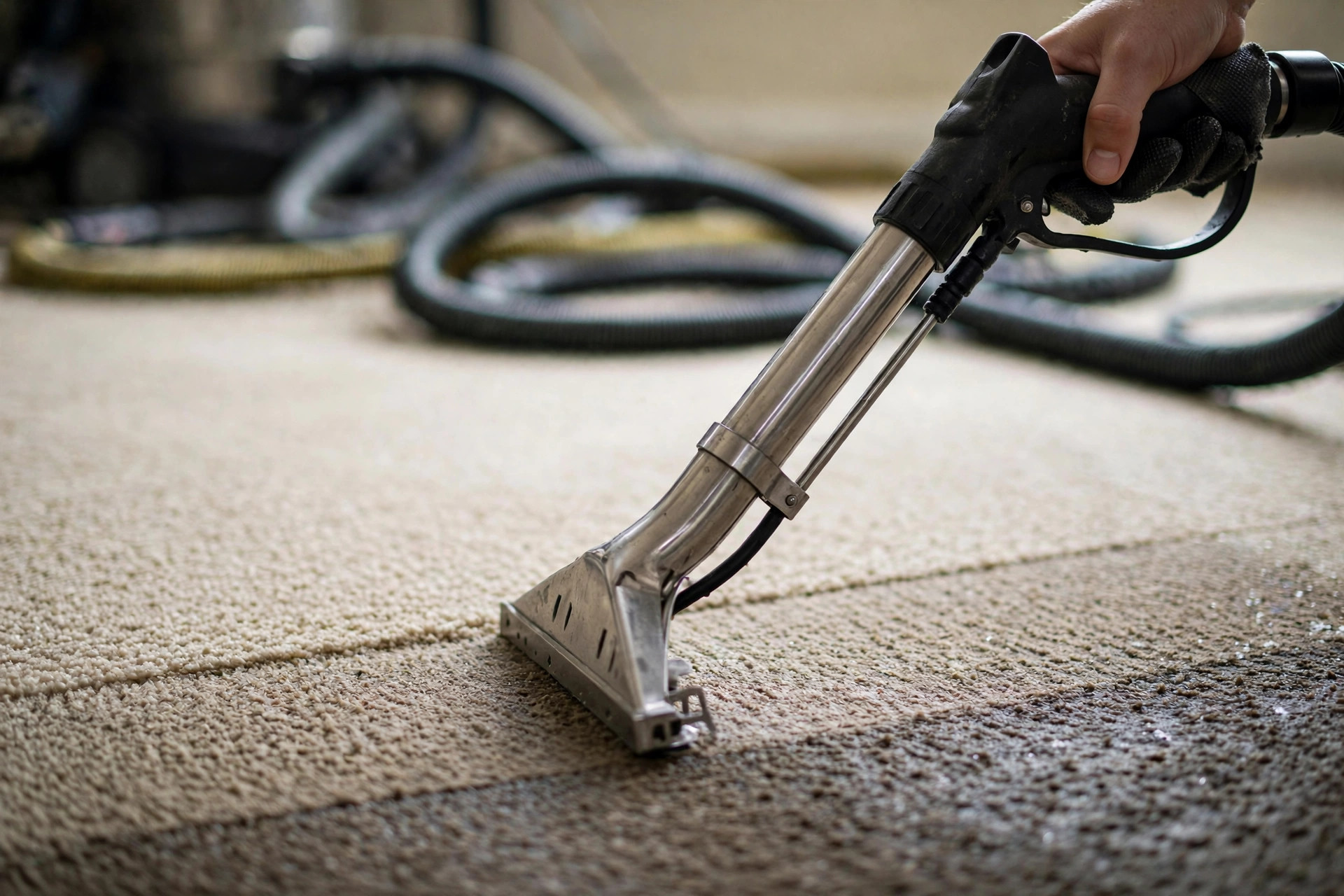
Close-up proof shots like this belong on every service page. They show the work, not just the promise.
Mistakes that waste a carpet cleaning website budget
No call tracking. If the site does not track which calls and quote requests it produces, you will never know what it earns. A $30-a-month tracking number is the difference between guessing and knowing. Install it on day one.
Burying the phone number. Half your visitors just want to call. If the number is not visible in the header on every page, on mobile, without scrolling, you are donating jobs to competitors. Big, tap-to-call, everywhere.
Stock photos of strangers’ living rooms. Customers can tell, and in a trust business it reads as hiding something. Your crew, your van, your results. A phone camera and good daylight beat a stock library.
No service-area pages. A single “areas we serve” list does almost nothing for search. Individual pages per town, with local photos and reviews, are what rank for “carpet cleaning” plus a town name. This is the cheapest SEO a carpet cleaner can buy.
Slow mobile load. Most of your traffic arrives on phones, often on the customer’s couch at 9 PM. A site that takes five seconds to load loses a large share of visitors before they see anything. Test on a real phone, on cellular data, not just office wifi.
Launching and abandoning. A website is not a brochure you print once. Add job photos monthly, publish a service-area page per quarter, and refresh the homepage copy yearly. Sites that grow outrank sites that sit.
Paying for design instead of conversion. A beautiful site that does not book is an expensive art project. Every design decision should answer one question: does this make a visitor more likely to get a quote or book a cleaning? If not, cut it. For ideas on driving traffic once the site converts, see our Google Ads cost for carpet cleaning companies guide, and for a cross-trade perspective, junk removal marketing ideas covers tactics that transfer well to any home service.
Your rollout checklist
Work through these in order. Each one builds on the last.
- 1Define the scope. List your services, your service area towns, and the pages you want before talking to any provider.
- 2Pick your build tier. DIY, freelancer, or agency, based on your budget and how fast you need bookings.
- 3Get three comparable quotes. Same brief to all three, with page lists, features, timelines, and monthly costs in writing.
- 4Register the domain yourself. In your name, with your email, before the build starts.
- 5Supply real photos. Crew, van, equipment, and before and after shots from real jobs.
- 6Build the quote calculator first. It is the highest-ROI feature; do not let it get cut for budget.
- 7Wire up booking and reviews. Online calendar tied to real availability, review widgets pulling fresh Google reviews.
- 8Install call tracking. A tracking number on day one so you know exactly what the site produces.
- 9Test on a phone. Load speed on cellular data, tap-to-call buttons, and the full quote flow on mobile.
- 10Plan the first year. Monthly photo additions, quarterly service-area pages, and a yearly copy refresh.
Frequently asked questions
How much does a basic carpet cleaning website cost?
A basic professional site from a freelancer runs $800 to $1,500: homepage, services, about, contact, and a quote form. DIY builders cost $15 to $50 a month but look generic and lack booking features. Most companies land between $1,500 and $5,000 for a site that actually books jobs.
Can I just build it myself on Wix or Squarespace?
Yes, and it is a reasonable placeholder when cash is tight. Expect limits: no real quote calculator, weaker local SEO, and a template look. Plan to rebuild professionally within one to two years as the business grows.
How much does a quote calculator add to the cost?
Typically $300 to $1,200 as an add-on, depending on complexity. A simple room-count form sits at the low end; a multi-step calculator with pet treatment, stairs, upholstery options, and booking handoff sits higher. It is the feature most worth the money.
Do I really need online booking?
If you want after-hours jobs, yes. A large share of carpet cleaning searches happen in the evening, when your phone goes to voicemail. Online booking captures those visitors at the moment of interest. The software runs $30 to $100 a month on top of the setup.
What are the monthly costs after the site launches?
Budget $50 to $300 a month: hosting ($10 to $50), maintenance ($50 to $150), booking software ($30 to $100), and domain renewal (~$15 a year). Optional SEO runs $300 to $1,500 a month on top.
How long does it take to build?
Two to four weeks for a freelancer template build, four to eight weeks for an agency custom site, longer if you are slow supplying copy and photos. The content you owe the developer is almost always the bottleneck, not the developer.
Will a new website rank on Google by itself?
No. A new site needs local SEO work to rank: Google Business Profile optimization, service-area pages per town, fresh reviews, and citations. Budget for SEO as a separate ongoing effort, or the site will sit invisible no matter how nice it looks.
Should I use stock photos on the site?
No. Use photos of your actual crew, van, equipment, and job results. Customers in a trust business read stock photography as a warning sign. A phone camera and good daylight produce everything you need.
What should the homepage include?
A tap-to-call phone number in the header, the quote calculator or a prominent quote button, before and after proof, your service area, fresh reviews, and a simple booking path. Everything above the fold should push toward a quote or a call.
How do I know if the website is working?
Track three numbers monthly: calls from the tracking number, quote calculator submissions, and online bookings. Divide the site’s total monthly cost by booked jobs to get your cost per booking, and compare it against your other marketing channels.
Get a website that books cleanings while you work
Digital Hayder builds websites for carpet cleaning companies: instant quote calculators, online booking, service-area pages, and review widgets, all designed to turn visitors into scheduled jobs. Tell us about your business and we will scope the build around it.
Contact Us