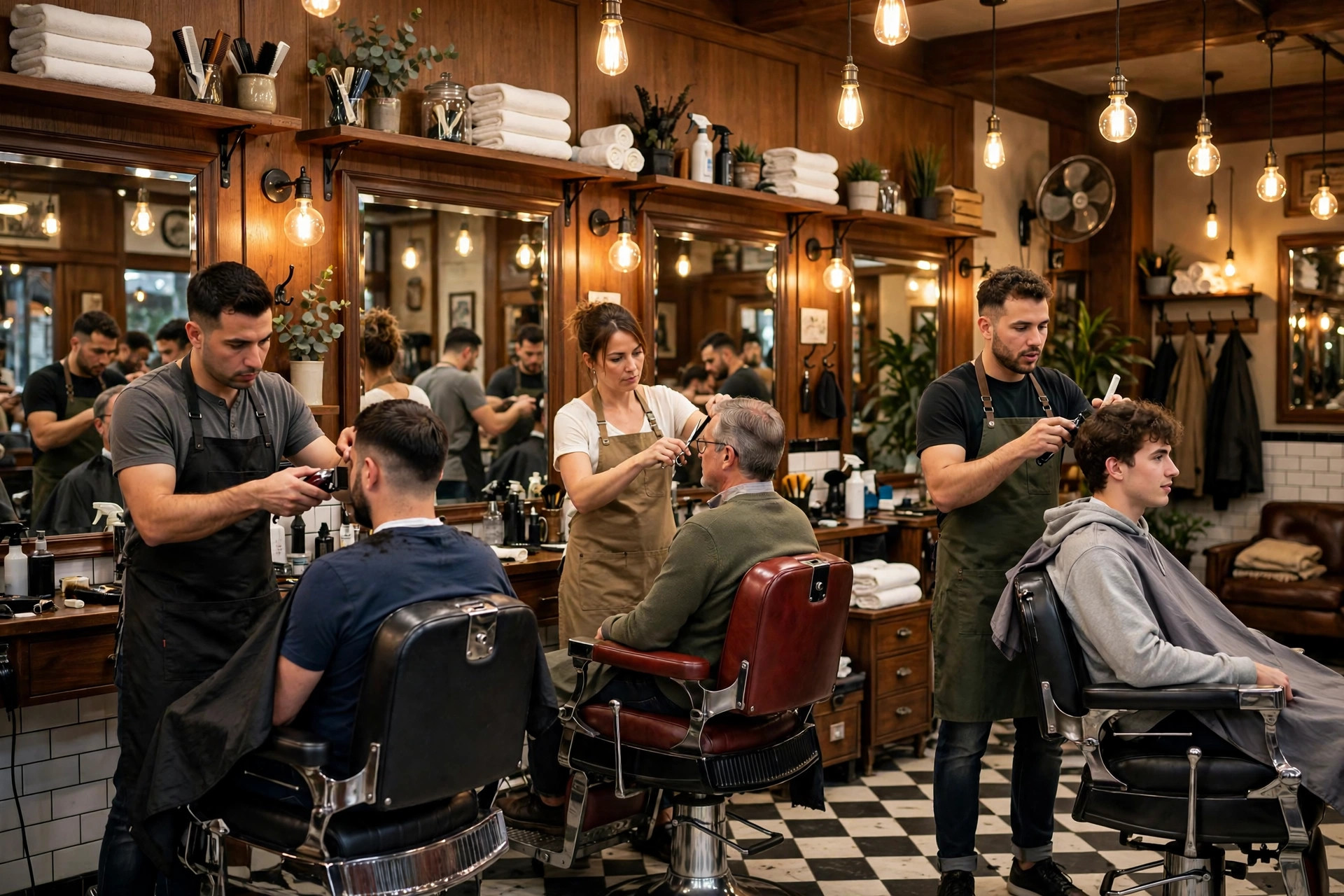
A barbershop sells time in chairs. Every empty chair during open hours is money that can never be recovered: you cannot sell Tuesday at 2 PM on Wednesday. Most shops lose that money quietly, a gap here, a no-show there, a regular who drifts to the shop across the street because nobody reminded him it was time for a cut. SMS marketing fixes this without discounting your way into thinner margins. A text is opened within minutes, it reaches the client wherever they are, and it costs pennies. This guide shows barbershop owners how to use SMS to rebook every client, fill slow days, send birthday offers that protect margins, and set cadence and opt-in rules that keep clients happy. No apps to download, no social algorithm to fight, just texts that fill chairs.
The quick answer
- Rebook at the chair: book the next cut before the client stands up; shops that do this fill most of their week in advance.
- Reminders cut no-shows: a 24-hour reply-to-confirm text keeps no-shows in the low single digits.
- Slow-day fills beat discounts: a Tuesday text to the right segment fills dead hours without training clients to wait for sales.
- Birthdays build loyalty cheaply: an add-on gift like a hot towel finish costs little and brings the client in that week.
- Four to six texts a month is the ceiling: reminders plus one or two promos; more than that drives opt-outs.
- Always get permission first: collect opt-ins at booking, honor STOP instantly, and keep a clean list.
Why SMS fits the barbershop business model
A haircut is the perfect product for texting. The purchase repeats every two to four weeks, the decision is habit-driven rather than researched, and the inventory, your chairs, expires every hour. Email is too slow for this rhythm and too easy to ignore; the average marketing email sits unopened while the chair sits empty. Social media reaches whoever the algorithm feels like reaching today. A text message lands on the lock screen within seconds, and industry measurements consistently put SMS open rates near 98 percent, most of them within minutes of sending.
The barbershop client relationship is also personal in a way that suits texting. Clients know their barber by name, they have a usual chair, and a message that says “Marcus has a 3:30 open today, want it?” reads like it came from the shop, not a marketing department. That intimacy is the advantage and the risk: used well, texts feel like good service; abused, they feel like spam from someone you trusted with your hair. The rules in this guide keep you on the right side of that line.
Cost seals the case. A text costs a fraction of a cent to a few cents depending on your platform, which means a campaign that fills two chairs pays for a month of texting many times over. There is no design work, no ad account, no audience to build. If you have a client list with phone numbers, you have everything you need to start this week.
The rebooking system: book the next cut before they leave
The single highest-ROI habit in this entire guide is also the simplest: never let a client leave without a next appointment on the books. Shops that rebook at the chair fill 60 to 70 percent of their week in advance, which means slow days stop being a surprise and no-shows stop being a crisis. Shops that do not rebook start every week at zero and spend their energy chasing.
The script takes ten seconds at the end of the cut, while the client is still in the chair feeling good about how they look. “Same time in three weeks? I have Thursday the 12th at 4 open, or Friday morning if that works better.” Two specific options, not an open question. “Want to rebook?” invites a no; two times invite a pick. For regulars, offer a standing appointment: every other Thursday at 4, on the books indefinitely until they change it. Standing appointments are the closest thing a barbershop has to a subscription.
Back the habit with a text for everyone who slips through. If a client leaves without rebooking, the system sends one nudge at the three-week mark: “Hey [Name], it has been about three weeks since your last cut with Marcus. Want me to grab you a chair this week? Reply with a day that works.” One nudge per cycle, not a drip campaign. If your booking software does not handle this cleanly, our best online booking software for salons guide covers which platforms make rebooking and texting work together. Track the rebooking rate per barber and post it; what gets measured gets done.
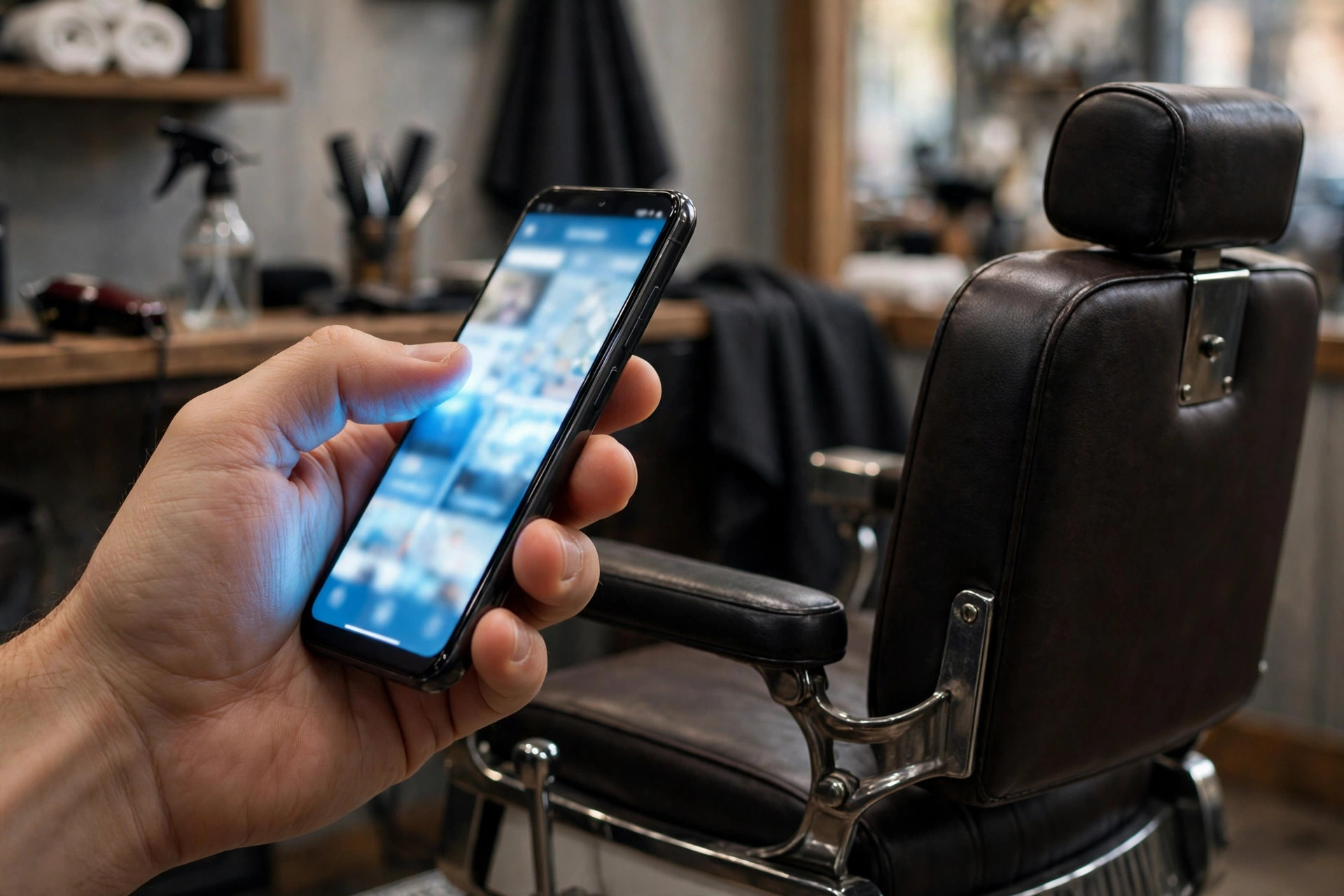
The phone in the client’s pocket is your most reliable booking channel. A short text beats every reminder method that came before it.
Rebooking and reminder texts that stop no-shows
A no-show is worse than an empty slow day, because you held the chair and turned away nobody in its place. The fix is a reminder sequence with a reply built in. Send the first reminder 48 hours before the appointment for cuts booked more than a week out, and the key one 24 hours before every appointment: “Hi [Name], confirming your cut with Marcus tomorrow at 4 PM. Reply YES to confirm or call us to move it.” The reply is the whole point. A client who types YES has made a small commitment, and small commitments get kept.
Unconfirmed appointments get a same-day nudge a few hours before: “Still good for 4 PM today? Reply YES or we will release the chair.” That message does two jobs: it saves the appointment when the client just forgot to reply, and it frees the chair early enough to fill when they cannot come. Every released chair goes straight to the waitlist text: “A 4 PM chair with Marcus just opened today. First reply gets it.” Waitlists turn cancellations from losses into opportunities, but only if the text goes out within minutes of the opening.
State your no-show policy kindly at booking, not as a threat but as information: “We hold your chair just for you, so we ask for 4 hours notice on changes.” Clients respect a clear policy far more than a surprise fee. Shops running reply-to-confirm reminders typically hold no-shows to the low single digits, which on a busy book is worth thousands a year without a single new client.
Slow-day fill texts: turn dead hours into paying chairs
Every shop has dead hours: Tuesday afternoons, the first hour after opening, the gap between the lunch rush and the after-work wave. Discounting to fill them is the obvious move and the wrong one, because it trains clients to wait for the sale and cuts margin on work you would have sold anyway. The texting approach fills the same hours at full price by reaching the right people at the right moment.
Start with the book, not the blast. Look at next Tuesday: which barbers have gaps, and at what times? Then text only the clients who fit: regulars of that barber who are due for a cut, or clients who usually book that daypart. A Tuesday morning text reads: “Hey [Name], Marcus has two chairs open this afternoon at 2:30 and 4. Want one? Reply and it is yours.” Specific, personal, easy to say yes to. A generic “20% off today!” blast to the whole list is how you get opt-outs.
Sweeten without discounting when a gap is stubborn. The currency of a barbershop is the experience, not the price: a free hot towel finish, a complimentary beard line-up with the cut, or first pick of the new product samples. These cost you minutes and pennies, they feel premium to the client, and they never touch your ticket price. Two examples that work: “Slow Tuesday? Not for you. Book any cut today and the hot towel finish is on us.” And for the waitlist crowd: “You asked about Fridays: a 5 PM just opened this Friday with Devon. Reply YES to claim it.”
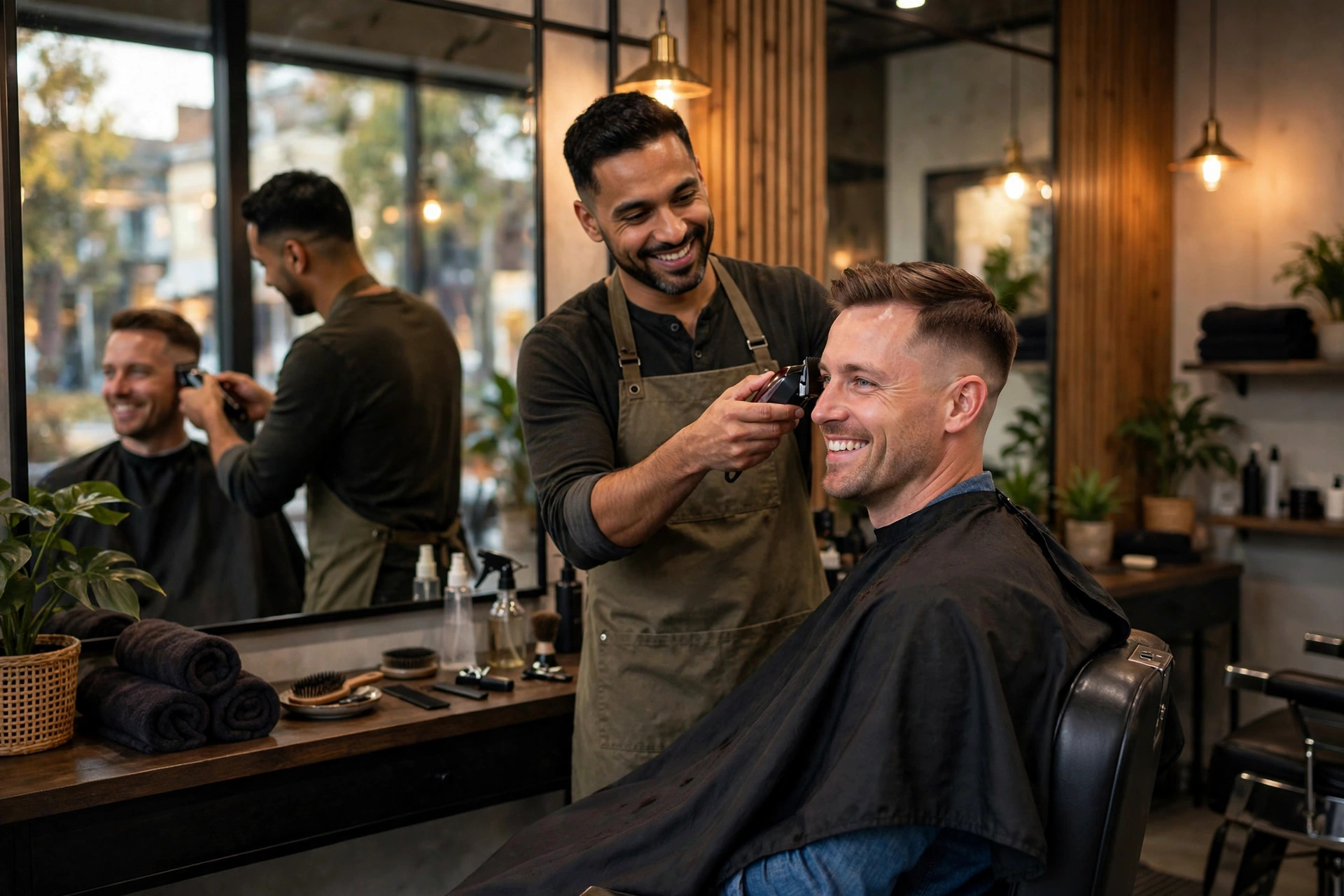
A full chair at full price is the goal. Targeted texts fill gaps without the margin damage of blanket discounts.
Cadence and opt-in rules: how often without annoying people
Texting works because it is intimate, and intimacy has limits. The shops that get complaints are not the ones sending reminders; they are the ones sending four promos a week to everyone. Set your cadence in writing, stick to it, and tell clients what to expect when they opt in: “We will text you booking confirmations, reminders, and the occasional heads-up about open chairs. About 4 to 6 texts a month. Reply STOP anytime.”
The table below is a cadence that keeps clients happy while covering every revenue moment. Treat the maximums as hard caps, not targets.
| Message type | When to send | Max frequency | What it says |
|---|---|---|---|
| Booking confirmation | Immediately after booking | Every booking | “You are booked Thursday 4 PM with Marcus. Reply C to confirm.” |
| Appointment reminder | 24 hours before the visit | Every appointment | “See you tomorrow at 4 PM. Reply YES to confirm or call to move it.” |
| Rebooking nudge | Three weeks after the last cut, only if no future booking exists | Once per cut cycle | “Time for a trim? Marcus has chairs Thursday and Friday. Reply with a day.” |
| Slow-day fill | Morning of a genuinely slow day, to the matching segment only | Two per month | “Two chairs opened with Marcus today at 2:30 and 4. Reply to claim one.” |
| Birthday offer | Seven days before the client’s birthday | Once a year | “Happy birthday week! A hot towel finish is on us with any cut this week.” |
| Review request | Day after the visit, happy regulars only | Quarterly per client | “Enjoyed your cut? A quick Google review keeps our chairs full: [link].” |
Opt-in is not optional, legally or practically. In the US, texting clients without express consent violates telemarketing rules and can draw real penalties, so collect permission properly: a checkbox on the booking form plus a verbal “is it okay if we text you confirmations and reminders?” at the chair. Never buy lists, never text numbers you scraped from anywhere. Honor STOP immediately and automatically; your platform should handle this, and you should test it. Keep texts inside quiet hours, roughly 9 AM to 8 PM, and keep a record of every opt-in. Clean compliance is also good marketing: clients who chose your texts read your texts.
Birthday offers that protect your margins
Birthday texts are the highest-goodwill message you will ever send, because nobody else in the client’s life is offering them anything that week except cake. The trap is reaching for a discount. Ten dollars off a $35 cut gives away nearly a third of your ticket to a client who was probably coming in anyway, and it teaches the whole list that patience gets rewarded. The better birthday offer costs you almost nothing and feels like more: an experience upgrade.
The menu of margin-safe birthday offers writes itself in a barbershop. A hot towel finish with any cut that week. A complimentary beard line-up. First pick of new product samples to take home. A $5 credit toward retail product, which costs you wholesale and often triggers a full-size purchase. Each one feels premium, each one brings the client through the door during their birthday week, and none of them touch your service price.
Timing and data make it work. Collect birthdays at booking with a simple optional field: month and day is enough, no year needed. Schedule the text seven days before, so the client has the full birthday week to book, and keep it to one message. “Happy birthday week, [Name]! A hot towel finish is on us with any cut this week. Marcus has chairs Thursday and Friday, reply to grab one.” If they do not book, let it go; one gentle message a year never annoyed anyone. Done right, birthday texts become a small but steady stream of full-price visits from clients who feel remembered.
Copy-paste message scripts
Good texts are short, specific, and sound like a person. Steal these, swap in your shop name and barber names, and you are ready to send today. Keep every message under 160 characters where you can; one text segment costs less and reads better.
The chair-side rebooking ask. Spoken, not texted: “Same time in three weeks? I have Thursday the 12th at 4 open, or Friday morning works too.” Book it before the cape comes off.
The 24-hour reminder. “Hi [Name], confirming your cut with Marcus tomorrow at 4 PM. Reply YES to confirm, or call us to move it. See you then!”
The three-week nudge. “Hey [Name], about three weeks since your last cut with Marcus. Want me to grab you a chair this week? Reply with a day that works.”
The slow-day fill. “Hey [Name], Marcus has two chairs open today at 2:30 and 4. First reply gets pick of the two. Want one?”
The birthday offer. “Happy birthday week, [Name]! A hot towel finish is on us with any cut this week. Reply to grab a chair with Marcus.”
The win-back. For clients silent eight weeks or more: “Hey [Name], it has been a while. Marcus saved you his Thursday 4 PM chair this week if you want it back. Reply YES and it is yours.”
Notice what none of these do: no exclamation-mark hype, no all-caps SALE, no link to a coupon page. They read like the shop texting a regular, because that is what they are. For ideas on pairing these texts with your wider promotion calendar, our salon marketing ideas guide covers how shops and salons promote without racing to the bottom on price.
SMS vs email vs Instagram for your shop
You do not have to choose one channel; you have to give each channel the job it does best. Most shops over-invest in the slow channels and under-invest in the fast one. The comparison below keeps it honest.
| Channel | Typical open rate | Speed | Best job | Cost |
|---|---|---|---|---|
| SMS | Around 98 percent, mostly within minutes | Seconds | Reminders, rebooking, slow-day fills, birthdays | Pennies per text |
| Around 20 percent, over hours or days | Slow | Newsletters, price change notices, holiday hours | Free to cheap | |
| Depends on the algorithm that day | Unpredictable | Showing off cuts, attracting new clients, brand personality | Your time, plus ad spend if you boost | |
| Phone call | High if they pick up, which is rare | Slow | Sorting out a problem, or a VIP personal touch | Staff time per call |
The practical setup is simple: Instagram brings new faces through the door, email handles the occasional announcement, and SMS runs the revenue engine week to week. A client who found you on Instagram, booked online, got text reminders, and rebooks by text is the modern barbershop customer journey. The shops winning their market are the ones that treat the text thread as the relationship, not as marketing.
What it costs
SMS pricing has two parts: the platform and the per-text charges. Both are small next to one filled chair. These are the three realistic setups for a barbershop, from do-it-yourself to fully managed.
DIY texting app
A basic business texting app on the shop phone or computer. You write and send everything by hand, which works fine for reminders and the occasional slow-day text.
- Send confirmations and reminders manually from the book
- Fine for one to two chairs and a few hundred clients
- No automation; the discipline has to come from you
Automated platform
The sweet spot for most shops. Reminders, rebooking nudges, and birthday texts send themselves from your real schedule, and replies land in one inbox the front desk can manage.
- Automated reminders and rebooking sequences tied to your calendar
- Segments by barber, visit history, and birthday month
- Automatic STOP handling and opt-in records built in
Fully managed
For owners who want it done for them. An agency or provider writes the campaigns, manages the list, and reports on fills and rebooking rates monthly.
- Done-for-you slow-day campaigns and win-back sequences
- Monthly reporting on texts sent, chairs filled, and opt-outs
- Best when the shop is too busy to run it internally
Per-text charges sit on top, usually a fraction of a cent to a few cents each depending on volume and carrier fees. A shop sending 2,000 texts a month might pay $20 to $40 in usage. Add it up and the all-in cost for most shops lands between $50 and $250 a month, which one slow Tuesday afternoon covers.
Mistakes that get you unsubscribes
Texting too often. Four to six texts a month is the ceiling for most clients. Every message past that has to earn its place, or the STOP replies start coming.
Blasting the whole list with generic promos. “20% OFF ALL CUTS TODAY” to 800 people is how you train clients to ignore you. Segment by barber, timing, and visit history, and write like a person.
No opt-out in the message. Every promotional text needs a clear way out, and STOP must work instantly. Hiding the opt-out does not keep subscribers; it creates complaints.
Texting at the wrong hours. Nothing before 9 AM, nothing after 8 PM. A promo text at 10:30 PM does not fill tomorrow’s chairs; it fills your opt-out list.
Discounting every week. Weekly deals teach clients to wait for the text instead of booking when they need a cut. Protect the ticket price and promote with experience upgrades instead.
Skipping the client’s name. “Hey, we have openings today” reads like spam. “Hey Marcus, Devon has a 3 PM open today” reads like service. Personalization is free.
Ignoring replies. A client who replies “can I move to Friday?” and hears nothing for six hours learns that texting you is pointless. Replies need a human within the hour during open hours.
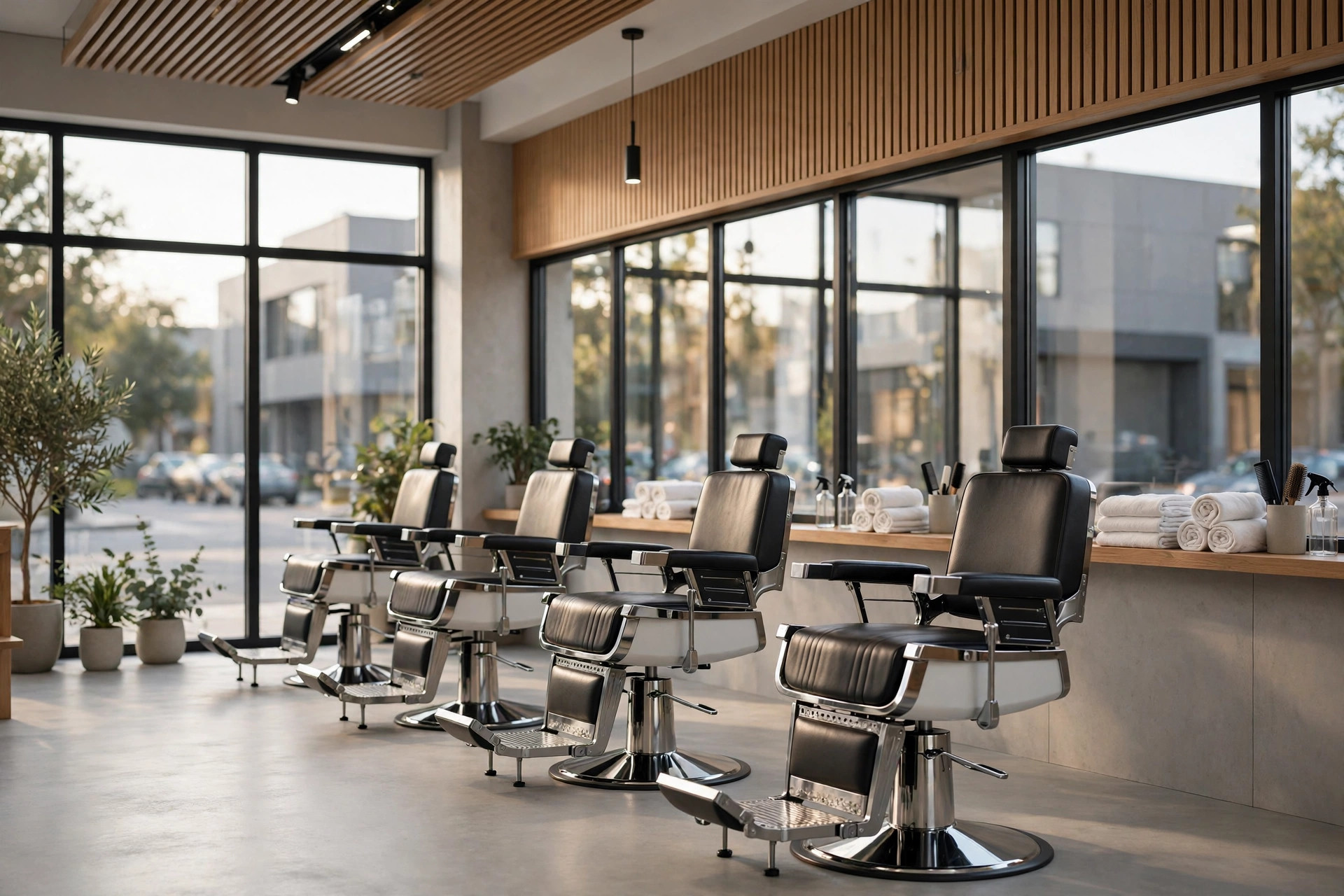
Empty chairs during open hours are revenue that can never be recovered. A well-timed text is the cheapest way to fill them.
Your rollout checklist
Work through these in order. Each one builds on the last.
- 1Collect opt-ins at the chair. One sentence at checkout plus a sign at the register; never text a client who has not said yes.
- 2Pick your SMS tool. Booking software with texting built in, or a standalone platform; match it to your chair count and budget.
- 3Connect your booking calendar. Reminders only work when the texts read your real schedule, so integrate before you send anything.
- 4Set the rebooking habit. Every client leaves with a next appointment, or a three-week nudge scheduled for those who slip through.
- 5Write your five core templates. Confirmation, reminder, rebooking nudge, slow-day fill, and birthday; short, personal, under 160 characters.
- 6Build the slow-day segment. Tag clients by preferred barber and usual visit day so fill texts reach the right people only.
- 7Set your cadence caps in writing. Max texts per month per client, quiet hours, and the opt-in promise; post it where the team can see it.
- 8Add the birthday offer. An add-on gift, not a discount, scheduled seven days before each client’s birthday.
- 9Train the team on the script. The chair-side rebooking ask word for word, plus replying to client texts within the hour.
- 10Review monthly. Reply rate, rebooking rate, chairs filled from texts, and opt-outs; adjust what the numbers tell you.
Frequently asked questions
How many texts per month is too many for a barbershop?
Four to six per client per month is the safe ceiling: booking confirmations, reminders, and one or two promos like a slow-day fill or birthday offer. Reminders tied to actual appointments never count against goodwill the way promos do, so keep the promo count low and the service messages automatic.
Do I need written permission to text my clients?
Yes. Get express consent before sending marketing texts: a checkbox on the booking form plus a verbal yes at the chair covers you. Keep a record of every opt-in, honor STOP requests immediately, and never text purchased or scraped numbers. The rules carry real penalties, so treat consent as part of the setup, not an afterthought.
Will SMS annoy my regulars?
Not if you respect the channel. Confirmations and reminders are welcome because they are useful; a slow-day text to the right client feels like good service. What annoys people is frequency and irrelevance: weekly blasts, late-night texts, and offers for services they never buy. Segment and cap your sends and regulars will thank you.
Should I send discounts by text?
Sparingly, and never as the default. Weekly discounts train clients to wait for the text instead of booking when they need a cut, and they cut margin on a $35 ticket fast. Fill slow days with experience upgrades like a hot towel finish, and save real discounts for win-back campaigns to clients who have gone quiet for two months or more.
What is the best time to send a slow-day fill text?
Morning of the slow day, between 9 and 11 AM, so clients can plan around it. Texting the night before works for next-morning gaps. Send only to the matching segment: regulars of the barber with the gap, or clients who usually book that daypart. Specific times in the message beat vague “openings today” every time.
How do birthday texts work without cutting into profit?
Offer an add-on, not a discount: a hot towel finish, a beard line-up, or product samples with any cut during the birthday week. These cost you minutes and pennies, feel premium to the client, and leave your ticket price untouched. Collect month and day at booking and schedule the text seven days before.
Can SMS really reduce no-shows?
Yes, it is the most effective no-show tool a shop has. A 24-hour reminder that asks for a YES reply turns a passive notification into a small commitment, and a same-day nudge frees the chair early when plans change. Shops running reply-to-confirm reminders typically hold no-shows to the low single digits.
What does SMS marketing cost for a small shop?
Most small shops land between $50 and $250 a month all-in: $20 to $50 for a basic texting app or $79 to $199 for an automated platform, plus a few cents per text in usage. One filled slow afternoon covers the month. Start with the DIY tier and upgrade when the rebooking habit is solid.
Should I text clients or use my booking app’s notifications?
Text. App notifications only reach clients who installed your app and left notifications on, which is a fraction of your list. A text reaches everyone with a phone number, gets opened within minutes, and needs no download. Use the booking app for scheduling and the text thread for everything time-sensitive.
How do I handle STOP replies?
Automatically and immediately. Your texting platform should process opt-outs the moment they arrive and suppress that number from future sends; test it with your own phone before launch. A client who opts out stays a client if you respect it, and becomes a complaint if you do not. Never re-add an opted-out number by hand.
Fill your chairs without discounting
Digital Hayder builds SMS and booking automation for barbershops and salons: rebooking reminders, slow-day fill texts, and birthday offers that run from your real schedule. Tell us about your shop and we will design the system around it.
Contact Us