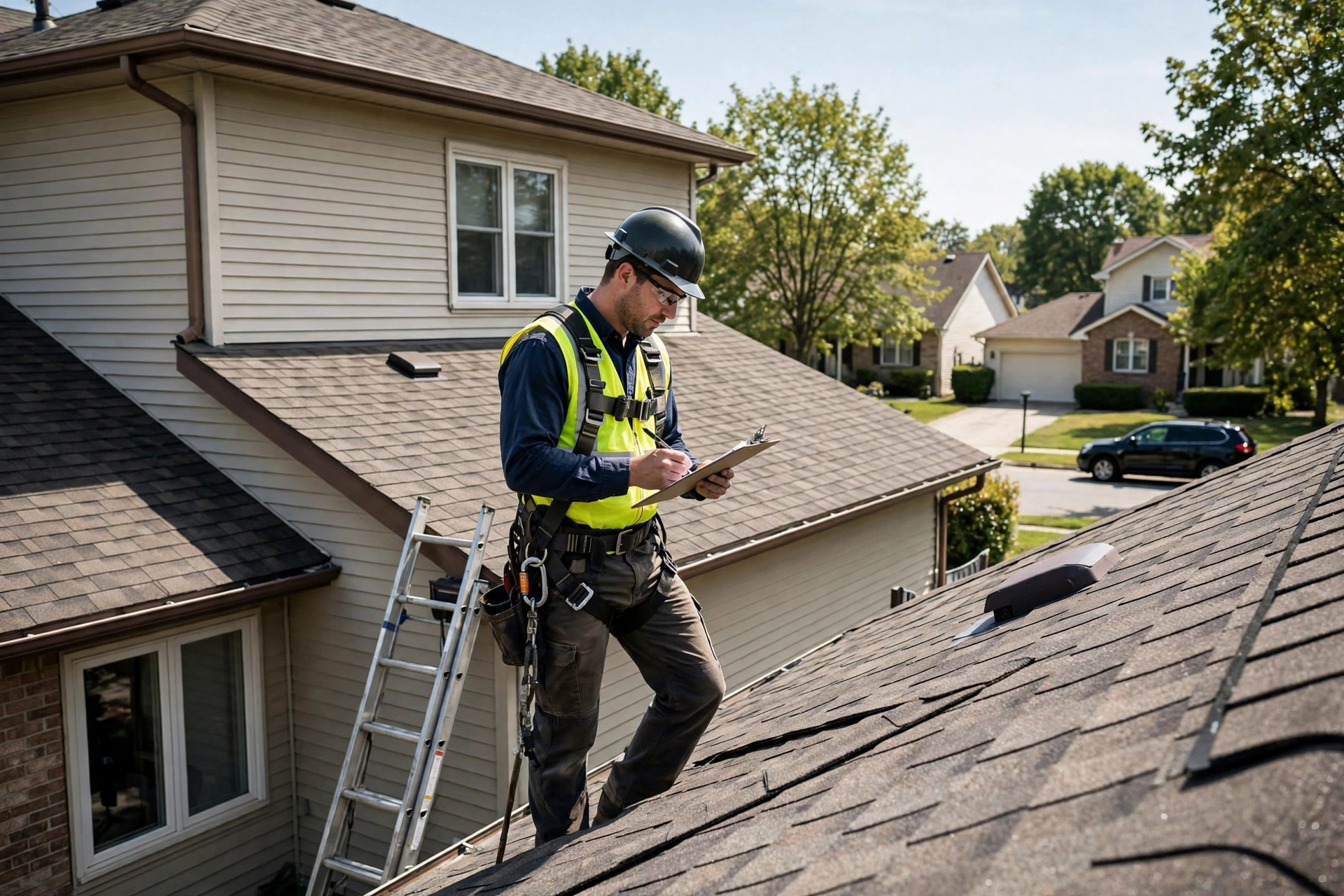
A homeowner finds a leak at 7 PM, searches for a roofer, and fills out three quote forms in ten minutes. The first company calls back the next morning. The second calls two days later. The third never calls at all. Guess who gets the $14,000 roof replacement. Roofing is a speed business: the lead goes to whoever responds first and follows up the longest. Yet most roofing companies still run follow-up on sticky notes, memory, and good intentions, which means good leads die quietly every week. Lead follow-up automation for roofing companies fixes that. It answers every inquiry in seconds, chases every estimate on a schedule that never forgets, and nurtures the not-yet-ready homeowners for months until they are ready. This guide shows how it works for a real roofing operation: the speed-to-lead standard, the exact estimate follow-up sequence, the CRM pipeline stages, storm season handling, costs, and the money math on what a better close rate is worth.
The quick answer
- Speed wins the roof: contacting a new lead within five minutes dramatically raises the chance of booking the inspection, and automation makes that speed automatic.
- Estimates need a sequence, not a single call: a structured 14-day follow-up of texts, calls, and emails recovers jobs that one call and one email would lose.
- Storm surges need systems: when hail hits, lead volume can spike tenfold overnight, and only automation answers every inquiry while the crew is on roofs.
- Not-yet-ready is not lost: long-term nurture keeps your name in front of homeowners for months until the budget, the spouse, or the next storm decides.
- Pipeline stages keep it honest: a simple CRM pipeline shows exactly where every lead sits, so nothing stalls in the gap between estimate sent and job signed.
- The math is lopsided: lifting your estimate close rate a few points on the same lead flow can add six figures of revenue against a few hundred dollars a month in software.
Roofing leads go cold in minutes, not days
Roofing leads behave differently from most home service leads. The trigger is usually urgent or emotional: a leak, storm damage, a failed inspection during a home sale, or a roof that has visibly given up. The homeowner is anxious and motivated right now. That motivation has a short half-life. Every hour without a response, the urgency cools, a competitor calls back, or life simply moves on to the next problem.
Industry studies on lead response have repeated the same finding for years: contacting a lead within the first few minutes produces dramatically higher contact and conversion rates than waiting even half an hour, and the drop-off after the first hour is steep. In roofing, the effect is sharper than average, because the homeowner typically contacts three to five companies at once. You are not racing the clock in the abstract. You are racing four competitors who got the same form submission at the same second.
The second problem is the estimate gap. A roofing estimate is not a yes-or-no moment. It is the start of a decision that takes days or weeks: the homeowner compares bids, talks to their spouse, checks insurance coverage, and waits for the right time. Most roofing companies make one call, send one email, and then move on to the next lead. The job does not go to the best roofer. It goes to the roofer who was still there, politely persistent, when the homeowner was finally ready to decide.
Automation solves both problems at once. It responds instantly, every time, no matter when the lead arrives. And it follows up on a schedule that never gets busy, never forgets, and never takes a lost bid personally. The crew can stay on the roof while the system works the pipeline.
The five-minute rule: what speed to lead really means
Speed to lead is the time between a lead arriving and your first real response. For roofing companies, the target is five minutes or less, around the clock. That sounds aggressive until you see what it replaces: the current reality at most companies is a response time measured in hours, with after-hours leads waiting until morning and weekend leads waiting until Monday.
Here is what the five-minute standard looks like in practice. A homeowner submits a quote form at 9:40 PM. Within seconds, they get a text: “Thanks for reaching out to Apex Roofing. Sorry about the leak. Can we call you first thing tomorrow at 8 AM to schedule a free inspection, or is there a better time?” At 8 AM, the system alerts the sales rep, who calls at the promised time. If the rep is on a roof and misses the window, the system sends a second text: “Our inspector is finishing a job nearby. Can we reach you at 10:30 instead?” The homeowner feels looked after from minute one. The competitor who calls at 11 AM feels late, because they are.
Automation handles the parts humans fumble. Instant text response to every form fill, every missed call, and every after-hours inquiry. Automatic call routing and alerts to the right rep during business hours. A backup sequence when the first attempt fails, so a missed connection becomes a rescheduled one instead of a dead lead. None of this requires the owner to stare at a phone. It requires a CRM with texting, a few well-written templates, and the discipline to let the system run.
Pair speed with qualification and it gets better. A short automated exchange can capture the essentials before the rep calls: address, type of issue, roof age, insurance claim or cash job, and best callback time. An AI chatbot for roofing companies can run that qualification conversation on your website around the clock, so the rep’s first call starts with facts instead of small talk. The homeowner gets a faster, sharper conversation, and the rep stops wasting inspections on bad-fit leads.
The estimate follow-up sequence that closes more jobs
The estimate is where roofing revenue is won or lost. A typical company closes 25 to 35 percent of the estimates it sends. The rest do not all go to competitors; a large share simply never decides, and drifts until a storm or a leak forces the issue months later, by which time your company is forgotten. A structured follow-up sequence recovers a meaningful slice of those drifters.
The sequence below runs 14 days from the estimate appointment. It mixes texts, calls, and emails, because different homeowners respond on different channels, and it spaces touches so persistence never feels like pressure. Every message references something specific from the inspection, which is why the rep’s inspection notes matter: “the soft spot near the chimney” beats “your estimate” every time.
Day 0, within one hour of the inspection. Text the estimate with a thank-you: “Thanks for having us out today, Mike. Your full estimate is attached: $13,800 for the complete replacement including the decking repair by the chimney. I will check in tomorrow in case questions come up. – Dave, Apex Roofing.” The estimate arrives while the conversation is fresh, with a human name on it.
Day 1. Morning call from the rep. If no answer, leave a short voicemail and follow with a text: “Left you a quick voicemail. Happy to walk through the estimate line by line whenever works for you.” One call, one text, then stop for the day.
Day 3. Text with something useful, not a nudge: “Quick note: most manufacturers require the old flashing replaced with a full replacement, which is in your quote. Some lower bids skip it. Happy to explain the difference.” You are educating, not begging, and you are quietly differentiating from the cheap bid.
Day 5. Email with social proof: two or three recent jobs in nearby neighborhoods, with photos and short homeowner quotes. Subject line: “Recent roofs near Maple Street.” Local proof answers the unspoken question: is this company real and do my neighbors trust them?
Day 7. Call plus text. This is the direct check-in: “Wanted to see where you landed on the roof decision. Any questions I can answer, or anything in the estimate to adjust?” Many homeowners decide in week two; this call catches them at the moment.
Day 10. Text with a soft reason to act: “Our install calendar is booking about three weeks out right now. If you want the work done before the rainy stretch, this week is a good time to lock a slot. No pressure either way.” A real scheduling fact, not a fake deadline.
Day 14. The graceful close text: “I will stop checking in after this, but your estimate stays good for 90 days. If anything changes with the roof, just reply here and we will pick it right up. – Dave.” This message gets replies. It removes pressure, and removing pressure is what finally lets hesitant buyers say yes.
After day 14, the lead moves to long-term nurture, not the trash. The sequence did its job: it gave the homeowner every reasonable chance to decide, stayed helpful throughout, and left the door open. Companies that run this kind of sequence consistently report close rates climbing from the high twenties into the high thirties, on the same estimates, with the same reps.
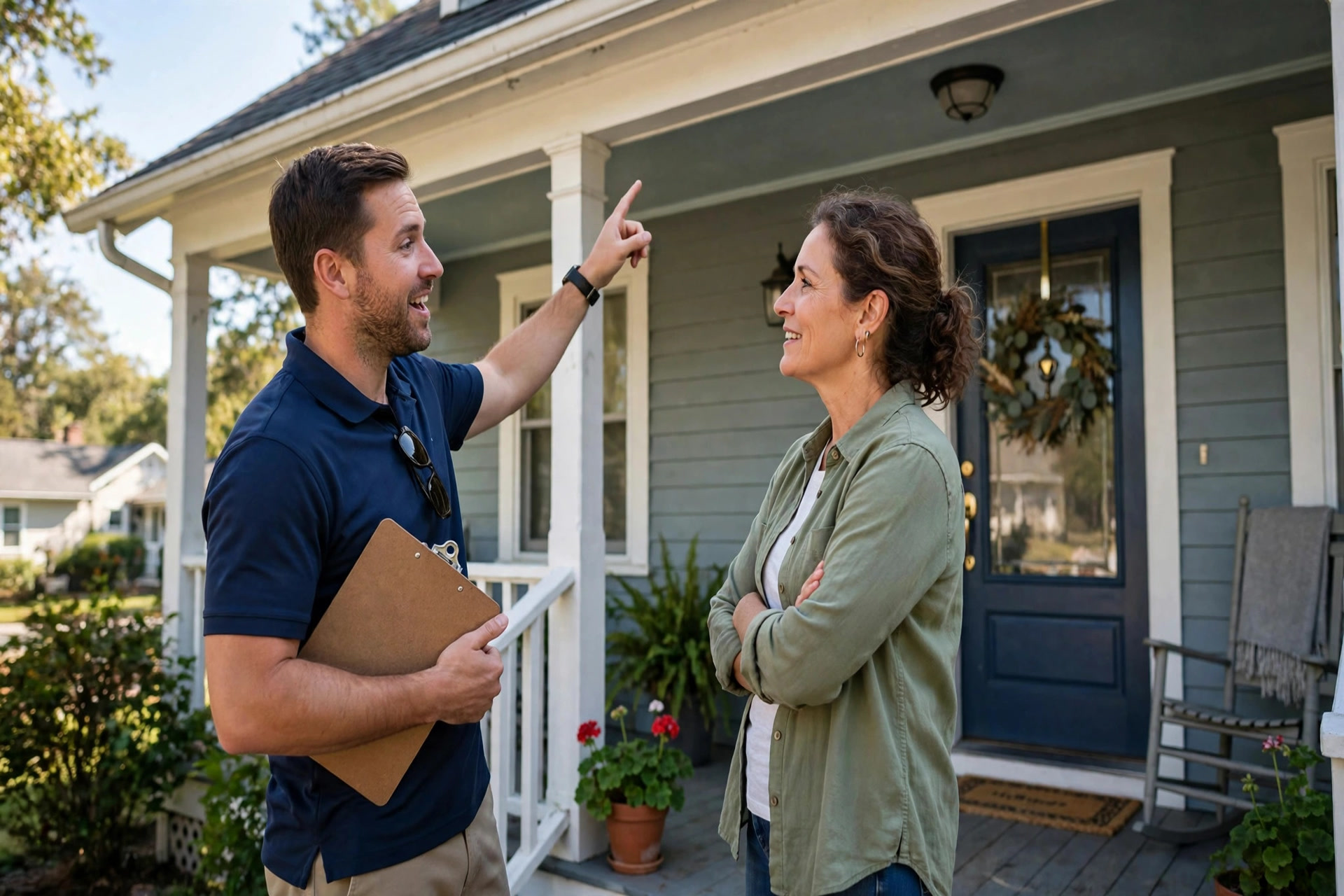
The inspection is only halftime. A structured follow-up sequence decides how many estimates turn into signed jobs.
Storm season: handling the surge without dropping a lead
Hail season changes the math of a roofing business overnight. One serious storm can generate more leads in 48 hours than the previous two months combined. It is the best opportunity of the year and the easiest to waste, because the same storm that creates the leads also buries the team. Reps are on roofs doing emergency tarping, the phones ring nonstop, and quote forms pile up unanswered. Every unanswered lead is a homeowner who will sign with whoever called back first.
Automation is the only way through a surge, because humans do not scale on storm week. The system needs three storm-specific behaviors ready before the season starts. First, instant storm response messaging: every new lead gets an immediate text acknowledging the storm, setting expectations, and capturing the essentials. “We know last night’s hail hit your area hard. We are scheduling free storm inspections now. What is the property address?” The homeowner feels heard in seconds, even at 2 AM.
Second, triage and prioritization. Not every storm lead is equal. Active leaks and visible damage outrank “just want someone to check.” A short automated qualification sorts leads into priority tiers so reps call the urgent ones first instead of working the list in random order. The CRM should tag storm leads separately from everyday leads, because the messaging, the timeline, and the insurance angle are all different.
Third, capacity honesty. Nothing damages a roofing company’s reputation faster than promising inspections it cannot deliver. When the schedule fills, the automation should say so plainly and offer the next real slot: “Our next available inspection in your area is Thursday. Can we lock that in?” Homeowners accept a wait when it is communicated clearly. They do not accept silence.
Prepare the storm playbook in the quiet months. Write the storm message templates, build the storm pipeline stages, set the priority rules, and test the whole flow with the team. When the hail comes, you flip one switch instead of building the airplane mid-flight. The companies that win storm season are the ones that did the work in the off season.
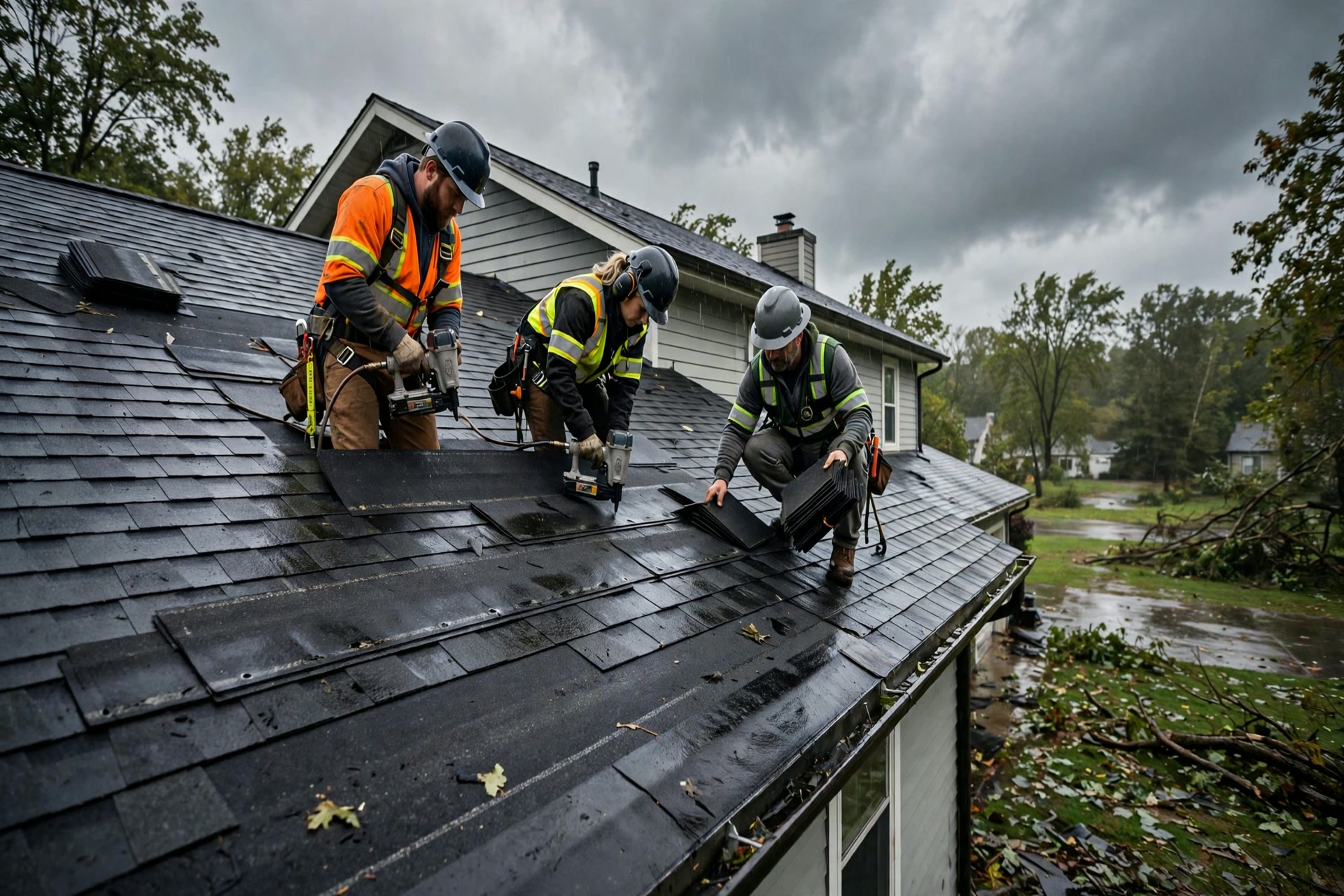
Storm weeks bring a flood of leads while the crew is on roofs, which is exactly when automated follow-up earns its keep.
Long-term nurture for the not-yet-ready homeowner
A large share of roofing estimates end with “not right now.” The budget is not there, the spouse needs convincing, they want to get through one more season, or they are waiting to see if insurance covers it. Most companies file these leads under lost. That is a mistake. “Not now” in roofing very often becomes “yes” within six to eighteen months, because roofs do not heal themselves.
Long-term nurture is a slow, useful drip of contact that keeps your company familiar until the timing is right. The cadence is monthly, not weekly; the tone is helpful, not salesy. Each touch should give the homeowner something worth opening: seasonal roof care tips, a reminder about what hail season does to aging shingles, photos of recent local jobs, or a plain-language explainer of how insurance claims work after storm damage.
A practical 12-month nurture calendar looks like this: month one, a thank-you and the estimate reminder; month two, a short guide to reading the estimate against competitors; month three, seasonal maintenance tips; month four, recent local job photos; month five, an insurance claim explainer; month six, a check-in text asking if anything changed; then repeat the pattern with fresh content. Every touch carries a soft call to action: reply to this text any time for an updated quote. Estimates should be refreshed, not left to expire silently; a 90-day-old price that is still honored feels like good service.
The economics of nurture are remarkable. These leads cost nothing new to acquire; you already paid for the inspection. The messages cost pennies. And when the homeowner’s situation changes, a familiar name with a standing offer beats a cold search every time. Companies that nurture systematically find that 10 to 20 percent of “lost” estimates come back within a year, which on roofing ticket sizes is serious money from leads they had already written off.
Segment the nurture list so it stays relevant. Insurance-claim leads get claim content. Aging-roof leads get deterioration timelines. Budget-blocked leads get financing information. One generic newsletter to everyone performs poorly; three simple segments perform well and take little extra work once the system is built.
CRM pipeline stages for a roofing company
Automation without a pipeline is just scheduled spam. The pipeline is what makes follow-up intelligent: each stage knows what the lead needs next, and the automation fires the right messages for where the lead actually sits. Below is a pipeline built for how roofing really sells, with the automation behavior for each stage.
| Pipeline stage | What it means | Automation behavior |
|---|---|---|
| New lead | Inquiry arrived, no contact yet | Instant text response, rep alert, qualification questions |
| Contacted | Spoke with homeowner, inspection not yet booked | Booking link texts, call reminders, 48-hour re-engagement if no booking |
| Inspection scheduled | Appointment set for the roof visit | Confirmation text, day-before reminder, morning-of reminder with rep name |
| Estimate sent | Inspection done, quote delivered | 14-day follow-up sequence of texts, calls, and emails |
| Negotiating | Homeowner engaged, deciding between options | Rep-led follow-up with automated check-ins and social proof |
| Won | Contract signed | Welcome sequence, install scheduling, preparation checklist |
| Installed | Job complete | Review request, referral ask, warranty information |
| Nurture | Not now, but still a prospect | Monthly useful touches for up to 18 months |
| Lost | Went with competitor or unreachable | Closed with a graceful message; re-enters nurture after 12 months |
Two details make this pipeline work. First, stages move in both directions. A nurture lead who replies “actually, let’s do it” jumps straight back to negotiating. A negotiating lead who goes quiet for three weeks drops to the estimate sequence again. Rigid one-way pipelines leak; flexible ones recover. Second, every stage has an owner and a time limit. A lead should never sit in “contacted” for two weeks without anyone noticing. The CRM flags stale leads automatically, so the system, not memory, enforces the standard.
The exact texts that get replies
Roofing homeowners reply to texts far more than they answer unknown calls or open emails. The whole follow-up system leans on texting, so the wording matters. The principles are simple: short, specific, human, and always from a named person. Below is the core message set with timing.
| When | Message | Why it works |
|---|---|---|
| Instant (new lead) | “Thanks for reaching out to Apex Roofing. Sorry about the roof trouble. Can we call you tomorrow at 8 AM to schedule a free inspection, or is there a better time? – Dave” | Acknowledges the problem, proposes a specific next step, signs a human name |
| Missed call | “Sorry we missed your call. This is Apex Roofing. Are you dealing with a leak or looking for a quote? Reply here and we will get right on it.” | Turns a dead missed call into a conversation in seconds |
| Day before inspection | “Hi Mike, confirming your free roof inspection tomorrow at 10 AM with Dave. He will text when he is on the way. Reply YES to confirm.” | Reply-to-confirm reminders cut no-shows sharply |
| Estimate delivered | “Your estimate is ready: $13,800 for the full replacement including the chimney flashing repair. I will check in tomorrow in case questions come up. – Dave” | Specific numbers and scope beat vague “your quote is attached” |
| Day 3 value text | “Quick note: full replacements should include new flashing, which is in your quote. Some lower bids skip it. Happy to explain the difference.” | Educates and differentiates without discounting |
| Day 7 check-in | “Wanted to see where you landed on the roof decision. Any questions I can answer, or anything in the estimate to adjust? – Dave” | Direct but low pressure; catches week-two deciders |
| Day 14 graceful close | “I will stop checking in after this, but your estimate stays good for 90 days. If anything changes, just reply here. – Dave” | Removing pressure is what finally gets hesitant buyers to reply |
| Monthly nurture | “Hi Mike, hope the roof is holding up. We just finished two replacements on Elm Street if you ever want to see the work. Your estimate from spring is still on file. – Dave” | Local proof plus a standing offer, no hard sell |
Keep every text under about 300 characters so it arrives as a single message. Never send links without context; “your estimate is attached” with no numbers feels like homework. And always give the homeowner an easy reply path: a question to answer beats a statement to ignore. The same playbook ports well to other trades; our guide to lead follow-up automation for HVAC companies shows how the sequence adapts when the ticket is smaller and the decision is faster.
What follow-up automation costs
Roofing CRMs with automation range from do-it-yourself software to fully managed systems. The right tier depends on whether you have someone to run it. The software is the cheap part; the expensive part is a system nobody maintains.
DIY CRM with automation
For owners comfortable setting up software themselves. You build the pipelines, write the messages, and keep the system tuned.
- CRM with texting, email, and pipeline automation
- Missed-call text-back and instant lead response
- Estimate follow-up sequences you build once and refine
- Your time: a focused weekend to set up, then an hour a week to maintain
Done-with-you setup
For companies that want the system built right the first time. An expert configures the pipelines and sequences around how you sell.
- Everything in the DIY tier, professionally configured
- Roofing-specific pipelines, storm playbook, and message templates
- Integration with your quoting and scheduling tools
- Training for your reps on working the pipeline daily
Fully managed follow-up
For busy owners who want it handled. The system is monitored, tuned, and reported on without your involvement.
- Full system management and monthly optimization
- Storm season surge handling and template updates
- Monthly reporting on response times, close rates, and recovered revenue
- New sequences for referrals, reviews, and repeat business
Set against a single recovered roof replacement, even the top tier pays for itself many times over. The question is never whether the software is affordable. It is whether you can afford to keep losing estimates to silence. For the demand side of the equation, our roofing marketing ideas guide covers keeping the top of the funnel full, and our notes on Google Business Profile optimization for roofers help storm-season searchers find you first.

Every recovered estimate is a five-figure job, which is why follow-up discipline beats more ad spend.
Your rollout checklist
Work through these in order. Each one builds on the last.
- 1Pick your CRM. Choose one with texting, pipelines, and automation built in, so follow-up lives in one place instead of three apps.
- 2Connect every lead source. Website forms, Google profile messages, Facebook ads, and call tracking all feed the same pipeline automatically.
- 3Build the instant response. New-lead text in under a minute and missed-call text-back, with a human name on every message.
- 4Set up the pipeline stages. New lead through nurture, with an owner and a time limit on every stage so nothing stalls silently.
- 5Write the 14-day estimate sequence. Texts, calls, and emails on the schedule above, referencing specifics from each inspection.
- 6Build the storm playbook. Storm templates, priority triage rules, and capacity-honest messaging, tested before hail season.
- 7Start the nurture calendar. Monthly useful touches for not-yet-ready leads, segmented by insurance, age of roof, and budget.
- 8Train the reps. Inspection notes feed the follow-up, handoffs have response-time targets, and everyone works the pipeline daily.
- 9Add review and referral automation. Review requests after every install and referral asks to happy customers, running without reminders.
- 10Review the numbers monthly. Response time, contact rate, estimate close rate, and nurture conversions, then tune the weakest link.
Frequently asked questions
How fast should a roofing company respond to a new lead?
Within five minutes, around the clock. Contact rates drop sharply after the first few minutes, and roofing homeowners usually contact several companies at once. Automation handles the instant text response; your rep follows up with the call at the promised time.
What is a good estimate close rate for roofers?
Most companies close 25 to 35 percent of estimates. With structured follow-up and nurture, many lift that into the high thirties. Because average job values run five figures, even a few points of lift is worth six figures of revenue on the same lead flow.
How many times should I follow up on a roofing estimate?
Plan on six to eight touches over 14 days across text, call, and email, then move the lead to monthly nurture. The sequence above spaces them so persistence reads as helpful, and the day-14 graceful close often produces replies that pressure never would.
Will homeowners find automated texts annoying?
Not when the messages are specific, useful, and signed by a real person. Homeowners get annoyed by generic blasts and by silence. A text that references their chimney flashing repair reads as service; a weekly “just checking in” reads as noise. Keep every message relevant to their roof.
Can automation handle storm season lead surges?
That is exactly what it is for. Instant storm acknowledgment texts, priority triage that sorts active leaks first, and honest scheduling when the calendar fills. Set the storm playbook up in the quiet months so one switch activates it when hail hits.
What should my roofing CRM pipeline stages be?
New lead, contacted, inspection scheduled, estimate sent, negotiating, won, installed, nurture, and lost. The key is that stages move both ways and every stage has a time limit, so stale leads get flagged automatically instead of discovered months later.
How long should I nurture a lost roofing estimate?
Twelve to eighteen months of monthly touches. Roofs do not heal, so “not now” frequently becomes “yes” within a year. Refresh the estimate instead of letting it expire silently, and segment by situation: insurance leads, aging roofs, and budget blocks each get relevant content.
Do I still need sales reps if follow-up is automated?
Yes. Automation handles speed and persistence; humans handle trust. The rep runs the inspection, reads the homeowner, and closes. The system makes sure no lead waits, no estimate goes unchased, and every rep works from full context instead of sticky notes.
How much does follow-up automation cost for a roofing company?
DIY CRM software runs $97 to $297 a month. A professionally built setup costs $500 to $1,500 one time plus $200 to $400 a month. Fully managed follow-up runs $600 to $1,500 a month. Against five-figure job values, one recovered estimate typically covers a year of any tier.
How do I measure whether follow-up automation is working?
Track four numbers monthly: average speed to lead, contact rate on new leads, estimate close rate, and nurture conversions. Compare against the two months before launch. Speed and contact rate move first, usually within weeks; close rate follows within a quarter.
Stop losing estimates to silence
Digital Hayder builds lead follow-up automation for roofing companies: instant lead response, 14-day estimate sequences, storm surge playbooks, and long-term nurture that turns not-yet-ready homeowners into signed jobs. Tell us about your sales process and we will design the system around it.
Contact Us