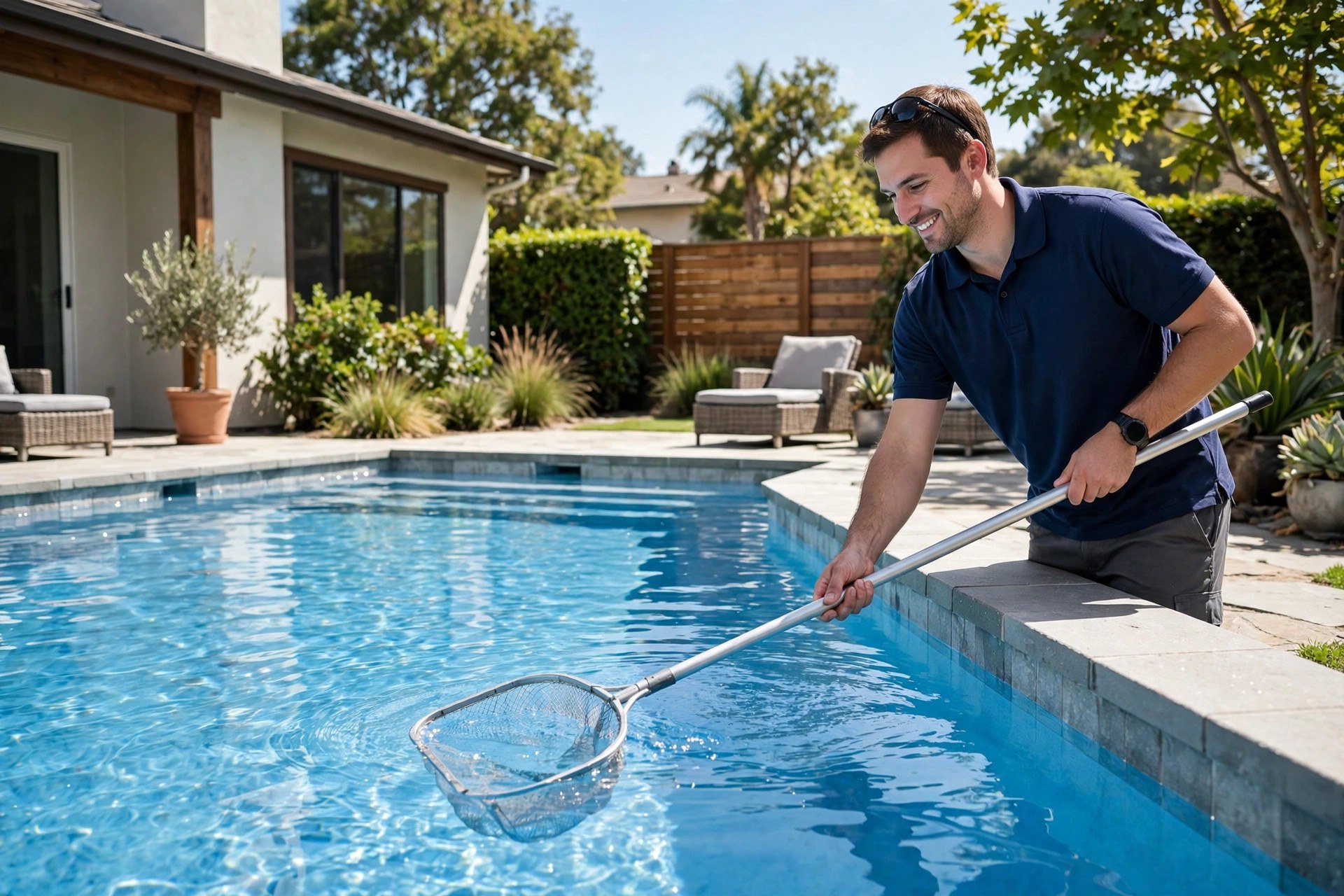
A homeowner with a green pool searches for help on a Saturday morning. Two pool companies show up in the results. One has 14 reviews and a 4.2 rating. The other has 212 reviews and a 4.8. The homeowner never reads a single review in full. The numbers make the decision before the first word is read. That is how pool customers choose: fast, visual, and based on review count and rating. Pool service is also one of the most review-friendly trades in home services. Your techs visit the same homes every week, they solve visible problems, and the customer sees the result every time they look at their pool. A review system that captures even a fraction of that goodwill turns your route into a review machine. This guide covers exactly how pool companies get more Google reviews: when to ask on a recurring route, what the techs should say, how the follow-up texts should read, and how to handle the bad ones.
The quick answer
- Ask after the visible win: the best moment is right after a cleaning when the pool looks perfect, or after fixing a green pool.
- Techs ask, texts close: the technician makes the verbal ask at the gate, and an automated text with the review link lands within the hour.
- Make it one tap: a direct Google review link, a QR code on the invoice, and no account creation hurdles.
- Respond to every review: reply to positives briefly and negatives within 24 hours. Responses shape what the next reader thinks.
- Track per tech: review counts by route and technician turn review generation into a team habit, not a hope.
- Target velocity: a steady 8 to 15 new reviews a month keeps a pool company ahead of local competitors in most markets.
Why reviews decide who gets the pool route
Pool service is bought on trust and kept on habit. A homeowner hands a stranger a gate code and a key to the equipment pad, then pays every month for work they rarely watch happen. Before the first visit, the only evidence the company is trustworthy is its online reputation. Google reviews are that evidence. Studies of local search behavior have repeatedly found that the large majority of consumers read reviews before choosing a local business, and that star rating and review count rank among the top factors in the choice. For pool companies, this plays out in the map pack: the businesses with the most recent, most numerous positive reviews get the calls.
The pool industry has a structural advantage most trades would envy. A weekly or biweekly route means your techs see each customer 25 to 50 times a year. Every one of those visits is a chance to earn a review, and the work is visibly satisfying: a sparkling pool is its own before-and-after photo. Compare that to a plumber who visits once every few years. Pool companies that build a review habit into the route collect reviews at a pace competitors cannot match, and that pace compounds. More reviews mean more calls, which mean more routes, which mean more review opportunities.
There is a second, quieter benefit. Reviews are market research written by your customers. When twenty reviews mention that your techs always close the gate or text before arriving, you have learned what your market values. When three mention cloudy water after a visit, you have found an operations problem before it costs you accounts. Read your reviews like reports from the field, because that is what they are.
The review math for a pool company
Put numbers on it and the case for a review system becomes obvious. A residential pool route customer paying $200 to $350 a month is worth $2,400 to $4,200 a year, and the average pool service relationship lasts several years. A single new route customer can be worth $10,000 or more over the relationship. If better reviews bring in just two extra customers a month, that is $20,000 or more in lifetime value added every month, from an effort that costs almost nothing.
The math also works in reverse. A pool company with a thin review profile pays more for every customer: higher ad costs to compensate for low organic calls, more price shopping because trust is low, and slower close rates on quotes. Reviews are the cheapest customer acquisition channel a pool company has. They cost a text message and thirty seconds of a tech’s time, and they keep working for years.

Every visit where the water tests clean is a visit that earned a review. The system just has to ask.
When to ask: timing that fits the route business
Timing is the difference between a review system that works and one that irritates. Ask at the wrong moment and you get ignored. Ask at the right moment and the review almost writes itself. For pool companies, the right moments are tied to the service cycle.
The weekly visit window
The strongest ask moment is within an hour after the tech leaves a clean, balanced pool. The customer walks outside, sees clear blue water, and feels the satisfaction your company created. That is when the text with the review link should arrive. Automate it from the completed job in your scheduling system so the timing is always right, even when the office is busy. The message should reference the visit: “Hi, this is [Company]. Jake just finished your weekly cleaning and the water is looking great. If you have a minute, a Google review would mean a lot to us: [link].”
Avoid asking before the visit or days later. Before the visit, you have earned nothing yet. Days later, the glow has faded and the text feels random. The one-hour window is the sweet spot for recurring service.
Seasonal and rescue moments
Some moments earn reviews faster than a routine cleaning. Opening the pool for the season, clearing a green pool after an algae bloom, and fixing equipment that another company could not diagnose are all high-emotion wins. Train techs to recognize these and ask on the spot: “We got your pool from green to clear in two visits. If you are happy with how it turned out, a Google review helps us more than you know.” Rescue moments produce the longest, most detailed reviews, and those detailed reviews convince the next reader more than any five-star rating alone.
How to ask: scripts for techs and texts
Most techs hate asking for reviews because it feels awkward. It stops feeling awkward when they have exact words to say and they see it work. Give them a script, practice it once, and make it part of the job, not a favor.
The tech script at the gate
Keep it short, specific, and tied to what just happened. As the tech finishes: “Your pool is all set, chemicals are balanced and the water looks great. If you are happy with the service, a quick Google review really helps our small business. I can text you the link so it takes ten seconds.” Three sentences. The offer to text the link removes the friction of the customer having to find the review page. Techs should ask only when the visit went well. If there was a problem, the tech’s job is to fix it and tell the office, not to ask for a review.
Make it a team metric, not a personal plea. Post a simple leaderboard in the office: reviews earned per tech per month. Recognize the top tech each month with something small but real, like a gift card or first pick of routes. Techs who see their name on a board keep asking. Techs who are told to “ask more” do not.
The SMS follow-up that closes the ask
The tech’s verbal ask primes the customer. The text closes it. Send it within the hour, from your business number, with the direct review link and no more than two sentences. “Thanks for being our customer. Here is the review link Jake mentioned: [link]. We appreciate you.” One reminder 48 hours later for customers who did not click, then stop. Two texts total. The reminder can add a nudge: “Quick reminder in case the link got buried: [link]. Takes about a minute.”
Email works as a backup for customers who do not respond to texts, especially older homeowners. Send it the next morning with a subject line about the visit, not about the review: “Your pool service from yesterday.” Inside, one paragraph of thanks and the link. Keep every version short. Long review request emails get deleted.

A handshake at the gate plus a texted link within the hour is the highest-converting review ask in the trade.
Make leaving a review effortless
Every extra step between your ask and the submitted review loses people. Audit the path yourself on a phone: tap the link, and count the taps to a submitted review. If it takes more than four taps, fix it.
Get your direct Google review link from your Business Profile and use it everywhere: in the texts, in the emails, on the invoice, and on a QR code the tech can show at the gate. A QR code on the service summary or the invoice is surprisingly effective with homeowners who are standing right there. Some companies put a small QR sticker on the equipment pad or inside the gate area, which is clever but optional. The link in the text does most of the work.
Never offer payment or discounts for reviews. Google prohibits incentivized reviews, and a batch of reviews that all mention a discount looks fake to readers and to Google. What you can do is make the ask warm and the process fast. Genuine reviews from real customers, collected steadily, beat a burst of incentivized ones every time. For a broader look at review tools across trades, our guide to reputation management software for small business compares the options.
What to do with bad reviews
A pool company with 200 reviews and no bad ones looks fake. A few negative reviews, handled well, actually build trust because they prove the reviews are real and the company is accountable. The goal is not zero negative reviews. It is a fast, professional response to every one.
Respond fast and calm
Reply to every negative review within 24 hours. Acknowledge the specific problem, apologize without groveling, and move the conversation offline: “We are sorry the pool was still cloudy after Thursday’s visit. That is not the standard we hold our techs to. Please call me directly at [number] so I can make this right. – [Name], Owner.” Never argue, never blame the customer, and never reveal private details. Future readers judge you by the response, not the complaint. Our full playbook for difficult reviews lives in how to respond to negative Google reviews.
The damage-dispute playbook
Pool companies get a specific category of complaint: alleged damage, usually to liners, covers, or equipment. These reviews are emotional and public, so handle them with a process. First, check the service records: what did the tech report, were there photos, what was the equipment condition before the visit? Second, respond publicly with calm facts and an invitation to resolve: “We take damage claims seriously. Our records show the liner was patched in two places before our first visit, and our tech photographed it. I would like to review this with you directly.” Third, resolve it offline, and if you make it right, politely ask whether the customer would update the review. Many will. Document everything with photos from every visit, because photo records end most disputes before they start.
| Stage | What happens | Healthy benchmark |
|---|---|---|
| Ask made | Tech asks or text is sent after the visit | 80 percent of weekly visits get an ask |
| Link clicked | Customer taps the review link | 30 to 50 percent of asks |
| Review submitted | Customer completes the Google review | 15 to 30 percent of asks |
| Response posted | You reply to the review | 100 percent, within 48 hours |
Keep the engine running all season
Review generation dies when it depends on memory. Build it into the weekly rhythm so it runs without anyone deciding to run it. The text automation handles the timing. The tech script handles the ask. Your job is the tracking and the targets.
Crew-level tracking
Break review counts down by technician and by route. You will quickly see patterns: one tech earns three times the reviews of another on similar routes, which means the difference is the ask, not the customer. Share the numbers monthly, coach the low askers with the exact script, and celebrate the leaders. When reviews become a visible team metric, they become a habit. When they are nobody’s number, they become nobody’s job.
Monthly targets by company size
Set a target that fits your route count and review it monthly. The table below gives starting points. The goal is steady velocity, not bursts: Google rewards recency, and a stream of fresh reviews keeps you ranked above competitors whose reviews are all two years old.
| Company size | Monthly review target | Asks needed per month | Why it works |
|---|---|---|---|
| 1 to 2 techs, under 100 accounts | 6 to 10 | 40 to 60 | Keeps you ahead of solo operators in small markets |
| 3 to 5 techs, 100 to 300 accounts | 10 to 20 | 80 to 120 | Builds the count lead that wins the map pack |
| 6+ techs, 300+ accounts | 20 to 40 | 150 to 250 | Defends the lead across multiple service areas |
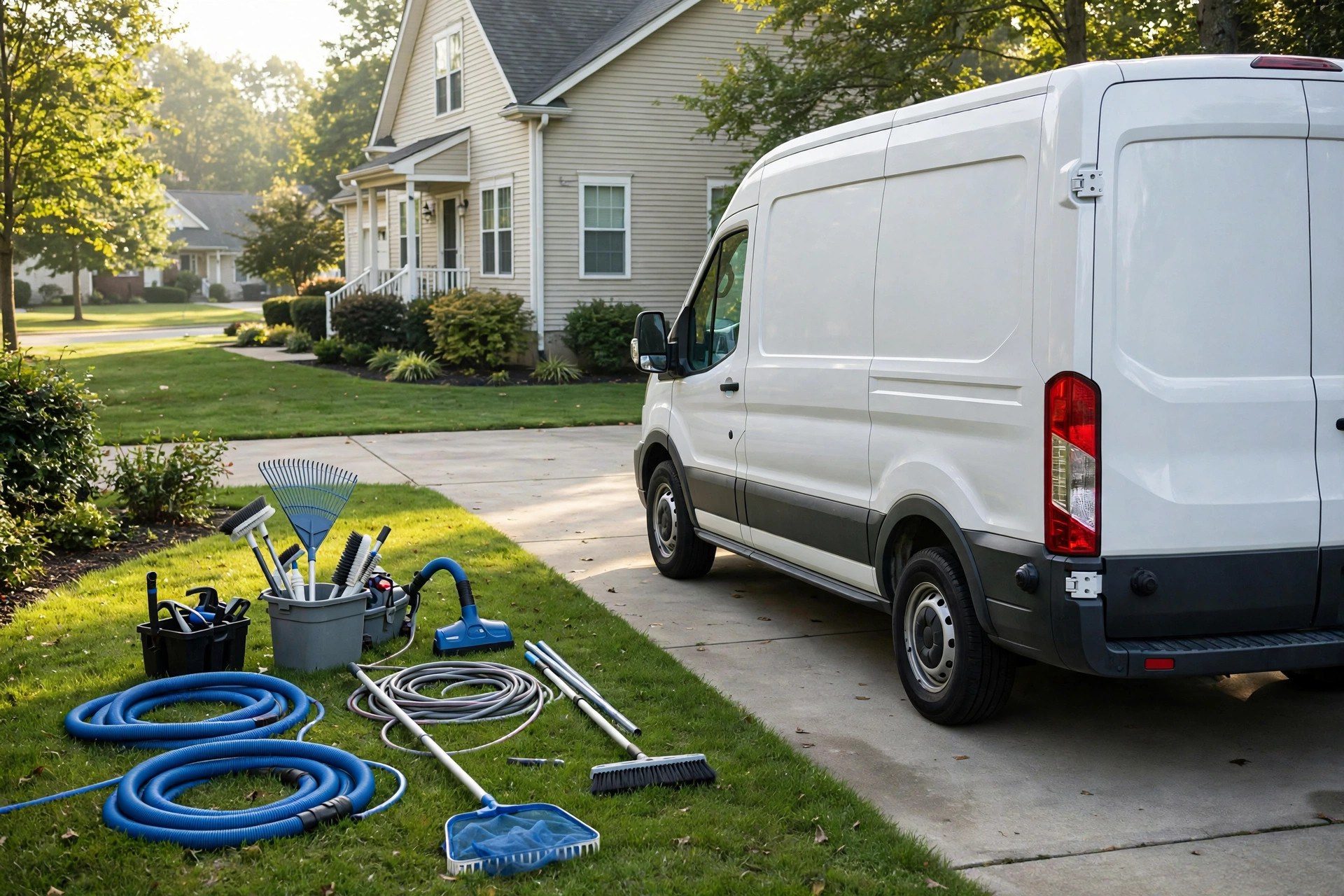
Every truck on the route is a review opportunity. The system turns routine visits into reputation.
Mistakes that stall review growth
The most common failure is asking once and stopping: a single email blast to the customer list, a burst of reviews, then silence for six months. Google and customers both notice recency, so bursts decay fast. The second failure is the friction path: a link to the homepage instead of the review page, or a request that requires creating an account. Audit the path on a phone every quarter.
The third is asking at the wrong time, like requesting a review in the same text as the invoice. The invoice triggers price thinking, which is the worst frame for a review ask. Send the bill and the review ask separately, with the review ask tied to the clean pool, not the charge. The fourth is ignoring the reviews you get. An unanswered review page tells readers the company does not listen. Reply to positives with a sentence of thanks and the tech’s name, which reinforces the behavior you want repeated.
The fifth is putting all the asking on the office and none on the techs. Office texts convert well, but a tech’s verbal ask multiplies the text’s conversion rate. The combination is what makes the system work. Either one alone produces half the reviews. Recurring-service businesses share this pattern: our guide to getting more Google reviews for cleaning companies shows how another weekly-visit trade times its asks.
Your rollout checklist
Start with the link and the script, then layer on automation and tracking.
- 1Get your direct Google review link. Pull it from your Business Profile and test the tap path on a phone. Four taps or fewer to submit.
- 2Write the tech script. Three sentences tied to the finished visit, ending with the offer to text the link.
- 3Write the post-visit text. Two sentences, business number, direct link, sent within one hour of the completed job.
- 4Automate the timing. Trigger the text from the completed job in your scheduling system so it fires on every route, every week.
- 5Add the 48-hour reminder. One nudge for customers who did not click, then stop. Two texts total per visit.
- 6Put QR codes on invoices. A scannable backup for customers standing at the gate with the tech.
- 7Train every tech once. Practice the script, explain when not to ask, and show them the leaderboard.
- 8Set the response rule. Every review gets a reply: positives within a week, negatives within 24 hours.
- 9Track reviews per tech monthly. Share the numbers, coach the low askers, recognize the leaders.
- 10Review the funnel quarterly. Ask rate, click rate, submit rate. Fix the weakest stage first.
Frequently asked questions
How do pool companies get more Google reviews?
Ask after every good visit. The tech makes a short verbal ask at the gate, an automated text with the direct review link lands within the hour, and a reminder goes out 48 hours later. Track reviews per tech and respond to every review you receive.
When is the best time to ask a pool customer for a review?
Within an hour after the tech leaves a clean, balanced pool, when the customer can see the result. Seasonal wins like pool openings and green-to-clear rescues are even stronger moments. Never ask before the visit or in the same message as the invoice.
Should pool techs ask for reviews in person?
Yes. A short script at the gate, tied to what was just done, multiplies the conversion rate of the follow-up text. Make it a team metric with a visible leaderboard rather than a vague instruction to ask more.
Can I offer a discount for a Google review?
No. Google prohibits incentivized reviews, and reviews that mention a reward look fake to readers. Ask warmly, make the process take ten seconds, and let genuine reviews accumulate steadily.
How many Google reviews does a pool company need?
Enough to lead your local competitors with a steady stream of fresh ones. In most markets, 100 to 200 total reviews with 8 to 15 new ones a month puts a pool company clearly ahead. Recency matters as much as count.
How should I respond to a negative pool service review?
Within 24 hours, calmly and specifically. Acknowledge the problem, apologize briefly, and move the conversation offline with a direct phone number. Never argue or reveal private details. Future readers judge you by the response.
What if a customer claims our tech damaged their pool?
Check service records and visit photos first, respond publicly with calm facts and an invitation to resolve offline, then settle it privately. If you make it right, politely ask whether they will update the review. Photo documentation from every visit prevents most disputes.
Do Google reviews help pool companies rank higher?
Yes. Review count, rating, and recency are core local ranking signals, and they directly influence which company a searcher calls from the map pack. A steady review stream is one of the highest-return local SEO activities for a pool business.
Should I reply to positive reviews too?
Yes, briefly. A sentence of thanks that names the tech reinforces good work and shows future readers that the company pays attention. It also gives you a natural place to mention the service the customer praised.
How do I track whether the review system is working?
Watch the funnel: ask rate, link click rate, submit rate, and response time. Break counts down by tech and route monthly. The number that matters most is steady monthly velocity, not one-time bursts.
Turn your route into a review machine
Digital Hayder builds review systems for pool companies: post-visit text automations with direct review links, tech scripts that actually get used, per-route tracking, and response playbooks for the tough reviews. Tell us about your routes and we will design the engine around them.
Contact Us