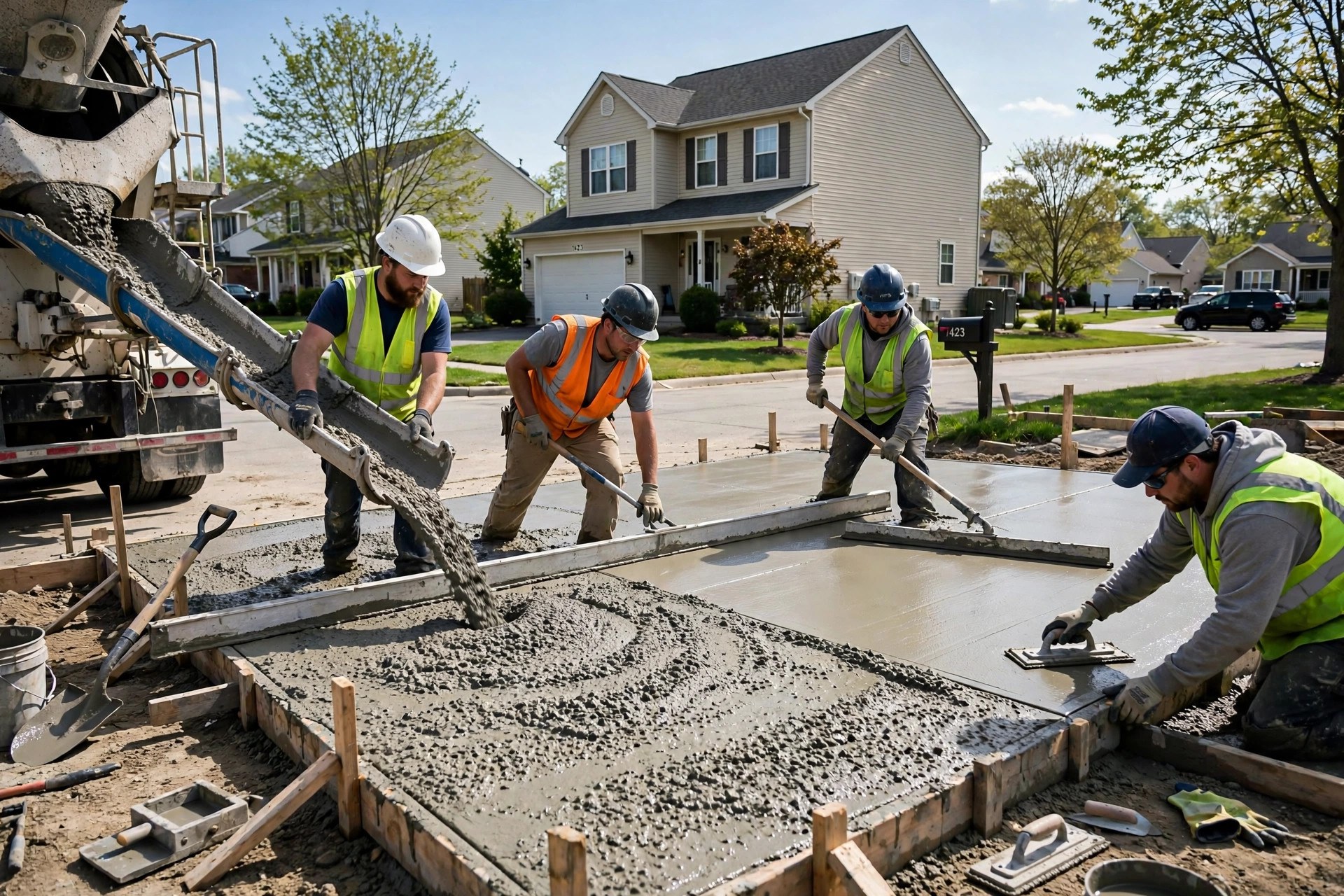
The driveway is cracked, the patio is sinking, and the homeowner has been meaning to fix it for two years. Then the neighbor pours a new stamped concrete patio, and suddenly the project moves to the top of the list. Concrete is a see-it-then-want-it trade: one finished job on the street creates the next three estimates, and the company whose photos show up first when the homeowner searches wins the job. The catch is that concrete work is seasonal, weather-dependent, and brutally competitive in spring, so the contractors with full calendars are the ones who market before the rush instead of during it. This guide covers the marketing that brings in driveway and patio jobs: before-and-after photo marketing organized by job type, local SEO for service-plus-city searches, review automation triggered on pour day, commercial partnership angles with builders and landscapers, and how to time everything for the spring concrete rush.
The quick answer
- Photos sell concrete: organize before-and-after shots by job type, driveways, patios, decorative, and repairs, because buyers shop the job type first.
- Win service-plus-city searches: pages and profiles built around “concrete driveway [city]” and “stamped patio [city]” capture buyers at decision time.
- Automate reviews on pour day: the homeowner watches the crew finish and loves the result. Text the review link that evening.
- Partner with builders and landscapers: builders need flatwork subs and landscapers see failing concrete daily. Both send steady work.
- Market before spring, not during it: start ads, content, and outreach in late winter so the calendar is full when pouring weather arrives.
- Split residential and commercial: homeowners buy on looks; builders and property managers buy on price per yard and schedule reliability.
Before-and-after photo marketing by job type
Concrete buyers are visual shoppers with a specific project in mind. A homeowner with a cracked driveway does not care about your beautiful stamped patio, and a couple planning an outdoor living space does not care about your commercial parking lot. Organize your photo marketing by job type and each buyer finds their proof in seconds.
Driveways
The driveway gallery is your volume play. Show the cracked, oil-stained, and sinking driveways you replaced, always with the before photo first. Include the measurement in the caption when you can: “1,200 sq ft driveway replacement, Maple Grove.” Homeowners use square footage to guess their own price, and the number makes the photo feel real. Shoot the wide straight-on angle that shows the full driveway plus a detail shot of the finish and control joints. Driveway jobs run $6,000 to $15,000 in most markets, so this gallery carries the revenue.
Patios and decorative work
This is the aspiration gallery and the highest-margin work. Stamped, stained, and exposed-aggregate patios photograph beautifully and sell at $12 to $25 per square foot installed, well above plain flatwork. Show pattern and color options clearly, because decorative buyers shop like they are choosing tile: they want to see ashlar slate versus flagstone, charcoal versus walnut stain. Include at least one dusk or evening shot with patio lighting if the homeowner has it. The emotional sell is the backyard they will live in, not the concrete itself.
Repairs and mudjacking
The repair gallery is the trust builder. Show settled slabs, cracked sections, and trip hazards next to the lifted and leveled result. Repairs are smaller tickets, $500 to $2,500, but they convert fast and they introduce you to the customer before the big replacement. Every repair customer is a future driveway or patio customer if you stay in touch.

Decorative patios are the highest-margin residential work. Photograph the pattern and color options buyers choose between.
Local SEO for service-plus-city searches
Concrete buyers search with the service and the city: “concrete driveway contractors [city],” “stamped concrete patio [city],” “concrete repair near me.” These searches have clear intent and they convert, so they deserve dedicated pages rather than one generic services page.
One page per service per city cluster
Build a page for each core service: concrete driveways, stamped concrete patios, concrete repair and leveling, and commercial concrete. Each page needs real local proof, photos from that service area, the cities served listed plainly, and a quote form above the fold. Stuffing twenty city names into the footer does not rank anymore. What ranks is a page that answers the buyer’s questions: how much does it cost, how long does it take, what is the process, and what does your work look like. Add FAQ sections to each page with the exact questions estimators hear: “How long before I can drive on a new driveway?” (usually 7 days for full strength, 24 to 48 hours for light use) and “Does stamped concrete need sealing?” (yes, every 2 to 3 years).
The Google Business Profile as the second website
For “near me” searches, your profile often outranks your website. Keep the category as “Concrete contractor,” upload pour-day and finished-job photos weekly, and post finished jobs with the service and neighborhood named. Reviews mentioning the specific service, “great new driveway,” “beautiful stamped patio,” build keyword relevance that lifts the profile for those exact searches. Our Google Business Profile guide for contractors walks through the full setup.
Review automation after pour day
Pour day is the emotional peak of a concrete job. The homeowner watches the crew screed, stamp, and finish, and by evening there is a brand-new surface where the cracked mess was. Ask that evening. The crew lead makes the ask during the final walkthrough, and the office texts the direct Google review link the same day: “Hi [Name], this is [Name] from [Company]. Your new driveway is poured and looking sharp. If you love how it turned out, a Google review would really help our crew: [link].” One follow-up text two days later, then stop.
Prompt the review content gently. Concrete buyers worry about cracking and settling, so ask happy customers to mention how the crew handled the details: “If you mention the finish and the cleanup, that helps future customers trust us.” Reviews that say “crew was on time, explained the curing process, yard left spotless” answer the exact fears of the next buyer reading them. For the texting playbook, see our text message marketing guide for contractors.
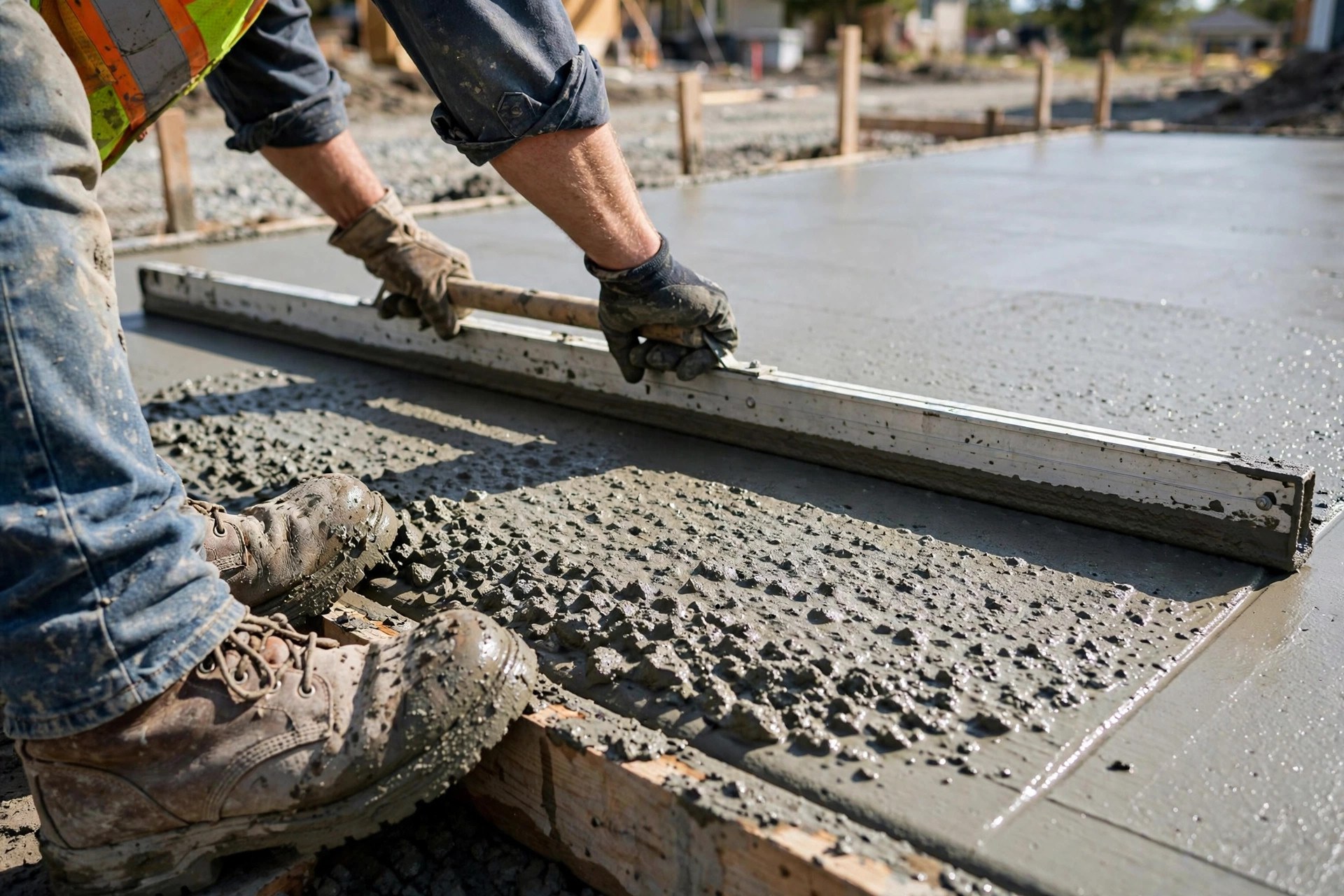
Pour day is the emotional peak. The crew lead asks during the walkthrough and the text goes out that evening.
Commercial partnership angles
Residential concrete is seasonal and competitive. Commercial and trade partnerships smooth the calendar and raise the average ticket.
Home builders
Production and custom builders need flatwork subcontractors they can trust: driveways, sidewalks, patios, and garage floors on schedule, at a predictable price per square foot. Introduce yourself to local builders with a one-page capability sheet: services, typical pricing per square foot, crew size, and three references. Builders care about two things above all: showing up when the schedule says and not holding up the next trade. One builder relationship can mean twenty to fifty jobs a year, and the work is steadier than residential because builders pour through more of the season.
Landscapers and hardscapers
Landscapers design outdoor spaces that need patios, walkways, and retaining-wall footings, and they would rather sub the concrete than pour it. Offer a clean sub arrangement: you handle the flatwork, they handle everything around it, and you refer each other both ways. The landscaper’s client becomes your patio customer, and your driveway customer becomes their landscaping lead. Put the referral terms in writing, even a simple one-page agreement, so nobody argues about fees later.
Property managers and municipalities
Apartment complexes, HOAs, and retail centers have endless concrete maintenance: trip hazards, cracked walks, and parking lot repairs. This work is smaller per job but recurring and bid-based, which means predictable revenue once you are on the vendor list. Get on the bid lists early in the year, respond to every bid on time, and treat the first small repair as an audition for the big replacement.
Seasonal timing for the spring concrete rush
Concrete pouring follows the weather, and in most of the country the season runs from early spring through late fall. The rush hits when the first warm weeks arrive: every homeowner who stared at their cracked driveway all winter calls at once, and the contractors who are visible win while the rest scramble.
| Season | What to do | Why it works |
|---|---|---|
| Late winter | Launch Google Ads, publish new gallery photos, refresh service pages | You are visible when the first warm-week searches spike |
| Early spring | Run the spring promotion, email past customers, activate builder outreach | Demand peaks; the calendar fills with the best-margin jobs |
| Summer | Pour at capacity, collect reviews on every job, photograph everything | Reviews and photos from summer fuel fall and next spring |
| Fall | Push repair and sealing work, bid commercial maintenance, plan winter content | Smaller tickets keep crews busy as residential slows |
| Winter | Update the website, build partnerships, train the crew on the review system | Systems built in winter execute without thinking in spring |
The late-winter head start
The single highest-impact move in concrete marketing is starting six to eight weeks before pouring weather. Launch your Google Ads in late winter so the campaigns are optimized before click prices spike. Email past customers with a “spring concrete checklist” that surfaces the driveway and patio projects they have been postponing. Call your builder and landscaper partners to confirm the season’s pipeline. Contractors who do this fill April and May in March. Contractors who wait until April are buying the most expensive clicks of the year and fighting for the leftover jobs.
Your rollout checklist
Build the system in winter, run it on autopilot in season.
- 1Reorganize photos by job type. Driveways, patios and decorative, repairs. Before shots first, measurements in captions.
- 2Build service-plus-city pages. One page per core service with local photos, real answers, and a quote form above the fold.
- 3Rebuild the Google Business Profile. “Concrete contractor” category, weekly pour-day photos, reviews that name the service.
- 4Automate pour-day review texts. Same-day text with the direct link from the paid-job trigger, one follow-up, replies to all.
- 5Pitch three builders. One-page capability sheet with per-square-foot pricing, crew size, and references.
- 6Sign two landscaper partners. Written sub and referral terms so the patio work flows both directions.
- 7Get on commercial bid lists. Property managers, HOAs, and municipalities. Treat the first small repair as an audition.
- 8Set the seasonal calendar. Ads and outreach in late winter, reviews and photos all summer, repairs and bids in fall.
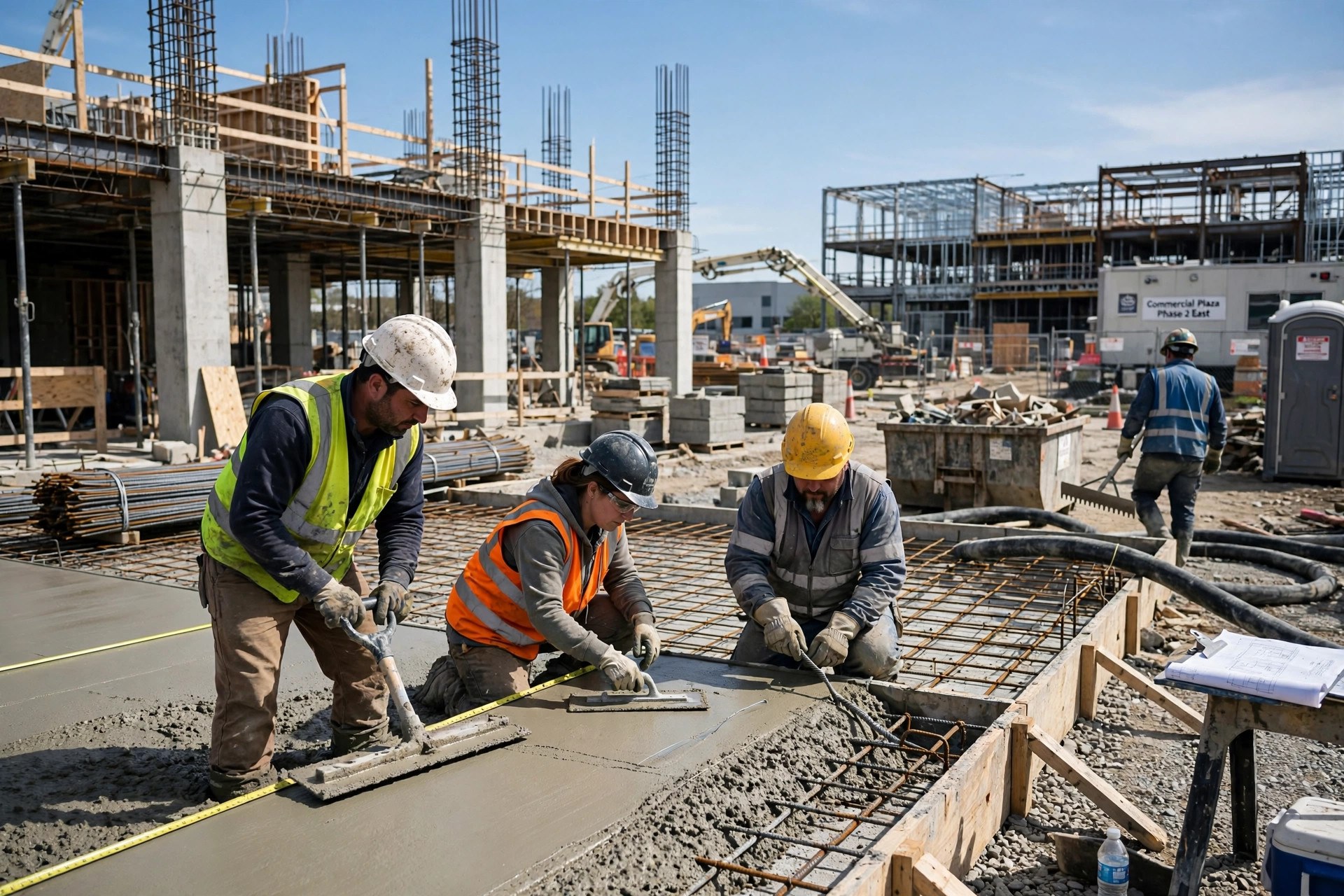
Builder partnerships turn seasonal residential work into steady year-round flatwork.
Frequently asked questions
What is the best marketing for a concrete contractor?
Before-and-after photos organized by job type, local SEO for service-plus-city searches like “concrete driveway [city],” and review automation on pour day. Start all of it six to eight weeks before spring so you are visible when demand spikes.
How much should a concrete contractor spend on marketing?
Plan on 5 to 10 percent of revenue. A typical mix is $2,000 to $4,000 a month on Google Ads in season, plus the time cost of photos, reviews, and partnership outreach, which are free and compound over time.
When should concrete contractors start marketing for spring?
Six to eight weeks before pouring weather arrives in your market. Launch ads, email past customers, and activate builder partners in late winter. Contractors who start early fill April and May before click prices spike.
How do I get more Google reviews for my concrete company?
Text the direct review link on pour day while the homeowner is admiring the finished work, with one follow-up two days later. Ask customers to mention the finish quality and cleanup, which are the trust signals concrete buyers look for.
Should concrete contractors take commercial work?
Yes, as a complement to residential. Commercial flatwork, repairs for property managers, and builder subcontracts smooth out the seasonal swings and raise the average ticket. Market it separately with a capability sheet, not pretty photos.
How do partnerships with builders work?
Introduce yourself with a one-page capability sheet showing services, typical per-square-foot pricing, crew size, and references. Builders care most about schedule reliability. One good builder relationship can mean dozens of jobs a year.
What photos should a concrete contractor post?
Organize by job type: driveways, patios and decorative, repairs. Always lead with the before photo, include measurements in captions, and shoot wide angles plus finish close-ups. Post finished jobs weekly naming the service and neighborhood.
Bring in driveway and patio jobs all season
Digital Hayder builds marketing systems for concrete contractors: service-plus-city pages, pour-day review automation, gallery sites that sell, and seasonal ad campaigns timed for the rush. Tell us about your company and we will design the system around your crews and your market.
Contact Us