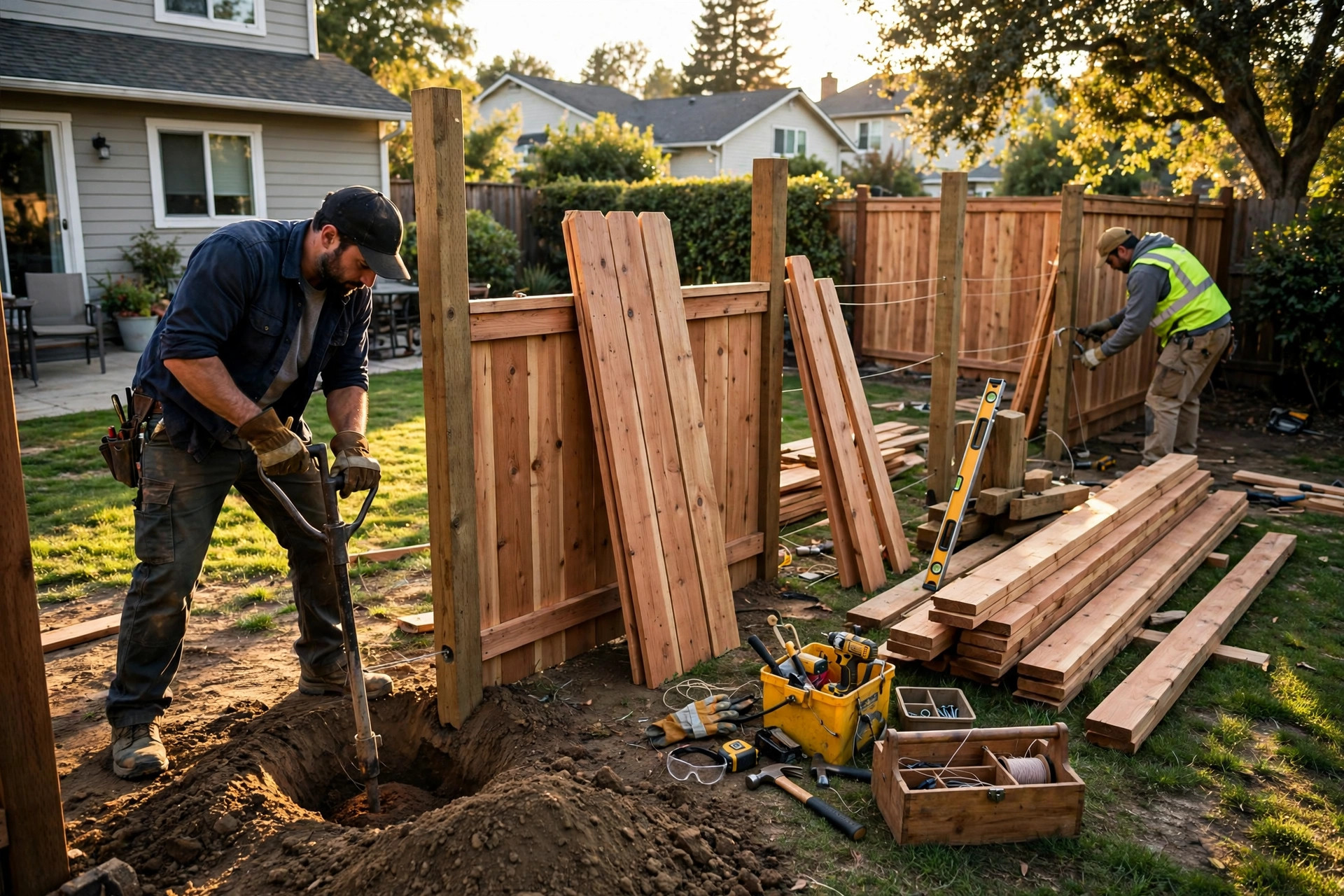
Tuesday, 10:15 AM. Your crew is three holes deep on a 180-foot cedar privacy fence, the auger is screaming, and nobody hears the office phone ring. The caller is a homeowner two streets over who just got a quote from your competitor and wants a second number before she decides. She gets voicemail. She hangs up, calls the next fence company on Google, and books with them by lunch. That single missed call was a $6,000 job, and fence companies lose versions of it every week. Homeowners call fence companies while crews are digging posts, hauling panels, and running saws. Nobody is sitting by the phone, and the quote request dies in voicemail, which almost nobody listens to anymore. A missed-call text-back fixes this with one automatic move: the moment a call goes unanswered, the caller gets a text within a minute. This guide covers how that text keeps the quote request alive, the exact questions it should ask (linear footage, photos, timeline), the follow-up sequence that turns texts into booked estimates, message templates for the most common fencing inquiries, and the math on how many recovered quotes pay for the system many times over.
The quick answer
- One automatic text saves the call: when a call goes unanswered, the caller gets a text within a minute, before they dial your competitor.
- Ask for footage and photos: linear footage plus a few yard photos lets you reply with a useful ballpark and book the on-site estimate.
- Most people prefer texting: callers who will not leave a voicemail will happily text back, which is why the reply rates beat callbacks.
- Every text enters a follow-up sequence: day 1, day 3, and day 7 touches keep the estimate request warm until it books or dies honestly.
- The math is lopsided: one recovered fence job, typically $4,000 to $9,000, pays for the system for years.
- It costs very little: text-back automation typically runs $50 to $300 a month, often bundled into your CRM.
Why fence companies miss the calls that matter most
Fencing is an outdoor, equipment-loud trade. Your crew is on job sites from morning to evening, the office is often a truck cab, and the person who answers the phone is usually the same person who sells the jobs. Industry surveys of home service businesses consistently find that a large share of inbound calls go unanswered during work hours, and the callers rarely try twice. They call the next company on the list. For fence companies the timing is especially cruel: quote requests spike in spring and after storms, exactly when crews are slammed and least able to pick up.
Voicemail does not catch what falls through. Fewer than one in five callers leaves a voicemail for a local contractor, and of those, most never get a timely callback because the message sits until the end of the day. By then the homeowner has three quotes and yours is not one of them. The missed-call text-back works because it meets the caller where they already are: on their phone, in a messaging app, ready to type. Response rates to that first text routinely run several times higher than voicemail callback rates, and the conversation it starts is exactly the one that leads to an estimate.
How the automatic text keeps the quote request alive
The mechanics are simple. Your phone system or CRM watches for unanswered inbound calls. Within about a minute of a missed call, it sends a text from your business number: a greeting, an apology for missing them, and one useful question. The caller replies by text, and from there the conversation is handled by your team or by automation, with every message logged against the contact record. Nothing falls into a personal cell phone. Nothing gets forgotten at 6 PM.
What the first text should say
Keep it short, human, and specific to fencing. “Hi, this is Mike with Apex Fence. Sorry we missed your call, the crew is on a job site. Are you looking for a new fence or a repair? If you can share roughly how many feet and a couple of photos of the yard, I can get you a ballpark today.” That one message does three things: it names a person, it explains the miss without excuses, and it asks for the two facts that move a fencing quote forward. Generic texts (“sorry we missed you, how can we help?”) get generic non-replies. Specific questions get answers.
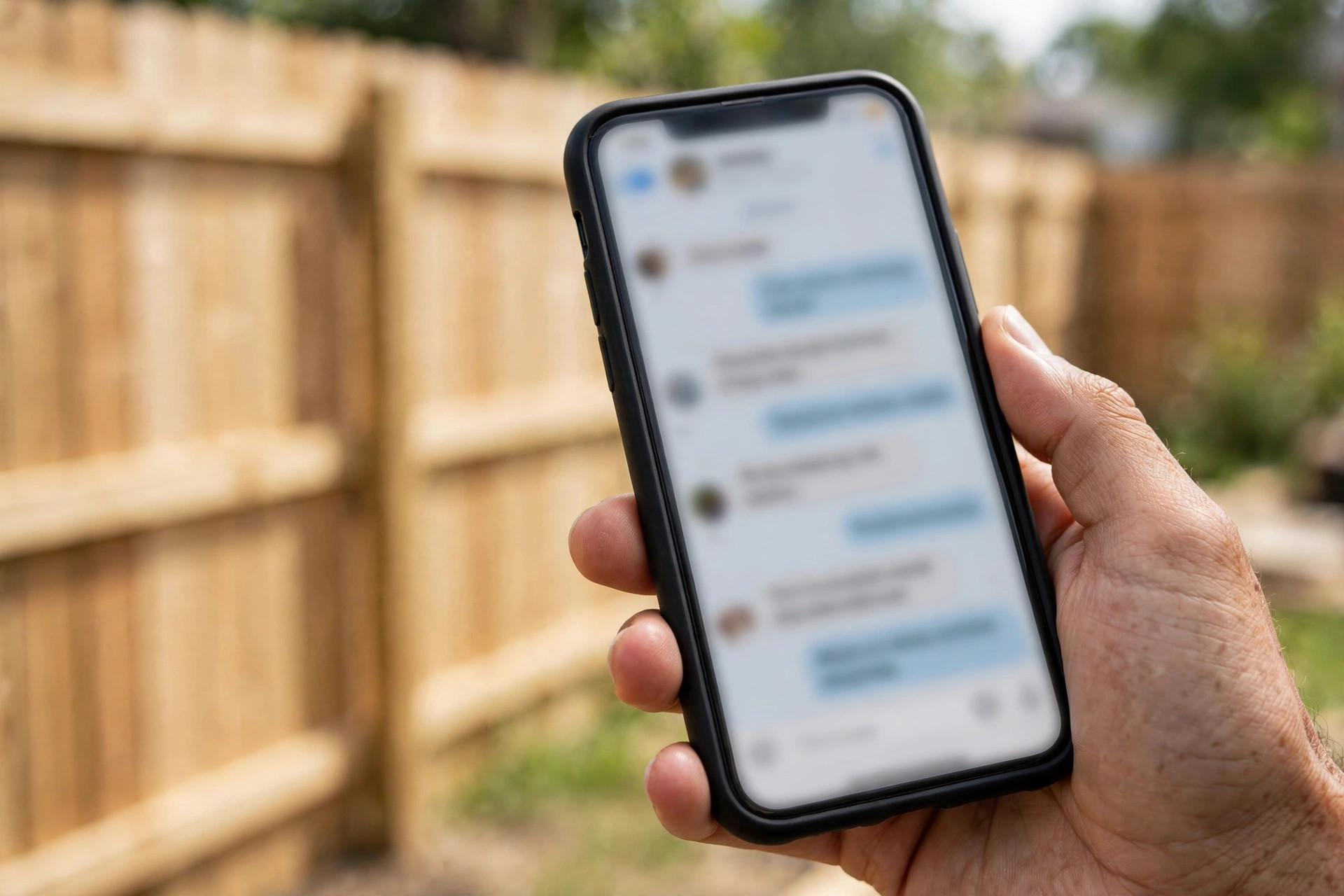
The caller is already on their phone. A text within a minute turns a missed call into a live conversation.
The two questions that qualify a fencing lead
Linear footage and photos. Everything else is secondary. With approximate footage and three or four yard photos (the fence line, both ends, any slope or obstacles), an experienced estimator can give a meaningful ballpark range and decide whether the job is worth an on-site visit. The text-back should ask for both explicitly: “About how many linear feet are you thinking, and could you text a few photos of the yard where the fence would go?” Homeowners almost always comply because it is easier than describing the yard in words. Train your team to acknowledge photos immediately (“got them, that looks like about 150 feet, let me price that”) because a fast, specific reply is what separates you from the competitor who also texted back but said “we will have someone call you.”
Message templates for common fencing inquiries
Most fence quote requests fall into a handful of patterns. Having a template for each means every text-back sounds professional even when the owner is the one replying between job sites. Customize the names, but keep the structure: acknowledge, ask the qualifying question, offer the next step.
| Inquiry | First text-back | Follow-up question |
|---|---|---|
| New privacy fence | Hi, this is [Name] with [Company]. Sorry we missed your call, we are on a job site. Are you looking to replace an old fence or put one where there is none? | About how many linear feet, and could you text a few photos of the yard? |
| Fence repair | Hi, this is [Name] with [Company]. Sorry we missed you. Is this storm damage, a leaning section, or a gate issue? | Can you send a photo of the damaged area? That tells us if it is a repair visit or a partial replacement. |
| Pool or pet fence | Hi, this is [Name] with [Company]. Sorry we missed your call. Is this for a pool enclosure, a dog run, or the full yard? | Pool code usually sets the height and style, so photos of the area help us quote it right the first time. |
| Price shopper | Hi, this is [Name] with [Company]. Sorry we missed you. Happy to give you a ballpark: what material are you considering, wood, vinyl, or aluminum, and roughly how many feet? | With footage and photos I can give you a range today and lock a firm number at a free on-site measure. |
| HOA or permit question | Hi, this is [Name] with [Company]. Sorry we missed your call. Are you checking on HOA-approved styles or permit requirements? | Tell me your subdivision and we will confirm what the HOA allows before we quote anything. |
| After-hours caller | Hi, this is [Name] with [Company]. Thanks for calling, our office is closed for the night. What kind of fence project are you planning? | Send footage and photos whenever is easy and we will have a ballpark to you first thing in the morning. |
The follow-up sequence that turns texts into estimates
The first text starts the conversation. The sequence closes it. Most homeowners do not reply instantly: they are at work, they need to measure, or they are waiting on a spouse. A short, polite sequence keeps your company first in mind without becoming a pest. Four touches over two weeks is the sweet spot for fencing.
Touch one goes out with the missed call, as above. If there is no reply, touch two goes out the next morning: “Morning, just floating this back up. If you send the yard photos I can get you numbers today.” Touch three lands around day four with something useful, not just a nudge: a quick note on current lead times (“we are booking installs about three weeks out right now”) creates honest urgency. Touch four around day ten is the clean break: “No pressure at all. If the timing changes, just reply here and we will pick it right up.” That last message gets replies months later because it leaves the door open gracefully. Every touch comes from the same business number, and every reply lands in one inbox your whole team can see. For the broader playbook on contractor texting, see our text message marketing for contractors guide.
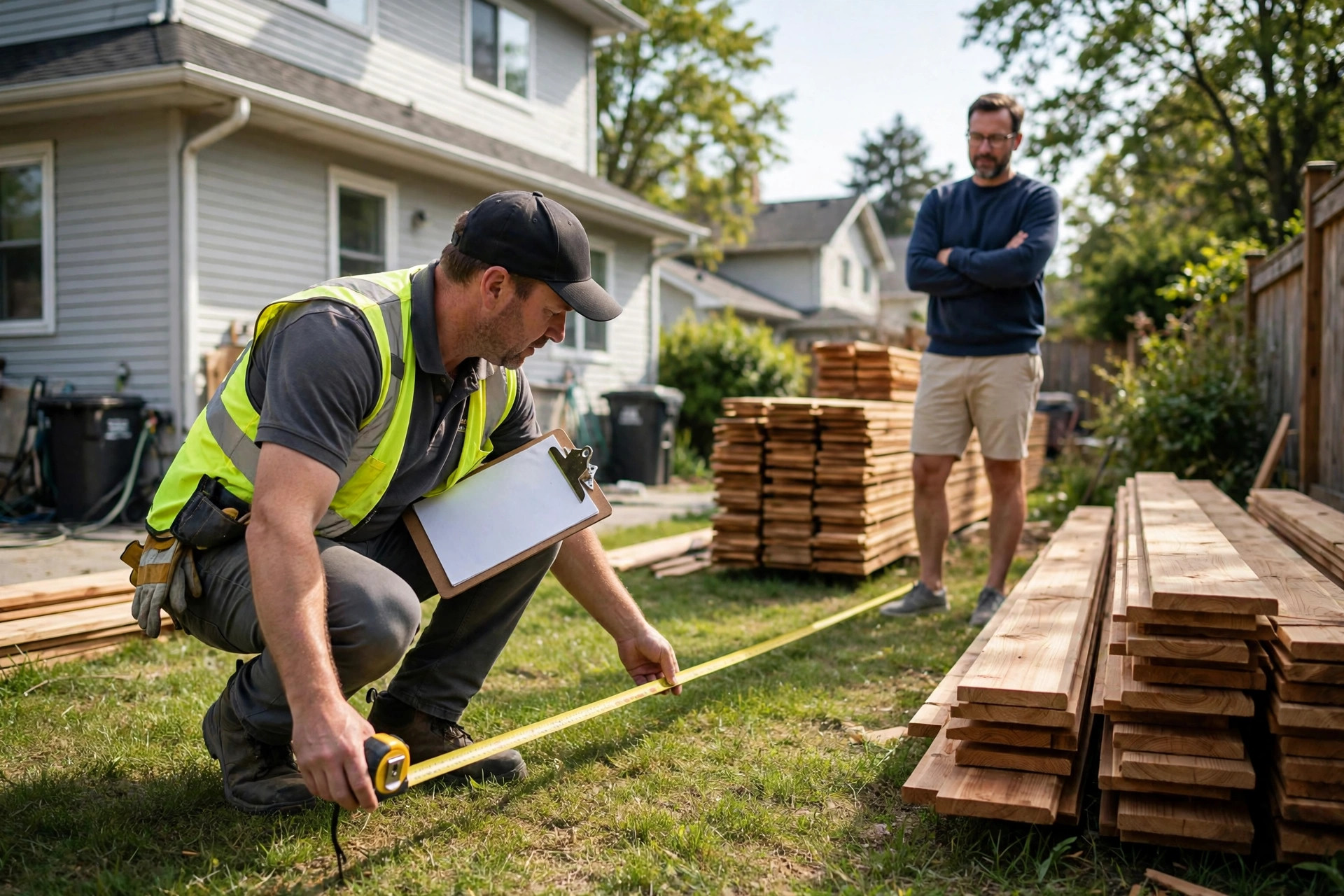
Footage plus photos turns a text conversation into a ballpark quote and a booked on-site estimate.
The math: how many recovered quotes pay for the system
Text-back automation is one of the cheapest tools a fence company can buy. Standalone missed-call text-back typically costs $50 to $150 a month, and it is often bundled into a CRM that runs $100 to $300 a month total. Against that, put the value of a recovered job. A residential privacy fence commonly runs $4,000 to $9,000 depending on material and footage, with healthy gross margins. Recovering a single job a quarter pays for the system many times over. Recovering a single job a month transforms the year.
Your rollout checklist
One afternoon of setup, then it runs itself.
- 1Connect the text-back to your business number. Missed calls trigger the text automatically within a minute. Test it by calling from your own cell after hours.
- 2Write your first text for fencing specifically. Name a person, explain the miss briefly, and ask whether it is a new fence or a repair.
- 3Build the footage and photo ask into the flow. The second message should request linear footage and yard photos every single time.
- 4Load the six inquiry templates. New fence, repair, pool or pet, price shopper, HOA question, and after-hours, each with its qualifying question.
- 5Set the four-touch follow-up sequence. Day 1 text-back, day 2 bump, day 4 lead-time note, day 10 graceful close.
- 6Route replies to one shared inbox. Owner, office manager, and estimator all see every conversation, so nothing waits on one person’s phone.
- 7Define the handoff to estimates. Decide exactly when a text conversation becomes a booked on-site measure and who owns that booking.
- 8Track recovered revenue monthly. Tag every job that started as a missed-call text so you can see the real return in dollars.
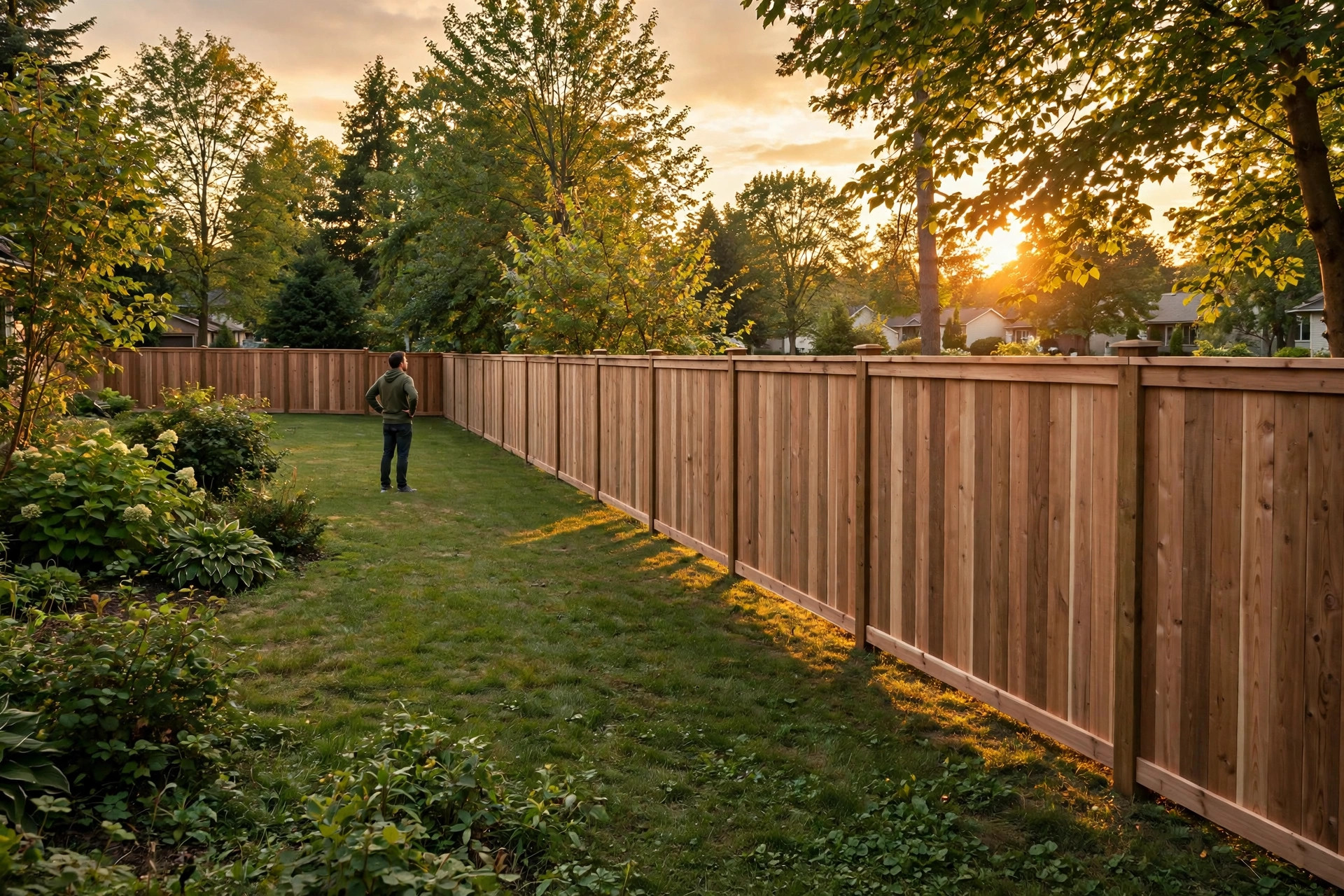
Every finished fence started as an inquiry. The text-back makes sure fewer of them slip away.
Frequently asked questions
What is missed-call text-back for a fencing company?
It is an automatic text sent to anyone whose call goes unanswered, usually within a minute. It apologizes for the miss, asks what they need, and starts a text conversation that your team can turn into a booked estimate, instead of losing the caller to voicemail.
How much does missed-call text-back cost?
Standalone tools typically run $50 to $150 a month, and the feature is often bundled into a contractor CRM at $100 to $300 a month total. Against fence jobs worth $4,000 to $9,000, a single recovered quote usually pays for years of the service.
Will customers find the automatic text annoying?
Rarely. The text arrives within a minute of their call, reads like it came from a real person, and offers immediate help. Most callers prefer texting over voicemail, and reply rates are consistently far higher than voicemail callback rates.
What should the first text say?
Name a person, briefly explain the miss, and ask one qualifying question: new fence or repair, plus a request for linear footage and yard photos. Specific questions get replies. Generic “how can we help” messages do not.
Can I give ballpark quotes by text?
Yes, with footage and photos. Give a range, never a firm number, and position the on-site measure as the step that locks the real price. Texting a thoughtful range beats making the homeowner wait days for any number at all.
Does it work after hours and on weekends?
That is when it works best. Evening and weekend callers are actively shopping, and the text-back captures them while competitors are closed. Set the after-hours template to promise a ballpark first thing in the morning.
How do I measure whether it is working?
Tag every job that originated as a missed-call text in your CRM. Track texts sent, reply rate, estimates booked, and jobs closed from those conversations each month. The recovered revenue number is the only metric that matters.
Stop losing fence jobs to voicemail
Digital Hayder builds missed-call text-back systems for fencing companies: automatic texts in under a minute, fencing-specific templates, footage and photo qualification, and follow-up sequences that turn missed calls into booked estimates. Tell us about your company and we will set up the system around your crew, your service area, and your close rate.
Contact Us