
It is 9:40 on a Saturday morning and the front desk sits empty until Monday. Overnight, six Instagram DMs asked about lip filler pricing, three Google messages asked whether laser hair removal suits darker skin tones, and two missed calls came from numbers that never left a voicemail. The owner reads all of it on Sunday night and plans to reply first thing Monday. By Monday morning, two of those people have already booked consultations with the med spa across town, the one that answered in four minutes. That is the exact problem an AI appointment setter solves for med spas. Your business runs on consultations. Botox, fillers, laser treatments, facials, and body sculpting almost always start with questions about price, pain, downtime, and results, and those questions arrive after hours, between appointments, or while the front desk is checking someone out. This guide covers how an AI setter responds to treatment inquiries in minutes, triages the classic price and prep questions, books consultations and follow-up treatments straight into your calendar, and runs reactivation campaigns for clients who quietly stopped coming. It also breaks down real pricing models and gives you a provider evaluation checklist so you can choose with confidence.
The quick answer
- Speed wins consultations: the setter replies to treatment inquiries in under a minute, day or night, before the prospect messages a competitor.
- It handles FAQ triage: trained answers for Botox, filler, and laser questions about price, pain, downtime, and candidacy, with escalation to staff whenever judgment is needed.
- It books real appointments: connected to your booking software, it offers open slots, confirms consultations, and schedules follow-up treatments.
- It reactivates lapsed clients: automated campaigns win back clients who have not visited in 90, 180, or 365 days.
- Pricing is flat or per booking: flat monthly plans run roughly $300 to $800, while per-booked-appointment models run roughly $15 to $50 per kept consultation.
- Judge the integration, not the demo: booking software sync, consent-form handling, and clear escalation rules matter more than a slick chat widget.
Why med spas lose bookings to slow response
Walk into any busy med spa at 2 PM and watch the front desk. The receptionist is checking in a client, the phone is ringing, a walk-in is asking about gift cards, and three unread Instagram DMs are sitting on a tablet nobody has touched since lunch. This is not a staffing failure. It is the normal texture of a med spa day, and it is exactly why inquiries slip through. Treatment inquiries are high intent and highly perishable. Someone asking “how much is lip filler” is comparing two or three med spas at that moment, and sales research has long shown that the business which responds first wins the overwhelming majority of those comparisons. One widely cited study found that 78 percent of buyers choose the vendor that responds first, and contact rates fall off a cliff after the first five minutes.
Med spas feel this harder than most local businesses because the buying journey is question heavy. A prospect rarely books Botox sight unseen. She asks about units and pricing, whether it hurts, how long it lasts, and whether she will look frozen, and each question is a moment where a slow reply sends her to the next tab. After-hours inquiries are the biggest leak: a large share of med spa messages arrive in the evening, exactly when no human is staffing the desk.
What an AI appointment setter actually does
Think of the setter as your best front desk hire, one who never sleeps and knows every treatment menu by heart. It lives on your website chat, Instagram DMs, Facebook messages, Google Business messages, and text, and it does four jobs in sequence: respond, triage, book, and follow up.
Instant inquiry response, around the clock
The setter replies within a minute to every incoming message, at any hour. The first message is warm and specific: it greets the prospect, acknowledges the treatment they asked about, and moves toward booking. Because it is connected to your real availability, it never says “we will call you back.” It offers real slots: “we have Thursday at 3:20 or Friday at 11:00, which works better?” Prospects who get a concrete next step book. Prospects who get a callback promise keep shopping. For more on automated chat, see our AI chatbot for med spas guide.
Price and prep FAQ triage
Most med spa inquiries are variations of the same twenty questions. The setter is trained on your treatment menu, your pricing, and your prep and aftercare instructions, so it answers the repetitive questions instantly and flags the ones that need a human. The table below shows how the triage typically breaks down.
| Inquiry type | Typical question | How the setter handles it | When it escalates |
|---|---|---|---|
| Botox pricing | How much is Botox and how many units will I need? | Quotes your per-unit price, explains typical unit ranges by area, offers a consultation to confirm | Prospect wants an exact quote without being seen |
| Filler consultation | How much is lip filler and will it look natural? | Quotes syringe pricing, describes your natural-results approach, books a consultation | Prospect has had filler complications elsewhere |
| Laser candidacy | Does laser hair removal work on my skin tone? | Explains which laser you use and who it suits, books a patch test or consult | Medical history questions or active skin conditions |
| Downtime and prep | Can I go back to work after a chemical peel? | Gives your standard downtime and prep guidance per treatment | Anything resembling medical advice beyond your approved scripts |
| Follow-up treatments | When should I come back for my next session? | Checks the treatment plan interval and books the next visit on the spot | Client reports a reaction or poor result |
| Gift and package questions | Do you have packages for laser sessions? | Presents your package pricing and payment options, books the first session | Requests for custom package pricing |
Escalation rules are the safety layer. Anything medical, emotional, or uncertain routes to a staff member immediately with full conversation history. Your team gets the short list of conversations that genuinely needed them, instead of forty routine price questions.

The consultation is the product the setter sells. Every inquiry should end with a booked time, not a promise to call back.
Booking consultations and follow-up treatments
Answering questions is only half the job. The setter is wired into your booking software, so it turns answers into calendar events: real open slots, a hold while the prospect decides, confirmation by text. Before the visit it collects intake details and sends consent forms, so clients arrive with paperwork done. After the visit it books the follow-up: the two-week Botox check, the next laser session, the quarterly filler maintenance. Med spas live on rebooking, and the setter never forgets to ask. If your scheduling needs an overhaul first, see our online booking system for med spas guide.
Reactivation: the revenue sitting in your client list
Every med spa has a quiet goldmine: past clients who meant to come back and drifted. Winning back an old client costs far less than acquiring a new one, and med spa treatments are repeat by nature: Botox wears off in three to four months, laser needs a series, skin needs seasonal care. The setter runs reactivation campaigns against your client list automatically, segmented by time away.
The 90-day segment gets a gentle check-in tied to their last treatment, with a booking link. The 180-day segment gets a reason to return, like a seasonal treatment suggestion. The 365-day segment gets a real win-back offer, because after a full year you are competing with new habits. Every message references their actual last visit, and every reply lands back in the setter for instant booking. Pair these with email, as covered in our email marketing for med spas guide.
Pricing models: flat monthly vs. per-booked-appointment
Providers generally sell AI setters in two ways, and the right choice depends on your inquiry volume. Flat monthly plans charge one predictable fee no matter how many conversations the setter handles. Per-booked-appointment plans charge only when the setter produces a kept consultation, which ties cost directly to results. Both can work. The table below lays out the real bands.
| Model | Typical price band | Best for | Watch out for |
|---|---|---|---|
| Flat monthly | $300 to $800 per month | High inquiry volume, multiple locations, heavy after-hours traffic | Caps on conversations or locations that trigger overage fees |
| Per booked appointment | $15 to $50 per kept consultation | Lower volume spas that want cost tied to results | Definitions of “booked” that count no-shows or reschedules |
| Hybrid | $200 to $400 base plus $10 to $25 per booking | Spas ramping up marketing and wanting a cost floor with upside | Complexity in reconciling the monthly invoice |
Setup fees range from zero to about $1,500. Ask about per-message charges on top of the headline price and what happens when you add a second location or Instagram. A plan that looks cheap at $297 a month can quietly double once overages kick in. If your average first-visit value is $400 or more, one extra booking a month pays for the setter, and most spas see far more.
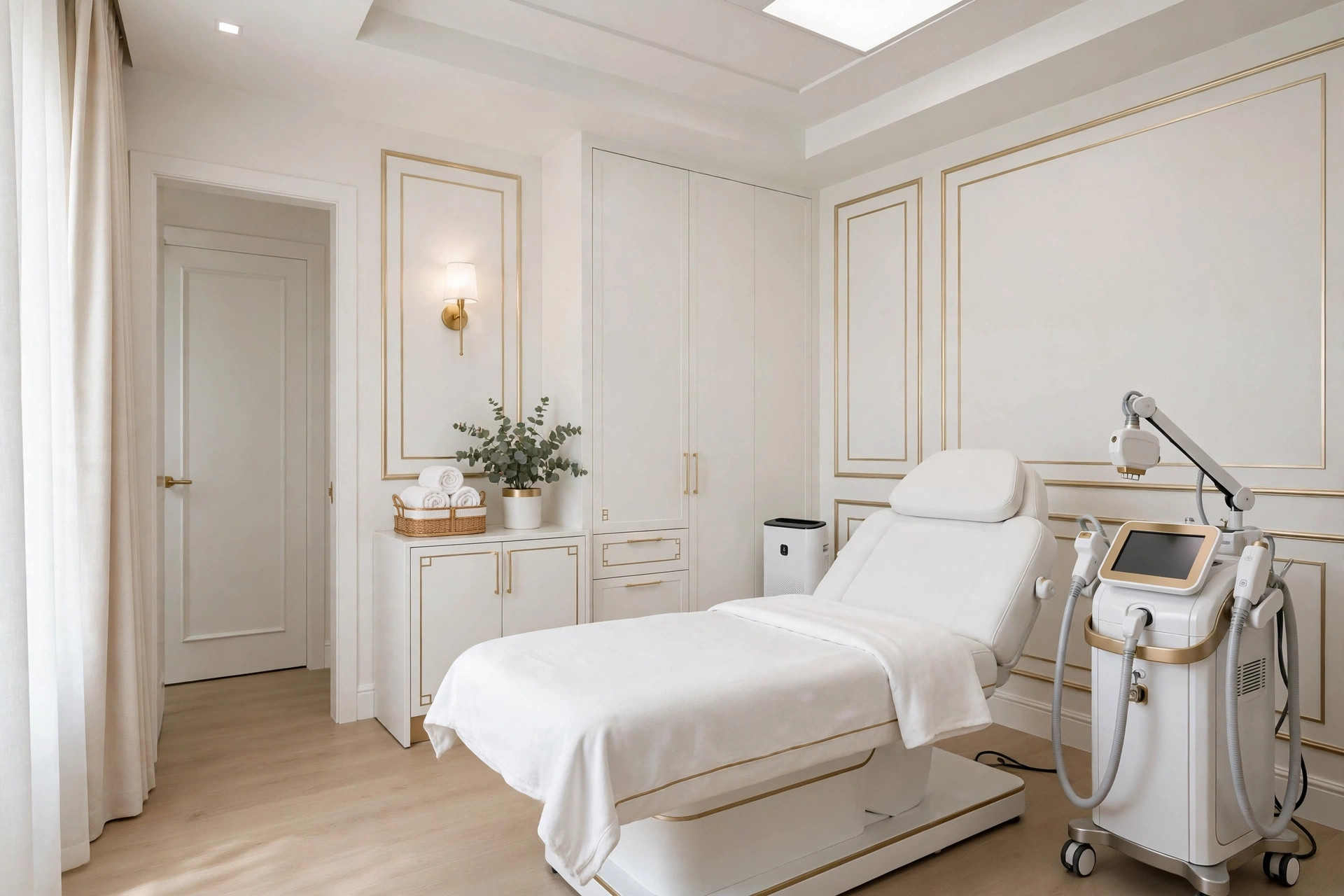
Empty treatment rooms are the most expensive thing in a med spa. The setter exists to keep the calendar full.
Provider evaluation checklist
Demos all look good. Judge providers on the integration details that decide whether the system works in your spa day to day.
| Criterion | What good looks like | Red flag |
|---|---|---|
| Booking software integration | Two-way sync with your system (Zenoti, Mangomint, Vagaro, Boulevard, Mindbody): real slots, no double booking, cancellations update both sides | Books into its own calendar and asks your staff to copy appointments over |
| Consent-form handling | Sends intake and consent forms before the visit, confirms they are signed, stores them where your staff can find them | No form capability, leaving your team to chase paperwork at check-in |
| Escalation rules | Clear triggers: medical questions, complications, pricing exceptions, and low-confidence answers route to staff instantly with full context | Vague promises that “the AI handles everything” |
| Channel coverage | Website chat, Instagram DMs, Facebook, Google messages, and text in one conversation thread | Website chat only, while most of your inquiries come from Instagram |
| Data and privacy | Written data-handling policy, proper safeguards for client information, easy data export if you leave | No clear answer on where conversation data lives or who can see it |
| Reporting | Weekly numbers: conversations, bookings, show rate, reactivation revenue attributed to the setter | Vanity metrics like “messages answered” with no booking data |
| Trial and exit | 30-day pilot on your real inquiries, month-to-month after that, your data stays yours | Long contract required before you have seen it book a single client |
Your rollout checklist
Get the foundations right in week one and the setter improves from there.
- 1Connect every inquiry channel. Website chat, Instagram DMs, Facebook messages, Google Business messages, and your text number all route into the setter, not just the website.
- 2Sync your booking software two ways. Real open slots in, confirmed bookings out. Test for double booking across every provider calendar before launch.
- 3Load your treatment menu and pricing. Every service, price, package, and promotion the setter is allowed to quote, with clear rules on what it may never discount.
- 4Write the FAQ and escalation scripts. Approved answers for Botox, filler, and laser questions, plus the exact triggers that hand a conversation to staff.
- 5Set up consent and intake forms. Forms go out automatically after booking and must be signed before the visit, with reminders for anyone who stalls.
- 6Build the reactivation segments. 90, 180, and 365-day lapsed lists with a message and offer for each, personalized with the client’s last treatment.
- 7Train your team on handoffs. Staff learn what the setter handles, how escalations arrive, and who owns the conversation after handoff, so nothing falls between the two.
- 8Review the numbers weekly for 60 days. Conversations, consultation bookings, show rate, and reactivation revenue. Tune the scripts wherever the drop-off appears.

Happy clients come back on schedule when someone remembers to invite them. The setter never forgets.
Frequently asked questions
What is an AI appointment setter for a med spa?
It is an automated system that responds to treatment inquiries across your chat, social DMs, and text in under a minute, answers common questions about services and pricing, and books consultations directly into your calendar. It also follows up on unbooked inquiries and runs reactivation campaigns for lapsed clients.
Will it replace my front desk staff?
No. It handles the repetitive, time-sensitive work: instant replies, FAQ answers, booking, reminders, and follow-up. Your staff keep the conversations that need judgment, warmth, and in-person care, and they get those conversations pre-qualified with full context instead of cold.
How does it handle medical or safety questions?
It answers only from your approved scripts, such as standard prep and downtime guidance, and escalates anything medical to your staff immediately. Complications, contraindications, and anything it is not certain about route to a human with the full conversation attached.
Which booking software does it work with?
Good providers integrate with the major med spa platforms, including Zenoti, Mangomint, Vagaro, Boulevard, and Mindbody, with two-way sync so availability is always real. Confirm your exact platform and test for double booking before you sign.
How much does an AI appointment setter cost?
Flat monthly plans typically run $300 to $800, per-booked-appointment plans run $15 to $50 per kept consultation, and hybrids combine a lower base with a per-booking fee. Setup ranges from zero to about $1,500. Ask about overage charges before comparing headline prices.
How fast will I see results?
Speed-to-lead improvement shows up in the first week: inquiries that used to wait hours get answered in a minute. Booking lift is usually visible within 30 days, and reactivation revenue builds over 60 to 90 days as campaigns work through your lapsed list.
What happens when the AI cannot answer a question?
It hands the conversation to your team right away, with a note on what was asked and everything said so far. Set a response-time target for escalations, ideally under 15 minutes during business hours, so the handoff never becomes a new waiting room.
Fill your treatment rooms without hiring more front desk staff
Digital Hayder builds AI appointment setters for med spas: instant inquiry response, treatment FAQ triage, direct calendar booking, and lapsed-client reactivation tuned to your services and pricing. Tell us about your med spa and we will design the setter around your treatments, your booking software, and your voice.
Contact Us