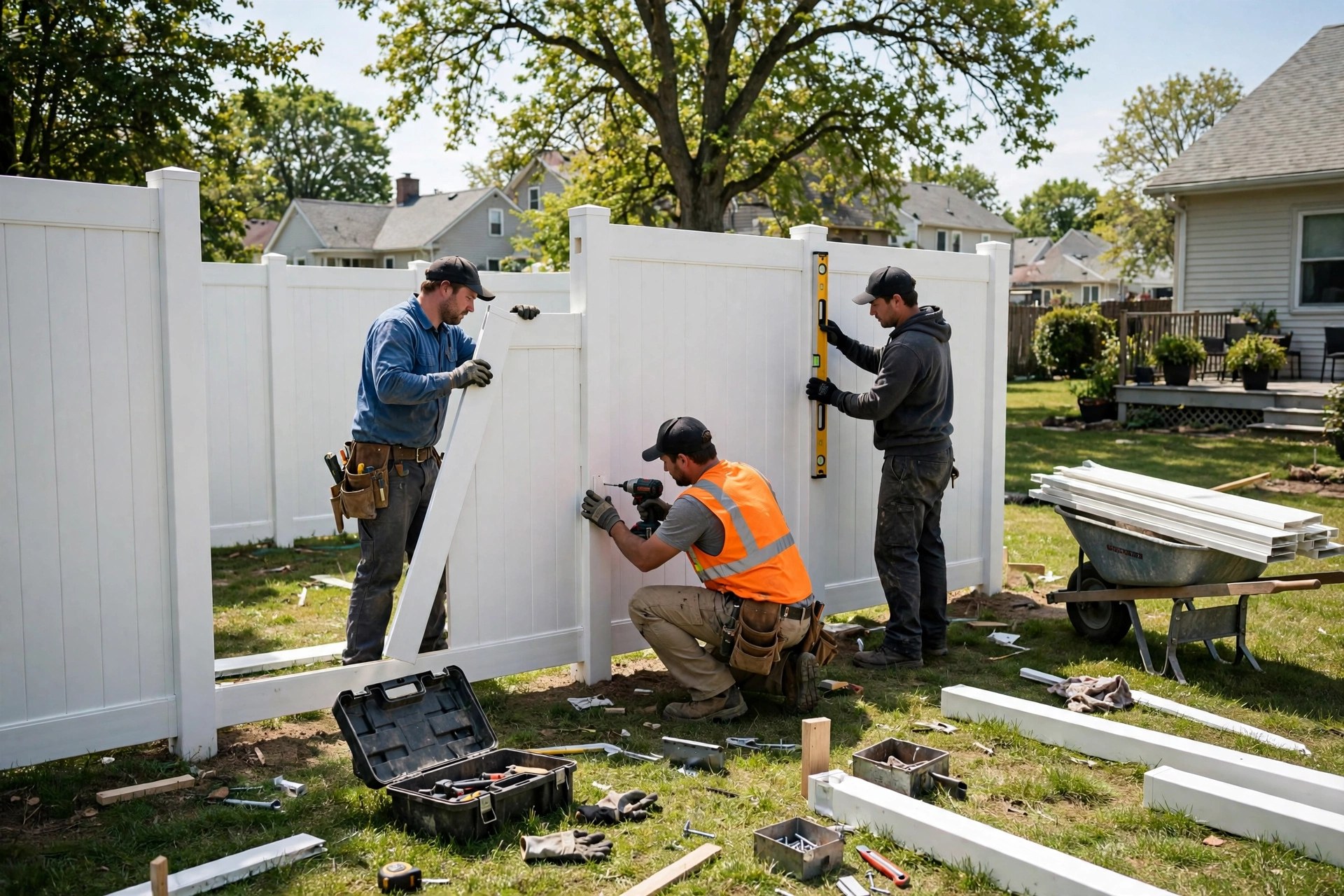
The fence crew is three hours into a 200-foot install when the office phone rings. Nobody is there to answer, because the office is a desk in the owner’s garage and the owner is holding the level. The caller, a homeowner ready to book a $8,000 vinyl fence, hears voicemail and calls the next company on Google. Fence crews miss calls because they are on installs: the people who do the work and the people who answer the phone are the same people. This guide covers the AI receptionist for fencing companies: a voice agent that answers every call, takes the quote request, captures job details, books the estimate, follows up on quotes that never got booked, handles the spring rush and after-hours repair calls, and what per-minute versus flat pricing really costs.
The quick answer
- Answers every call: the AI receptionist picks up on the first ring while the crew is on installs, nights, and weekends.
- Takes the full quote request: material, footage, gates, timeline, and address captured in a natural conversation.
- Books the estimate: real open slots offered on the call, confirmed by text the moment they hang up.
- Follows up on unbooked quotes: automatic calls and texts recover the estimates that stall after the visit.
- Built for the spring rush: handles ten simultaneous calls when fencing season peaks, with no hiring.
- Pricing compared: per-minute $0.60 to $1.50 vs. flat $200 to $600 a month, with the math on which fits your call volume.
Why fence companies miss their best calls
The fencing business concentrates its phone problem into a few brutal realities. The crew works outdoors with loud equipment, so phones stay in the truck. The owner is usually on the tools, not at a desk. And the calls that matter most, the quote requests, arrive in bursts: spring mornings when homeowners walk the yard, evenings after dinner, and Monday mornings when the weekend’s research turns into action. Studies of caller behavior have found that the large majority of callers who reach voicemail hang up and call a competitor rather than leaving a message. For a fence company, each of those lost callers represents a job worth $3,000 to $10,000.
An AI receptionist is a voice agent that answers the business line like a trained intake person. It greets the caller, understands the request, captures the details, books the estimate, and sends the summary to the owner by text. It answers the first call and the tenth simultaneous call the same way, at 7 AM on a Saturday or 9 PM on a Tuesday.
What the AI receptionist does on a quote call
A fencing quote call follows a predictable shape, and the AI receptionist is trained to run it the way a good office manager would. It starts warm and direct: confirms the business name, asks how it can help, and identifies a quote request within seconds. Then it works through the qualification: wood, vinyl, chain link, or ornamental; what the fence is for; approximate linear footage or lot details; number of gates; timeline. It captures the name, callback number, and address, and it asks whether the caller can text photos of the yard, which most can.
The agent handles interruptions, repeats back details to confirm, and asks one question at a time instead of reading a script. What callers remember is that someone answered on the first ring and their estimate got booked.
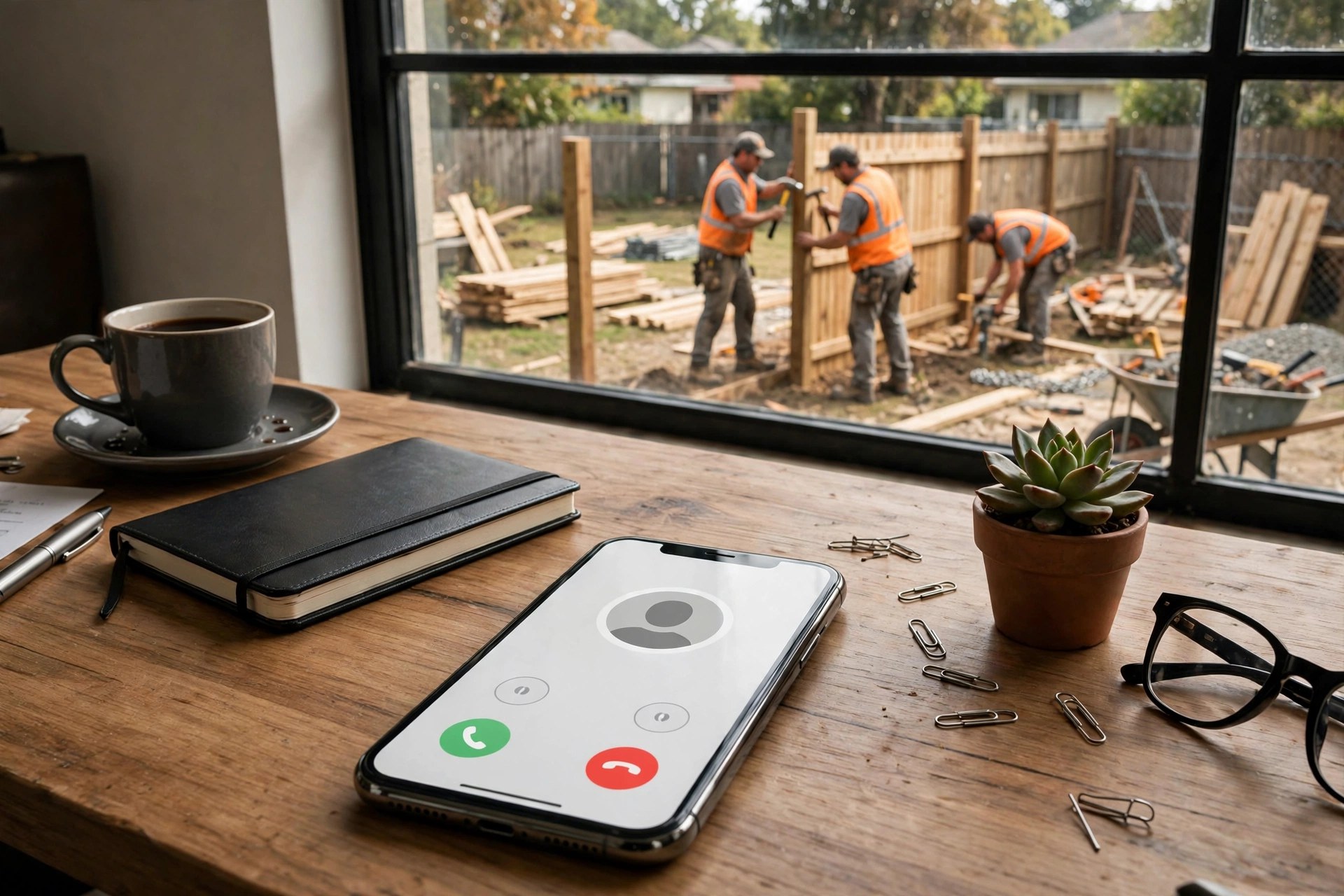
Every call answered on the first ring, even when the whole crew is on an install across town.
Capturing job details and photos by voice and text
Voice has one limitation: the caller cannot show the yard. The AI receptionist solves it with a text follow-up. At the end of the call it sends a text: “Thanks for calling. Reply with a few photos of your yard and the property line so our estimator can prepare.” The photos land in the same job record as the call summary, so the estimator sees the conversation notes and the yard photos together before the visit.
The job record is what makes the system valuable beyond answering. Each call produces a structured summary: caller name and number, address, fence type and purpose, footage estimate, gates, timeline, and photos received. The owner reviews the day’s calls in minutes instead of playing back voicemails, and nothing discussed on the call is lost to a forgotten sticky note.
Booking the estimate on the call
The booking moment is where the AI receptionist earns its keep. Once the details are captured, it offers the next available estimate slots from the real calendar: “We have a free estimate Thursday between 10 and 12, or Friday afternoon. Which works for you?” The caller picks, the appointment is booked with the full job summary attached, and a confirmation text goes out before they hang up. A reminder text goes out the evening before and the morning of the visit, with the estimator’s name and a one-tap reschedule link.
For fencing, the calendar connection needs one more feature: realistic drive-time spacing. Estimate visits are spread across the service area, and back-to-back bookings on opposite ends of town burn the estimator’s day. The scheduling rules should enforce buffers between visits, and the AI receptionist should only offer slots that respect them.
Following up on quotes that never got booked
Here is the quiet leak in most fence companies: the estimate visit happens, the quote goes out, and then silence. The homeowner meant to decide, got busy, and the quote sits in the inbox for three weeks until a competitor’s follow-up call closes it. Most fence companies do zero follow-up because nobody owns the task.
The AI receptionist owns it. Three days after the quote, it calls or texts: a friendly check-in referencing the actual job. Ten days later, another touch answering the common hesitations and offering to adjust the scope. At three weeks, a final call noting that material prices and the install schedule change with the season. Every touch references the real quote, the real fence type, and the real price, because the system has the job record. This is not robocalling. It is the follow-up a great office manager would do, done consistently for every quote.
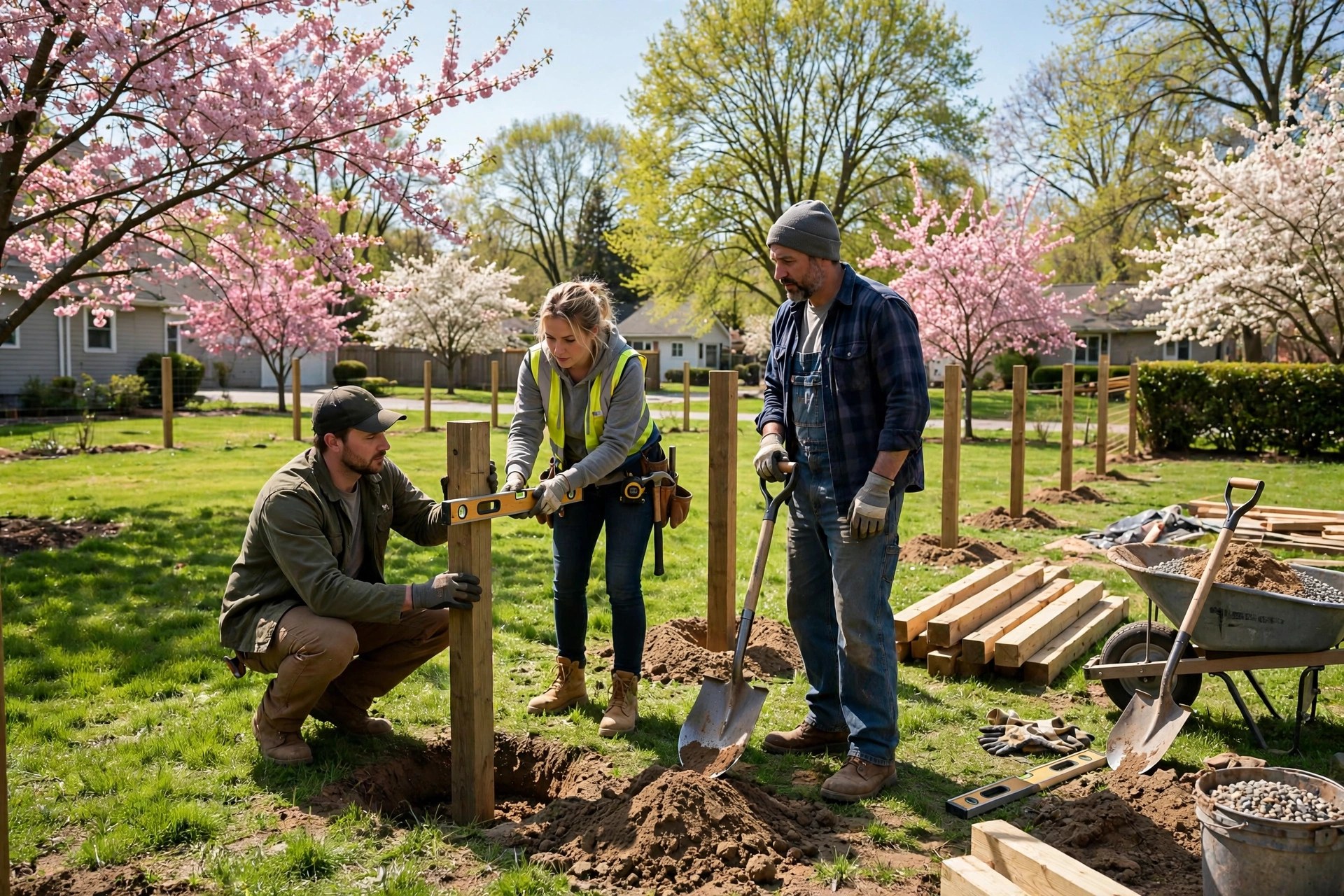
Spring brings the year’s best jobs all at once. The receptionist answers all of them, even ten at a time.
Surviving the spring fencing rush
Spring is the fencing industry’s defining season. Winter damage, new homeowners, pool season deadlines, and months of deferred decisions all land in the same eight to twelve weeks. Call volume can triple. A human receptionist can answer one call at a time; the rest go to voicemail. Hiring a seasonal receptionist means recruiting, training, and payroll for a spike that ends in June.
The AI receptionist scales to the spike by design. Ten simultaneous calls are answered like one. Every caller gets the full qualification, the photo request text, and the estimate booking. When the install book fills, the agent is honest about lead times: “Our next install opening is four weeks out. Want to lock in your estimate this week?” An honest wait keeps the customer. A voicemail loses them. If you are weighing voice against chat coverage, our guide to how to choose an AI receptionist walks through the decision.
After-hours emergency repair calls
Storms do not check business hours. A downed fence section after a midnight storm is urgent: the dog can get out, the pool is exposed, the property is open. The AI receptionist treats repair calls differently from new-install calls. It captures the address, asks for photos of the damage by text, and determines urgency: is the property secure or exposed? For exposed properties it offers the soonest emergency slot or an on-call callback with a promised time. For non-urgent damage it books the next repair visit.
The key detail is the callback promise. If the on-call tech cannot take the call immediately, the agent tells the caller exactly when to expect contact and texts the full details to the owner instantly. Emergency repair work is high-trust and high-margin, and the company that answers at midnight owns it.
Per-minute vs. flat pricing
AI receptionist pricing comes in two main shapes, and fencing companies should understand both before signing.
| Pricing model | Typical cost | How it works | Best for |
|---|---|---|---|
| Per-minute | $0.60 to $1.50 per minute | You pay for actual talk time; a 4-minute quote call costs $2.40 to $6.00 | Lower call volumes, seasonal businesses that want costs tied to usage |
| Flat monthly | $200 to $600 per month | Unlimited or high-volume minutes included; predictable bill | Steady call volume, spring rush months, companies that hate surprise bills |
| Hybrid | $150 to $300 base plus per-minute overage | Base covers a minute bundle; extra minutes billed at a set rate | Growing companies with spiky but rising volume |
For most fence companies, the decision comes down to the spring math. A shop taking 150 calls a month at an average of 4 minutes each uses 600 minutes. At $1.00 per minute, that is $600, more than most flat plans. At 60 calls a month, per-minute costs $240, less than a typical flat plan. Run your own call volume through both models, and ask providers what happens to per-minute rates during high-volume months. Also confirm what is included: after-hours coverage, the texting for photo collection, CRM integration, and the quote follow-up calls are sometimes add-ons.
Your rollout checklist
Three to four weeks from kickoff to live, with the spring season as the deadline that matters.
- 1Port or forward the business line. Decide whether the AI answers every call or only overflows and after-hours; most fence companies start with full coverage.
- 2Script the quote call. The qualification order: fence type, purpose, footage, gates, timeline, then name, number, address, and the photo request text.
- 3Load real price bands. Wood, vinyl, chain link, and ornamental per-foot ranges so ballpark answers match your real quotes.
- 4Connect the calendar with drive buffers. Estimate slots respect travel time between visits; bookings carry the full job summary.
- 5Build the repair-call branch. Damage photos by text, urgency triage, emergency slots or promised on-call callbacks.
- 6Turn on quote follow-up. Automatic calls and texts at 3, 10, and 21 days referencing the actual quoted job.
- 7Set the escalation rules. Define exactly when the agent transfers to a human: complaints, commercial jobs, permit disputes, anything heated.
- 8Review call recordings weekly. Listen to real calls for the first month, tighten the script, and update pricing as the season moves.

Storm damage does not wait for morning. The receptionist triages repair calls and promises the callback time.
Frequently asked questions
How much does an AI receptionist cost a fencing company?
Flat plans run $200 to $600 a month; per-minute plans run $0.60 to $1.50 per minute of talk time. Setup is typically $1,000 to $3,000. Run your monthly call volume through both models: high-volume shops usually save with flat pricing.
Will callers know it is an AI?
Some will, most will not notice or care. The agent converses naturally, handles interruptions, and confirms details like a trained intake person. What callers remember is that someone answered on the first ring and their estimate got booked.
Can it really book estimate visits?
Yes. It offers real open slots from your calendar, books the visit with the full job summary attached, sends a confirmation text, and follows up with reminders. The calendar rules should include drive-time buffers between visits.
What about after-hours emergency repairs?
The agent runs a separate repair branch: it captures the address, requests damage photos by text, triages urgency, and books the soonest repair slot or an on-call callback with a promised contact time.
How does the quote follow-up work?
After an estimate goes out, the system places automatic follow-up calls and texts at 3, 10, and 21 days, each referencing the actual quoted job. It recovers a meaningful share of quotes that would otherwise die quietly.
Does it handle the spring rush?
That is its strongest case. It answers unlimited simultaneous calls, so the seasonal spike in quote requests gets full qualification and booking instead of voicemail. No hiring, no training, no payroll for a twelve-week spike.
Can it transfer urgent calls to me?
Yes. You define the escalation rules: complaints, commercial projects, permit issues, or any heated caller transfer to your phone immediately, with the call context and summary handed over so you are not starting cold.
Never miss a call from the job site again
Digital Hayder builds AI receptionists for fencing companies: full quote-call handling, photo collection by text, estimate booking, quote follow-up, and after-hours repair triage. Tell us about your fencing company and we will design the voice agent around your services and pricing.
Contact Us