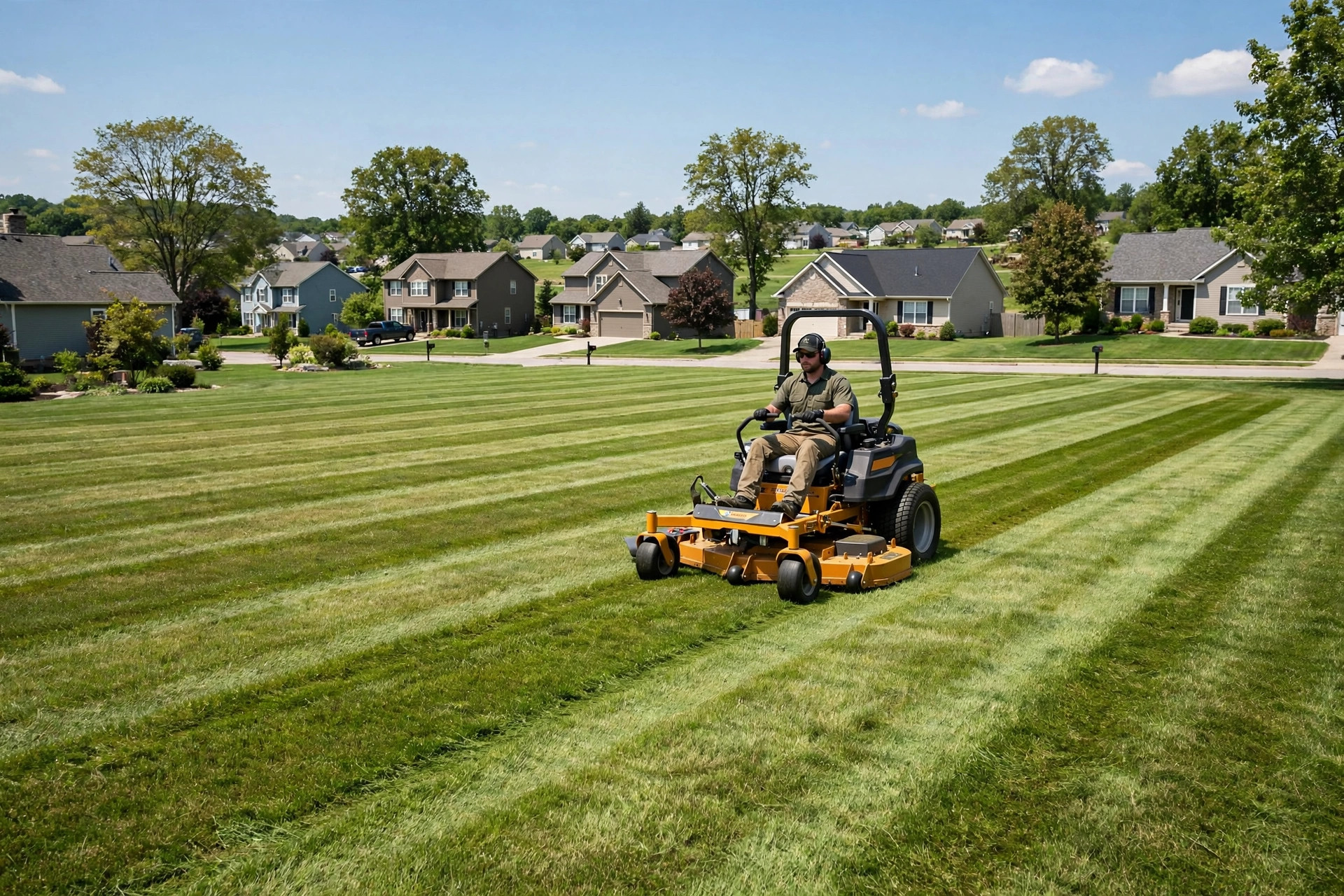
It is 10:40 on a Saturday morning and you are on the zero turn, ear protection on, halfway through the third lawn of the day. Your phone is in the truck, buzzing. You do not hear it over the mower, and you are not stopping mid stripe to check anyway. The caller was a homeowner two streets over. Their backyard is a mess after a season of neglect, they want a cleanup and a weekly mowing quote, and they are calling three landscapers this morning. You were number one on their list. They got your voicemail, left nothing, and called number two. By the time you see the missed call at lunch, the other company has already texted them back, gotten photos of the yard, and booked an estimate for Monday. This is the mower owner’s problem in one scene. When you are on the equipment, you cannot answer the phone. Every missed call is a quote request that calls the next landscaper on the list, and quote requests are the entire business. Missed call text back fixes it without asking you to wear a headset on the mower. The moment the call goes unanswered, the homeowner gets a text: you are on a job, you want their business, and here is what to send so you can price it. The quote request survives the missed call, and it is sitting in your phone, with photos, when you climb off the mower.
The quick answer
- The core job: text every missed caller back within a minute, while they are still shopping for a landscaper, and turn the call into a quote request with photos.
- What it asks for: the property address, the service they need, and photos of the yard, all collected by text before you ever call back.
- Templates included: instant reply, photo request, mowing quote flow, and cleanup or install flow, all in your voice.
- The follow up sequence: automatic quote follow ups on day 1, 3, 7, and 14, because most lost quotes are just forgotten quotes.
- The payoff math: one recovered weekly mowing client is worth thousands a year; the system pays for itself many times over.
- What it costs: about $100 to $250 per month for most landscaping operations.
Every missed call is a quote request that calls the next guy
Landscaping has the most brutal missed call economics of any trade. The owner is the estimator, the crew lead, and often the mower operator, which means the person who should answer the phone is the person least able to answer it. The phone rings while you are on the equipment, on a ladder, or under a trailer hitch. Meanwhile the caller is a homeowner with a simple behavior pattern: they Google “landscaper near me,” they call the top three results, and they hire the one who responds first and sounds organized. Consumer research backs this up across service industries. The business that responds first wins the job a clear majority of the time, and “responds” increasingly means a text, not a callback three hours later.
The ticket sizes make every miss expensive. A weekly mowing client at $200 to $300 a month is worth $2,400 to $3,600 a year, and most stay for years. A spring cleanup runs $500 to $1,500. A landscape install is $5,000 to $20,000. These are not small tickets, and the homeowner is not going to wait around. If your voicemail says “we will get back to you,” the competitor who texts back in thirty seconds already has their photos. Our missed-call text-back guide for roofers covers the same dynamic in another outdoor trade.
The 60 second reply that wins the quote
The system watches your business line and texts the caller back automatically within a minute of the missed call. The message has to do two jobs at once: sound like a real owner who is on a job, and move the quote forward without you. Something like: “Hey, this is Mike with Greenline Landscaping. I am out on the mowers right now but I want to get you a quote. What do you need done, and can you send me a couple photos of the yard? Just reply here.” The homeowner is still standing in their yard thinking about the project, and instead of a dead voicemail they are already halfway to a quote.
The photo request is the secret weapon. A homeowner who sends three photos of their yard has invested in your quote. They are not calling the next landscaper while they wait for your reply, because your reply already arrived and already asked for something useful. Photos also let you pre qualify: you can see whether it is a quarter acre lot or a two acre jungle, whether it is weekly mowing or a full install, and you can price with confidence before you drive out. Every thread lands in your CRM or job system with the photos attached, so the estimate visit starts with you already informed.
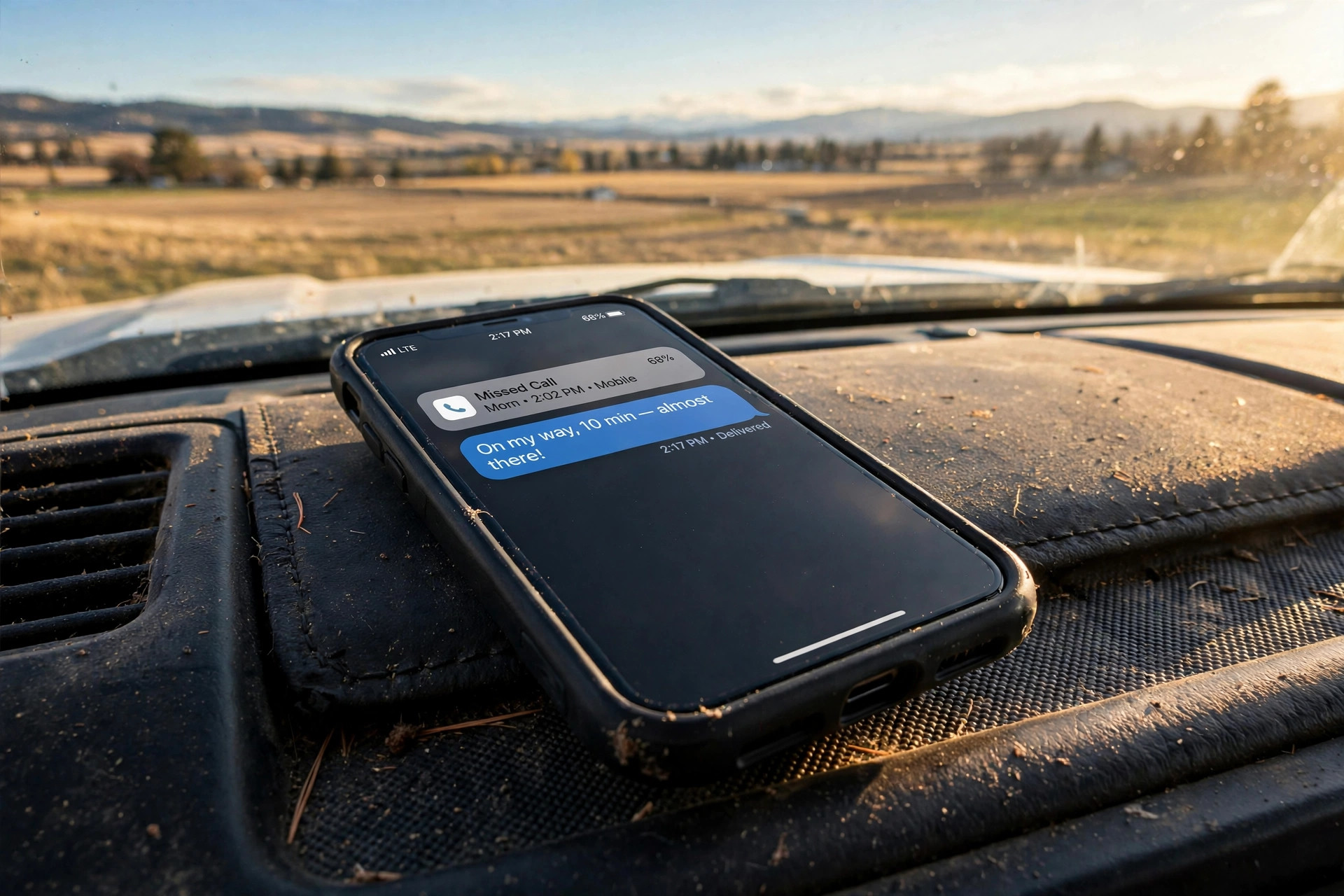
The call was missed on the mower. The quote request was not, because the text went out before the homeowner dialed the next company.
Templates you can copy and use
Keep every message short, in your voice, and pointed at the next step. These four cover nearly every landscaping inquiry.
The instant reply
“Hey, this is [Name] with [Company]. I am out on jobs right now but I saw your call. What do you need done? Send me a couple photos of the area and I will get you a price today or tomorrow.” This does the essential work: it proves a human saw the call, it sets a pricing timeline, and it asks for the photos that move the quote forward.
The mowing quote flow
“Got it, weekly mowing. Two quick things: what is the property address, and about how big is the lot? Photos help too. I will get you a per visit price by this evening.” Address lets you check the route. Lot size lets you price. The same evening deadline keeps you honest and the homeowner engaged.
The cleanup and install flow
“Sounds like a bigger project. Can you send me 3 or 4 photos, wide shots and close ups of the problem areas? Once I see them I will tell you whether I need to come look in person or if I can price it from the photos.” This filters the drive across town estimates from the ones you can price remotely, which saves hours a week.
The after hours reply
“Hey, this is [Name] with [Company]. Thanks for calling, we are done for the day. Send me what you need and some photos, and I will get back to you first thing in the morning.” Evening calls are common in landscaping because homeowners walk their yards after work. This message captures them instead of losing them overnight.
The quote follow up sequence: where the real money hides
Most landscapers lose more quotes to silence than to price. You send the estimate, the homeowner says “thanks, we will think about it,” and then nothing happens because you are back on the mower and the follow up never gets sent. The automatic sequence fixes this without you remembering anything. Day one after the quote: “Hey [Name], just checking you got the estimate. Any questions on it?” Day three: a short value reminder, like a photo of a similar job you did nearby. Day seven: “We have a crew opening next week if you want to get on the schedule.” Day fourteen: the final check in with a gentle close.
This sequence recovers a meaningful share of quotes that would otherwise die quietly. Industry sales data consistently shows that a large portion of deals close after the first follow up, yet most small operators never follow up at all. The texts read like they come from you, because the templates are written in your voice, and any reply lands in your phone for a human response. Pair this with a strong local presence, and our Google Business Profile guide for contractors helps the calls find you in the first place.
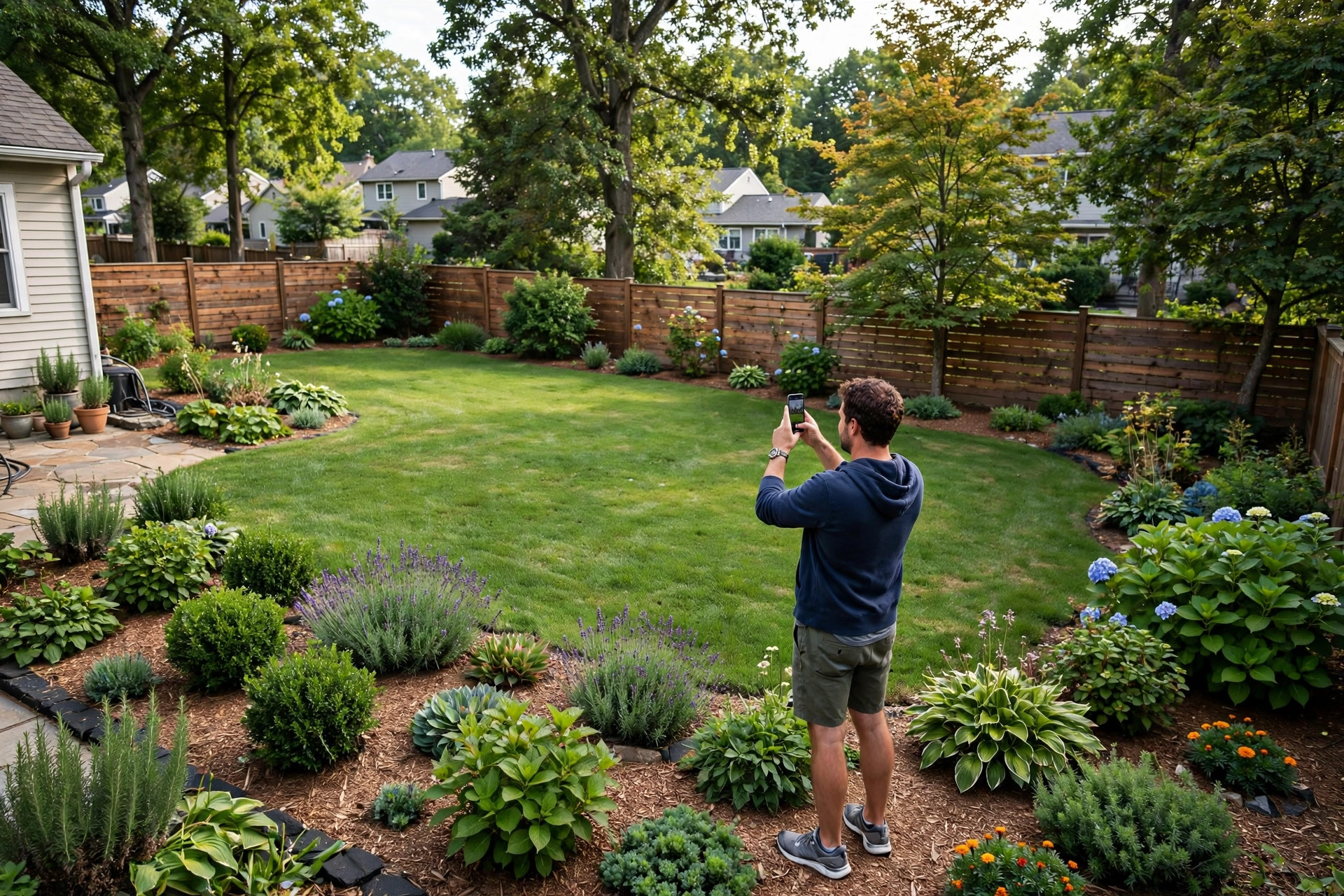
A homeowner who sends yard photos is already invested in your quote. The text just has to ask.
How many recovered quotes it takes to pay for the system
The math for landscapers is the friendliest of any trade, because the ticket values are high and the monthly cost is low. Most operations land in the ranges below.
| Cost component | Typical range | Notes |
|---|---|---|
| Monthly platform, basic | About $100 to $175 per month | Instant text back, templates, photo collection |
| Monthly platform, with follow up automation | About $175 to $250 per month | Quote follow up sequences, CRM logging, review requests |
| One time setup | About $300 to $700 once | Templates in your voice, service area and pricing rules loaded |
| Recovered job type | Typical value | What it covers |
|---|---|---|
| One weekly mowing client | $2,400 to $3,600 per year | About 12 to 24 months of the system |
| One spring or fall cleanup | $500 to $1,500 | About 3 to 9 months of the system |
| One landscape install | $5,000 to $20,000 | Several years of the system |
Your rollout checklist
Keep it simple. This system works best when it sounds like the owner, so write it like you talk and connect it to the phone you already carry.
- 1Write the instant reply in your voice. Short, human, on a job, asks for the service and photos. This is the message that wins quotes.
- 2Build the photo request into every flow. Make sending photos the default next step for mowing, cleanup, and install inquiries.
- 3Set your pricing rules. Per visit mowing ranges by lot size, cleanup minimums, and what always requires an in person look.
- 4Define your service area. The system should politely decline out of area callers instead of wasting your drive time.
- 5Build the quote follow up sequence. Day 1 check in, day 3 value reminder, day 7 schedule nudge, day 14 final close.
- 6Connect the threads to your job system. Every conversation and photo should land where you plan the week’s work.
- 7Add the after hours reply. Evening yard walkers are real buyers; capture them for the morning instead of losing them overnight.
- 8Track recovered quotes monthly. Ask every new client how they reached you, and count the ones that started as a missed call.
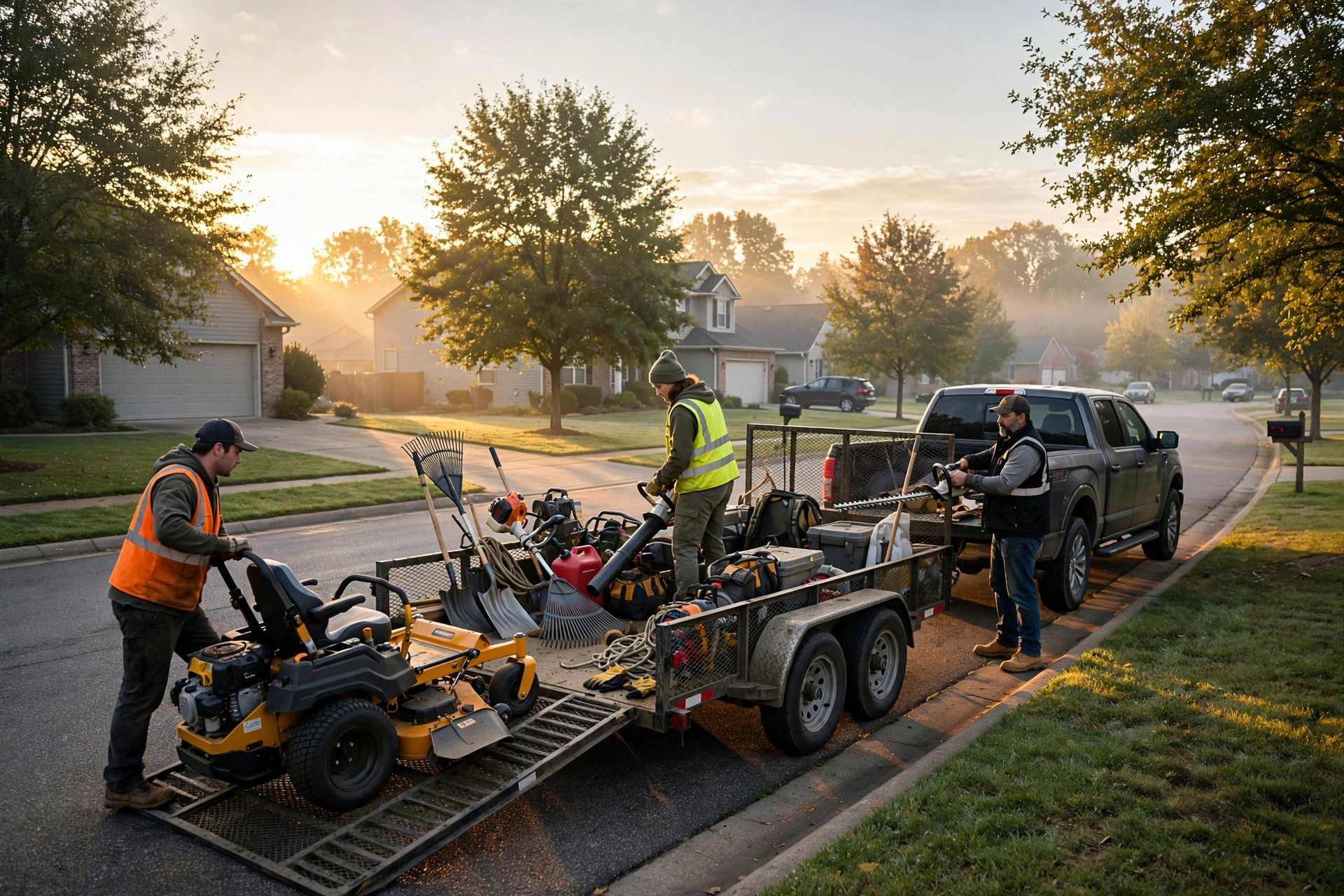
While the crew loads up, the text back is already working the phones you cannot answer.
Frequently asked questions
Will this work when I am on the mower all day?
That is exactly the situation it is built for. The system needs nothing from you during the day. It texts back, collects the details and photos, and everything waits in your phone for the evening when you price quotes.
Can it really quote from photos?
For mowing and many cleanups, yes: address, lot size, and photos are usually enough for a confident price. For installs and drainage work, the system pre qualifies with photos so your in person estimate starts with you already informed instead of starting cold.
What about callers outside my service area?
Build the service area into the flow. When the address is outside your area, the system thanks them and can refer them elsewhere instead of letting you discover it after a wasted drive.
Will homeowners actually send photos to a text?
Yes, and at a high rate, because you asked while they are standing in the yard thinking about the project. The ask is easy, the phone is in their hand, and people enjoy showing the problem. Keep the request to “a couple photos” so it feels small.
How is this different from just calling back at lunch?
Speed. By lunch the homeowner has talked to two other landscapers and often already has an estimate scheduled. The text back reaches them in seconds, while they are still in buying mode, and it starts collecting what you need immediately.
Can I see the conversations?
Every thread is visible in the dashboard and usually in your CRM too. You can jump into any conversation live, and you get a notification when a high value thread, like an install inquiry, needs a human.
Do I need to change my phone number?
No. The system works with your existing business number through your phone provider or CRM, so your Google listing, truck signage, and yard signs all keep working exactly as they do now.
Stop losing quotes to the mower
Digital Hayder sets up missed call text back for landscapers: instant replies in your voice, photo collection for faster quotes, automatic quote follow up, and every thread logged where you plan your week. Tell us about your operation and we will build the quote flow for your services.
Contact Us