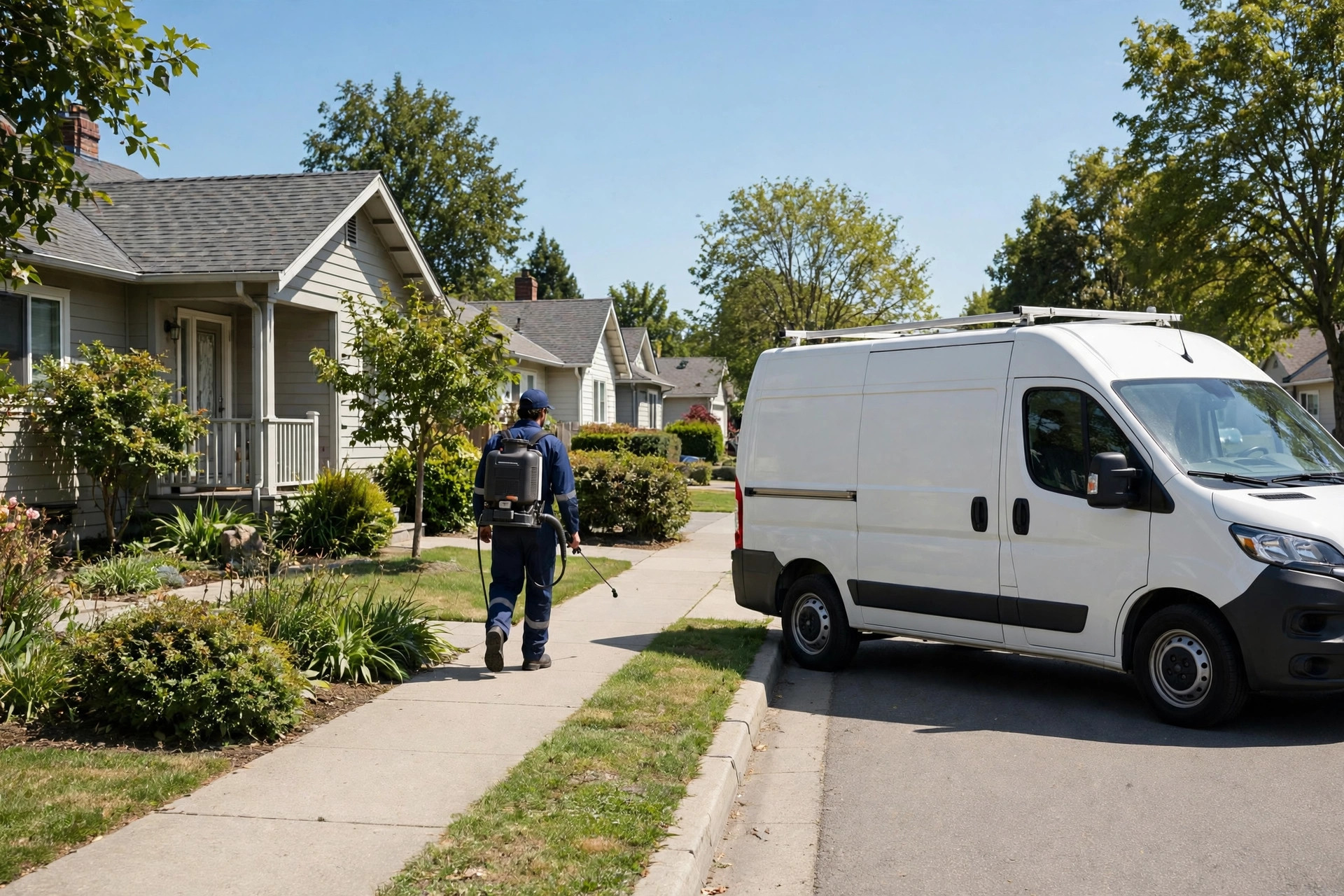
A homeowner finds ants in the kitchen on a Saturday morning. By Saturday afternoon they have called the first company that answered, and that company now has a customer worth thousands over the next few years. Pest control is urgency marketing: nobody browses for it, everybody needs it now, and the company that shows up first usually wins. But urgency only fills today’s schedule. The pest control companies with full calendars year-round do something else too: they market seasonally so demand arrives before the pests do, they turn every job into neighborhood marketing, and they convert one-time emergency calls into quarterly plans that pay every ninety days. This guide covers the marketing ideas that actually fill a pest control schedule, in the order a growing company should run them.
The quick answer
- The urgency play: be the company that answers. Most pest calls come with same-day intent, and the first responder wins a large share.
- The seasonal play: run campaigns ahead of each pest season: ants in spring, mosquitoes and ticks in summer, rodents in fall, inspections in winter.
- The cheapest lead source: door hangers on neighboring homes after every job. You are already there. The neighbors have the same pests.
- The ranking factor: automated review requests after every service. Review count drives local rankings and converts panicked searchers.
- The profit engine: quarterly plan retention marketing. A plan customer is worth several times a one-time job and stabilizes winter revenue.
- The system behind it: CRM automation for follow-up, reminders, and win-backs, so no lead or customer slips through when the phones get busy.
Why pest control marketing is seasonal (and why that is an advantage)
Most local businesses would love predictable demand waves. Pest control has them built in. Ants surge in spring as colonies wake up and forage. Mosquitoes and ticks own the summer. Rodents move indoors in the fall as temperatures drop. Winter quiets down, which makes it the season for inspections, attic work, and commercial accounts. Each wave brings homeowners with the same problem at the same time, which means your marketing can speak to exactly what is happening in their kitchen right now.
The advantage is timing. A generic “we do pest control” ad competes with everyone. A March campaign about ant prevention, running just as ants appear, feels like it was written for the reader’s exact situation, because it was. Seasonal marketing also lets you plan the year instead of reacting to it: you know when to push mosquito plans, when to push rodent exclusion, and when to shift the crew toward commercial work. The companies that treat seasonality as a calendar to market against stay busy. The ones that treat it as weather to endure have dead winters and chaotic springs.
The second rhythm underneath the seasons: the emergency versus prevention split. Emergency calls (wasp nests, bed bugs, a mouse in the pantry) are high urgency, high margin, and one-time. Prevention plans are lower urgency and recurring. Your marketing needs both engines: capture the emergency caller today, then convert them into a plan customer before you leave the driveway.
Idea 1: Seasonal campaigns that arrive before the pests do
Run four campaigns a year, each starting four to six weeks before the pest peaks. The early start matters: you want to be the company homeowners think of when the problem appears, not the company they find while panicking.
Spring: ants and the prevention pitch
Start in late winter. The message is prevention, not panic: “Ant season starts in a few weeks. A perimeter treatment now stops the kitchen invasion before it starts.” Offer a spring inspection special that gets a technician to the property, because an inspection is a sales call that customers invite. Direct mail to neighborhoods where you already have customers works well here, and so does a simple email to last year’s one-time customers: “Time for your spring treatment.” Spring is also termite swarm season in many regions, which deserves its own push: swarmers are visible and alarming, and the company with a termite page ranking locally gets the calls.
Summer: mosquitoes, ticks, and outdoor living
Mosquito control sells itself once you frame it around the backyard: the family that cannot use their patio in July will pay for relief fast. Market mosquito plans as a season package (monthly treatments through summer), which locks in recurring revenue during your busest months. Tick treatments pair naturally for properties near woods. This is also peak wasp and hornet season, which is pure emergency work: make sure your ads, your Google Business Profile, and your website all say same-day service clearly, because the wasp-nest caller is choosing whoever can come today.
Fall: rodents and exclusion work
As temperatures drop, rodents look for warmth, and homeowners hear scratching in walls. Fall campaigns should lead with exclusion, not just trapping: sealing entry points, attic inspections, and crawl space work. Exclusion jobs bill higher than standard treatments and the work photographs well for social proof. Message it as winter preparation: “Get your home sealed before the cold drives them inside.” This campaign also converts well to quarterly plans, since the homeowner who just dealt with mice understands the value of ongoing protection.
Winter: inspections, attics, and commercial
Winter is the quiet season for residential emergencies, which makes it the season for everything else: discounted attic and crawl space inspections, wildlife removal (animals den up in winter), and a push into commercial accounts like restaurants and property managers who buy year-round contracts. Use the downtime for the marketing that never gets done in summer: refreshing the website, filming technician videos, building the next year’s email list, and asking every happy customer for reviews while the memory is fresh.
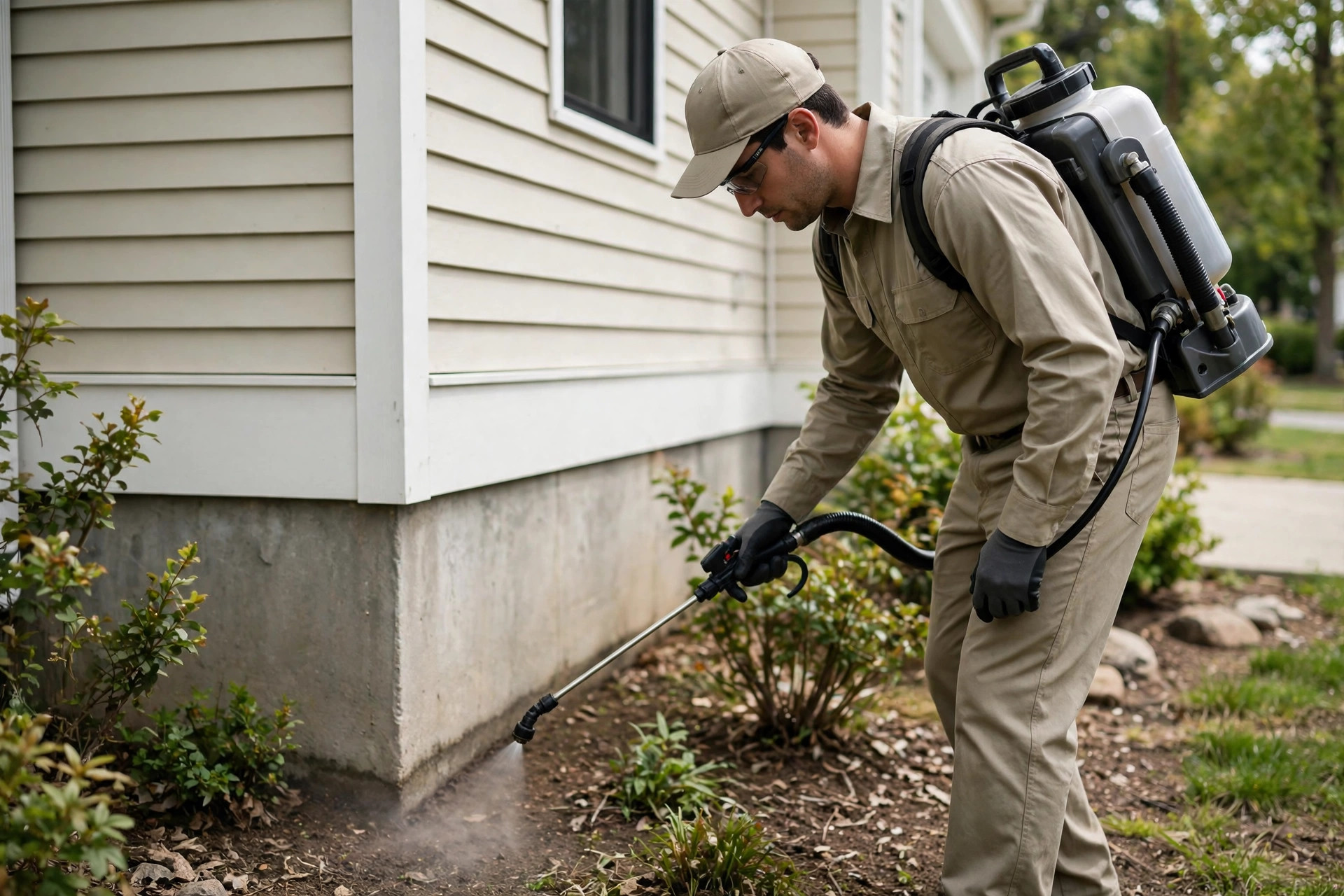
Seasonal treatments are the core product. Market each one four to six weeks before the pest peaks.
Idea 2: Door hangers on neighboring homes after every job
This is the highest-ROI tactic in pest control marketing, and it costs pennies per impression. When your technician finishes a job, they hang door hangers on the ten to twenty nearest homes. The logic is airtight: pests do not respect property lines. The neighbor’s ants are in your customer’s kitchen too, or will be soon. And nothing sells pest control like seeing the branded van in the driveway next door.
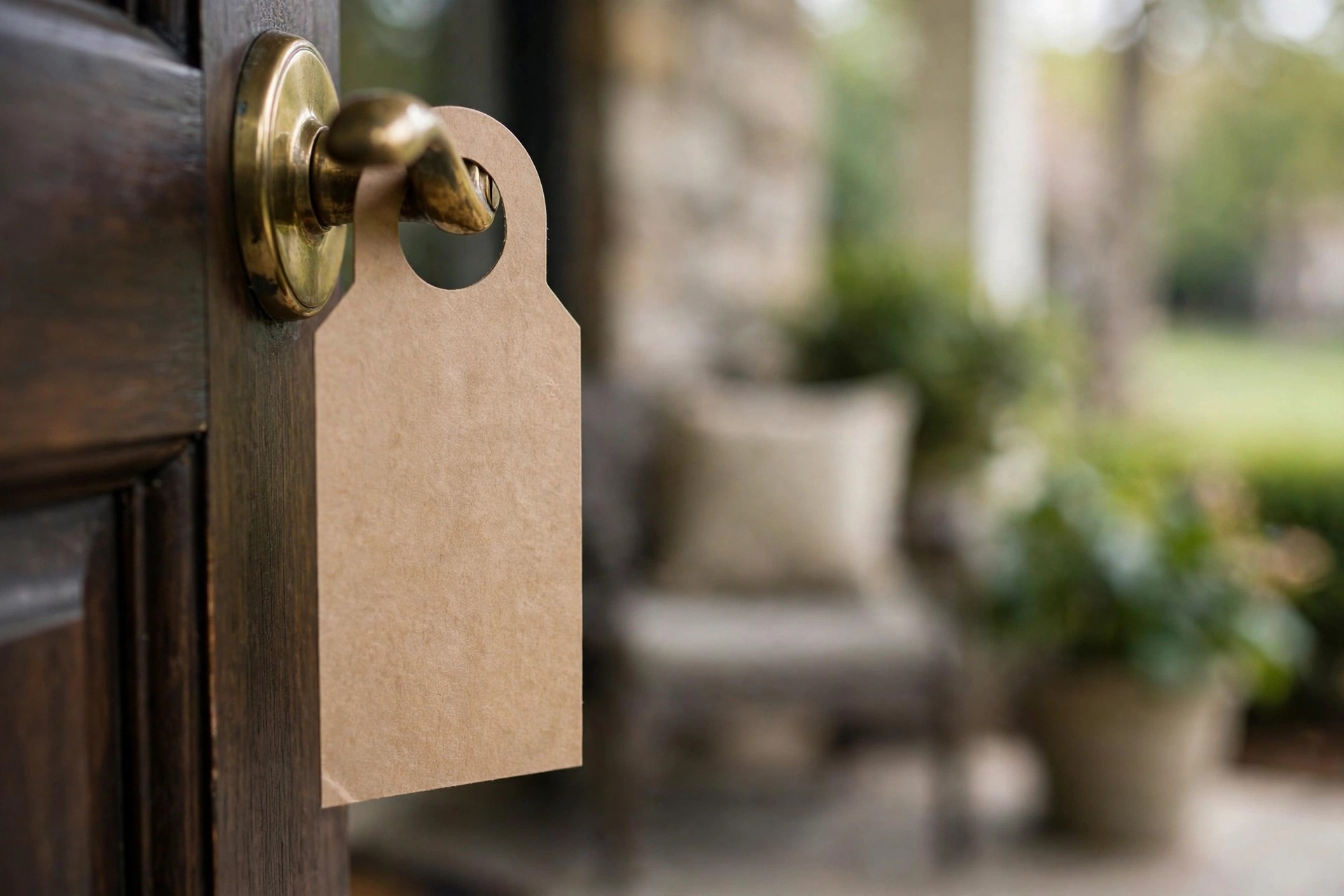
The best time to market to a neighborhood is while your van is already parked in it.
What goes on the hanger
Keep it simple and specific. The headline names the situation: “We just treated your neighbor’s home for ants.” That one sentence does more work than any logo or slogan, because it makes the problem local and immediate. Below it: three bullet points on what was done (perimeter treatment, entry-point sealing, guaranteed re-treatment), a limited offer for neighbors (“Free inspection this week for homes on this street”), and a phone number plus a QR code to the booking page. No paragraphs. Nobody reads paragraphs on a door hanger. Print in seasonal batches so the pest named on the hanger matches what is actually active.
How to make it a system, not a hope
Hangers only work when they happen every time. Build it into the job workflow: the technician’s kit includes a stack of hangers, the dispatcher notes the streets covered, and the CRM logs the drop so you can track which streets produce calls. Pay technicians a small bonus per hanger-generated lead to keep compliance high. Track it for one quarter and the math will convince you: even a one or two percent response rate on a few hundred hangers a month produces steady, nearly free leads in exactly the neighborhoods you already serve, which keeps drive time down too.
Idea 3: Review automation after every service
Pest control buyers are often anxious and in a hurry: something is in their house and they need it gone. In that state, they pick the company with the most convincing reviews, fast. Review count and recency both matter for local rankings and for the panicked click decision. Yet most pest companies collect reviews sporadically, usually when the owner remembers to ask.
Automate it instead. After every completed service, the customer gets a text within the hour: a thank-you, a direct link to your Google review page, and a nudge on what to mention (“It helps other homeowners when reviews mention the pest we treated.”). Technicians should mention it at the door too: “You will get a text asking for a review. It really helps our small business.” The double touch, human plus automatic, produces far more reviews than either alone. Respond to every review, and treat negative reviews as public customer service: a calm, specific owner response to a complaint tells future customers more about you than a dozen five-star ratings. Our law firm lead generation strategies guide breaks down review mechanics that transfer directly to any local service.
Idea 4: Quarterly plan retention marketing
A one-time ant treatment might bill $150 to $300. A quarterly plan customer pays $100 to $150 every three months for years, calls you first when anything appears, and refers neighbors. Plan customers are the profit engine of a pest control company: predictable revenue, lower acquisition cost per dollar earned, and a schedule that fills itself. Yet many companies sell the plan at the door and then never market to it again. Retention marketing is the difference between a plan base that grows and one that quietly cancels.

Plan customers stay when they see the value. Inspections and reports make the invisible work visible.
Sell the plan at the moment of relief
The best time to sell a quarterly plan is right after you have solved the customer’s problem. They are relieved, they trust you, and the technician is standing in their home. Train technicians to make the offer plainly: “The treatment is done and guaranteed for 30 days. Most of our customers go on the quarterly plan so this does not come back. It is $129 every three months, I handle everything, and you never think about pests again.” The price must be stated confidently, the benefits in one sentence, and the signup immediate: a tablet, a signature, a first appointment booked. Companies that leave plan signup to a follow-up email convert a fraction of what door-close rates achieve. The same retention logic applies across local services; our guide to dental patient reactivation covers keeping customers on a schedule from the other side.
Keep the plan with visible value
Plans cancel when customers forget why they pay. Fight that with visibility: after every quarterly visit, the customer gets a short report by text or email, what was checked, what was treated, what to watch for, with a photo or two from the technician. It takes the technician one minute and makes the invisible work visible. Before each renewal quarter, send a reminder that frames the upcoming visit as protection, not a bill: “Your spring treatment is scheduled for Tuesday. This is the one that stops ant season before it starts.” And watch for cancellation signals: a skipped appointment, a bounced payment, a customer who never opens the reports. A personal call at the first signal saves accounts that an email never would.
Idea 5: Capture the emergency and after-hours caller
Wasp nests, bed bugs, and mice do not wait for business hours. A large share of high-value pest calls arrives in the evening or on weekends, exactly when most small companies send callers to voicemail. The company that answers wins, and the math is brutal: the caller phones down the search results until someone picks up. Every unanswered call is a customer handed to a competitor.
Fix it in layers. First, make sure your Google Business Profile and website say same-day and emergency service explicitly, with a tap-to-call button above the fold on mobile. Second, route after-hours calls to someone who can actually book: an answering service briefed on your services and prices beats voicemail, and an AI receptionist that can answer common questions and book the visit beats a message-taker. Our guide to the AI receptionist for law firms covers after-hours call handling in detail, and the same setup works for pest control. Third, respond to every web inquiry within minutes, even at night: an instant text (“Thanks for contacting us. We handle emergencies 7 days a week. What pest are you seeing?”) keeps the caller from dialing the next company while they wait.
Idea 6: Referral and neighbor programs that run themselves
Pest control has a natural referral trigger that most companies waste: the relieved customer. Someone whose wasp nest is gone or whose ant problem is solved is genuinely grateful, and gratitude is the moment to ask. Build the ask into the job close: the technician mentions the referral program while the customer is happy, and the follow-up text includes the referral link. Keep the reward simple and two-sided: the referrer gets a account credit, the neighbor gets a discounted first service. Two-sided beats one-sided because the customer feels good sharing it rather than mercenary.
Layer a neighborhood program on top for streets where you have density. When you service three or more homes on one street, those customers get a “neighborhood rate” and a reason to recruit the rest of the street: everyone benefits when the whole block is treated, since pests migrate. This turns your existing route density into a marketing asset and cuts drive time as the street fills in. Track referrals per customer in the CRM and personally thank your top referrers once a year. A $25 gift card to someone who sent you five customers is the cheapest marketing you will ever buy.
| Marketing idea | Typical cost | Time to results | Difficulty |
|---|---|---|---|
| Seasonal campaigns | $500 to $2,000 per season | 4 to 8 weeks per wave | Medium, needs planning |
| Door hangers after jobs | Pennies per home, printing only | Days to weeks | Low, once it is a habit |
| Review automation | Nearly free with automation | 60 to 90 days for visible lift | Low |
| Quarterly plan retention | CRM cost plus message fees | Ongoing, compounds yearly | Medium, needs technician training |
| After-hours call capture | $200 to $500/mo for service or AI | Immediate | Low |
| Referral program | Credit and gift costs only | 60 to 90 days to ramp | Low |
| Local SEO and content | $1,000 to $3,000/mo if outsourced | 4 to 9 months | Medium to high |
Your 12-month marketing calendar
Pin this to the office wall. Each season has one main campaign, one always-on system to maintain, and one project for the quiet weeks.
- 1Late winter: spring ant and termite push. Launch the prevention campaign, email last year’s one-time buyers. Project: refresh the website’s seasonal pages.
- 2Spring: inspections that sell plans. Push the inspection special, train technicians on the door-close plan pitch, keep door hangers stocked. Always-on: review automation after every job.
- 3Early summer: mosquito season packages. Sell the summer mosquito plan as a bundle, advertise same-day wasp removal hard. Project: film short technician tip videos for social media.
- 4Late summer: tick and back-to-school push. Tick treatments for properties near woods, and a reminder campaign to plan customers about fall. Always-on: referral program mentions at every job close.
- 5Fall: rodent exclusion campaign. Lead with sealing and attic inspections, message winter preparation, convert exclusion jobs to quarterly plans. Project: update Google Business Profile photos.
- 6Winter: commercial push and maintenance. Pitch year-round contracts to restaurants and property managers, run discounted inspections, use quiet weeks for website updates, video content, and next year’s email list building.
Frequently asked questions
What is the most effective marketing for a pest control company?
Door hangers on neighboring homes after every job for cheap local leads, seasonal campaigns timed four to six weeks before each pest peaks, and automated review requests after every service. Together these three fill the schedule without ad spend. Paid ads help, but only after the basics are running.
How do I get more quarterly plan customers?
Sell the plan at the door at the moment of relief, right after solving the customer’s problem, with a confident price and immediate signup. Then keep the plan with visible value: a short report with photos after every visit, pre-visit reminders framed as protection, and a personal call at the first cancellation signal.
Do door hangers still work for pest control?
Yes, and the math is excellent. Pests do not respect property lines, so neighbors of your customers are your warmest prospects. Even a one to two percent response rate produces steady, nearly free leads in neighborhoods you already serve, which also keeps drive time down. The key is making it a system: hangers in every technician’s kit, every job, every time.
How should a pest control company handle after-hours calls?
Never let them reach voicemail. Route after-hours calls to an answering service briefed on your services or an AI receptionist that can answer questions and book visits, and send an instant text response to every web inquiry even at night. Emergency callers phone down the list until someone answers; be the company that answers.
What should pest control companies post on social media?
Short, practical technician videos: what a termite swarmer looks like, where mice get in, how a mosquito treatment works. Film on a phone during real jobs, one video a week. Homeowners share useful pest content with neighbors, which is free distribution to exactly the right audience.
Fill your schedule with systems, not guesswork
Digital Hayder builds marketing systems for pest control companies: seasonal campaign pages, review automation, CRM follow-up for quotes and plan renewals, and after-hours call capture. Tell us about your service area and we will map your 12-month plan.
Contact Us