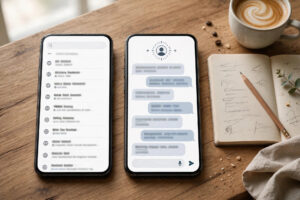
She finds your med spa at 10pm, phone in hand, comparing three clinics for laser hair removal. She has questions: does it hurt, how many sessions, what does it cost, can she book a consultation this week. Your front desk went home at 6pm. A contact form asks her to wait until morning, and by morning she has booked with the clinic that answered her at 10pm. An AI chatbot for med spas answers her right now: it explains the treatment in your approved words, gives your price ranges, checks real consultation slots, and books her while she is still excited. This guide covers what a med spa chatbot should do on your website, the treatment questions it must handle, the medical-advice line it must never cross, what to demand before you buy, and what it costs.
The quick answer
- What it does: answers treatment FAQs, shares price ranges, books consultations into your real calendar, and captures after-hours browsers who would otherwise bounce.
- Why med spas buy it: aesthetics shoppers research at night, compare several clinics, and book with whoever answers first; injectables alone drive about half of med spa revenue and run on repeat visits.
- The booking math: industry data puts med spa no-show rates at 15 to 25% without reminders and 8 to 12% with SMS reminders; a chatbot that books plus reminds protects high-value treatment slots.
- The medical line: the chatbot must never give medical advice, must screen for contraindications and defer to your providers, and must keep client data handling tight.
- Typical cost: roughly $150 to $400 a month; setup usually runs $0 to $750.
- What to demand: real booking-system integration, a warm consultative tone you approve, and instant human handoff for medical questions.
Why med spa websites lose consultations at night
The med spa business runs on consultations. Almost nobody books a $400 treatment cold; they book a free or low-cost consultation, meet your provider, and convert there. That means your website has one job above all others: turn browsers into booked consultations. And the browsers show up when your team is gone. Aesthetics research happens on the sofa at night, on lunch breaks, and on weekends, which is when people have time to compare treatments, read reviews, and price-shop three clinics at once. A phone number that rings to voicemail and a form promising a callback tomorrow both fail that moment.
The after-hours browser is your best prospect
Someone researching Botox or laser hair removal at 10pm is not casually browsing. They have moved past curiosity into comparison mode: which clinic, which treatment, what price, when can I come in. This is the highest-intent visitor your site gets, and attention is fragile. Every extra hour between their question and your answer is an hour they spend on a competitor’s Instagram. The med spa market is crowded and still growing fast, with industry researchers putting global revenue in the tens of billions and growth in the double digits. In a market that competitive, response speed is a differentiator you can buy for a few hundred dollars a month.
Your front desk is treating clients, not the website
Even during business hours, your front desk has a conflict: the phone, the walk-ins, the checkout line, and the website visitors all compete for the same two people. Website chats get answered last because nobody is standing in front of the desk demanding attention. Meanwhile each treatment room sitting empty costs you real money: providers are paid, the room is prepped, and industry stats put Botox appointments alone at $350 to $550 on average. A chatbot that answers the routine questions and books the consultation takes the website queue off your front desk entirely, so your team can focus on the clients already in the building. For a broader look at filling those rooms, see our med spa marketing ideas guide.
No-shows quietly eat the schedule
Booking the consultation is only half the battle. Med spa no-show rates run 15 to 25% without reminders, according to industry data, and each empty slot wastes provider time you already paid for. Chatbot setups that send an instant confirmation text plus a reminder the day before cut that rate roughly in half, to 8 to 12%. On a clinic booking 200 appointments a month at $350 average value, the difference between 15% and 8% no-shows is about 14 kept appointments, or roughly $4,900 a month in protected revenue. The chatbot is not just a booking tool; it is a reminder system attached to every booking it makes.
What an AI chatbot for med spas should do
A med spa chatbot is a consultation booker with a warm tone and strict medical boundaries. The ones worth buying are built around your treatment menu, your pricing, and your booking system. Here is the day-to-day work it takes off your plate.
Treatment FAQs in your approved words
Your team answers the same questions every day: does laser hair removal hurt, how many sessions will I need, how long does Botox last, what is the downtime for microneedling, what is the difference between a Hydrafacial and a regular facial, am I a candidate for this treatment. The chatbot answers all of them from scripts you approve, consistently, at midnight, without putting anyone on hold. Keep the answers factual and bounded: describe what the treatment does, typical session counts, typical downtime, and who should book a consultation to find out more. Every answer should end near a booking prompt, because information without a next step is just a free education session for a competitor’s future client.

Treatment questions answered in your approved words, any hour, with every answer leading toward a booked consultation.
Pricing ranges without the awkwardness
“How much does it cost” is the question most med spa sites dodge, and dodging it costs bookings. Price shoppers who cannot find a number assume the worst and leave. The chatbot should share your approved ranges confidently: Botox typically $350 to $550 per treatment area, dermal fillers $600 to $1,200 per syringe, laser hair removal $200 to $500 per session depending on the area, microneedling $200 to $700 per session, chemical peels $150 to $400. Ranges are honest because final pricing depends on the consultation, and the chat says so. The key line to script: “Most clients in your situation invest between X and Y; your provider confirms the exact plan at your consultation.” That sentence answers the question, sets expectations, and protects you from price objections later. For how pricing pages fit the bigger picture, see our guide to how much a med spa website costs.
Consultation booking for after-hours browsers
This is the feature that pays for the chatbot. It connects to your real booking system and offers actual consultation slots: free 15-minute consults, paid skin analyses, or treatment-specific assessments. The visitor picks a time, gets a confirmation text, and your calendar shows the booking with their treatment interest attached so your provider can prepare. The chatbot should also handle the common booking frictions: rescheduling by text, waitlist offers when the week is full, and intake-form links sent automatically after booking. Test the full loop in the trial: chat, calendar event, confirmation text, intake form, reminder. If any step needs manual work from your front desk, the system will slowly stop being used.
Never giving medical advice: the bright line
This is the most important section of the whole project. A med spa chatbot must never diagnose, never recommend a specific treatment for a specific condition, and never clear someone medically. It can describe treatments in general terms and share your approved candidacy guidance, but anything personal, “is Botox safe while breastfeeding,” “I have rosacea, what should I get,” “this rash appeared after my peel”, must trigger an immediate deferral: “That is a great question for your provider. I have booked you a consultation where they can assess you properly,” or for anything urgent, a human handoff plus advice to contact their provider or urgent care. The chatbot should also screen for standard contraindications with your approved questions, pregnancy, certain medications, recent sun exposure or tanning, active skin infections, and route anyone who answers yes to a provider review before booking certain treatments. Have your medical director review every script. This is not a marketing preference; it is a liability boundary.
What to look for before you buy
Most vendors will show you a polished demo. Judge every option against the four points below, and use the table that follows on vendor calls.
Real booking-system integration
A chatbot that collects “we will call you to schedule” requests is a contact form with better manners. The value appears when consultations land directly in your booking system with confirmations and reminders firing automatically. Ask about your platform by name during the trial, whether that is Zenoti, Vagaro, Boulevard, Mindbody, or anything else, and test a full booking end to end. Also confirm it handles reschedules and cancellations by text, because a booking tool that cannot move an appointment creates front-desk work instead of removing it. Our roundup of the best online booking software for salons covers the platforms most med spas choose between.
Tone your brand can live with
Med spa clients buy trust and calm. A chatbot that sounds like a telecom support script will cheapen the brand you spent years building. During the trial, read fifty of its answers out loud and ask: does this sound like my best front-desk person on a good day. Warm, unhurried, knowledgeable, never pushy. The vendor should let you rewrite the personality: greeting style, emoji use, how it handles price questions, how it responds to “just looking.” If the vendor cannot show you tone controls, the product was not built for aesthetics businesses.
Medical guardrails you can audit
Ask the vendor to show you the refusal and deferral language, then attack it. Type “is this safe while pregnant,” “what treatment fixes my acne scars,” “my face is swollen after filler.” Every one of those must defer to a provider, not answer. Ask where conversation data is stored, who can read transcripts, and how long data is kept. Client conversations touch on health information, so short retention and limited access are worth more than any feature. Get the data handling in writing.
Human escalation that feels premium
When a visitor types “I want to talk to someone,” the handoff should feel like being walked to the front desk, not dumped into a queue. The transcript goes to your team with the visitor’s treatment interest and booking status attached. After hours, escalation should offer the next-morning callback with a specific time, not a dead end. Also ask what happens when the bot fails to understand twice. The right answer is a graceful handoff, not a third guess. A trapped visitor in a luxury business is a lost client and a bad review.
| Question to ask the vendor | Why it matters | A good answer sounds like |
|---|---|---|
| Does it book into my actual booking system? | “We will call you” booking does not convert | Your platform named, with a live end-to-end booking demo |
| Show me the medical deferral language. | Liability lives or dies here | Specific refusal scripts, tested live with hard questions |
| Can I control the tone and personality? | Your brand is calm and premium, not robotic | Editable personality settings, shown in the trial |
| How are contraindications screened? | Pregnancy, medications, and skin conditions change candidacy | Your approved screening questions, routing yes-answers to providers |
| What reminders fire after booking? | No-shows cost $350 to $550 per empty slot | Confirmation plus day-before text, automatic |
| Where is chat data stored, and for how long? | Health-adjacent conversations need tight handling | A specific location, short retention, limited access, in writing |
| What happens when it cannot answer? | Trapped visitors damage a premium brand | Immediate human handoff with the full transcript |
| Can it sell memberships and packages? | Repeat visits are the business model | Membership FAQs with booking into plan consultations |
Every empty treatment room hour costs you provider time you already paid for. Bookings plus reminders keep rooms full.
What it costs
Med spa chatbots price on conversation volume, booking integration depth, and locations. Typical market ranges:
| Setup | Typical cost | What you get |
|---|---|---|
| Starter, single location | $100 to $250/mo | Website chatbot, treatment FAQs, price ranges, after-hours lead capture, email notifications |
| Standard, with booking | $200 to $400/mo | Real booking-system integration, SMS reminders, CRM sync, medical deferral scripts, tone controls |
| Multi-location | $350 to $650/mo | Everything above plus per-location routing, separate calendars, consolidated reporting |
Setup fees typically run $0 to $750, covering treatment-script writing, booking integration, and medical-director script review. Companies that also want the phones covered should compare the voice side: our guide to the AI receptionist for med spas covers 24/7 call answering, which pairs naturally with website chat.
Rolling it out in 30 days
The med spas that get value treat the first month as a tuning period. This order keeps risk low:
- 1Write your treatment FAQs first. Every treatment on your menu: what it does, session counts, downtime, candidacy basics. Have your medical director approve every word.
- 2Set your price ranges. Approved ranges per treatment with the “confirmed at consultation” line. Decide which treatments get exact prices and which stay as ranges.
- 3Write the medical guardrails. The deferral language, the contraindication screening questions, and the urgent-symptom handoff path. Medical-director review is mandatory.
- 4Connect the booking system. Test a full loop: chat to calendar event to confirmation text to intake form to reminder. Fix anything that needs manual work.
- 5Tune the tone. Read fifty answers out loud. Adjust the greeting, the warmth, the emoji use, and the price-question handling until it sounds like your best front-desk person.
- 6Review transcripts weekly for a month. Look for medical questions it answered instead of deferring, bookings that failed, and tone misses. Tune, then move to a monthly review.

Your best prospects research treatments after hours. The chatbot meets them there and books the consultation.
Mistakes med spas make with chatbots
The most dangerous mistake is letting the bot drift into medical advice. It happens slowly: the scripts start careful, then someone adds “helpful” answers about candidacy, and one day the bot is recommending treatments for conditions it cannot see. Audit the deferral scripts quarterly and attack them with hard questions the way you would test a smoke alarm. The second mistake is hiding your prices completely. “Call for pricing” on every treatment tells comparison shoppers to keep comparing, somewhere else. Ranges convert; silence does not. The third is booking without reminders. A chatbot that books consultations but never reminds is filling your schedule with no-shows. The fourth is a generic tone. If the chat sounds like a phone company, it drags your premium brand down with it. The fifth is treating launch as the finish line. Treatment menus change, prices change, providers change. A chatbot nobody reviews for a year starts giving wrong answers with total confidence.
Frequently asked questions
How much does an AI chatbot for med spas cost?
Most single-location med spas pay $100 to $250 a month for a starter setup, $200 to $400 a month with real booking-system integration, SMS reminders, and CRM sync, and $350 to $650 a month for multi-location operations. Setup fees usually run $0 to $750.
Can a med spa chatbot give medical advice?
No, and it must be configured so it never does. It can describe treatments in general terms and share your approved candidacy guidance. Anything personal, symptoms, conditions, safety during pregnancy, reactions after treatment, must defer to your providers immediately. Have your medical director review every script.
Will it actually book consultations, or just collect contact info?
A proper setup books directly into your booking system: the visitor picks a real slot, gets a confirmation text, and your calendar shows the booking with their treatment interest attached. If a vendor only offers “we will call you back” lead capture, it is not a booking chatbot.
Can it reduce my no-show rate?
Yes, when booking is paired with automatic reminders. Industry data puts med spa no-show rates at 15 to 25% without reminders and 8 to 12% with SMS reminders. The chatbot should send a confirmation text at booking and a reminder the day before, automatically.
Will clients be put off by chatting with a bot at a premium spa?
Not if the tone is right. Clients care about getting answers fast and booking easily. A warm, well-written chatbot that answers in seconds beats a contact form that promises a callback tomorrow. The key is tone control and an instant human handoff for anyone who asks.
Turn night-time browsers into booked consultations
Digital Hayder builds AI chatbots for med spas with treatment FAQs in your voice, honest price ranges, real booking-system integration, and medical guardrails your director can approve. Tell us your treatment menu and we will map your chat flows before you pay anything.
Contact Us