
A car that leaves your shop today will need an oil change in a few months, tires within a year, and brakes sooner than the driver expects. The shops that remind customers about this work get the return visits; the shops that stay silent watch those cars roll into a competitor’s bay. Email marketing for auto repair shops is the system that brings cars back: mileage- and time-based service reminders that fire automatically, declined-service follow-ups that recover work customers said “not today” to, and post-service review requests that turn happy customers into your best advertising. This guide covers the exact sequences, sample subject lines, and the shop-management wiring that makes it all run without adding work to your service advisors.
The quick answer
- Highest-value sequences: oil change and maintenance reminders, inspection and state-safety reminders, declined-service follow-ups, and post-service review asks.
- Why it works: drivers forget maintenance schedules; the shop that reminds them at the right mileage wins the job by default.
- Biggest missed revenue: declined services. Following up on work the customer postponed recovers 15 to 25% of those tickets.
- Benchmarks to beat: aim for 30 to 40% open rates and 2 to 4% click rates, with review-request emails often doubling those clicks.
- Key integration: connect email to your shop management system so mileage, service history, and declined items trigger reminders automatically.
- Start today: pull every customer whose last visit was 5+ months ago and send the first “time for a check-in” email this week.
Why email fits auto repair better than most marketing
Auto repair is a trust business with a memory problem. Customers trust you once you have done good work, but they forget maintenance schedules almost immediately. Nobody remembers that their oil change is due in 3,000 miles or that their inspection sticker expires next month. The shop that remembers for them earns the visit. Email is the cheapest way to be the shop that remembers.
The math is compelling because the average repair order is high. At a $300 to $500 average ticket, a single reminder-driven visit pays for a year of email software. A shop with 2,000 past customers only needs a small fraction of them to return one extra time per year to add six figures in revenue. Compare that to paid ads, where a single new-customer acquisition in a competitive market can cost $50 to $150, and email’s advantage is obvious: you are marketing to people who already chose you once.
Email also does something ads cannot: it documents the relationship. A reminder that references the customer’s actual vehicle, last service, and mileage (“Your Camry is due for its 60,000-mile service”) feels like personal attention from a shop that keeps records, which is exactly what nervous car owners want. Generic marketing cannot do this; only your service history can. For the broader marketing picture, our guide to auto repair shop marketing ideas covers how email fits alongside reviews, local SEO, and referrals.
Sequence 1: Mileage- and time-based service reminders
This is the foundation of the whole system. Every vehicle that leaves your shop has a known next-service point: a mileage, a date, or both. Your shop management system already records the odometer reading and the service performed. Email turns that data into return visits.
Build reminders around the services that drive the most repeat business:
- Oil changes: the highest-frequency reminder and the backbone of the program. Trigger at the mileage or month interval you set on the windshield sticker, typically 3,000 to 5,000 miles or 3 to 6 months. The email references the vehicle and the last service date: “Your F-150 is due for an oil change, it has been about 4 months since your last visit.”
- Tire rotations and replacements: rotation reminders at 6,000 to 8,000 miles; replacement nudges when the last recorded tread depth was getting low. Tires are high-ticket and time-sensitive, which makes the reminder especially valuable.
- Brake service: follow up 6 to 9 months after a brake inspection that showed wear, or at the mileage interval for the vehicle. Brake work is safety work, so the tone is care, not sales: “Last time we checked, your front pads were at 40%. Worth a quick look before they wear thin.”
- Battery checks: batteries last 3 to 5 years; remind at the 3-year mark from the last recorded replacement, especially before winter. A dead battery is an emergency the customer will remember you prevented.
- Seasonal services: air conditioning checks in spring, battery and antifreeze checks in fall, wiper and tire checks before rainy seasons. Seasonal reminders feel timely rather than salesy because the weather gives you a reason to write.
Each reminder email follows one shape: the vehicle and what is due, why it matters in one sentence, and a single booking button or phone number. Keep the tone helpful and specific. “Your RAV4 is due for its 60,000-mile service” will always outperform “Time for maintenance!” because specificity proves you actually know the car.
Timing matters more than design. Send the first reminder a week or two before the due point, not after. A reminder that arrives after the customer already went elsewhere is just a newsletter. Most shop systems can trigger on mileage estimates using average driving (roughly 1,000 miles a month), refined by the customer’s actual history when you have it.
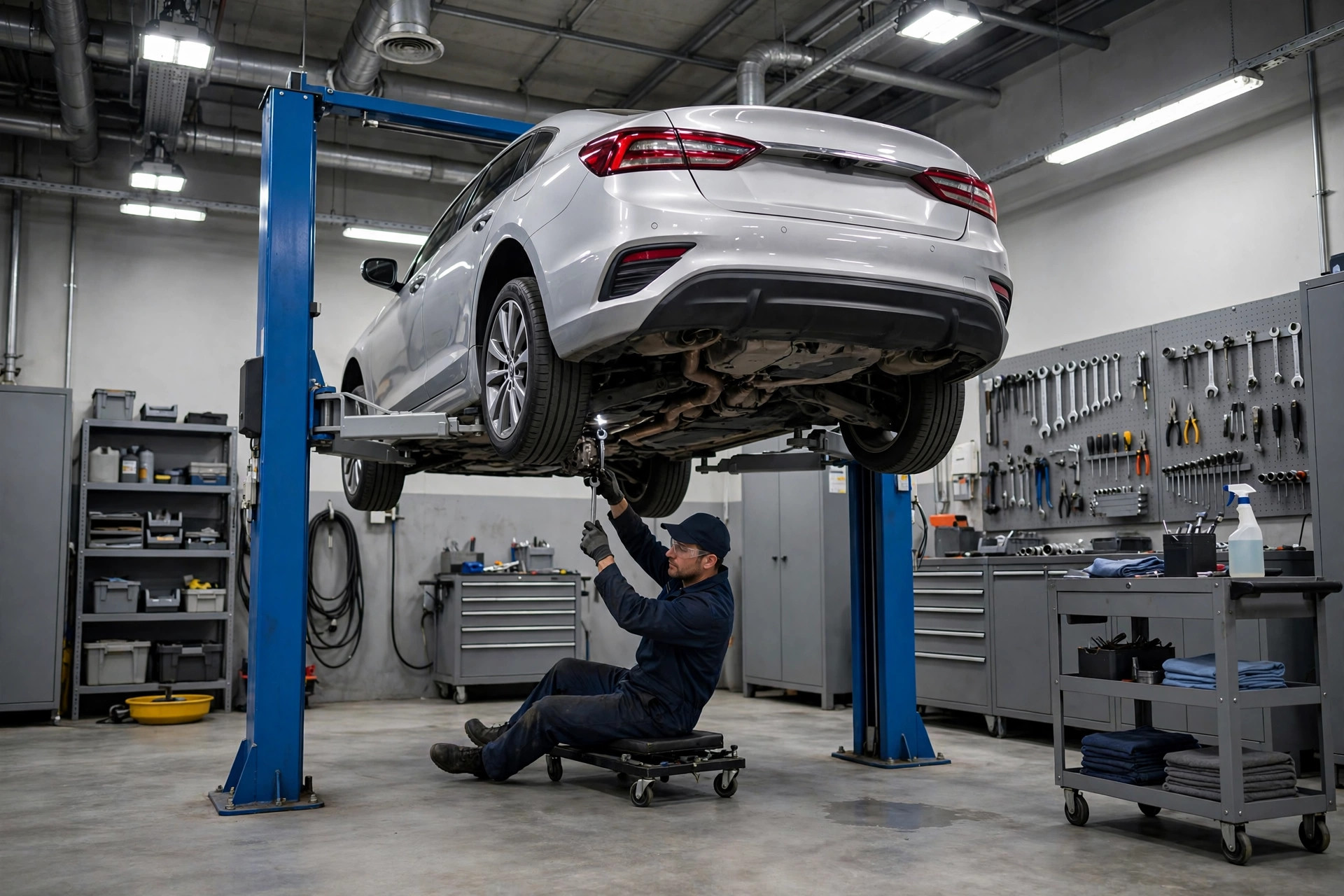
Every car that leaves your bay has a known next-service date. Email makes sure the customer remembers it.
Sequence 2: Inspection and registration reminders
State inspections, emissions tests, and registration renewals are deadlines the customer cannot ignore, which makes them perfect reminder triggers. The shop that reminds a driver their inspection expires next month gets the inspection job and usually the repair work that comes with it.
This sequence needs one extra data point: the inspection or registration expiry date. Capture it at every visit by asking, or note it from the windshield sticker during the write-up. Then run a simple two-email sequence: a heads-up 30 days before expiry (“Your inspection expires next month, here is a booking link”) and a final reminder 7 days before. The second email should mention that expired inspections risk fines, which is true and motivating.
Inspection reminders have a useful side effect: they bring in the vehicle for a full look-over. An inspection visit routinely surfaces brakes, tires, and fluids the customer did not know about, which is legitimate, needed work discovered at the right time. Track how many inspection reminders convert into additional approved work; the number will justify the sequence on its own.
Sequence 3: Declined-service follow-up
Every shop writes up recommended work that the customer postpones: the brakes that can wait a few months, the tires that are “fine for now,” the fluid flush the budget does not cover today. Most of that work never happens, not because the customer went elsewhere, but because nobody followed up. The declined-service sequence is the highest-ROI email most shops will ever send.
The sequence is simple and respectful. When a service is declined, it gets tagged in your shop management system with the item, the quoted price, and the reason if the advisor noted one. Then the follow-up runs:
- Email 1, 30 days after the visit: “Following up on your [vehicle]” – a brief recap of what was recommended, the original quote, and a note that the offer still stands. Tone is helpful, not pushy: “No pressure, just wanted to make sure this did not slip through the cracks.”
- Email 2, 60 days after the visit: “A quick check on those [brakes/tires]” – adds a safety or cost angle: worn items get more expensive the longer they wait, and some affect other components. One sentence of education, one booking link.
- Email 3, 90 days after the visit: the final nudge with a modest incentive, such as 10% off the declined work or a free re-inspection. After this, the item merges into the general maintenance reminders rather than continuing as a separate chase.
Expect 15 to 25% of declined work to convert through this sequence. On a shop that writes $20,000 a month in declined recommendations, a 20% recovery is $4,000 a month in found revenue, from emails that cost nothing to send. The key constraint is accuracy: only follow up on work that is still genuinely needed. If the customer had the brakes done elsewhere and you keep emailing about them, you look like you are not paying attention. Note completed work and suppress the sequence when the vehicle returns for any service.
Sequence 4: Post-service review asks
Reviews are the lifeblood of local auto repair marketing. Drivers choosing a shop read reviews more carefully than almost any other local purchase, because the fear is being overcharged by someone they cannot evaluate. A steady stream of fresh reviews is worth more than most advertising, and email is the most reliable way to generate them.
Send the review request 24 to 48 hours after the customer picks up the vehicle: soon enough that the experience is fresh, late enough that they have driven the car and confirmed everything feels right. The email should be short and come from the shop, not a review platform. One question first: “How was your visit?” with a simple thumbs-up or thumbs-down, or a 1-to-5 scale. Customers who respond positively get a follow-up with direct links to your Google profile and other review sites. Customers who respond negatively get routed to the owner or service manager privately, which turns a potential bad review into a service recovery.
This two-step approach matters. Asking everyone to “leave us a review” in one step sends unhappy customers to public review sites alongside happy ones. The screening question catches problems while they are still fixable and multiplies your public reviews from the customers who are genuinely pleased. Shops that run this consistently add several reviews a month, which compounds into the review count that wins the “best auto repair near me” comparison.
Never offer discounts or gifts for reviews; it violates most platforms’ policies and cheapens genuine feedback. The ask itself, timed well and made easy with direct links, is enough. A customer who just had a good experience is usually happy to say so when asked once, politely.

Review requests sent a day or two after pickup turn good experiences into the reviews that win new customers.
Subject lines that get opened
Car owners open emails that mention their vehicle and a specific need. Vague subject lines get deleted; specific ones get opened. Keep them under 50 characters and put the vehicle or the service in the first few words.
- Maintenance reminders: “Your Camry is due for an oil change”, “60,000-mile service coming up for your RAV4”, “Time to check those tires before winter”
- Inspection reminders: “Your inspection expires next month”, “Do not forget: emissions test due in 30 days”
- Declined-service follow-up: “Following up on your visit last month”, “Those brakes we talked about”, “Quick check-in on your F-150”
- Review requests: “How was your visit yesterday?”, “One quick question about your service”, “Thanks for coming in, how did we do?”
- Seasonal: “Is your battery ready for winter?”, “AC check before the heat hits”, “Rainy season tire check”
Avoid anything that sounds like a generic promotion. “Big savings on auto care!” reads as spam; “Your Civic needs its 45,000-mile service” reads as a shop that keeps records. The difference in open rates is dramatic, often 15 percentage points or more.
| Sequence | Trigger | Timing | Expected result |
|---|---|---|---|
| Oil change / maintenance reminder | Mileage or months since last service | 1 to 2 weeks before due | 20 to 35% of reminded customers book within a month |
| Inspection / registration reminder | Expiry date on file | 30 days and 7 days before expiry | High conversion; inspection visits surface additional work |
| Declined-service follow-up | Recommended work not approved | 30, 60, and 90 days after visit | 15 to 25% of declined tickets recovered |
| Post-service review ask | Vehicle picked up | 24 to 48 hours after pickup | Steady flow of new reviews; problems caught privately first |
| Seasonal service push | Calendar (spring/fall) | 2 to 4 weeks before season | Fills slower weeks with preventive work |
Wiring it to your shop management system
None of this works as a manual process. A shop doing 40 repair orders a week cannot hand-track who is due for what. The sequences must trigger from the data your shop management system already holds: customer name and email, vehicle year/make/model, odometer readings, services performed with dates, declined recommendations with quotes, and inspection expiry dates.
Most modern shop management platforms integrate with email tools or CRMs directly. The integration should sync nightly at minimum, and the trigger logic lives in the email platform or CRM: when last-service date plus interval approaches, queue the reminder; when a declined item hits 30 days, start the follow-up; when a repair order closes, schedule the review ask for two days later.
Three configuration details decide whether the system feels smart or sloppy. First, suppress reminders when the vehicle already has a future appointment booked; reminding someone who booked yesterday is the fastest way to look careless. Second, merge by household: if two vehicles belong to one customer, one combined email beats two separate ones. Third, cap the frequency: no customer should get more than one marketing email a week, no matter how many triggers fire. Set priority rules so the most time-sensitive message wins.
Missed calls deserve the same automation thinking. When a customer calls during a busy bay rush and nobody picks up, an instant text-back keeps them from calling the next shop on the list. Our guide to AI receptionists for auto repair shops covers how shops handle every call without adding front-desk staff, which pairs naturally with the email follow-up system described here.
What good numbers look like
Auto repair email benchmarks are solid because the content is relevant and the sender is a known, trusted business. Target 30 to 40% open rates on reminders and 2 to 4% click rates to your booking page or phone number. Review-request emails often see higher engagement because the ask is small and the timing is right.
The metrics that actually matter, though, are downstream: return-visit rate (what share of customers come back within 12 months), declined-service recovery rate, and reviews per month. A shop that moves its 12-month return rate from 40% to 55% through reminders has transformed its economics, regardless of what the open rates say. Connect the email platform to your shop system well enough to track which bookings came from which email, and review those numbers monthly.
Watch unsubscribe rates as your quality signal. Consistently above 0.5% per send means you are emailing too often or the content feels generic. The fix is almost always more specificity (vehicle, service, date) and less frequency, not better graphic design.
Mistakes that send customers elsewhere
The most damaging mistake is the generic blast: “Spring car care specials!” sent to the entire customer list. It teaches customers that your emails are ads, and they stop opening the reminders that actually matter. Every email should feel like it was triggered by something true about the customer’s car.
Second is reminding without a booking path. An email that says the oil change is due but links to a homepage instead of a booking page or a tap-to-call button loses half its conversions to friction. Third is ignoring the data: shops that never record declined services, inspection dates, or odometer readings cannot run the sequences at all, so the write-up process has to capture the data the emails need. Fourth is over-emailing: more than one marketing email a week per customer burns goodwill fast. Fifth is never asking for reviews, which leaves your online reputation to chance and to the angriest customers, who review without being asked. The same automation discipline applies in other service businesses; our article on email marketing for gyms shows the pattern in a completely different industry.
Your setup checklist
Build the system in this order. Most shops can have the first two sequences live within a couple of weeks.
- 1Connect your shop management system to an email platform. Sync customer, vehicle, service history, declined items, and odometer data. Verify the sync before building triggers on it.
- 2Start capturing the data you are missing. Inspection expiry dates, declined-service quotes with reasons, and odometer readings at every visit. The sequences are only as good as the write-up.
- 3Launch maintenance reminders first. Oil changes and major intervals cover the most vehicles and prove the concept fastest.
- 4Add the post-service review ask. Two-step format: satisfaction check first, review links only for happy customers. Watch your review count climb.
- 5Build the declined-service follow-up. Tag declined items at write-up, run the 30/60/90-day sequence, and track the recovery rate monthly.
- 6Add inspection reminders and seasonal pushes. These fill the calendar around the core sequences and catch work the others miss.
- 7Set suppression and frequency rules. No reminders when a booking exists, one marketing email per customer per week maximum, household merging where possible. Test with real customer profiles before full launch.
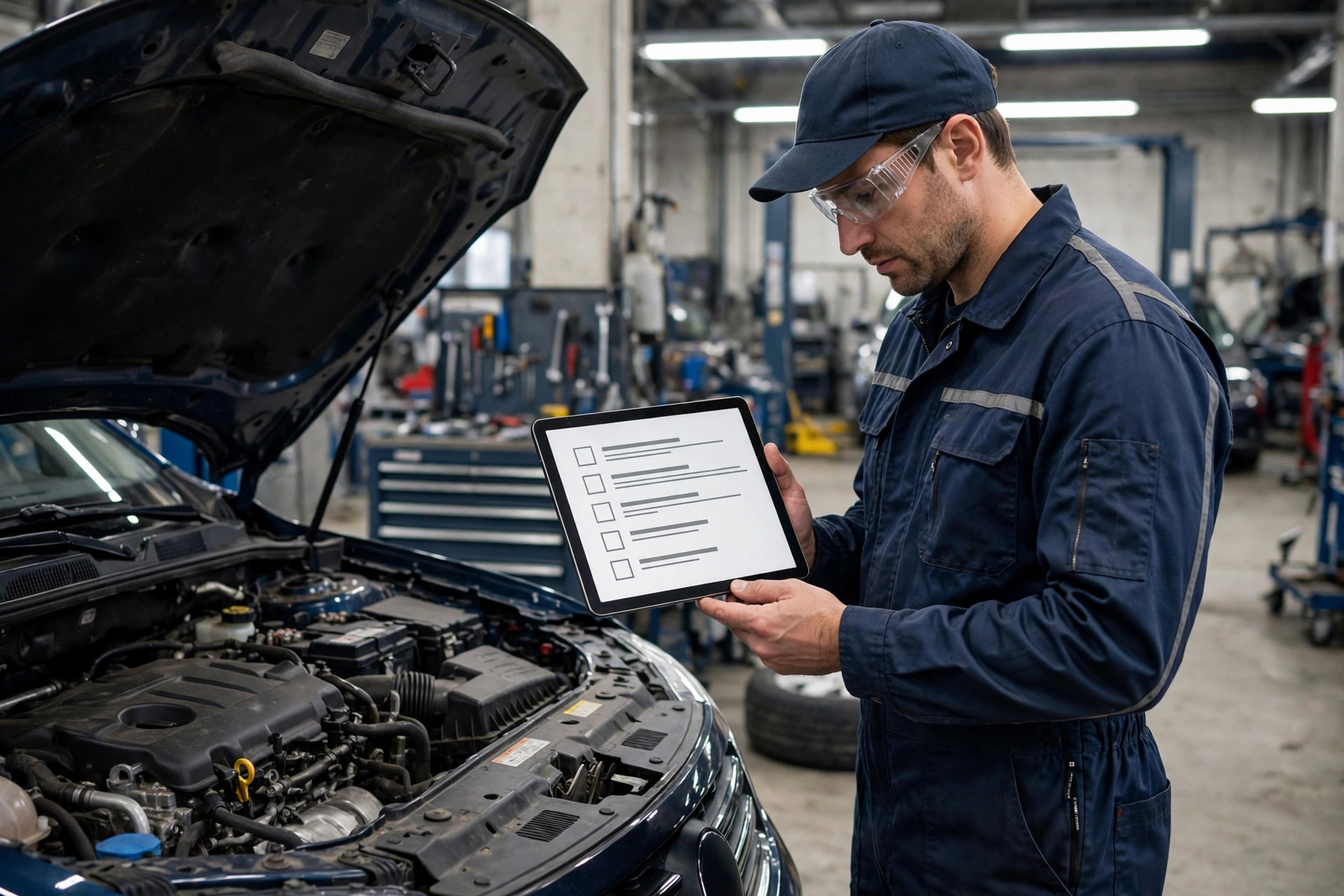
Good write-ups feed good emails: the data your advisors capture today powers the reminders that fill next month’s bays.
Frequently asked questions
How often should an auto repair shop send marketing emails?
Send triggered emails as needed (service reminders, declined follow-ups, review asks) and cap promotional emails at one per customer per week. Most customers will receive one to two emails a month from the reminder sequences, which feels helpful rather than intrusive when each email references their actual vehicle.
What is the best email sequence for bringing back old customers?
The maintenance reminder is the workhorse: a vehicle-specific email 1 to 2 weeks before the next service is due. For customers who have been away 6+ months, send a “we have not seen your [vehicle] in a while” check-in with a free multi-point inspection offer. Declined-service follow-ups at 30, 60, and 90 days recover 15 to 25% of postponed work.
How do I get more Google reviews for my auto repair shop?
Email every customer 24 to 48 hours after pickup with a one-question satisfaction check. Happy customers get direct links to your Google profile; unhappy ones get routed to the manager privately. This two-step approach steadily grows your public reviews while catching problems before they become bad reviews.
What data does my shop need to run service reminders?
Customer name and email, vehicle year/make/model, odometer readings and service dates, declined recommendations with quoted prices, and inspection or registration expiry dates. Most of this already lives in your shop management system; inspection dates and declined reasons are the two items shops most often fail to record.
Should I offer discounts in my shop’s emails?
Use discounts sparingly. They work in declined-service follow-ups (a modest incentive to complete postponed safety work) and seasonal pushes, but avoid discounting routine reminders. Customers who get 20% off every oil change learn to wait for the coupon, which permanently erodes your margins on work they would have bought anyway.
Bring every car back to your bays
Digital Hayder builds email and automation systems for auto repair shops: mileage-based service reminders, declined-service follow-up sequences, review generation, and instant missed-call follow-up, all wired into your shop management software. Tell us about your customer list and your bays, and we will map the system that fills them.
Contact Us