Facebook ads can fill an HVAC company’s schedule with tune-up bookings, system replacements, and service calls, or they can quietly burn through a budget with nothing to show. The difference is rarely luck. It comes down to knowing what these ads should cost, what drives the price up or down, and how to structure campaigns so every dollar is accountable. This guide gives you real numbers: typical cost per click, cost per lead, and monthly budgets for HVAC companies, all labeled as the typical ranges they are, plus the exact levers that lower your cost per booked job.
The quick answer
- Cost per click: HVAC ads typically run $1 to $4 per click, depending on market and creative.
- Cost per lead: a qualified HVAC lead from Facebook typically costs $25 to $75.
- Starter budget: $750 to $1,500 a month is realistic for testing; growth-stage shops spend $2,000 to $5,000+ a month.
- What you pay for: Facebook charges per impression in an auction; better creative and tighter targeting lower your effective cost.
- Best use: seasonal tune-up offers, system replacement promos, and retargeting website visitors.
- Watch out for: cheap leads that never answer the phone. Track cost per booked job, not just cost per lead.
How Facebook ads are priced for HVAC companies
Facebook does not sell you a fixed number of leads for a fixed price. It runs an auction: every time a user opens the app, advertisers bid for that impression, and Facebook shows the ad it predicts will create the most value, weighing the bid against the ad’s expected engagement. You set a daily or lifetime budget, and Facebook spends it chasing the result you told it to optimize for, such as link clicks or leads. Two HVAC companies in the same city can pay very different prices for the same audience, because the auction rewards ads people actually engage with.
The metrics that matter
Three numbers tell you almost everything about your costs. CPM is the cost per thousand impressions, the raw price of attention. CPC is the cost per click, what you pay when someone taps through to your site or form. CPL is the cost per lead, what you pay when someone actually submits their contact details. For planning, CPL is the number that matters most, because clicks and impressions are only valuable if they turn into leads. Always push your reporting one step further, to cost per booked appointment, because that is the number that decides whether the ads make money.
What HVAC Facebook ads typically cost
The ranges below reflect what HVAC companies commonly report spending. Treat them as typical ranges for planning, not guarantees: your market, season, creative, and offer move the real numbers.
| Metric | Typical range | What it means for you |
|---|---|---|
| CPM (cost per 1,000 impressions) | $10 to $30 | Higher in competitive metro markets and during peak season |
| CPC (cost per click) | $1 to $4 | Strong creative with a clear offer lands at the low end |
| CPL (cost per lead) | $25 to $75 | Tune-up offers at the low end, replacement quotes higher |
| Cost per booked appointment | $75 to $200 | Depends heavily on your speed to contact and follow-up |
Why the ranges are wide
A $29 tune-up special in a small market with great creative can produce leads under $20. A system replacement campaign in a competitive metro, running in peak summer with average creative, can push past $75 a lead. Neither number is wrong. They reflect different offers, different competition, and different execution. The goal of this guide is to move you toward the low end of every range.
Cost by campaign type
Not all HVAC campaigns cost the same, because not all of them ask for the same thing. Match the campaign type to the job you want it to do.
Seasonal tune-up and maintenance offers
The workhorse of HVAC Facebook advertising. A low-priced seasonal offer, like a $29 or $49 tune-up special, converts well because the commitment is small. These campaigns generate volume: tune-up visits that turn into repair work and replacement opportunities on site. Typical budgets run $750 to $2,000 a month during shoulder seasons.
- Best run 4 to 6 weeks before peak heating and cooling seasons
- Simple offer, simple form: name, phone, preferred day
- Expect a share of price shoppers; the tech’s job is to convert them on site
System replacement and high-ticket promos
Ads for full system replacements, with financing offers or seasonal rebates, produce fewer but far more valuable leads. One booked replacement can be worth $8,000 to $15,000 in revenue, so a $75 lead is cheap by comparison. These campaigns need stronger proof: reviews, before and after installs, financing details, and warranty information.
- Longer consideration cycle; expect follow-up to close most of these
- Retargeting website visitors works especially well here
- Typical budgets run $1,500 to $4,000 a month in competitive markets
Retargeting past visitors
Ads shown to people who visited your website but did not convert. This audience already knows you, so costs run far below cold campaigns. Every HVAC company running Facebook ads should have retargeting live: it is the cheapest lead source on the platform. Budget can be modest, often $200 to $500 a month, because the audience is small by definition.
- Show testimonials and limited-time offers to nudge visitors back
- Exclude people who already converted so you stop paying for them
- Refresh creative monthly to avoid ad fatigue in a small audience
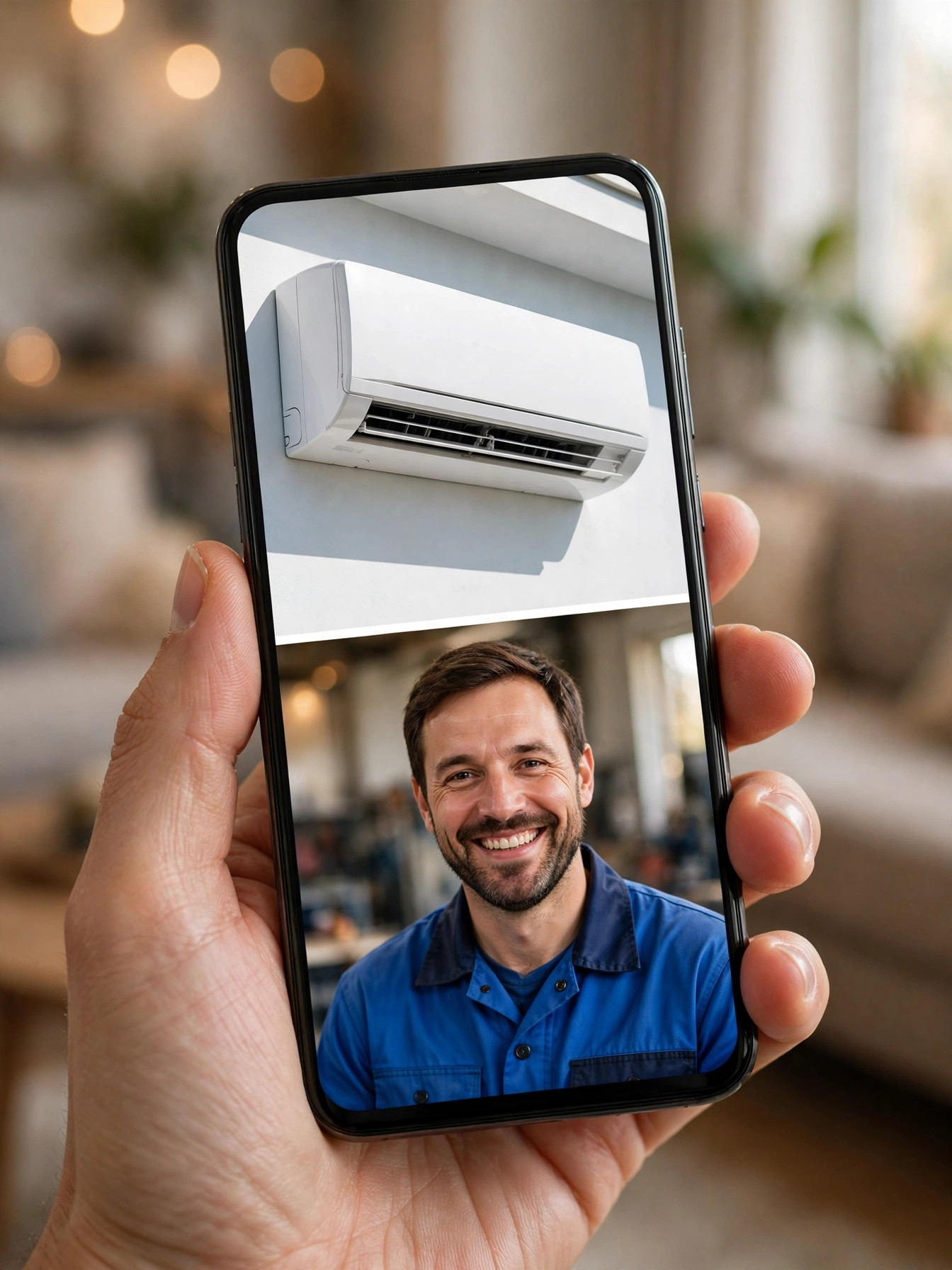
Seasonal offers with a clear price are the most reliable HVAC ad format on Facebook.
What drives your cost up or down
Six factors decide where you land inside those ranges. Get them right and your cost per lead drops. Get them wrong and you pay the high end for poor results.
1. Creative quality
The single biggest lever. Facebook’s auction rewards ads people engage with, so a video of your actual techs, a real before and after, or a short customer testimonial clip will beat a generic stock photo every time, and the auction prices it accordingly. Plan on refreshing creative every 4 to 6 weeks. Costs creep up as the same audience sees the same ad too many times.
2. The offer
A specific, low-friction offer converts far better than “call us for all your HVAC needs.” Put a number on it: a tune-up price, a dollar amount off a replacement, a free second opinion. The offer is what turns an impression into a lead, and weak offers are the most common reason for $80+ cost per lead.
3. Targeting
For HVAC, broad local targeting usually beats hyper-narrow interest targeting. Homeowners aged 30 to 65+ within your service area, with creative that speaks to their situation, outperforms tiny audiences that exhaust quickly. Keep your service area tight: paying for clicks from towns you do not serve is pure waste.
4. Seasonality
Costs rise during peak summer and winter because every HVAC company advertises at once. The smart money runs tune-up campaigns in the shoulder seasons, when attention is cheaper and you are filling the schedule ahead of the rush. Replacement campaigns can run year-round, since a failing system does not wait for convenient timing.
5. Landing page and form
The ad only buys the click. If the landing page is slow, confusing, or asks for too much information, your cost per lead doubles while your cost per click stays the same. Send ad traffic to a dedicated page that matches the ad’s promise, with a short form and a click-to-call button. Never send paid traffic to your homepage.
6. Speed to contact
A lead contacted within 5 minutes converts dramatically better than one contacted the next day. Every hour of delay raises your effective cost per booked job, because fewer leads turn into appointments. An instant text-back to every new lead is the cheapest performance improvement in this entire guide.
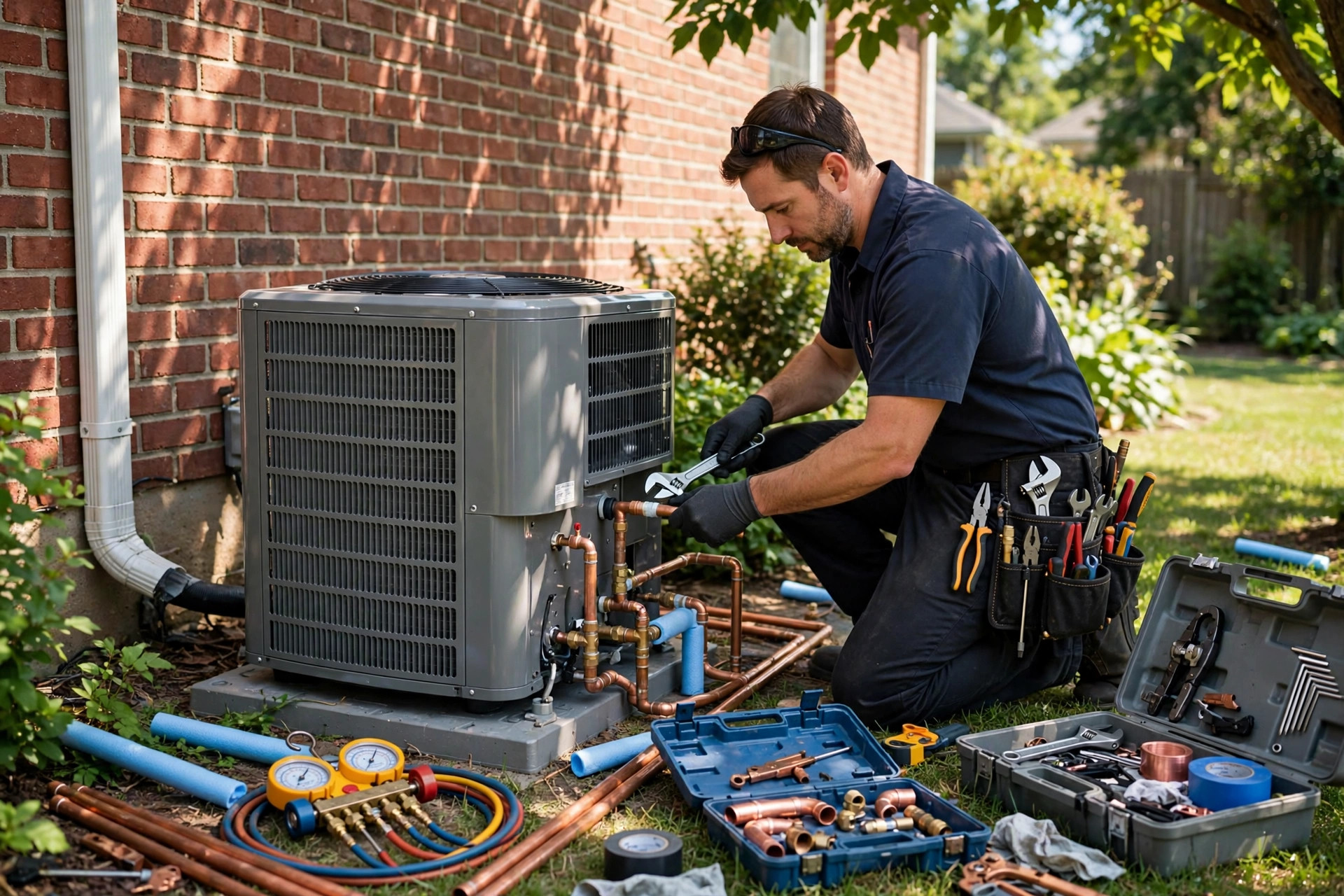
Real photos of your techs and installs outperform stock imagery in the ad auction.
How to budget: monthly spend by business size
Your budget should be big enough to exit the learning phase and produce a readable number of leads each week. Tiny budgets produce tiny, noisy data that teaches you nothing. The ranges below are typical starting points.
| Business size | Typical monthly ad spend | What it buys |
|---|---|---|
| Single-truck or small shop | $750 to $1,500 | One seasonal offer campaign plus retargeting; 15 to 40 leads a month at typical CPLs |
| Growing shop, 3 to 6 techs | $2,000 to $4,000 | Seasonal offers plus a replacement campaign; enough volume to keep techs busy in shoulder seasons |
| Established company, 7+ techs | $5,000 to $10,000+ | Always-on campaigns across offers, retargeting, and service areas; managed and tested continuously |
Do not forget management cost
Ad spend is only part of the total. Managing the campaigns yourself costs your time: expect 3 to 5 hours a week for a basic setup. Hiring it out typically costs $500 to $1,500 a month for a freelancer or small agency on top of ad spend, or 10 to 15% of spend at larger budgets. Either way, budget for creative: even phone-shot videos of real jobs outperform stock, and they cost nothing but a few minutes of a tech’s time.
How to lower your cost per lead
Run through this list before you raise your budget. Most HVAC advertisers can cut CPL by a third or more with these fixes.
- Lead with video. Short clips of real techs, real installs, and real customers beat static images on cost per lead in most tests. Film on a phone; authenticity beats polish.
- Put the offer in the first three seconds. Viewers decide fast. The price, the discount, or the free offer should be visible immediately, not buried at the end.
- Use instant forms carefully. Facebook’s built-in lead forms convert well because visitors never leave the app, but the leads can be lower intent. Add one qualifying question, like the age of their system, to filter tire-kickers.
- Follow up in minutes, not hours. An automated text the moment a lead arrives, plus a call within 5 minutes during business hours, is the highest-ROI change most shops can make.
- Retarget everyone. Website visitors, video viewers, and past engagers are your cheapest audiences. Keep retargeting running always.
- Kill losers fast. Give a new ad 3 to 5 days and a few dozen clicks. If CPL is far above your target with no improvement, pause it and test new creative instead of raising the budget on a weak ad.

Track cost per booked job, not just cost per lead, to know if the ads truly pay.
Facebook ads vs Google ads for HVAC
Most HVAC companies eventually run both, but they do different jobs. Understanding the difference keeps you from expecting one channel to do the other’s work.
| Facebook ads | Google ads | |
|---|---|---|
| You pay for | Impressions and clicks; leads typically $25 to $75 | Clicks; HVAC clicks often $15 to $40 in competitive markets |
| Best for | Creating demand: tune-up offers, replacements, brand building | Capturing demand: “AC repair near me” searches |
| Intent | Lower; the homeowner was not looking for HVAC | Higher; the homeowner searched with a problem |
| Targeting | Demographics, location, interests, past visitors | Keywords and location, interests, past visitors |
| Creative | Video and images carry the ad | Text and landing page carry the ad |
| Typical starter budget | $750 to $1,500/mo | $1,500 to $3,000/mo |
Google captures homeowners with an urgent problem right now. Facebook creates the tune-up visit and the replacement conversation before the emergency happens. Together they cover both halves of the market.
Tracking: prove the ads pay for themselves
The shops that lose money on Facebook ads usually share one trait: they cannot say which leads came from the ads or what happened to them. Fix that before you scale spend.
- Separate tracking numbers. Use a call tracking number on your ad landing pages so ad calls are counted separately from every other source.
- Log every lead. Every form fill and call goes into a simple CRM or spreadsheet with the source marked. No lead exists only in someone’s memory.
- Track to the booked job. Cost per lead is a midpoint metric. The numbers that decide your budget are cost per booked appointment and revenue per lead.
- Review weekly. Check CPL, booking rate, and cost per booked job every week. Pause what is not working, shift budget to what is, and test one new creative each week.
Your first 90 days of HVAC Facebook ads
- 1Days 1 to 14: set up tracking: call tracking numbers, lead logging, and a dedicated landing page for your seasonal offer. Film three short videos with your phone: a tech introduction, a tune-up walkthrough, and one customer testimonial.
- 2Days 15 to 30: launch one cold campaign with your best offer and one retargeting campaign for website visitors. Set up instant text-back on every new lead. Watch CPL daily but judge nothing before day 5.
- 3Days 31 to 60: pause creative that misses your CPL target, double down on winners, and test two new videos. Tighten the audience to the zip codes that produced booked jobs. Start a replacement-focused campaign if tune-up volume is steady.
- 4Days 61 to 90: review cost per booked job by campaign, shift budget to the winners, and plan the next seasonal offer. By now you should know your true CPL and booking rate, which makes every future budget decision simple arithmetic.
Frequently asked questions
How much should an HVAC company spend on Facebook ads?
A realistic starting range is $750 to $1,500 a month for a small shop, scaling to $2,000 to $5,000 or more as results prove out. The budget needs to be large enough to produce a readable number of leads each week. Start with one offer and retargeting, then expand what works.
What is a good cost per lead for HVAC Facebook ads?
Typical ranges run $25 to $75 per lead, with tune-up offers at the low end and replacement campaigns higher. But CPL alone does not tell you if ads work. A $60 lead that books at 40% is cheaper per job than a $30 lead that books at 10%. Track cost per booked appointment as your deciding metric.
Are Facebook ads worth it for HVAC companies?
They work best for creating demand: tune-up specials, maintenance plans, and replacement promos shown to homeowners before they have an emergency. They are less effective for emergency calls, where Google search captures the urgent intent. Most successful HVAC companies run both channels for those two different jobs.
How long before Facebook ads produce results for HVAC?
Leads usually start arriving within days of launch. But give a new campaign 2 to 3 weeks before judging it: the algorithm needs time to learn, and you need enough data to separate real performance from noise. Most shops know their true cost per lead by day 30 to 45.
Should I use Facebook lead forms or send traffic to my website?
Facebook’s built-in lead forms usually produce more leads at a lower cost per lead, because visitors never leave the app. Website landing pages usually produce higher-intent leads that book at better rates. Test both. A common winning setup is lead forms with one qualifying question, plus retargeting that sends warm visitors to a full landing page.
Want Facebook ads that book HVAC jobs, not just clicks?
Digital Hayder runs ad campaigns for home service businesses: offer strategy, creative direction, landing pages, instant lead follow-up, and weekly reporting on cost per booked job. Tell us about your shop and we will map out what your ad budget should produce.
Contact Us