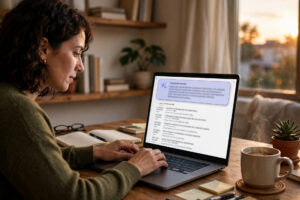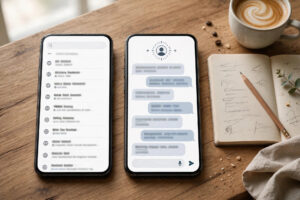
A homeowner searches “how much does a water heater cost,” reads the answer right on the Google results page, and closes the tab. A patient searches “dentist open Saturday near me,” sees your hours, rating, and phone number in the map pack, and calls you directly. Neither of them visited a website. Both searches were zero-click searches, and they now make up the majority of all Google searches. For local businesses, this feels like a threat: fewer website visits, less traffic to measure. But look closer and the picture changes. Many zero-click searches still end in a phone call, a direction request, or a booking. The businesses winning in a zero-click world are not the ones with the most website traffic. They are the ones whose information dominates the results page itself. This guide shows you how to become one of them.
The quick answer
- Zero-click searches end on the results page: the searcher gets the answer from a snippet, AI overview, map pack, or knowledge panel and never clicks a website.
- Most Google searches are now zero-click: well over half of searches end without a click to any website, and the share keeps rising on mobile.
- Zero-click is not zero-value: calls, direction requests, and bookings from the results page are conversions that never show up as website traffic.
- Your Google Business Profile is the new homepage: for many customers, your profile, not your website, is the first and last thing they see.
- Win the answer, not just the click: structured facts, strong reviews, and cited content put your business inside the on-page answer.
- Typical cost: $0 to $500 a month DIY; $1,000 to $3,000 a month for an agency managing profile, reviews, and answer-focused content.
What zero-click searches are
A zero-click search is any search that ends without the user clicking through to a website. Google answers the question directly on the results page and the searcher moves on. The answer can take many forms: a featured snippet quoting a web page, an AI Overview summarizing several pages, a knowledge panel with business facts, a map pack with phone numbers and directions, a “people also ask” box, or a direct answer like a unit conversion or the weather.
Research firms tracking search behavior have repeatedly found that a majority of Google searches now end this way, with mobile searches skewing even more zero-click than desktop. The searcher is not being lazy. Google has spent years getting better at answering directly, and customers prefer the fastest path to what they need. For a local business, the practical meaning is simple: the results page is no longer just a doorway to your website. For many searches, it is the entire customer interaction.
Examples you see every day
- “What time does [your business] close?” Answered by your Google Business Profile hours. Zero clicks needed.
- “How much does [service] cost?” Answered by a featured snippet or AI Overview quoting a cost guide. The searcher may never open the guide.
- “Best [service] near me” Answered by the map pack: names, ratings, distances, phone numbers. The call happens from the results page.
- “Do you need an appointment for [service]?” Answered by your profile Q&A or an AI summary. The searcher calls or books directly.
Why zero-click searches keep growing
Four forces are pushing the zero-click share higher every year. First, mobile: more than half of searches happen on phones, where screens are small, patience is short, and calling from the results page is one tap. Second, Google’s answer features keep expanding: AI Overviews now sit above organic results for a large share of informational queries. Third, voice search and AI assistants read answers aloud, which is zero-click by nature. Fourth, the map pack keeps absorbing transactional searches: for “near me” queries, Google shows everything needed to choose and contact a business without any website visit.
None of this is reversing. Planning your marketing around website clicks as the only thing that counts means planning for a shrinking slice of customer behavior. The businesses that thrive measure what actually matters: calls, bookings, direction requests, and branded searches, wherever they happen.
Most searches now end on the results page. Your business needs to win there, not just on your website.
What zero-click searches cost local businesses
The honest accounting has two sides. On the cost side, informational content earns fewer visits than it used to. A cost guide that once brought 2,000 visits a month might bring 1,200 now, with the rest of the readers satisfied by the snippet or AI summary. If you sell ads against pageviews, that hurts directly. If you measure marketing success by traffic alone, the numbers look like decline even when the business is fine.
On the other side, transactional searches still convert without clicks. A map pack impression that produces a phone call is worth more than ten website visits that produce nothing. Direction requests, click-to-call taps, and profile-driven bookings are real revenue events that never touch your analytics as “traffic.” Businesses that track calls and bookings separately from website visits usually find the zero-click shift is neutral or positive for revenue. The pain is concentrated in vanity metrics, not in the bank account.
The searches you can still win: a field guide
Not all zero-click searches are equal. Some take value away; others hand it to whichever business owns the on-page answer. Here is how the main types break down for a local business.
| Search type | Zero-click outcome | How your business benefits |
|---|---|---|
| “Near me” / map searches | Customer calls or gets directions from the map pack | Complete profile, strong reviews, accurate hours win the call |
| Cost and pricing questions | AI Overview or snippet gives the range | Your cost guide gets cited; your name appears in the answer |
| Hours and location questions | Knowledge panel answers directly | Accurate profile data makes you the answer |
| “Best” and comparison questions | AI summary names top options | Reviews, mentions, and quotable content get you named |
| How-to questions | Snippet or video answers the task | Your how-to content gets cited; brand exposure to future buyers |
| Branded searches (your name) | Knowledge panel shows everything | Rich panel with reviews, posts, and photos pre-sells the caller |
The pattern: every row rewards the same assets. Accurate profiles, strong reviews, clear factual content. Zero-click does not demand a new strategy. It demands that you execute the local visibility basics better than competitors, because the results page shows fewer businesses than the old ten blue links ever did.
Strategy 1: Make your Google Business Profile your second website
Treat your profile as the page most customers will see. For zero-click searches, it often is the only page they see.
- Every field complete: description, services with details, hours including holidays and special hours, service areas, attributes, appointment links. Empty fields are answers you forfeit to competitors.
- Photos and video: 50 or more photos minimum: storefront, team, work in progress, finished results. Add a short video tour if you can. Visual profiles earn more calls and give Google more to show.
- Weekly posts: offers, seasonal reminders, completed projects, events. Posts appear in your knowledge panel and keep it fresh.
- Q&A, seeded and monitored: ask the real questions yourself and answer them well, then watch for public questions and answer within a day. Each answer is a fact Google can serve without a click.
- Products and services menus: list actual services with prices where possible. “Drain cleaning from $129” in your profile can win the customer before they ever search for prices.
- Reviews as content: ask on every job, respond to all within 48 hours. Your star rating and review count appear in nearly every local answer format Google serves.
Calls, directions, and bookings straight from the results page are conversions that never count as website traffic.
Strategy 2: Become the cited source inside AI answers
When Google answers with a snippet or AI Overview, it names its sources. Being the cited source puts your business name in front of every searcher who reads that answer, which is branding at a scale small businesses rarely get for free.
The mechanics are the same as AI Overview optimization: answer-first page structure, headings phrased as customer questions, direct answers in the opening sentences, key facts in tables and lists, FAQ schema marking up the content. Our AI Overviews optimization guide walks through the full method. The pages worth this treatment are your cost guides, comparisons, and the questions your staff answers daily. One cited page can put your name in thousands of answers a month.
Also publish the short, factual content that feeds knowledge panels: an about page with founding details, service area pages naming the towns you serve, and team pages with real names and credentials. Google pulls panel facts from across the web, and your own site is the most controllable source.
Strategy 3: Convert without the click
If the customer will not visit your website, bring the conversion to the results page. Every action a customer can take without clicking through is a zero-click conversion you can win.
- Click-to-call: keep your profile phone number current and answered. Most profile calls happen on mobile, during and after hours. Missed-call text back catches the ones you cannot answer live.
- Booking and quote links: add your online booking, quote request, or contact link to your profile. Google shows these buttons directly; each one is a conversion path with zero website visits.
- Directions: accurate map pin and address. Direction requests are among the strongest purchase-intent signals in local search.
- Messaging: enable profile messaging or chat and answer fast. Customers who message from the results page are one step from booking.
- Menu and price lists: for restaurants, clinics, and salons, complete menus and service price lists in the profile remove the last reason to click elsewhere.
Track these in your profile insights: calls, direction requests, website visits, bookings. When someone says zero-click searches produce nothing, show them the call log.
Strategy 4: Build demand that skips search entirely
The ultimate defense against zero-click search is customers who do not need to search. Direct and repeat business bypasses Google completely.
- Email and SMS list: collect contact details at every job and send useful seasonal reminders twice a year. A past customer who texts you directly is a zero-cost booking no search engine can take.
- Referral program: referred customers arrive pre-sold and never comparison shop. A simple “refer a neighbor, you both save” offer on every invoice compounds over time.
- Social and community presence: local Facebook groups, Nextdoor, Instagram. Customers who follow you think of you first when the need arises.
- Memorable branding: wrapped vehicles, yard signs, consistent name and logo. Offline visibility drives branded searches, and branded searches convert at the highest rate of any search type.
None of this shows up as organic traffic, which is exactly the point. A business with strong direct demand is immune to algorithm shifts because it does not depend on the algorithm.
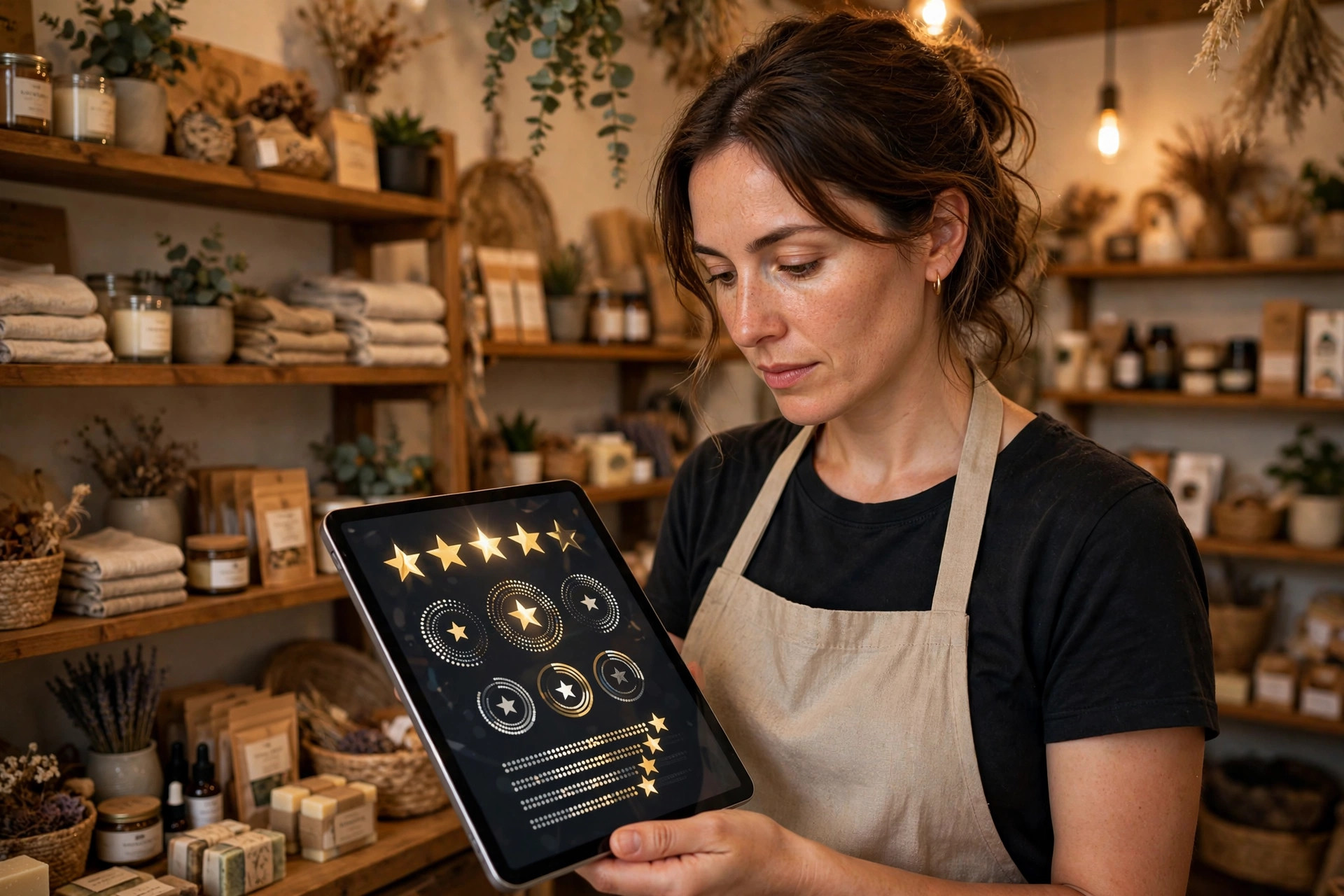
Reviews and repeat customers create demand that never passes through a search results page.
How to measure performance when clicks lie
Website traffic is now a partial metric. Build your reporting around the actions that pay.
- Profile insights: track calls, direction requests, bookings, and messages from your Google Business Profile monthly. This is your zero-click dashboard.
- Call tracking: use tracked numbers on your profile, website, and ads so every call is attributed to its source. A call from the map pack is the purest zero-click conversion.
- Branded search volume: rising searches for your business name in Search Console mean your on-page visibility is turning into demand.
- Revenue per channel: tie bookings back to source at intake with a “how did you hear about us” question. Compare revenue from profile-driven calls against website-driven leads.
- Share of local voice: monthly, check your key searches and note whether your business appears in the map pack, the AI answer, or the snippet. Presence across all three is the real scoreboard.
Report these numbers together. When traffic dips but calls hold steady, the story is not decline. It is customers converting earlier in the journey.
What does a zero-click strategy cost?
Most of the work is profile management, reviews, and content you should already be doing. Typical ranges:
| Item | Typical cost | Notes |
|---|---|---|
| DIY program | $0 to $500/mo | Review software ($30 to $150/mo), your time for profile posts and one content piece monthly |
| Profile + review management service | $300 to $800/mo | Posts, Q&A monitoring, review requests and responses handled for you |
| Answer-focused content (freelance) | $200 to $600 per piece | Cost guides, comparisons, and FAQ pages built to be cited |
| Call tracking | $50 to $150/mo | Attribution for profile, site, and ad calls; essential for proving ROI |
| Agency program | $1,000 to $3,000/mo | Profile management, review engine, monthly citable content, zero-click reporting dashboard |
Typical ranges, not fixed prices. The cheapest items on this list, complete profiles and answered reviews, deliver the most zero-click value.
Your 90-day zero-click plan
- 1Days 1 to 14: complete your Google Business Profile fully: every field, 50 plus photos, services with prices, booking links, seeded Q&A. Restart the review ask on every job.
- 2Days 15 to 30: set up call tracking on your profile and website. Add “how did you hear about us” to intake. Post weekly on your profile.
- 3Days 31 to 60: publish one cost guide and one comparison page built to be cited, with FAQ schema. Enable profile messaging and booking buttons.
- 4Days 61 to 90: build your zero-click dashboard: profile insights, call sources, branded search trend. Review which searches show you in answers and close the gaps.
Frequently asked questions
Are zero-click searches bad for local businesses?
Not necessarily. Informational searches produce fewer website visits, but transactional searches still convert through calls, directions, and bookings from the results page. Businesses that track conversions instead of traffic usually find revenue holds steady or grows.
How do I get my business into Google’s answer boxes?
Complete your Google Business Profile with accurate, detailed facts; publish answer-first content with clear headings and FAQ schema; and build strong reviews. Google pulls on-page answers from profiles, well-structured pages, and review content.
Should I still invest in my website if searches do not click through?
Yes. Your website feeds the answers: snippets quote it, AI Overviews cite it, and knowledge panels pull facts from it. It also converts the customers who do click, who tend to be deeper in the buying process. A thin website means thin answers about your business.
What is the most important zero-click metric to track?
Phone calls from your Google Business Profile. They are the closest thing to revenue in the zero-click world: a customer who calls from the results page skipped your website entirely and is ready to buy. Track them with a dedicated number.
Can small businesses compete with big brands in zero-click results?
Often yes, because local answers favor proximity, ratings, and specific facts over brand size. A local shop with 300 reviews and a complete profile beats a national chain with a thin local listing in the map pack and local answer boxes.
Want to win customers who never click?
Digital Hayder builds zero-click visibility for local businesses: profile optimization that converts on the results page, review engines, citable answer-first content, call tracking, and reporting on the metrics that actually pay. Tell us about your business and we will map the plan.
Contact Us