
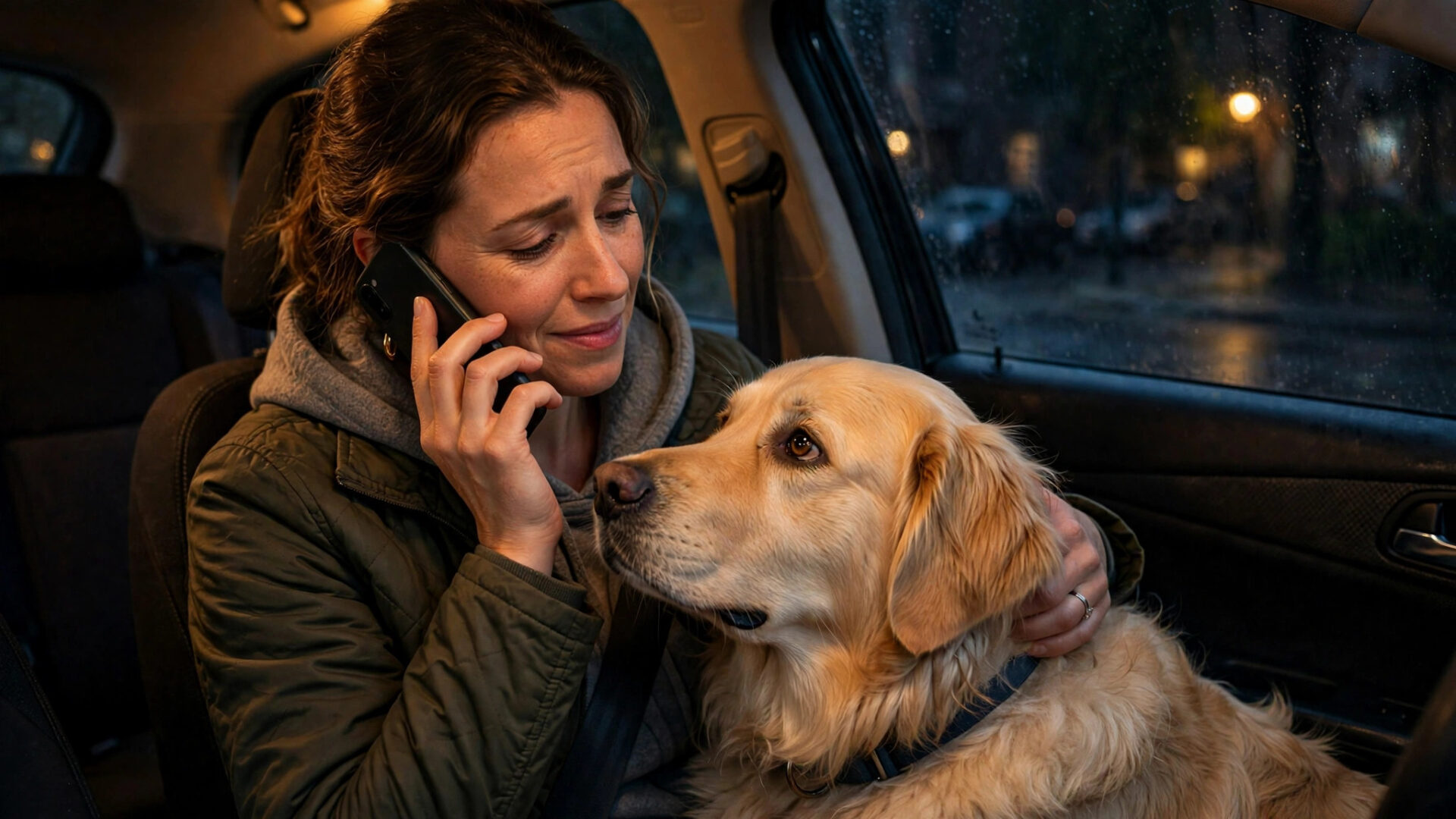
A panicked owner calls at 6:40 pm. Their dog just ate a chocolate bar. Your front desk is handling a checkout, a barking lobby, and two lines already on hold. The call goes to voicemail. The owner calls the emergency clinic across town instead, and they do not come back. An AI receptionist for veterinary clinics exists for exactly this problem: every call answered in seconds, urgent cases escalated instantly, routine bookings handled without touching your staff.
This guide covers what a veterinary AI receptionist actually does, how urgent-versus-routine triage works, what after-hours coverage looks like, what it costs, and how to set it up without losing the personal touch your clients expect.
The quick answer
- What it does: answers every call 24/7, books appointments, triages urgent versus routine cases, handles prescription refill requests, and routes emergencies to your on-call vet or the nearest emergency hospital.
- Typical cost: $50 to $300 per month depending on call volume and features, against $3,000 to $4,000 a month for a human receptionist once salary, benefits, and training are counted.
- Why clinics buy it: vet front desks face brutal phone volume plus lobby chaos plus some of the highest burnout in any service industry.
- The payback: industry pricing guides note most practices recover the monthly cost by capturing just two or three additional appointments per week.
Why vet clinic phones are uniquely brutal
A human doctor’s waiting room is generally quiet. A veterinary lobby is barking dogs, stressed cats, and anxious owners, sometimes all at once. Your receptionist is expected to check in a reactive German Shepherd, process a payment, and answer a ringing phone with a high-emotion emergency on the other end. That is not a staffing problem you can solve with a pep talk. It is a design problem.
The people data makes it plain. Industry reporting puts chronic exhaustion at 72 percent of veterinary professionals. Client service representatives, technicians, and assistants turn over at 23 to 33 percent, and the Merck Animal Health Veterinary Wellbeing Study found the support team faces serious psychological distress, in some measures more than veterinarians themselves (Today’s Veterinary Business). More than half of veterinary CSRs last under two years in the job, and burnout shows up as mistakes, absenteeism, and lost interest in the work (Veterinary Practice News).
Now add the call volume. One documented practice profile, a four-veterinarian general practice in suburban Colorado, averaged 105 calls a day with a 31 percent missed-call rate. That was 32 missed calls a day, translating to roughly four lost clients a week, and exit surveys said “difficulty reaching the office by phone” was the number-one reason clients left, above pricing, location, and doctor preference (QuickVoice case study). Research from SCORE estimates small businesses lose an average of $75,000 a year to missed calls, and for a clinic, the number is arguably conservative: a new pet relationship means years of wellness visits, vaccinations, dental cleanings, and the occasional surgery (CallAgentAI).
What an AI receptionist for veterinary clinics does
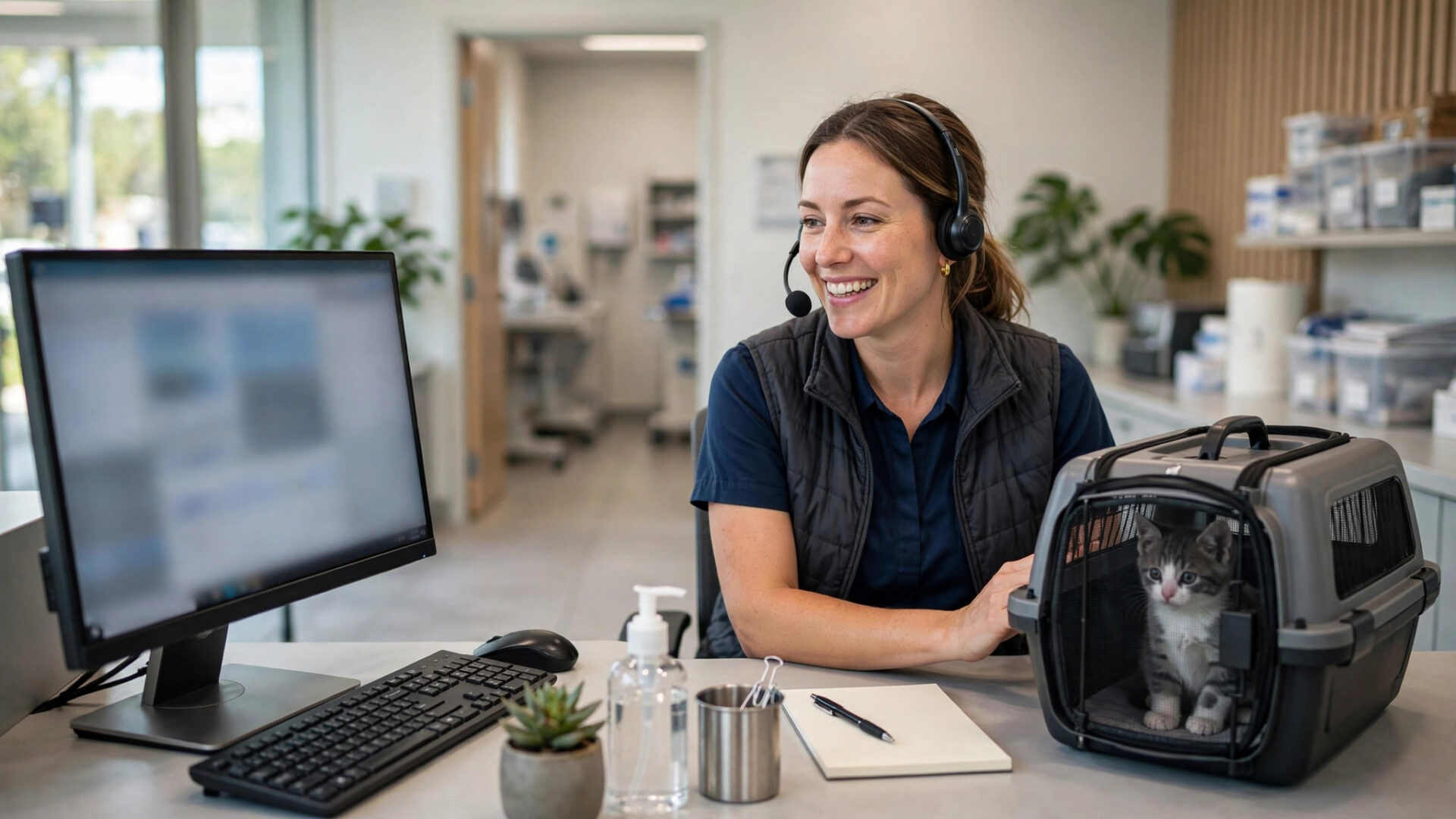
An AI receptionist is a voice agent that answers your clinic’s phone line, on every line, at every hour. It is not a phone tree and not a voicemail. It holds a real conversation, takes action, and logs everything. The core jobs:
- Answers every call instantly. No hold, no voicemail, no “we are experiencing higher than normal call volume.” One line or ten, 8 am or 11 pm, the caller hears a professional greeting.
- Books appointments. Connected to your practice management software, it offers real slots, books the right appointment type, and sends confirmations. Wellness exam, sick visit, dental, surgery consult: it knows the difference.
- Triages urgent versus routine. It listens for urgency signals and escalates true emergencies immediately while routing routine requests into the standard booking flow. More on this below, because it is the feature that matters most.
- Handles prescription refill requests. Pet name, medication, pickup or delivery preference. The request goes to your team for approval without a phone game of tag.
- Manages the routine traffic. Hours, directions, pricing for common services, vaccination requirements for boarding, new-client paperwork. The questions your staff answers fifty times a week.
- Sends reminders and recalls. Appointment confirmations, day-before reminders, and overdue wellness or vaccine nudges that cut no-shows and fill the schedule.
Urgent versus routine: how AI triage works
Triage is the feature that separates a veterinary AI receptionist from a generic answering bot, and it is the one you should test hardest before buying. The logic is straightforward: the AI listens for symptom keywords and urgency signals during the call. Phrases like “not breathing,” “ate something,” “seizure,” “hit by a car,” or “bleeding” trigger immediate escalation. Routine calls, annual exams, nail trims, dental cleanings, vaccine updates, flow into standard appointment booking (AIRA).
What escalation means is up to you. Options most clinics use:
- Page the on-call veterinarian with a summary of the symptoms and the caller’s number, so the callback is informed, not blind.
- Route to your emergency protocol, including the nearest emergency hospital with a warm handoff: the AI tells the caller exactly where to go and what to say on arrival.
- Stay on the line with basic first-response guidance, like keeping the pet still and bringing any packaging if something was ingested, while the escalation runs.
The triage rules are customizable, so build them with your lead veterinarian, not with a vendor’s default list. Test with real scenarios: “my dog is breathing funny,” “cat ate a lily,” “puppy has diarrhea but is playing normally.” The first is urgent, the second is an emergency (lilies are toxic to cats), the third is routine. If the AI gets these right, it is ready. If not, tune it until it does.
After-hours calls that stop going to voicemail
Pet emergencies do not respect business hours, and neither do worried owners. After-hours callers currently hear your voicemail and make a decision: wait until morning, or call someone else. Many call someone else, and some never come back.
An AI receptionist works evenings, weekends, and holidays at no extra cost. After-hours callers get a professional greeting instead of a recording. They can book the next available appointment, submit a refill request, and get emergency escalation when the call is urgent. Holiday coverage is automatic; there is nothing to configure when the clinic is closed (AIRA).
Set the after-hours rules clearly: which symptoms page the on-call vet, which route to the emergency hospital, and what the AI says in each case. Owners calling at midnight are scared. A calm voice that says “I am connecting you to the doctor on call right now” keeps them your client. A voicemail beep sends them to your competitor’s emergency page.
This pairs naturally with a missed-call text-back setup: even the rare call the AI cannot take gets an instant text with a booking link, so nobody falls into a silent gap.
Appointment booking and refills without the phone tag
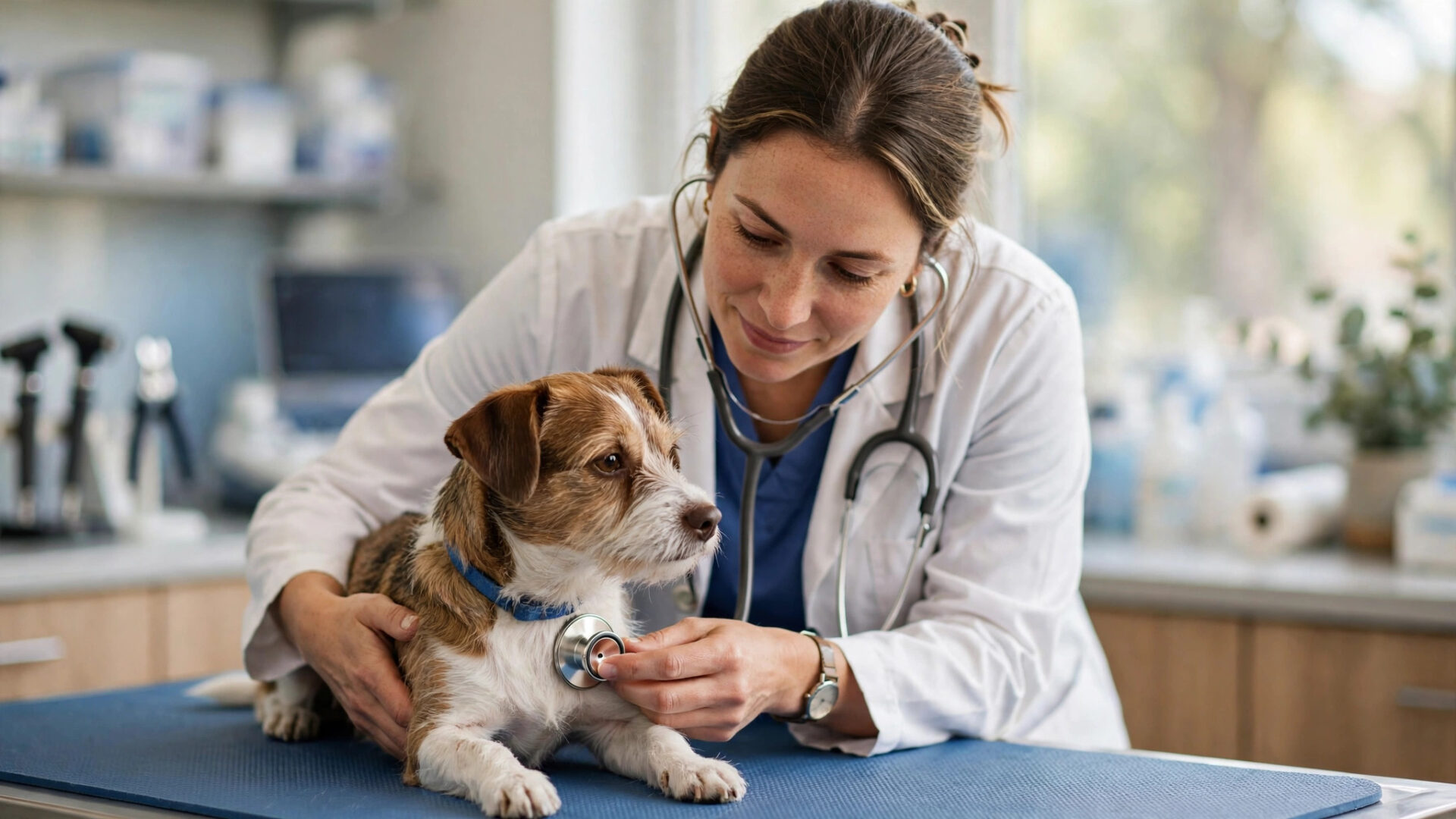
Booking is where the AI connects to your practice management software, Cornerstone, ezyVet, Covetrus, and similar systems, and this integration is the difference between a toy and a tool. With it, the AI sees real availability, books the correct appointment type and duration, and writes the client and pet details straight into the record. Without it, you have a polite message-taker creating manual work for your staff.
Prescription refills deserve their own flow because they are pure volume. The AI collects the pet’s name, the medication, and whether the owner wants pickup or delivery, then queues the request for your team’s approval. No hold music, no “let me check with the back,” no callback three hours later. Chronic-medication clients, the ones who call every single month, feel the difference immediately.
The same logic applies to boarding and grooming add-ons, vaccine reminders, and new-client intake. Every routine transaction the AI completes is a call your front desk never had to take, which is time they can spend on the clients standing in front of them. That is the burnout equation in reverse: fewer interruptions, calmer lobby, staff doing the human parts of the job instead of drowning in the repetitive ones.
What an AI receptionist for veterinary clinics costs
Published pricing guides put AI receptionist services for veterinary clinics at roughly $50 to $300 per month, depending on call volume, features, and integration depth (AIRA). Real examples from the market: AIRA’s own plans start at $99 a month for unlimited calls with appointment booking, emergency triage, and after-hours coverage; Vosita AIR starts at $299 a month with HIPAA-compliant handling and a signed BAA; ElevenLabs’ Reception product starts at $29 a month for 75 call minutes. Compare that against a full-time receptionist at $35,000 to $45,000 a year, or $3,000 to $4,000 a month once salary, benefits, and training are counted, and against a traditional answering service at $0.75 to $2.00 per call.
| Option | Typical cost | Best for |
|---|---|---|
| Vet-specific AI receptionist (e.g. AIRA) | From $99 per month, unlimited calls | Clinics that want triage, booking, and after-hours coverage built for vet workflows |
| General AI receptionist (ElevenLabs Reception and similar) | $29 to $199 per month by usage tier | Low call volume or a first test of AI answering |
| Medical-grade AI front desk (e.g. Vosita AIR) | From $299 per month | Practices wanting formal compliance handling and scheduling integrations |
| Human receptionist | $3,000 to $4,000 per month all-in | The in-person lobby experience, which AI does not replace |
| Traditional answering service | $0.75 to $2.00 per call | Simple after-hours message-taking, no booking or triage |
The honest comparison is not AI versus your receptionist. It is AI plus your receptionist versus your receptionist alone. The AI takes the phone volume, the after-hours calls, and the repetitive bookings. Your human staff handles the lobby, the scared owners, and the judgment calls. Most practices recover the monthly AI cost by capturing just two or three additional appointments per week, and given pet lifetime values, the math is kind.
Burnout relief for your front desk
This part matters more than most vendors talk about. Your CSRs are not quitting because the phone is hard. They are quitting because the phone never stops while everything else keeps piling on: the lobby, the checkout line, the doctor’s schedule changes, the upset client at the counter. The phone is the one part you can remove without hiring.
When the AI takes first contact, the job changes shape. Your receptionist stops being a switchboard operator and becomes a client experience person: greeting people properly, comforting the nervous owner, handling the complex cases that need a human. Practices that make this shift report calmer lobbies and staff who stay longer, because the work finally matches what they signed up for. Given that more than half of CSRs leave within two years, retention alone can justify the subscription.
Introduce it to your team the right way. This is not “the robot replacing you.” It is “the robot takes the 105 calls a day so you can do the parts of this job that need a person.” Staff who hear that framing become the AI’s biggest supporters, because they feel the relief in week one.
- 1Is the triage actually veterinary? Test it with real emergency scenarios before you sign. Generic urgency detection is not enough; it must know the difference between “puppy has diarrhea and is playing” and “cat ate a lily.”
- 2Does it integrate with your PMS? Cornerstone, ezyVet, Covetrus, or whatever you run. Real availability and real booking, not message-taking that creates manual entry.
- 3What happens after hours? Confirm the exact flow: which calls page the on-call vet, which route to the emergency hospital, and what the caller hears in each case.
- 4Can it handle refills, boarding, and reminders? These are the high-volume, low-judgment tasks where AI saves the most staff time.
- 5How does it sound? Call the demo line yourself at 10 pm. If it sounds like a phone tree, your clients will hate it. If it sounds like a calm, competent receptionist, they will not care that it is AI.
- 6What data do you get? Call recordings, transcripts, booking reports, missed-call logs. The data is half the value: it shows you exactly what your clients ask for.
- 7Can you tune it without the vendor? Triage rules, hours, pricing answers, and escalation paths change. You should be able to update them yourself, not file a support ticket.
A rollout plan that keeps clients comfortable
Week 1: build the triage protocol. Sit with your lead veterinarian and define the escalation triggers: which symptoms page the on-call vet, which route to the emergency hospital, what the AI says while connecting. This is the foundation; do not skip it.
Week 2: connect and configure. PMS integration, appointment types and durations, refill workflow, hours, pricing for common services, boarding and grooming add-ons. Record the greeting in a tone that matches your clinic.
Week 3: test like a worried owner. Role-play the hard calls: the chocolate-bar dog, the limping cat, the refill request with the wrong drug name, the new client with ten questions. Fix every wrong answer. Test the after-hours flow at midnight, not at noon.
Week 4: go live and listen. Review the first hundred calls. You will hear the gaps faster than any report shows them. Tell your clients what changed: “We have added 24/7 phone coverage so you always reach us.” Framed that way, it is a service upgrade, not a cost cut.
The pattern here, an AI front desk that answers, books, and triages, is proving itself across client-facing local businesses. For a look at how the same idea works in another appointment-driven field, see our guide to AI receptionists for dental offices.
Frequently asked questions
Is it safe to let AI handle pet emergency calls?
The AI does not diagnose or treat. It recognizes urgency signals, asks structured follow-up questions, and escalates immediately to your on-call vet or your emergency protocol. The triage rules are built with your lead veterinarian and tested before launch. Think of it as a highly trained dispatcher, not a doctor.
Will my clients hate talking to an AI?
Clients hate voicemail, hold music, and being told to call back tomorrow. An AI that answers in seconds, books their appointment, and gets them help at midnight is a better experience than the status quo for most callers. Be transparent that 24/7 coverage is new, and keep a human path for anyone who asks for one.
Do veterinary clinics need HIPAA compliance for this?
HIPAA covers human health information, not animal records, so most veterinary uses do not require a HIPAA business associate agreement. That said, choose a vendor with solid data security practices regardless, and confirm how call recordings and transcripts are stored.
Will it work with my practice management software?
Vet-specific AI receptionists integrate with the major systems, including Cornerstone, ezyVet, and Covetrus. Confirm your exact system and version before buying, and test a real booking during the trial, not a demo booking.
What happens when the clinic is closed for a holiday?
Nothing changes for the caller. The AI works the same on holidays as on weekdays: professional greeting, appointment booking for the next open day, refill requests queued, and emergency escalation running. There is no manual holiday configuration to forget.
Every call answered. Every emergency escalated. Every routine booking handled.
Digital Hayder builds AI receptionists for veterinary clinics: 24/7 call answering, urgent-versus-routine triage built with your vets, appointment booking, refill handling, and PMS integration. Tell us about your clinic and we will scope the right setup.
Contact Us