Daycare Music Activities: Boost Development in 2026
In 2026, daycare music activities have become more than just entertainment. They're essential tools for early childhood development. Did you know that nearly 70% of preschool teachers use music in their classroom three or more times daily? [1] This isn't just about fun,it's about building brains, bodies, and social skills.
The best daycare centers understand that music isn't just a break from learning. It's a different kind of learning altogether. When children sing, dance, and play instruments, they're developing language skills, improving coordination, and learning to work together. But how do you implement effective music activities in your daycare setting? Let's explore the research-backed strategies that can transform your curriculum.
Why Music Matters in Early Childhood Development
Music activates multiple brain regions simultaneously. This creates powerful neural connections that form the foundation for all future learning. When children engage with music, they're not just having fun,they're building cognitive pathways that will serve them for life.
Research shows that children who participate in regular musical activities demonstrate better verbal IQ development than those who don't [5]. This isn't surprising when you consider how music naturally enhances vocabulary, memory, and pattern recognition. The rhythmic elements help children understand mathematical concepts too.
Physical development gets a significant boost from music activities. As children clap, jump, dance, or march to rhythms, they build gross motor skills like balance and coordination [2]. These movements are crucial for overall physical development and help children gain better control over their bodies.
The Science Behind Musical Learning
The human brain is wired for music. From infancy, we respond to rhythm and melody. This natural connection makes music an ideal teaching tool for young children. When children engage with music, multiple areas of the brain light up simultaneously.
Studies have found that 60% of US families incorporate daily musical interactions into their routines [4]. This daily exposure helps develop not just musical abilities but also social-emotional skills. Children learn to recognize emotions in music, which helps them understand and express their own feelings.
Language development sees remarkable benefits from musical activities. The majority of music education programs report singing as the most common activity, with participation rates of nearly 80% [3]. This focus on singing builds phonological awareness,a critical precursor to reading success.
Types of Music Activities for Daycare Settings
Implementing diverse musical activities ensures all children can participate and benefit. Different activities target various developmental areas, from fine motor skills to social-emotional learning. The key is offering a balanced program that engages different learning styles.
Movement-based music activities get children physically engaged. These include dancing, marching, and playing simple rhythm instruments. Such activities help develop gross motor skills while teaching concepts like tempo and dynamics. Children learn to speed up or slow down their movements based on the music.
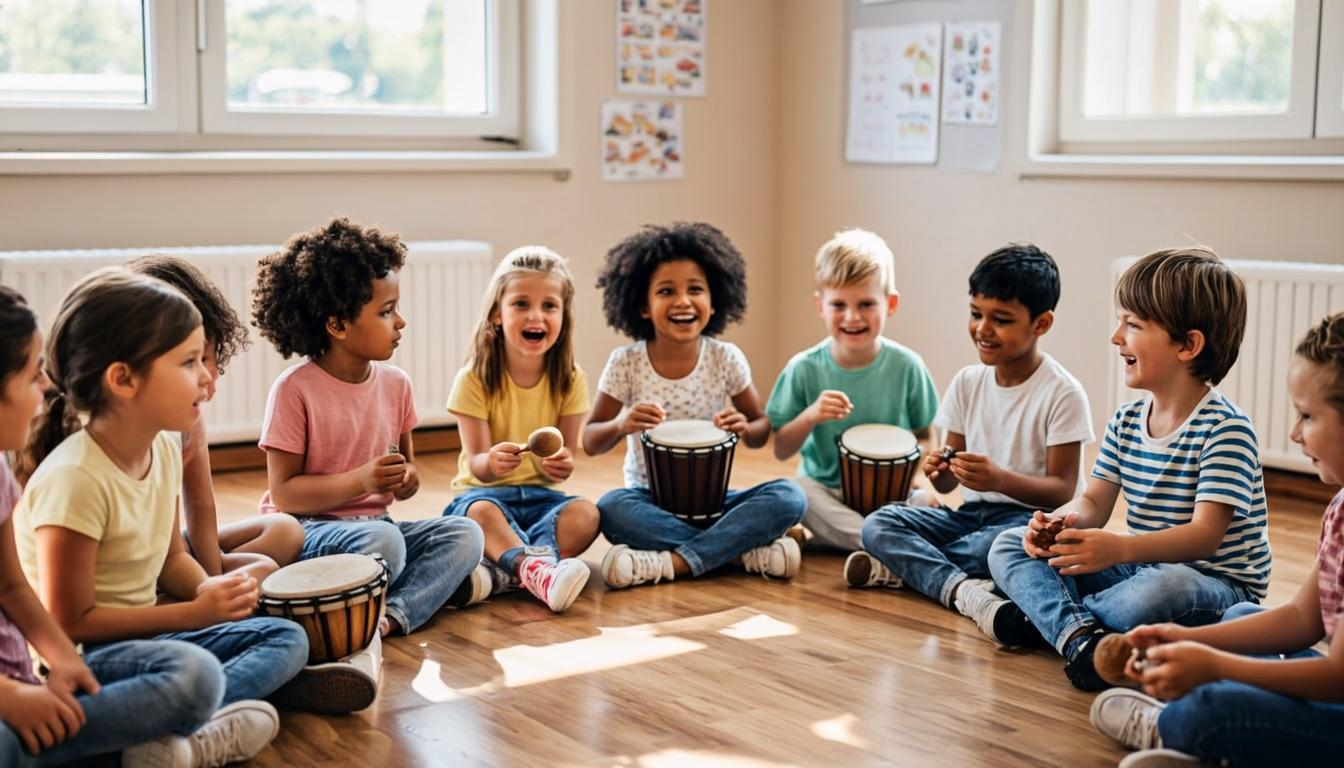
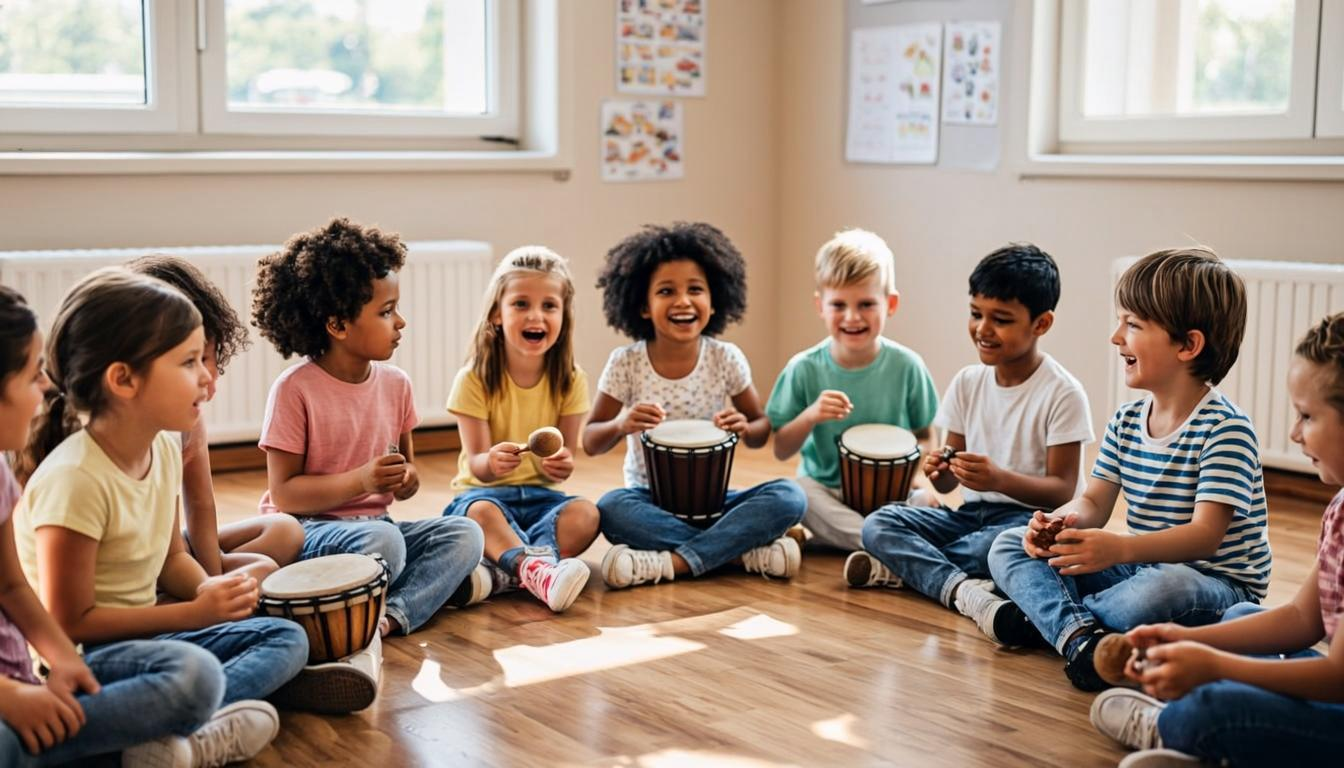
Instrument play introduces children to cause-and-effect relationships. When children shake a tambourine or strike a drum, they learn that their actions produce sounds. This understanding of agency is crucial for cognitive development. Simple instruments like shakers, bells, and drums work well for toddlers and preschoolers.
Singing activities build language skills and memory. Group songs with repetitive phrases help children develop vocabulary and sequencing abilities. Finger plays and action songs combine movement with language, creating multi-sensory learning experiences that stick with children longer.
Age-Appropriate Music Activities
Different age groups benefit from different types of musical experiences. Tailoring activities to developmental stages ensures maximum engagement and learning benefits. What works for toddlers won't necessarily engage preschoolers, and vice versa.
For infants, simple lullabies and finger plays create neural connections. The human voice is the most important instrument at this age. Soft singing and rhythmic patting help develop auditory discrimination and emotional security.
Todgers thrive on repetitive songs and simple movement activities. Songs with clear actions like "Head, Shoulders, Knees and Toes" help develop body awareness and coordination. Instruments that are easy to grasp and manipulate, like maracas or bells, provide immediate sensory feedback.
Preschoolers can handle more complex activities. They can learn simple songs with verses and choruses, experiment with different tempos, and even create their own simple compositions. Group performances build confidence and teach cooperation skills.
Creating an Effective Music Curriculum
A well-designed music curriculum integrates musical activities throughout the day rather than treating music as a separate subject. This approach maximizes exposure while making music a natural part of the learning environment.
Start by establishing musical routines. Morning welcome songs, transition music between activities, and quiet lullabies before naptime create predictability while building musical skills. These routines help children understand daily schedules while developing pitch and rhythm awareness.
Incorporate music into other learning areas. Count songs teach math concepts, movement activities develop motor skills, and cultural songs introduce diversity. This integration makes learning more engaging and helps children see connections between different subjects.
Provide varied musical experiences. Include different genres, instruments, and cultural traditions. This exposure helps children develop musical discrimination skills while appreciating diversity. The key is offering consistent, high-quality musical experiences rather than occasional special events.
Essential Equipment for Musical Activities
Having the right equipment makes musical activities more engaging and effective. You don't need expensive instruments,simple, well-chosen items can provide excellent musical experiences for young children.
Basic rhythm instruments should be accessible to all children. Include shakers, drums, bells, and rhythm sticks. These instruments help develop fine motor skills while teaching concepts like beat and tempo. Ensure instruments are durable, safe, and easy for small hands to manipulate.
A music corner creates a dedicated space for musical exploration. Include a CD player or speaker system, visual aids like posters of instruments or musical concepts, and mirrors for movement activities. This space should be inviting and accessible throughout the day.
Technology can enhance music activities when used appropriately. Simple recording devices allow children to hear their own voices, while basic music apps can introduce concepts like pitch and rhythm. However, technology should supplement rather than replace live musical experiences.
Measuring the Impact of Music Activities
Assessing the effectiveness of your music program helps ensure it's meeting developmental goals. Regular evaluation allows you to refine your approach and demonstrate value to parents and stakeholders.
Track observable developmental outcomes. Note improvements in language skills, social interactions, and physical coordination. Children who regularly participate in musical activities often show better focus, improved memory, and enhanced ability to follow multi-step instructions.
Gather feedback from educators and parents. They can provide valuable insights into how children respond to different activities and what benefits they observe outside the classroom. This feedback helps identify which activities are most effective and which might need adjustment.
Document musical growth through portfolios. Recordings of singing progress, videos of movement activities, and samples of creative compositions provide concrete evidence of developmental benefits. These portfolios also help children see their own growth over time.
Comparing Music Program Approaches
Different approaches to music education offer varying benefits. Understanding these differences helps you choose the right mix for your daycare setting. The table below compares common approaches to implementing music activities in daycare settings.
| Approach | Implementation Time | Cost | Developmental Benefits | Best For |
|---|---|---|---|---|
| Integrated Music | 15-20 minutes daily | Low | All developmental areas | Most daycare settings |
| Specialized Music Class | 30-45 minutes weekly | Medium-High | Focus on specific skills | Centers with dedicated staff |
| Parent-Child Music | 10-15 minutes daily | Medium | Bonding and routine | Home daycare settings |
| Technology-Based | 15-20 minutes 3x/week | Medium-High | Digital literacy | Tech-focused centers |
Key Takeaways
- Music activities should be integrated throughout the day, not treated as separate lessons. This consistent exposure builds stronger neural connections.
- Nearly 70% of effective preschool programs use music three or more times daily [1]. This frequency is crucial for maximum developmental benefits.
- Different age groups need different types of musical experiences. Tailor activities to developmental stages for optimal engagement.
- Movement-based music activities develop gross motor skills while teaching concepts like tempo and dynamics [2]. These activities are essential for physical development.
- Singing is the most common music activity in early childhood programs, with participation rates of nearly 80% [3]. Focus on songs that build vocabulary and memory.
- Regular assessment helps ensure your music program delivers measurable developmental benefits. Track progress in language, social, and physical skills.
Getting Started with Music Activities
Ready to enhance your daycare program with music? Start small by adding one or two simple activities to your daily routine. Morning welcome songs and transition music provide immediate structure while building musical skills.
Train your staff to facilitate musical activities effectively. Even educators without musical backgrounds can lead successful music experiences. Focus on enthusiasm and participation rather than musical perfection. Children respond more to engaged adults than to technically perfect performances.
Involve parents in extending musical learning at home. Share simple songs and activities they can incorporate into daily routines. This creates consistency between daycare and home environments while maximizing developmental benefits.
Music isn't just fun in daycare,it's fundamental to healthy development. By implementing intentional, research-backed musical activities, you're giving children the tools they need to succeed academically, socially, and emotionally. The rhythmic foundation you help build today will support their growth for years to come.
What musical activities have worked well in your daycare setting? Share your experiences in the comments below!