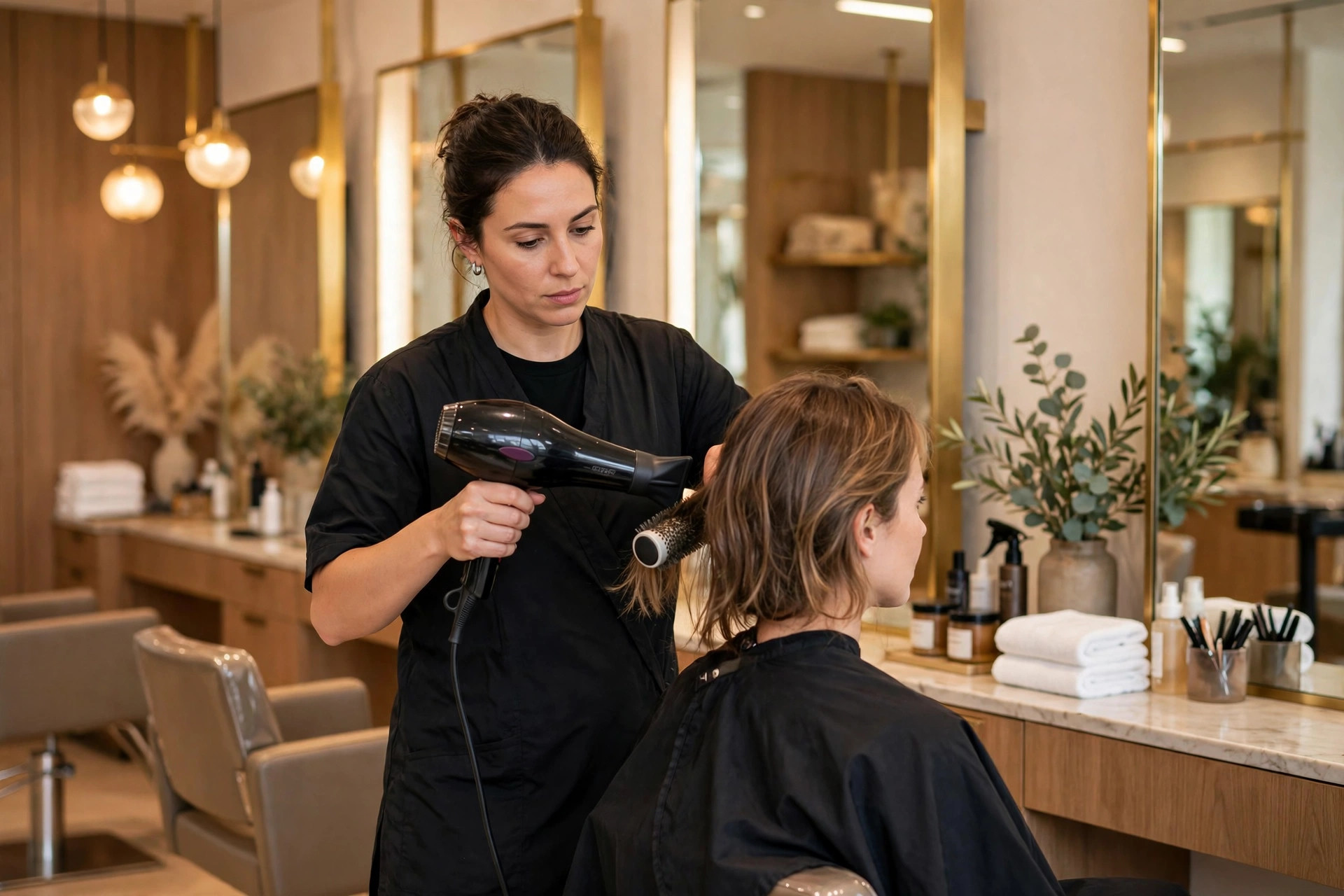
Your stylist has both hands in a client’s hair, color processing on the next chair, and the phone rings. Nobody can pick it up. The caller, a new client looking for balayage before a wedding, hangs up after four rings and books with the salon down the street. This scene repeats in salons every single day, because the very thing that makes a salon busy, stylists working with their hands, is the thing that makes the phone go unanswered. Missed call text back solves the mid-appointment problem without pulling anyone away from the chair: the caller gets an automatic text within a minute, answers one question, and ends up booked. This guide covers the salon version of the system, the one-question text-back that prices and books, salon-specific templates you can copy, and the daily routine that keeps the text inbox from piling up.
The quick answer
- What it is: an automatic text sent to anyone whose call your salon misses, so the caller can book by text while your stylists keep working.
- Why salons need it: stylists cannot answer mid-treatment, and most callers will not leave a voicemail or call back a second time.
- The money math: recovering 6 missed booking calls a month, at an $85 average ticket, adds about $6,100 a year before rebooks and retail.
- The core setup: instant text-back, one qualifying question (service, stylist, timing), a booking link, and a next-morning nudge for stalled chats.
- Typical cost: $15 to $50 a month standalone, or $30 to $100 a month inside a CRM that also handles reminders and rebooking.
- Setup time: an afternoon for the basic flow; add a day to write templates for your top services.
The mid-appointment problem no salon can staff its way out of
A salon is one of the hardest businesses to keep the phone answered, and it has nothing to do with effort. A colorist with foils in a client’s hair cannot stop to answer. A stylist mid-blowout cannot hold a phone. Even a dedicated receptionist gets pulled into checking out clients, mixing color, and handling walk-ins during the rush. The busier the salon, the more calls go unanswered, which means missed calls peak exactly when demand is highest.
Salon callers are also impatient in a specific way. Many are calling because they want something soon: a slot this week, a fix for a color gone wrong, a trim before an event. They are not researching for next month. If they reach voicemail, the common behavior is to call the next salon on the list. New clients, the ones worth the most over time, are the most likely to do this, because they have no loyalty to you yet. A first-time balayage client who books elsewhere today may stay there for years.
The economics make every recovered call count twice. A new salon client is worth the first ticket plus every rebook: cut and color clients return every 6 to 10 weeks, and a client who stays a year is worth 5 to 8 visits plus retail. Losing that first call does not lose one appointment, it loses a client relationship. And unlike a product business, a salon cannot recover the slot later. An empty chair on Thursday is revenue that is gone forever. The missed call text back system exists to make sure fewer chairs stay empty because the phone went unanswered.
There is also the after-hours pattern. Working clients call salons in the evening, when they are off work and thinking about their hair, and on Sunday, when they are planning the week. Small salons are often closed or short-staffed at exactly those times. An automatic text that arrives at 9pm keeps you in the running until the morning, when staff can finish the booking.
How the salon text-back flow works
The flow has four steps and no learning curve for the caller. A call comes in and nobody answers. Within 60 seconds the caller gets a text from your salon’s number. The text apologizes briefly and asks one question. The caller replies, and your staff or an automation books them. The whole exchange happens in the text thread, so the caller never has to call back.
The one question is the heart of the system. For salons, the best version is: “Sorry we missed your call. Are you looking to book an appointment, or do you have a question about a service?” This single question splits your callers into the two groups that matter: people ready to book, who need speed, and people with questions, who need answers. It also tells you who is a price shopper versus who is ready to commit, which changes how staff should reply. Avoid sending a menu of six options. Menus feel like phone trees, and callers who just escaped one phone tree will not enjoy a second.
Speed after the reply matters as much as the automatic text. The automation wins the first minute. A human needs to pick up the thread within 10 to 15 minutes during business hours. Set the text inbox to notify like a ringing phone on the front desk device. Between clients, a stylist or receptionist can book a caller in under two minutes. The salons that lose text-back bookings are the ones where the first text goes out and then nobody watches the inbox for three hours.
The one-question text-back that prices and books
Once a caller answers your opening question, the next move is to qualify with the three details that determine everything in a salon booking: the service, the stylist, and the timing. You do not need a long intake. You need exactly enough to quote and book.
Service: what do they want
Ask directly: “Which service are you looking for?” Most answers fall into a short list: haircut, color, balayage, highlights, keratin, extensions, bridal, or a combo. Keep a cheat sheet of your starting prices for each so any staff member can quote without guessing. For color services, the follow-up question matters: “Have you had color with us before?” A new color client may need a longer slot or a consultation, and booking the wrong slot length creates a cascade of late appointments for the rest of the day.
Stylist: who do they want
“Do you have a stylist in mind, or would you like the first available?” New callers usually take first available, which lets you fill gaps. Callers who name a stylist are often rebooking or following a referral, and they are worth extra care: check that stylist’s book first and offer their two nearest openings. If their stylist is fully booked, offer the waitlist plus a first-available option rather than a flat no. A flat no sends them back to Google.
Timing: when can they come
“What day works best for you?” beats “when are you free” because it pushes toward a concrete answer. Then offer two specific slots: “I have Thursday at 2pm or Friday at 11am with [stylist]. Want me to hold one?” Named slots convert better than a bare booking link, though you should send the link too for callers who prefer to book themselves. If neither slot works, ask for their constraint (“are mornings or evenings better?”) rather than listing the whole week.
| Caller type | What they need | Your text-back path |
|---|---|---|
| Ready to book | A slot, soon, with minimal fuss | Ask service, stylist, day. Offer two named slots plus the booking link. Hold the slot on request. |
| Price question | A number before they commit | Give the starting price, explain what changes it (hair length, thickness, add-ons), invite them to book a consultation or the service. |
| Service question | Advice: will this work for my hair? | Short honest answer, then pivot: “The best way to know is a quick consultation. It is free and takes 15 minutes.” |
| Fix or complaint | Something went wrong with a recent visit | Apologize, take it seriously, and get them back in fast. Never debate over text. Offer the soonest slot with the original stylist. |
One qualifying question splits callers into bookers and question-askers, so staff reply with the right next step.
Salon-specific copy-paste templates
Save these as named templates in your texting tool. Fill in the brackets once per template and your team can send a perfect reply in seconds, between clients, without thinking about wording.
The initial text-back
“Hi, this is [Salon Name]. Sorry we missed your call, our stylists are with clients right now. Are you looking to book an appointment, or do you have a question about a service?” Warm, honest, and it ends with the one question that routes the conversation.
The booking reply
“Happy to get you in. Which service are you looking for, and do you have a stylist in mind or prefer the first available?” Once they answer: “Perfect. I have [day] at [time] and [day] at [time] with [stylist]. Here is our booking link too: [link]. Want me to hold one of those for you?”
The price quote
Keep one template per top service. “Our balayage starts at [price] and most clients land between [range] depending on hair length and thickness. It includes toner and a blowout. Would you like me to check this week’s openings?” The “most clients land between” line is doing real work: it sets expectations honestly and reduces sticker shock at checkout, which is where bad reviews are born.
For haircuts: “Women’s cuts with [stylist level] start at [price] and include a wash and style.” For keratin: “Keratin treatments run [range] depending on hair length, and results last 3 to 5 months with the right aftercare.” Short, specific, and each ends with a step forward.
The consultation pivot
“That is a great question, and honestly it depends on your hair. We do free 15-minute consultations where a stylist looks at your hair and gives you an exact plan and price. I have [day] at [time] open. Want it?” This template handles every “will this work for my hair” question, every “how much for a color correction” question, and every vague “I need a change” message. The consultation is the salon’s best conversion tool. Use it.
The next-morning follow-up
Send automatically to conversations that stalled: “Hi, checking back in from [Salon Name]. We still have openings this week if you would like to book. Reply with the service you need and I will send times.” One nudge recovers a solid share of stalled chats. Do not send a second automated nudge. If the ticket is high, like bridal or extensions, one personal message from a stylist a few days later is fine.
The fix-or-complaint reply
“I am really sorry to hear that. We want to make it right. Can you come in [day]? I will put you back with [stylist] at no charge for the fix.” Complaints over text need speed and generosity, not explanations. A fast free fix turns an angry client into a loyal one and prevents the one-star review that was about to happen.
The daily routine that keeps the inbox empty
Text-back fails in salons for one reason: nobody owns the inbox. The automation sends the first text, the caller replies, and the reply sits unread until closing. Fix this with a routine, not willpower.
- 1Put the inbox on one device. A front desk tablet or a shared phone that stays at reception. Notifications on, sound on. The inbox is a ringing phone, not an email folder.
- 2Assign inbox duty by shift. Whoever is on reception owns it. No receptionist? The stylist between clients checks it, or the owner handles it from the back. Write the name on the shift sheet.
- 3Answer overnight texts first. Every morning, before the first client, reply to every text that arrived after closing, oldest first. Evening callers are planning their week and will book with whoever answers first.
- 4Use templates, not typing. Every reply starts from a template. Staff fills in the service, stylist, and two slots, then sends. Target: under two minutes per booking conversation.
- 5Confirm service length before the time. Check the price and duration cheat sheet for every color and correction booking. Wrong slot lengths cascade through the day.
- 6Send the day-before reminder. Every booked appointment gets a confirmation text the day before. No-shows cost a salon the full ticket with no chance to refill the chair.
- 7Count the five numbers weekly. Missed calls, texts sent, replies, bookings, no-shows. Review every Monday. If replies are high but bookings are low, the templates need work. If texts are low, the trigger is broken.
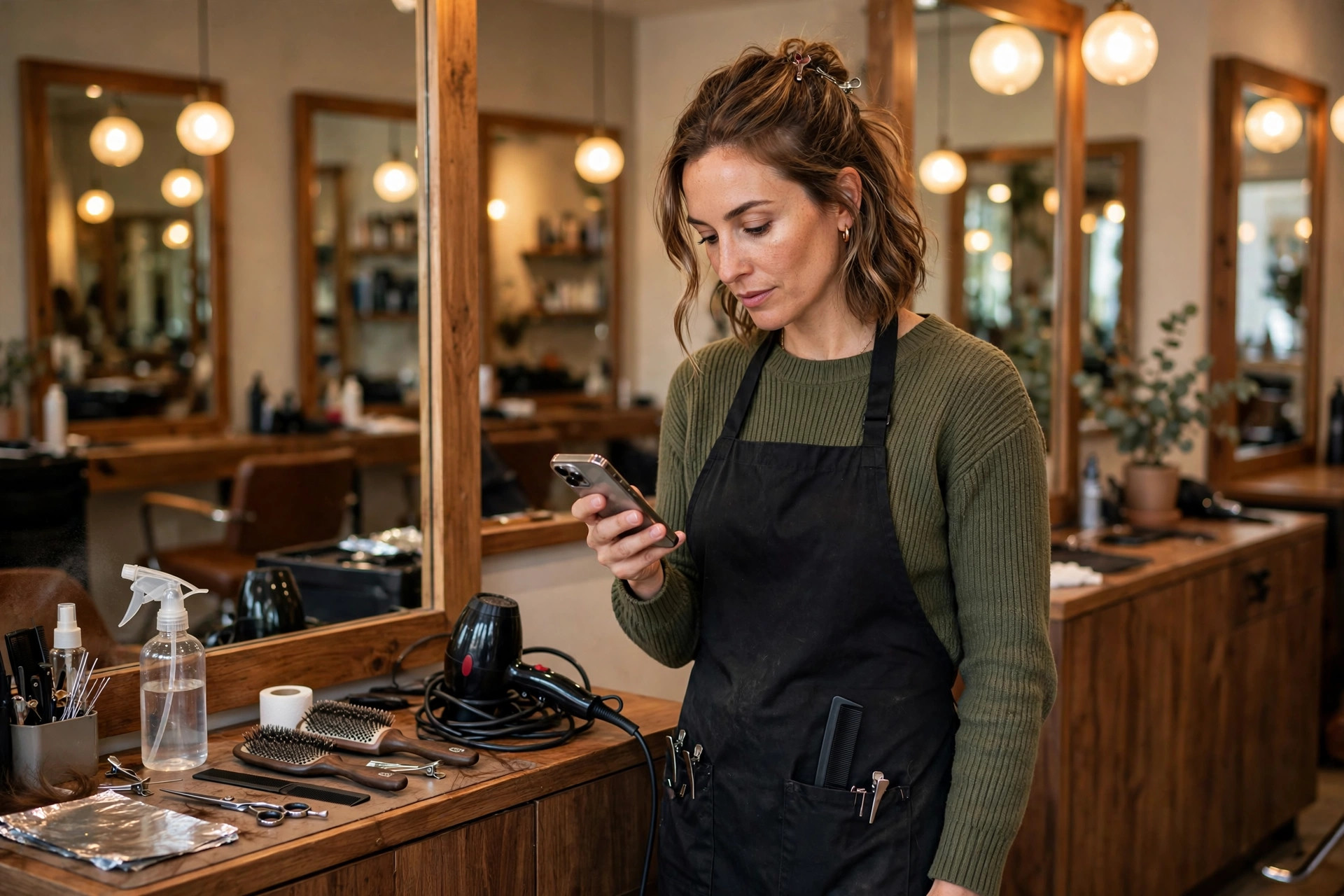
Between clients, one staff member can clear the whole text inbox in minutes with templates.
Connecting text-back to your salon software
The system works best when it talks to your booking software. At minimum, your booking link lives in every template. Better setups connect the CRM to the scheduler so staff can see real availability while texting and book without switching screens. Most salon platforms, including Vagaro, Boulevard, Fresha, and Mindbody, either integrate directly with texting CRMs or work through the booking link plus a shared calendar view.
The integration that pays for itself fastest is the automated reminder sequence. Every appointment booked, whether by text, phone, or walk-in, should trigger a confirmation text immediately and a reminder the day before. Salons that add this see no-show rates drop by a third or more. The second integration worth adding is the rebooking nudge: 6 to 8 weeks after a cut or color, an automatic text invites the client back. That single automation fills chairs with clients you already won, which is the cheapest revenue a salon can get. For ideas on the email side of client retention, see our guide to email marketing for salons.
| Setup option | Monthly cost | Best for | Watch out for |
|---|---|---|---|
| Standalone text-back tool | $15 to $50 | Salons that only need the missed call text and templates | Reminders and rebooking need a separate system |
| CRM with texting built in | $30 to $100 | Salons that want text-back plus reminders, rebooking, and review requests together | Someone has to build the automations; budget a day for setup |
| Done-for-you setup | $250 to $800 one-time plus monthly | Owners who want it working without touching settings | Confirm you own the number and the account before paying |
Mistakes salons make with text-back
The classic mistake is the dead-end text: “Sorry we missed you, call us back.” It asks the caller to repeat the effort that just failed. Always end with a question. The second mistake is quoting without the variables: “balayage $150” with no mention of hair length, thickness, or toner leaves you arguing at checkout. Quote the starting price and the typical range, every time. The third is the inbox nobody watches, which turns a fast system into a slow one. The automation is only as good as the human who follows it. The fourth is forgetting the fix-or-complaint caller. A client texting about a bad color is one text away from a one-star review. Answer fast, be generous, and get them back in the chair. The fifth is treating text-back as a replacement for answering the phone. It is a safety net, not a strategy. Keep answering live calls whenever a human is free, and let the text-back catch what falls through.
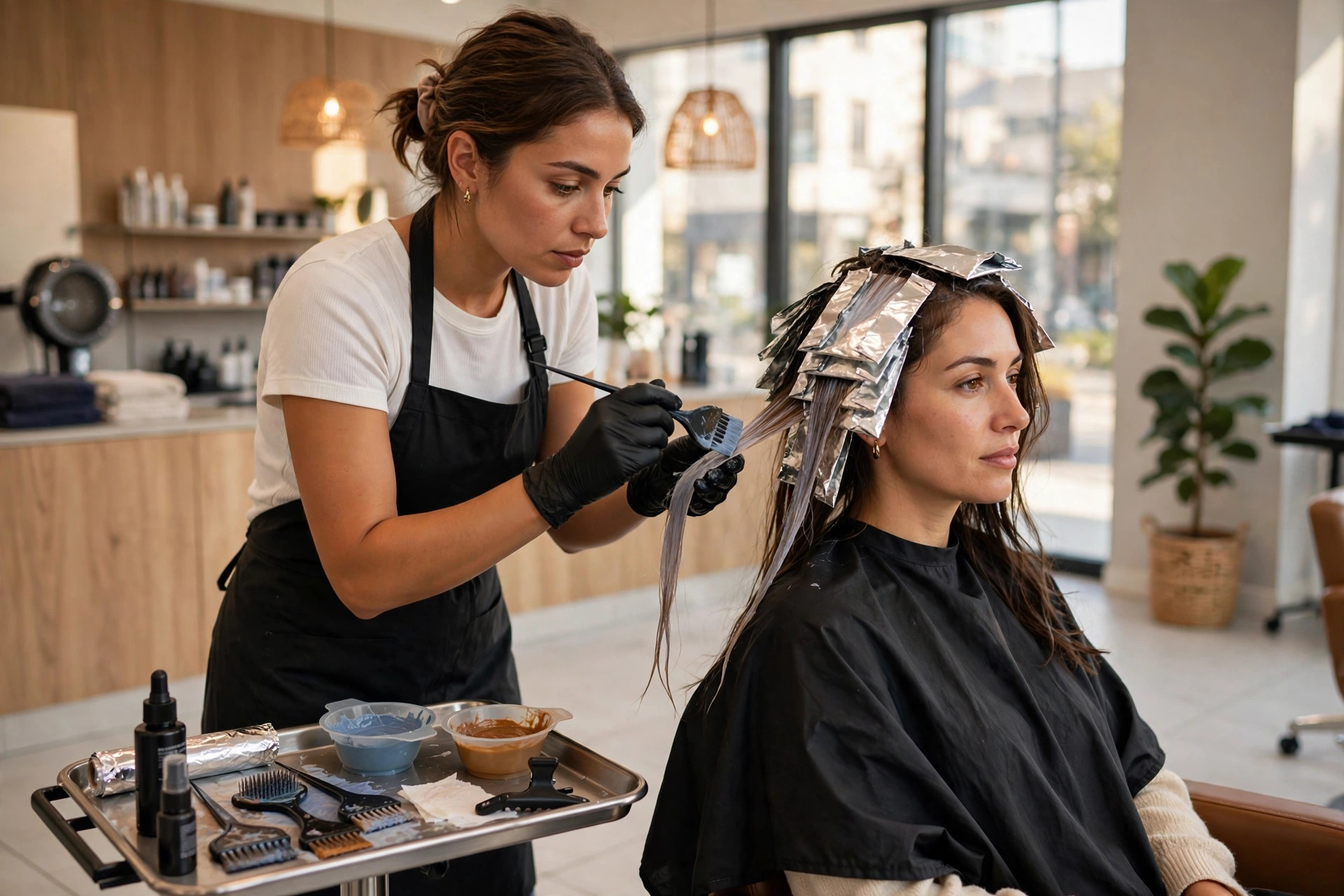
Color clients are the highest-value text-back wins. Quote the range, confirm the slot length, book the consultation.
The salon text-back playbook in one page
Every missed call gets a text within 60 seconds from your salon’s number. The text asks one question: booking or service question. Bookers get three quick qualifiers, service, stylist, timing, then two named slots plus the booking link. Price shoppers get the starting price, the typical range, and what changes it. Service questions get a short answer and a free consultation invite. Stalled chats get one nudge the next morning. Complaints get speed and a free fix, never a debate. Every booking triggers a confirmation text and a day-before reminder. Every morning starts with the overnight inbox, oldest first. Count the five numbers weekly and fix the weakest step. Run this and the mid-appointment problem stops costing you clients, because the phone can ring all it wants while your stylists keep working.
The same system works across personal care businesses with small variations. Our guide to missed call text back for dentists shows how high-value appointment businesses handle the same flow, and missed call text back for law firms covers the professional-services version. If missed calls are only part of the problem, our email marketing for salons guide covers filling chairs with clients you already have.
Frequently asked questions
Will texting back annoy callers who wanted to talk?
Most callers prefer a fast text to a voicemail they have to wait on. The key is speed and a human follow-up. The automatic text buys the first minute, and a real reply within 10 to 15 minutes closes the loop. Callers get annoyed by silence, not by texts.
How do we handle calls when the salon is closed?
Use a separate after-hours message: “Thanks for calling [Salon Name]. We are closed and open again at [time]. Reply here and we will book you first thing in the morning.” Answer those texts first every morning, oldest first.
Should stylists text from their personal phones?
No. All texting should come from the salon’s business number through your texting tool, so conversations are logged, templated, and visible to the team. Personal phones create inconsistent replies and no records.
What if a caller wants a specific stylist who is fully booked?
Offer the waitlist plus a first-available option: “She is booked this week, but I can put you on her waitlist and get you in with [stylist] on [day]. Want one of those?” A flat no sends the caller back to Google. Always offer a path.
How do we keep the text inbox from overwhelming the front desk?
Templates do the heavy lifting: most replies take under two minutes. Assign inbox duty by shift, clear it between clients, and let the next-morning automation handle stalled chats. If volume grows past what one person can handle, that is a good problem, and a sign to add reception hours.
Fill the chairs your phone keeps missing
Digital Hayder builds missed call text back for salons: instant replies from your salon’s number, templates for your top services, booking software connections, and reminder sequences that cut no-shows. Tell us how many chairs you run and we will map your setup before you pay anything.
Contact Us