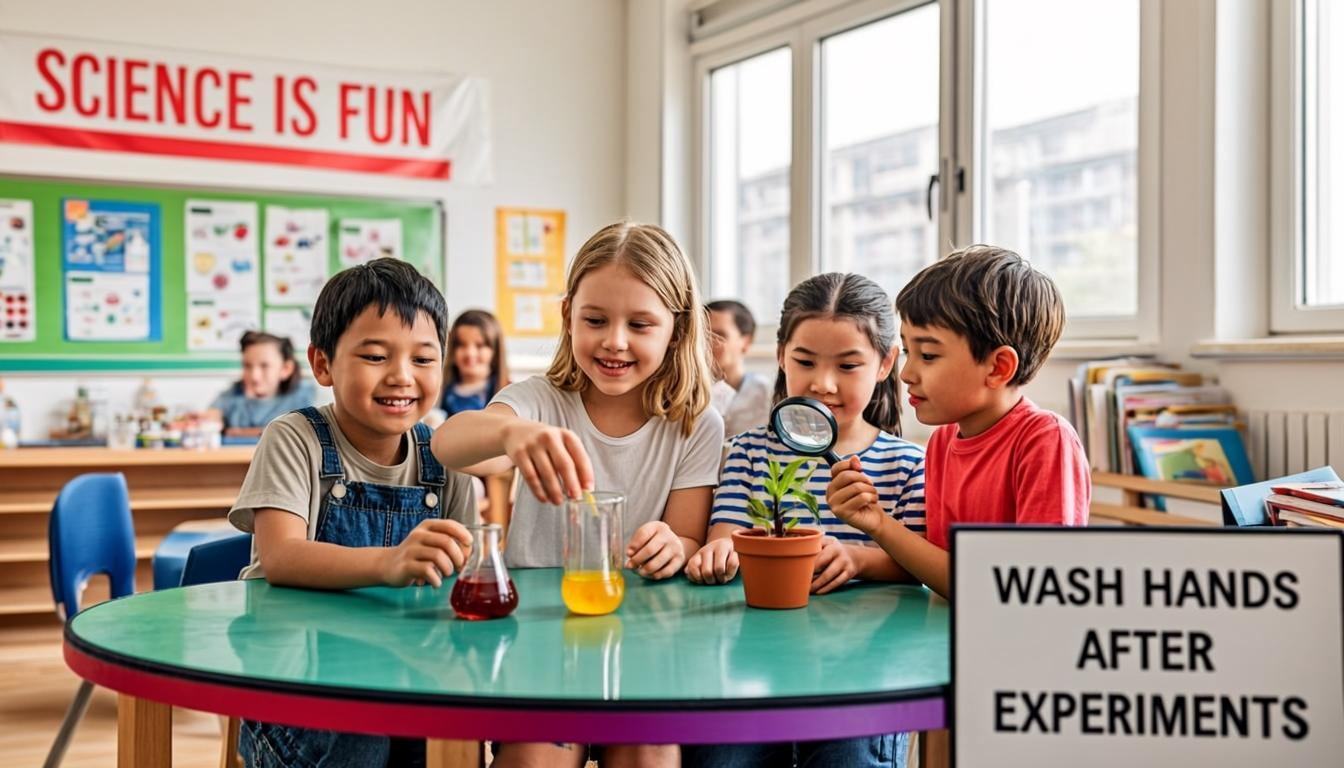
Daycare Science Activities for 2026
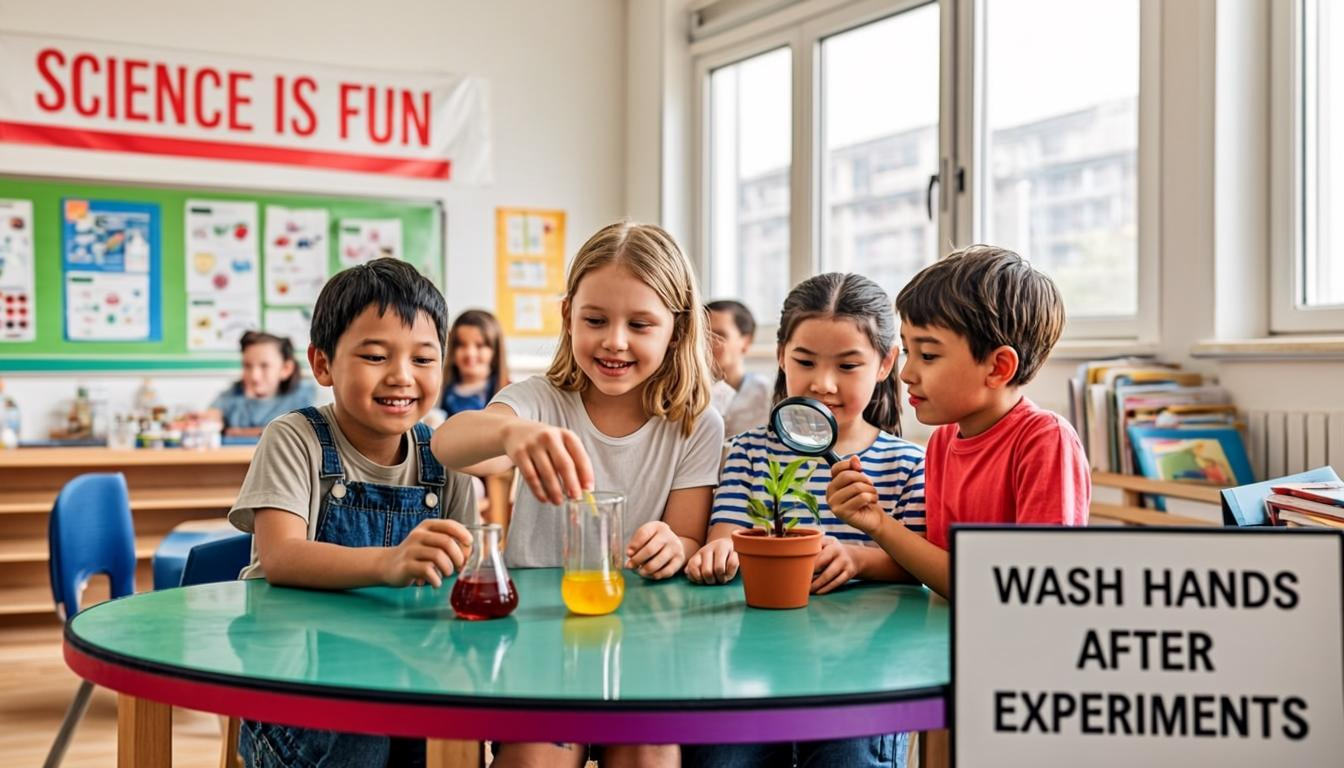
In 2026, early childhood education is evolving faster than ever. Are you looking for ways to make your daycare stand out? Science activities for young children aren't just fun,they're essential for cognitive development. Research shows that children who engage in science experiments during their early years show significantly higher levels of engagement and knowledge retention [1]. But how do you implement these activities effectively in a busy daycare setting?
The truth is, many daycare providers underestimate the power of hands-on science. You don't need a fancy lab or advanced degrees. With simple materials and the right approach, you can transform your classroom into a science wonderland. Let's explore how to make science a cornerstone of your curriculum this year.
Why Science Matters in Early Childhood
Science activities in daycare settings do more than just entertain children. They build critical thinking skills that last a lifetime. When kids experiment with cause and effect, they're learning how the world works. This foundational knowledge supports all other areas of learning.
Research reveals that children show high levels of engagement in learning science experiments [1]. They acquire not just knowledge but also problem-solving abilities. These skills are increasingly important in our technology-driven world.
Moreover, early science exposure helps close achievement gaps. According to recent studies, children from disadvantaged backgrounds who participate in quality science programs show improved academic outcomes [5]. This makes science activities an equity issue as well as an educational one.
The Developmental Benefits
Science activities support all areas of child development. Here's how:
- Cognitive growth: Children learn to observe, predict, and draw conclusions.
- Language skills: They learn new vocabulary to describe what they see and do.
- Social development: Many experiments require teamwork and sharing materials.
- Physical development: Pouring, measuring, and manipulating objects builds fine motor skills.
Simple Science Activities for Toddlers
Toddlers are natural scientists. They explore the world through touching, tasting, and testing. You can harness this curiosity with age-appropriate activities that require minimal setup but deliver maximum learning.
Water play is one of the most effective science activities for toddlers. Set up different containers, funnels, and water wheels. Let children pour water between containers. They're learning about volume, flow, and cause-effect relationships. All you need is water, containers, and a waterproof mat.
Another simple activity is color mixing. Provide primary color water (using food coloring) in clear containers. Let children mix colors to discover what happens. This teaches color theory and the scientific method in a hands-on way.
Materials You'll Need
Most toddler science activities use common household items. Stock your science corner with:
- Clear plastic containers of various sizes
- Food coloring (primary colors)
- Magnifying glasses
- Large tweezers for sorting
- Natural materials (leaves, rocks, pinecones)
- Large droppers and basters
Engaging Science Activities for Preschoolers
Preschoolers can handle more complex experiments. They're ready to make predictions, test hypotheses, and document their findings. These activities build the foundation for scientific thinking that will serve them throughout their education.
Plant growth experiments are perfect for this age. Have children plant seeds in clear cups with paper towels. They can observe root development and track growth over weeks. This teaches biology, measurement, and patience.
Another engaging activity is building simple circuits with batteries, wires, and small light bulbs. Children can see how electricity flows and what happens when the circuit is broken. This introduces physics concepts in a safe, hands-on way.
Setting Up a Science Center
A dedicated science center encourages ongoing exploration. Include:
- A discovery table with natural items
- Magnifying glasses and tweezers
- Science journals with simple drawing prompts
- Balance scales for comparing weights
- Books about nature and science
Science Activities for School-Age Children
School-age children in your care can tackle more sophisticated experiments. These activities challenge their thinking skills while still being accessible and fun.
Chemistry experiments using safe household items are always a hit. Baking soda volcanoes, slime making, and crystal growing demonstrate chemical reactions in dramatic ways. Children learn about states of matter, reactions, and molecular structures.
Physics experiments can include building simple machines with LEGOs or creating marble runs. These activities teach about gravity, force, and motion. Children can test different designs to see which works best.
Advanced Materials for Older Kids
For school-age science activities, consider adding:
- Basic microscope slides
- Safety goggles and lab coats (for dramatic effect)
- Magnets and magnetic items
- Simple circuit kits
- Plant growth lamps for controlled experiments
Planning Your Science Curriculum
Effective science planning requires balancing structure with flexibility. You want enough variety to keep children engaged, but enough consistency to build skills over time.
Start with a monthly theme. For example, "Weather" might include cloud observation, rain measurement, and simple weather prediction experiments. Each week, focus on a different aspect of the theme.
Incorporate science into your daily routine. A simple question like "What do you think will happen if we freeze this leaf?" can spark curiosity and lead to a brief experiment. These mini-science moments add up to significant learning over time.
Sample Monthly Science Themes
| Month | Theme | Key Activities |
|---|---|---|
| January | Winter Science | Ice melting experiments, snowflake making, insulation testing |
| February | Human Body | Heart rate experiments, simple digestion models, germ observation |
| March | Plants | Seed growth tracking, leaf rubbings, plant needs experiment |
| April | Water Cycle | Evaporation observations, cloud in a jar, water filtration |
| May | Insects | Bug hotel building, butterfly life cycle, ant farm observation |
Budget-Friendly Science Supplies
You don't need a big budget to implement effective science activities. Many experiments use common household items or inexpensive materials. Smart shopping can stretch your resources significantly.
Dollar stores are treasure troves for science supplies. Look for measuring cups, funnels, clear containers, and craft supplies that can be repurposed for experiments. Thrift stores often offer science kits, magnifying glasses, and other tools at discounted prices.
Recycling provides excellent free materials. Plastic bottles become terrariums or tornado tubes. Cardboard boxes can be transformed into simple science stations. Teaching children to reuse materials for science adds an extra environmental lesson.
Money-Saving Tips
- Partner with parents for supply donations
- Rotate materials between classrooms to reduce duplication
- Purchase multi-purpose items that can be used in multiple experiments
- Create a science supply wishlist for holiday gifts from parents
Key Takeaways
- Science activities boost engagement and knowledge retention in early childhood [1]
- Start simple with water play and color mixing for toddlers
- Preschoolers can handle plant experiments and basic circuit building
- School-age children benefit from chemistry and physics experiments
- Plan with monthly themes and incorporate science into daily routines
- Budget-friendly options abound with household items and recycled materials
Conclusion
Science activities aren't just for school-aged children. Even toddlers can benefit from hands-on exploration that builds critical thinking skills. By incorporating these activities into your daycare curriculum, you're giving children a foundation for lifelong learning.
Ready to transform your classroom into a science wonderland? Start small with one activity this week. You might be surprised at how much children learn,and how much fun they have,while exploring the world through science.
For more ideas on early childhood education, check out resources from Child Care Aware and the American Progress Center on early learning trends and best practices.