Educational Daycare Activities for 2026
Are you searching for ways to enhance your daycare program with educational activities that truly make a difference? In 2026, the landscape of early childhood education continues to evolve, with new research highlighting the critical importance of intentional, developmentally-appropriate learning experiences for young children. Whether you're a daycare owner, director, or parent, understanding the most effective educational activities can transform your child's daily experience and set them up for long-term success.
The need for high-quality educational daycare has never been greater. According to recent data, 4,186,363 children nationwide are left without access to a formal care slot, representing a 28% child care gap [3]. This makes it even more crucial that the care that is available provides maximum educational value. Let's explore the most effective educational daycare activities that can help close this gap while nurturing children's development.
Why Educational Activities Matter in Daycare Settings
Educational activities in daycare aren't just about keeping children busy. They form the foundation of early learning and development. Research from the U.S. Department of Health and Human Services shows that high-quality early care and education (ECE) benefits all young children, particularly in areas like language development, social skills, and school readiness [4].
When children engage in educational activities during their daycare hours, they're not just learning letters and numbers. They're developing executive function skills, emotional regulation, and problem-solving abilities that will serve them throughout their lives. The question isn't whether educational activities belong in daycare, it's how to implement them most effectively.
Age-Appropriate Educational Activities
Infants (0-12 months)
For infants, educational activities focus on sensory exploration and attachment. Simple activities like tummy time, textured touch boards, and responsive interactions build neural connections. Research from the National Institute for Early Education Research (NIEER) shows that even infants benefit from intentional learning activities that engage their senses [5].
Consider incorporating:
- Black and white contrast cards for visual development
- Gentle music and movement for auditory processing
- Simple sign language to encourage early communication
These activities might seem basic, but they're laying crucial groundwork for future learning.
Toddlers (1-3 years)
Toddlers are natural explorers, and their educational activities should channel that curiosity. At this stage, focus on sensory play, motor development, and beginning social skills. The Children's Corner Group highlights interactive learning games as a key component of 2025 early childhood education trends [2].
Effective toddler activities include:
- Sensory bins with safe, textured materials
- Simple puzzles that develop problem-solving
- Parallel play opportunities to build social awareness
- Basic counting games using everyday objects
Remember, toddlers learn through repetition and hands-on experiences. The same activity done multiple ways reinforces learning without boredom.
Preschoolers (3-5 years)
Preschool is where academic foundations begin to take shape, but play should still be the primary vehicle for learning. According to NIEER's Preschool Learning Activities survey, programs that balance structured learning with free play show the best outcomes [5].
Key activities for this age group:
- Literacy-rich environments with book nooks and storytelling
- Science exploration through simple experiments
- Creative arts using various mediums
- Dramatic play to develop social and emotional skills
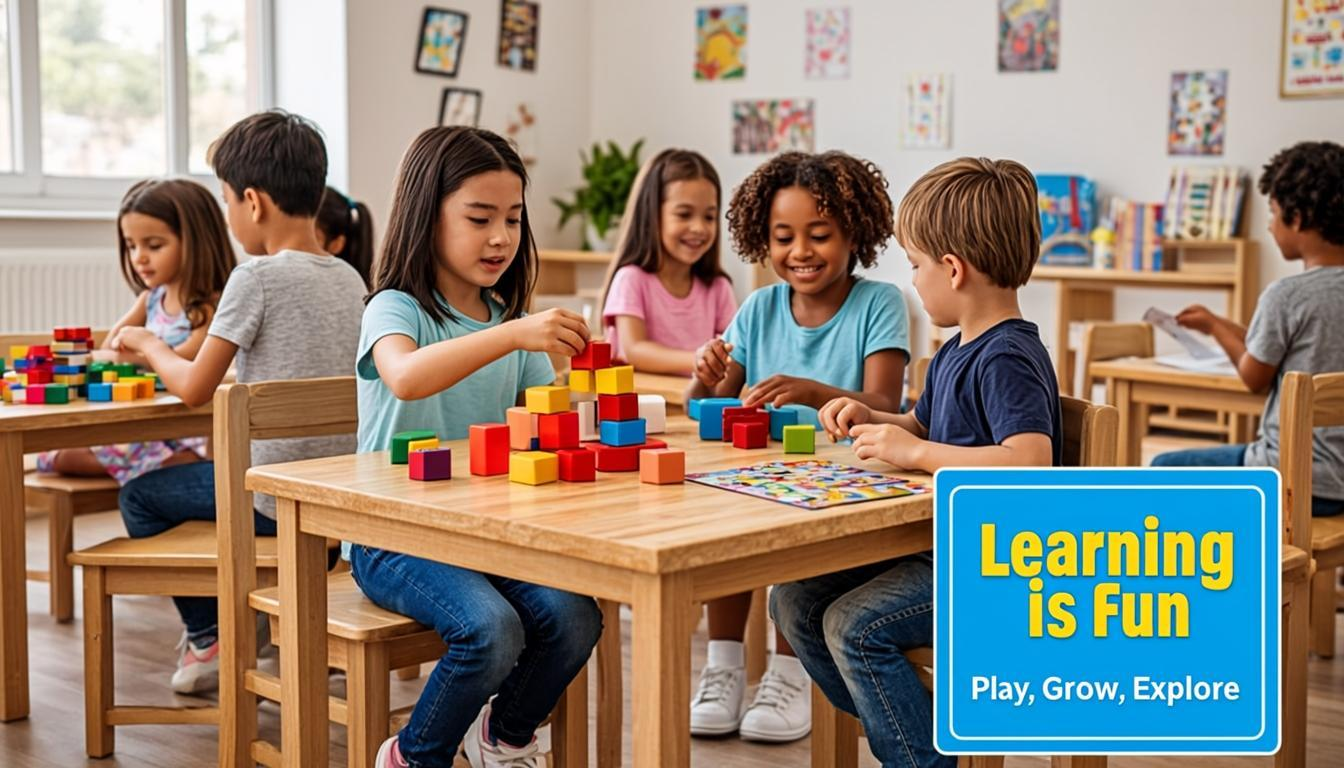
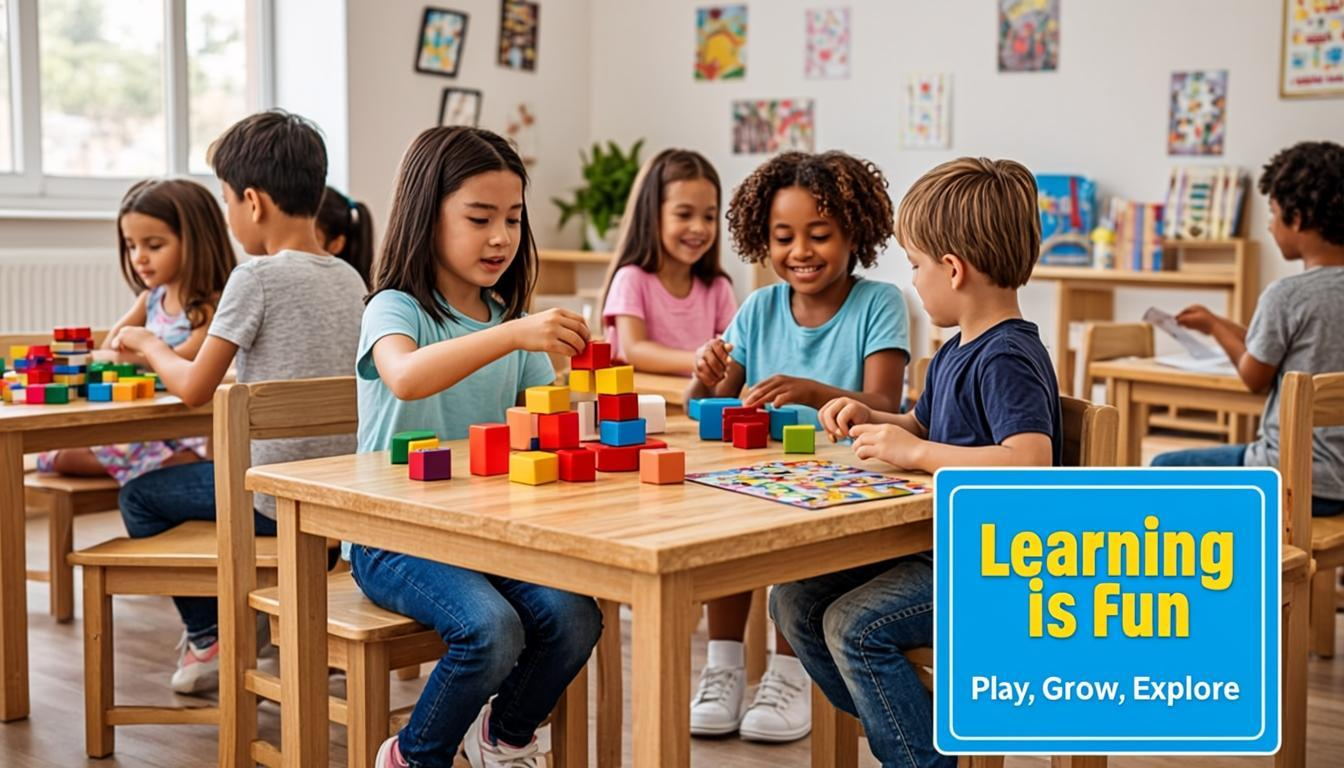
- Pre-math activities using games and manipulatives
The most effective preschool programs don't separate play from learning, they integrate them seamlessly. Children learn best when they're having fun and engaged in activities that feel natural to their development stage.
Implementing Educational Activities in Your Daycare
Structuring Your Day for Maximum Learning
A well-structured day balances routine with flexibility. Children thrive on predictability, but also need opportunities for exploration and choice. Consider creating a daily schedule that includes:
- Morning welcome and free play (30 minutes)
- Group circle time with stories and songs (15 minutes)
- Focused learning centers (45-60 minutes)
- Outdoor play (minimum 60 minutes, weather permitting)
- Quiet activities like reading or puzzles (20 minutes)
- Creative expression through art or music (30 minutes)
This structure provides children with security while allowing for diverse learning experiences throughout the day.
The Role of the Educator in Facilitating Learning
Your role as an educator isn't just to lead activities, it's to observe, question, and extend children's learning. Effective facilitation involves:
- Asking open-ended questions that encourage critical thinking
- Documenting children's progress through notes or photos
- Adapting activities based on children's interests and needs
- Creating a responsive environment that changes as children develop
The best daycare educators are guides rather than directors. They create environments where children can discover and learn at their own pace.
Measuring the Impact of Educational Activities
Assessment Strategies That Work
How do you know if your educational activities are making a difference? Effective assessment in early childhood education should be:
- Ongoing and natural, not tied to formal testing
- Based on observation of children's behaviors and interactions
- Documented through portfolios showing growth over time
- Shared with parents to create consistency between home and daycare
According to research from the Center for American Progress, programs that use authentic assessment methods show better outcomes for children [1]. The goal isn't to measure children against each other, but to understand their individual developmental journey.
Long-Term Benefits of Quality Educational Activities
The impact of quality educational activities extends far beyond the preschool years. Studies show that children who participate in high-quality early education programs:
- Are 29% more likely to graduate high school [4]
- Develop stronger social-emotional skills that persist into adolescence
- Show improved academic performance in elementary school
- Demonstrate better executive function and self-regulation abilities
These benefits aren't just nice to have, they represent real advantages that can affect a child's entire educational trajectory.
Comparing Educational Activity Approaches
| Approach | Key Features | Best For | Implementation Difficulty |
|---|---|---|---|
| Montessori | Child-directed learning, specialized materials, mixed-age groups | Independent learners, hands-on learners | Moderate (requires specialized training) |
| Reggio Emilia | Project-based learning, documentation of learning, environment as third teacher | Creative children, social learners | High (requires flexible curriculum) |
| Play-Based | Learning through play, child-led activities, minimal direct instruction | Young children, active learners | Low (natural approach) |
| Academic-Focused | Structured lessons, skill development, teacher-directed activities | Kindergarten preparation, older preschoolers | Moderate (requires balance with play) |
Key Takeaways
- Educational activities in daycare provide critical developmental benefits that extend into school years and beyond.
- Age-appropriate activities are essential, what works for a toddler won't engage a preschooler in the same way.
- Balance structure with flexibility in your daily schedule to support both security and exploration.
- Your role as an educator is to facilitate learning through observation, questioning, and responsive environments.
- Authentic assessment shows real progress better than formal testing in early childhood settings.
- Long-term benefits of quality educational activities include higher graduation rates and stronger social-emotional skills.
Conclusion
As we navigate the evolving landscape of early childhood education in 2026, one thing remains clear: educational activities in daycare settings are more important than ever. They provide the foundation for lifelong learning and development, helping to close the child care gap while ensuring every child has access to meaningful learning experiences.
Ready to transform your daycare program with educational activities that truly make a difference? Start small by implementing one new approach or activity type, observe how children respond, and gradually expand based on their interests and needs. Remember, the most effective educational activities are those that respect children's developmental stages while making learning joyful and engaging.
For more insights on early childhood education trends and best practices, explore resources from the National Institute for Early Education Research and the U.S. Department of Health and Human Services. These authoritative sources can provide additional guidance as you continue to enhance your educational offerings and make a lasting impact on the children in your care.