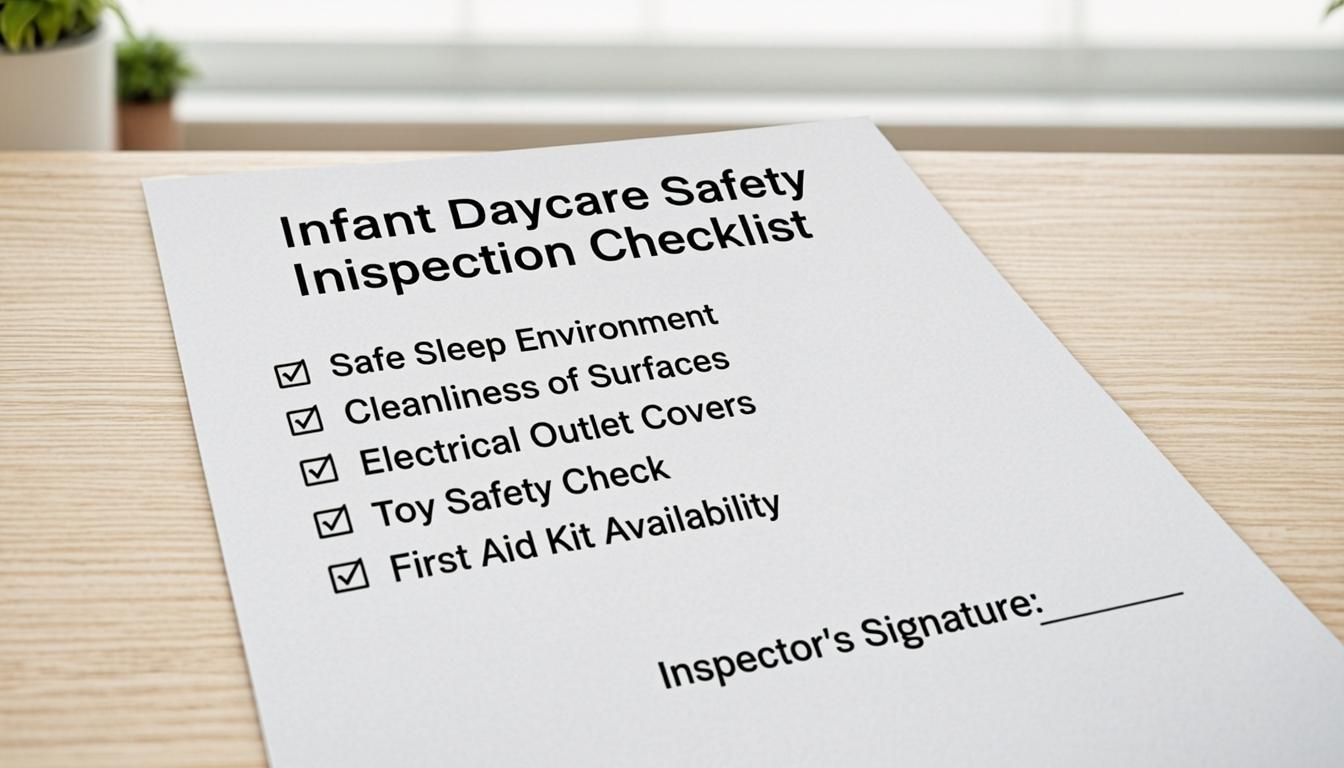
Infant Daycare Safety Checklist: 2026 Guide
As a daycare owner or director, you know that infant safety isn't just important,it's non-negotiable. In today's regulatory environment, parents expect nothing less than the highest safety standards for their youngest children. An infant daycare safety checklist isn't just a compliance document; it's your roadmap to creating an environment where babies can thrive while parents feel confident leaving their most precious treasures in your care.
Did you know that according to industry reports, proper safety protocols can reduce infant injuries in childcare settings by up to 60%? That's not just a statistic,it's peace of mind for parents and protection for your business. This comprehensive checklist will help you evaluate every aspect of your infant program, from physical environments to staff training, ensuring you meet or exceed current safety standards.
Physical Environment Safety
The physical space where infants spend their time must be meticulously designed to prevent accidents and promote development. Your infant rooms should be free from hazards yet stimulating enough to encourage growth.
Flooring and Surfaces
All flooring in infant areas must be non-slip and easy to clean. Avoid carpeting in infant spaces, as it can harbor allergens and bacteria. Instead, use seamless vinyl flooring that can be disinfected daily. According to safety guidelines, infant play areas should have impact-absorbing surfaces under climbing equipment [1].
Check for sharp edges on furniture and fixtures. Corner guards on tables and shelves are non-negotiable. Remember, infants are learning to roll, crawl, and eventually walk,they will bump into things!
Crib and Sleep Area Safety
Sleep safety is paramount for infants. Your cribs must meet current Consumer Product Safety Commission (CPSC) standards. This means no drop-side cribs, proper mattress firmness, and correct spacing between slats (no more than 2 3/8 inches apart) [5].
Infants should always be placed on their backs to sleep on a firm, flat surface with no soft bedding, pillows, or bumpers. Each crib should have a firm mattress that fits snugly with no gaps larger than two fingers between the mattress and the crib frame [5].
Toy and Equipment Safety
All toys and equipment must be age-appropriate and regularly inspected. Infant toys should be large enough that they can't be swallowed (at least 1.25 inches in diameter) and free of small parts that could pose choking hazards [1].
Create a schedule for inspecting all equipment, including swings, bouncers, and activity centers. Check for loose parts, sharp edges, or signs of wear that could compromise safety. Document each inspection in your safety log.
Staff Training and Qualifications
Your staff is the first line of defense against safety incidents. Proper training isn't just a checkbox,it's what transforms a good daycare into an excellent one.
Background Checks and Certification
Every staff member working with infants must undergo comprehensive background checks. This includes fingerprinting, criminal history searches, and verification of past employment. In many states, infant caregivers must have additional specialized training beyond basic childcare certification [3].
Verify that all staff maintain current CPR and first aid certifications, including infant CPR. Consider requiring staff to complete additional training in infant-specific emergency response, such as infant choking and infant CPR [2].
Caregiver-to-Child Ratios
Proper staffing ratios are critical for infant safety. The American Academy of Pediatrics recommends a 1:4 ratio for infants under 12 months, with no more than 8 infants per caregiver [3]. These ratios aren't just guidelines,they're based on research showing that lower ratios lead to better supervision and fewer safety incidents.
Your facility should maintain even lower ratios during peak times, such as drop-off and pick-up, when distractions are highest. Consider having additional staff available during these transitions to ensure every infant is properly supervised.
Ongoing Safety Training
Safety training shouldn't stop at orientation. Implement monthly safety drills covering various scenarios, including fire evacuation, lockdown procedures, and medical emergencies. Document all training sessions and ensure staff can demonstrate proper procedures [2].
Create a mentorship program where experienced infant care workers can mentor newer staff. This hands-on approach helps reinforce safety practices and creates a culture where safety is everyone's responsibility.
Health and Hygiene Protocols
Infants have developing immune systems, making them particularly vulnerable to illness. Your health and hygiene protocols must be rigorous and consistently followed.
Diapering and Toileting Procedures
Designate a separate area for diapering that is away from food preparation and play spaces. Each diapering station should have a sturdy, washable changing surface with safety straps to prevent falls [1].
Implement strict handwashing protocols before and after diaper changes. Use touch-free faucets if possible, and provide alcohol-based hand sanitizer at each station. Train staff to never leave an infant unattended on a changing table, even for a moment.
Illness Prevention and Management
Develop clear policies for excluding ill infants and staff. Include specific criteria for when a child should stay home, such as fever, vomiting, or contagious conditions [4]. Communicate these policies to parents during enrollment and reinforce them regularly.
Maintain accurate health records for each infant, including immunization records and known allergies. Train staff to recognize early signs of illness and follow your facility's protocol for isolating ill children and contacting parents.
Cleaning and Sanitizing Schedules
Create detailed cleaning schedules for all areas of your infant program. High-touch surfaces should be cleaned and disinfected multiple times daily, including toys, crib rails, and changing tables [1].
Use age-appropriate cleaning products that are safe for infant environments. Many commercial cleaners contain harsh chemicals that can leave residues harmful to infants. Consider using EPA-approved, child-safe alternatives that effectively clean without toxic residues.
Emergency Preparedness
Emergencies can happen in any childcare setting. Your preparation can make the difference between a manageable incident and a tragedy.
Emergency Contact Information
Maintain updated emergency contact information for every infant, including multiple contacts and authorization for medical treatment. This information should be easily accessible in both digital and paper formats in case of technology failures [2].
Regularly verify that emergency contacts are current. Many providers update this information annually, but consider doing it more frequently for infants, as circumstances can change quickly with young families.
Evacuation and Lockdown Procedures
Practice evacuation drills specific to infant care. Infants can't evacuate themselves, so your staff must be prepared to quickly and safely move infants to designated meeting points [2].
Develop lockdown procedures that address how to secure infant areas while continuing to provide care. This includes having emergency supplies like formula, diapers, and medications readily accessible in secure locations.
Medical Emergency Response
Train staff to recognize and respond to common infant emergencies, including choking, allergic reactions, and sudden illnesses. Keep emergency medical supplies in each infant area, including infant-sized doses of medications as authorized by parents [5].
Establish relationships with local pediatric emergency services. Consider having standing orders from a local pediatrician for emergency medications that might be needed before paramedics arrive.
Parent Communication and Involvement
Parents are your partners in ensuring infant safety. Open communication builds trust and helps create consistent safety expectations between your facility and the home environment.
Daily Reports and Documentation
Provide detailed daily reports to parents about their infant's day, including feeding times, diaper changes, sleep patterns, and any incidents or concerns. This documentation not only keeps parents informed but also creates a record that can be valuable if questions arise later [4].
Use digital systems or apps that allow real-time updates when possible. Many parents appreciate receiving photos and updates throughout the day, especially for infants who are experiencing separation anxiety.
Safety Policy Transparency
Share your complete safety policies with parents during enrollment and make them available in parent handbooks. Include information about your safety protocols, emergency procedures, and how you handle incidents [3].
Hold regular parent meetings to review safety procedures and address concerns. Consider inviting safety experts to speak at these meetings to demonstrate your commitment to continuous improvement in safety practices.
Incident Reporting and Follow-up
Develop a clear process for documenting and reporting any incidents, no matter how minor. Include details about what happened, how staff responded, and any follow-up actions taken [2].
Follow up with parents after any incident to ensure they have all the information they need and to answer any questions they might have. This transparency builds trust and shows parents that you take safety seriously.
Safety Technology and Equipment
Modern technology can enhance safety in infant care settings when used appropriately. The right tools can provide additional layers of protection and peace of mind.
Monitoring Systems
Consider installing video monitoring systems in infant areas. These systems can provide an additional layer of security and help staff review incidents if questions arise [1].
Be transparent with parents about monitoring policies. Many facilities post signs indicating when and where recording occurs and provide access to footage for parents when needed.
Safety Equipment Comparison
| Equipment Type | Basic Option | Premium Option | Cost Difference | Key Benefits |
|---|---|---|---|---|
| Cribs | Standard fixed-side crib | Convertible crib with adjustable height | $100-200 | Longer lifespan, better ergonomics for staff |
| Changing Tables | Basic plastic table | Wall-mounted with safety straps | $50-150 | Space-saving, reduced fall risk |
| Thermometers | Digital stick thermometer | No-touch temporal scanner | $30-80 | Faster readings, reduced cross-contamination |
| Playards | Basic foldable playard | Heavy-duty with bassinet attachment | $80-150 | Multi-functional, better support for infants |
Emergency Alert Systems
Implement systems that can quickly alert all staff in case of an emergency. This could be intercom systems, mobile apps, or wearable alert devices that can signal across your entire facility [2].
Test these systems regularly to ensure they function properly during drills and actual emergencies. Include backup systems in case of power failures or technology malfunctions.
Key Takeaways
- Create a comprehensive infant safety checklist covering physical environments, staff training, health protocols, emergency preparedness, parent communication, and safety technology.
- Maintain proper caregiver-to-child ratios (1:4 for infants under 12 months) to ensure adequate supervision [3].
- Implement rigorous cleaning and sanitizing schedules, with special attention to high-touch surfaces and toys [1].
- Train staff in infant-specific emergency response, including CPR, choking, and illness recognition [2].
- Maintain open communication with parents about safety policies and incident procedures [4].
- Regularly review and update your safety protocols to incorporate new research and best practices.
Conclusion
Creating a safe infant daycare environment isn't just about compliance,it's about building trust with parents and providing the best possible care for the youngest children in your program. By implementing this comprehensive infant daycare safety checklist, you're not just meeting standards; you're exceeding them and creating an environment where infants can thrive while parents feel confident leaving their most precious treasures in your care.
Remember that safety is an ongoing process, not a one-time checklist. Regular reviews, staff training, and parent feedback will help you continuously improve your safety practices. Take action today to review your current safety protocols against this checklist and identify areas for improvement. Your infants and their parents deserve nothing less than your commitment to excellence in safety.